Many people are curious about simple, kitchen-based routines for brighter, smoother-looking underarms. One popular DIY idea combines fresh lemon juice with tomato juice for a light, refreshing skin care habit. Here is what to know before you give it a try.
What Is This Routine?
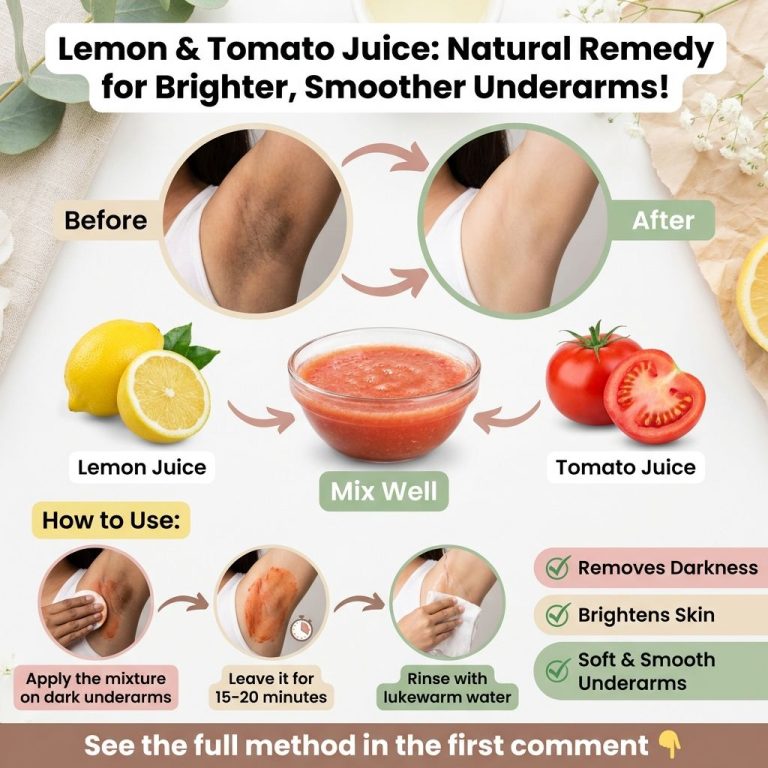
This homemade approach is built around two familiar ingredients. Lemon juice is naturally acidic and is often mentioned in DIY beauty circles for its fresh, citrusy character. Tomato juice is commonly used in home beauty routines for its refreshing, hydrating feel. People who try this idea usually hope for a fresher, more even-looking complexion rather than dramatic changes.
What You Will Need
- Freshly squeezed lemon juice
- Plain tomato juice without added salt or sugar
- Cool water for dilution
- A clean cotton pad or soft cloth
- A small clean bowl and spoon
How People Prepare It
- Wash your hands and make sure your bowl and spoon are clean.
- Mix one part fresh lemon juice with two parts tomato juice in the bowl.
- Add a small splash of cool water to soften the mixture and reduce stinging.
- Stir gently and pour a small amount onto a cotton pad.
- Store any leftovers in a sealed container in the refrigerator and use them within a day.
How to Use It
Apply the mixture lightly to clean, dry underarm skin using the cotton pad. Let it sit briefly, then rinse with cool water and pat dry. Many people use this routine only a few times a week, since frequent use can irritate sensitive skin. Follow with a gentle, fragrance-free moisturizer if your skin feels dry.
Before You Try This
- Do a patch test on a small area of skin first and wait at least 24 hours.
- Avoid using this mixture on freshly shaved, waxed, or irritated skin.
- Lemon juice can increase sun sensitivity, so use sunscreen or avoid direct sun after application.
- Stop immediately if you notice burning, redness, itching, or discomfort.
- Speak with a healthcare professional if you have a skin condition or concerns about your skin.
Final Thoughts
Simple kitchen ingredients can be an interesting part of a gentle self-care routine, but they are not a substitute for proven skin care or medical advice. Treat this DIY idea as one light, optional step, keep your expectations realistic, and always prioritize patch testing and skin comfort.