Before you toss that green onion root or celery base into the bin, consider giving it a second life on your windowsill. Regrowing vegetables from kitchen scraps is one of the most approachable projects in home gardening. It needs little more than a glass of water, a sunny spot, and a bit of patience, and it turns food waste into fresh greens you can snip for your next meal.

Why Regrow Kitchen Scraps?
Regrowing scraps is a practical way to reduce waste, enjoy fresh herbs and greens, and learn how plants grow. It is also a gentle introduction to gardening for beginners, since you can watch progress day by day without buying seeds or seedlings. Results vary by plant, season, and light, so think of each project as a learning experiment rather than a guaranteed harvest.
Vegetables That Regrow Well from Scraps
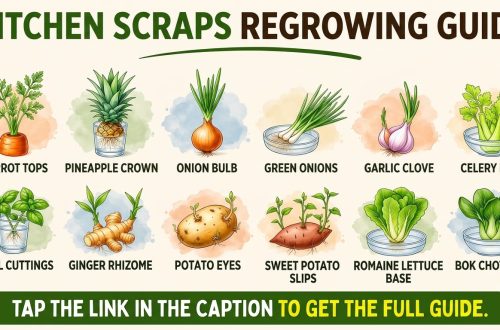
The infographic highlights six popular choices, each with its own method:
- Green onions: Place the white root ends in a glass of water with the roots submerged, and new green shoots usually appear within days.
- Romaine lettuce: Keep the base about one to two centimeters deep in shallow water, then move it to soil once roots develop.
- Celery: Set the bottom stalk in a shallow dish of water to encourage fresh leaves from the center.
- Bok choy: Use the root base in shallow water, and enjoy tender new leaves in a few days.
- Lemongrass: Stand the lower stalk with roots in water, then plant it in soil when roots are established.
- Ginger: Place a piece with visible buds in soil or water, keeping it warm and moist; this one takes longer to show growth.
Step-by-Step: Regrowing Green Onions
Green onions are a great starting point for beginners. Follow these simple steps:
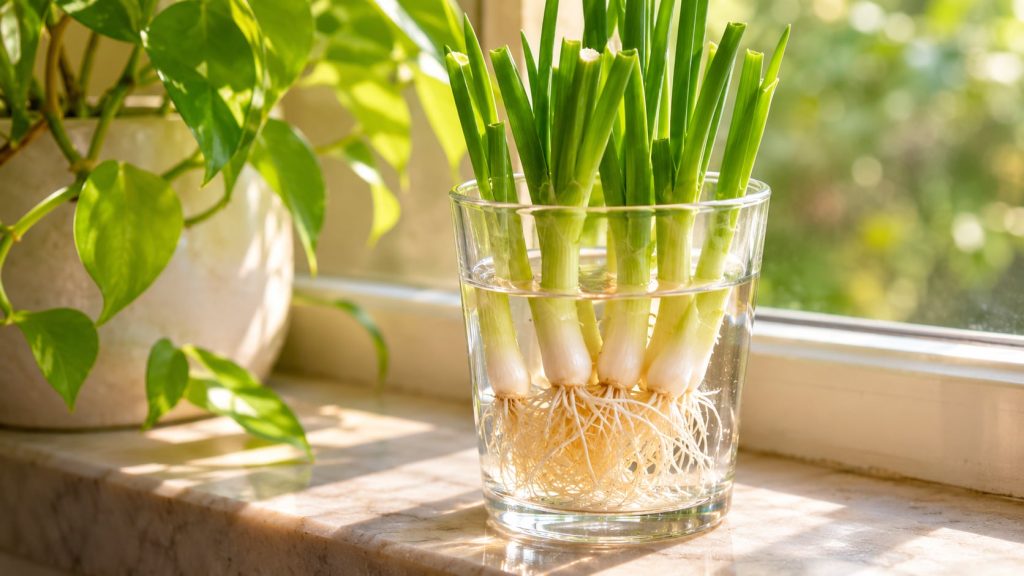
- Cut green onions about five centimeters above the root base, leaving the roots and a small section of white stem attached.
- Place the roots in a clean glass with about two centimeters of fresh water.
- Set the glass on a bright windowsill that gets plenty of indirect sunlight.
- Change the water every two to three days to keep it fresh and reduce odor.
- Snip the new green shoots as they grow, leaving at least a short base so the plant can keep producing.
Tips for Better Results
- Use fresh scraps: Healthy, firm bases regrow more reliably than soft or discolored ones.
- Give plenty of light: A bright window helps leafy growth stay sturdy.
- Move to soil when ready: Once roots are strong, planting in a pot with good potting mix supports longer-term growth.
- Harvest gently: Take a few leaves at a time so the plant keeps regrowing.
Common Mistakes to Avoid
Keeping the base submerged in too much water can cause rot, so use only enough water to cover the roots. Stagnant water is another common issue, which is why regular water changes matter. Finally, expect slower growth in cooler months, and be patient with ginger and lemongrass, which can take several weeks to show clear progress.
Final Thoughts
Regrowing kitchen scraps is a simple, rewarding way to bring more green life into your home while cutting down on waste. Start with green onions, observe how they respond, and then try lettuce, celery, or bok choy. Each small success builds confidence for your next windowsill garden project.