If you have ever watched water run off a thirsty vegetable bed or tossed kitchen scraps into the trash and wondered whether there was a better way, the keyhole garden may be the answer you have been looking for. This simple, circular bed was developed in Lesotho, a small mountain kingdom in southern Africa where rain is unpredictable and fertile soil is precious. Its design lets you grow a surprising amount of food in a small space while feeding the soil from the middle outward. Whether you have a suburban backyard, a raised patch by the kitchen door, or a small plot on a homestead, this guide will walk you through how the system works, how to build it, and how to keep it productive through the seasons.
The Core Idea Behind the Keyhole Garden
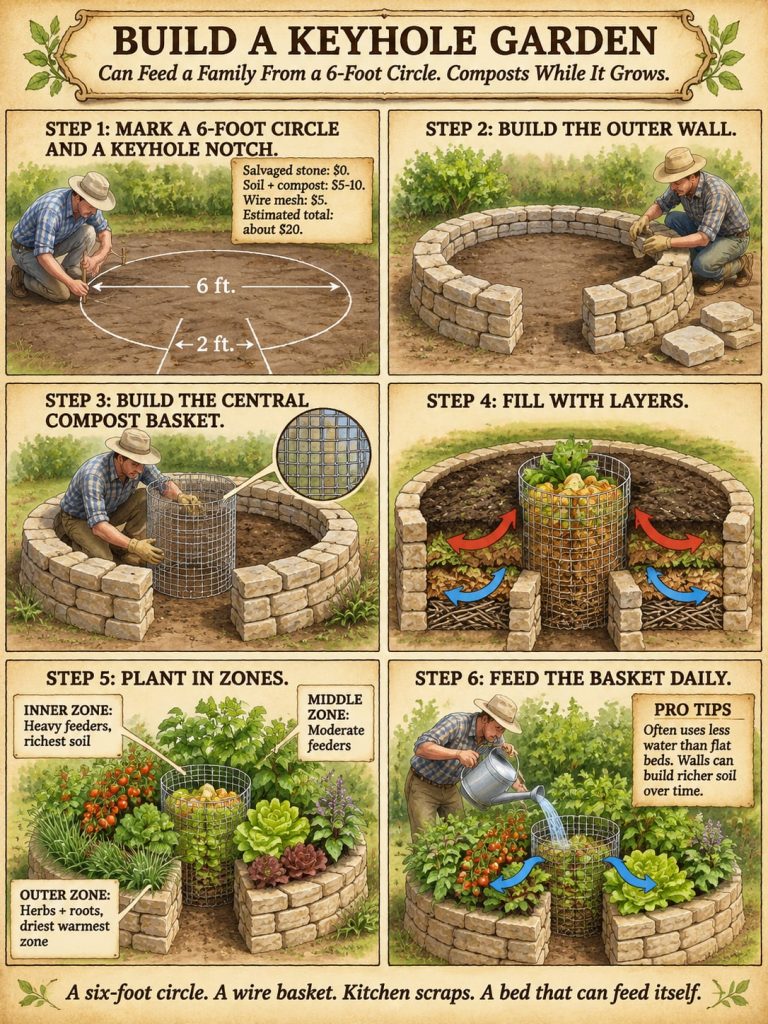
The keyhole garden works on a simple principle: put the nutrients and water where the roots can reach them easily. A central basket, usually built from wire mesh, woven branches, or old tires set on end, sits in the middle of the bed. You fill it with kitchen scraps, dry leaves, manure, and grass clippings, then pour water into it. As the material breaks down, it releases nutrients, and the moisture seeps sideways through the surrounding soil, so plants at the outer edge still get what they need.
The wedge-shaped notch in the ring is the “keyhole.” It gives you comfortable access to the compost basket without stepping into the bed and compacting the soil. Most keyhole beds are about 6 to 8 feet across, with walls roughly 2 to 3 feet tall. That size lets you reach the center from the notch while keeping every plant within arm’s length.
How to Build a Keyhole Garden Step by Step
Choose a sunny spot that gets at least 6 to 8 hours of direct sun a day. Mark a circle about 6 to 8 feet in diameter, and leave a wedge about 2 feet wide cut out of one side. Place the central basket in the middle, then build the ring walls using stone, cinder block, brick, or stacked sod. Stone and brick hold heat and last for years, while sod is a low-cost option that breaks down slowly over time.
Layer the bed for drainage and nutrition. Start with a few inches of coarse material such as rocks or broken brick at the bottom. Next, add a layer of sticks, leaves, or cardboard. Top this with a mix of garden soil, compost, and well-aged manure, roughly two parts soil to one part compost. Keep the soil slightly sloped toward the outer edge so water flows down and out to the roots.
Fill the central basket with alternating layers of green material, such as vegetable peelings and fresh grass, and brown material, such as dried leaves or shredded paper. Add a little soil or finished compost between layers to speed decomposition. Avoid meat, dairy, oily foods, and diseased plant material, because these can attract pests or cause odors.
Watering Method That Makes the Difference
Water the basket, not the leaves. Pour about a gallon at a time into the center, and do this several times a week during hot weather or less often in cool, humid conditions. To check the bed, push a finger into the soil about 2 inches deep. If it feels dry, add water to the basket. If it is damp and crumbly, wait a day or two. Overwatering shows up as yellowing lower leaves and soggy soil that smells sour, while underwatering shows up as wilting in the afternoon that does not recover by evening.
What to Plant in a Keyhole Garden
The keyhole layout works well for many vegetables because the nutrient supply is concentrated near the center and the bed is compact. Leafy greens, root crops, herbs, and bush-type fruiting vegetables all fit well. Place tall plants on the north side of the ring so they do not shade shorter plants. Leave the access notch clear so you can reach the basket easily.
Choose cultivars that match your season length. Bush beans, compact tomatoes, and loose-leaf lettuce tend to perform well in small beds. Plant spacing depends on the crop, so follow the seed packet or nursery tag. As a general guideline, leave enough room between plants for air to move freely, which reduces fungal problems in humid weather. Succession sowing, which means planting small batches every two to three weeks, keeps lettuce, radishes, and spinach coming in steadily instead of all at once.
Common Mistakes and How to Avoid Them
The most common mistake is letting the compost basket dry out. Dry compost does not break down, and the water you pour in runs straight through without feeding the bed. Keep the basket as damp as a wrung-out sponge.
Another frequent problem is adding too much fresh material at once. A large pile of wet kitchen scraps can turn sour and attract flies. Add scraps in small amounts and cover them with dry leaves or soil each time. Finally, do not pack the bed soil down with heavy foot traffic. Compacted soil drains poorly and limits root growth, so keep your steps to the access notch.
Adapting the Keyhole Garden Across the United States
USDA hardiness zones measure winter cold tolerance, not summer heat or drought. Keyhole gardens can be useful in many parts of the country, but how you manage them will change with your climate. In hot, dry regions such as parts of the Southwest, the water delivered through the basket is especially valuable, and you may need afternoon shade cloth in summer. In cold northern areas, typically zones 3 through 5, you can extend the season by planting cold-tolerant crops early and covering the bed with a frost cloth when temperatures dip. In mild coastal zones, around zones 8 through 10, you may be able to grow vegetables nearly year-round, although heavy rain can waterlog the bed if drainage is poor.
Frost dates and soil temperatures vary widely even within a single zone. Check your local cooperative extension service for planting calendars in your area, and use the days-to-maturity listed on seed packets to plan your harvests.
Bringing It All Together
A keyhole garden turns everyday scraps into a steady supply of nutrients, puts water where plants can use it, and packs a lot of food into a small circle. You do not need special tools or expensive materials to get started. Pick a sunny spot, build a ring of about 6 to 8 feet, place a compost basket in the center, and plant a few crops you already enjoy eating. Over one growing season, you will learn how your bed responds to water, sun, and compost, and that knowledge will make every future harvest more rewarding. Start small this weekend, and let your kitchen scraps help grow your next salad.