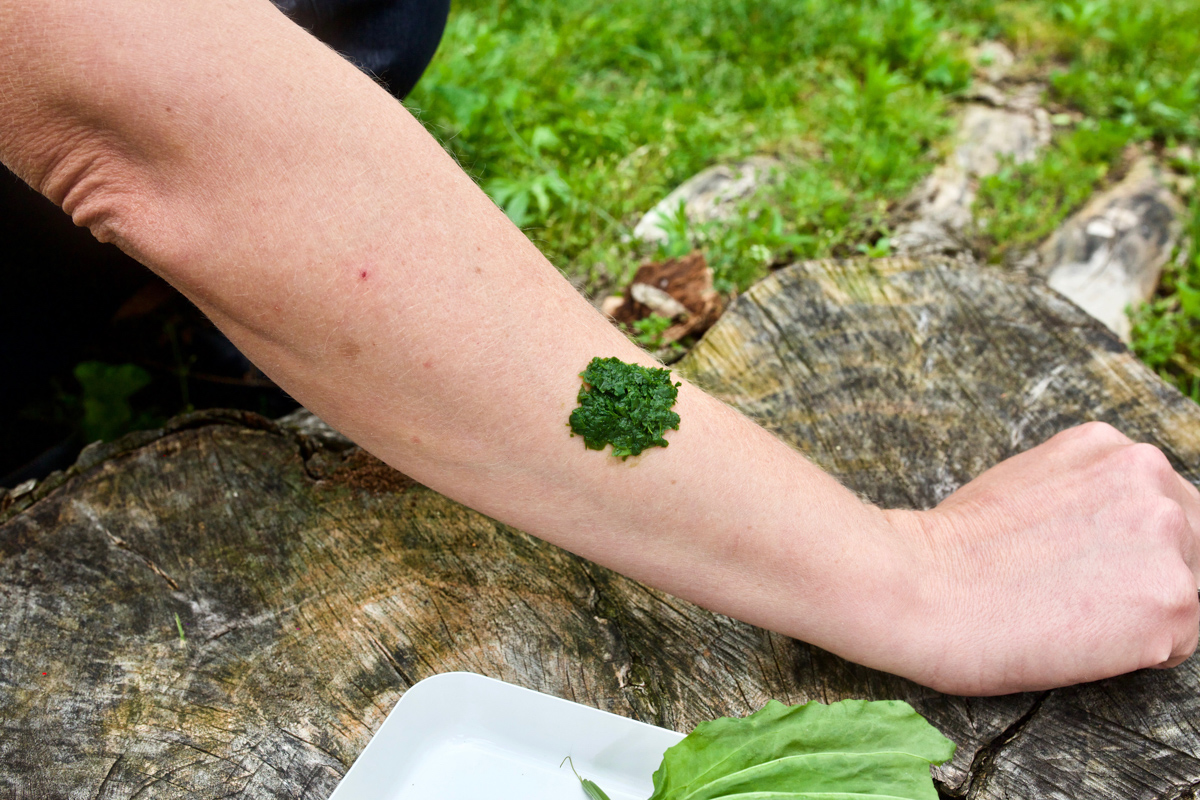
For centuries people have called it “nature’s bandage” because you can crush the fresh leaf and press it straight on the skin to calm stings, bites, and scrapes.
Today, many still dry it, turn it into green pastes and jars of infused oil to keep that soothing power on hand all year.
Let’s turn this sidewalk plant into a simple, safe herbal remedy for your home.
What It Does In Your Body & On Your Skin
Plantain is gentle, cooling, and slightly salty-bitter. Traditional herbalists reach for it when skin or tissues feel hot, itchy, irritated, or inflamed.
Inside and out, plantain is thought to:
- Soothe irritated skin – bug bites, nettle stings, minor scrapes and rashes
- Gently draw out splinters or stingers when used as a moist poultice
- Support wound edges as they knit together (not for deep or infected wounds)
- Calm the digestive tract when used as a mild tea (similar to how it soothes skin)
Nutritionally, plantain leaves contain:
- Mucilage – a slippery, gel-like fiber that coats and calms tissues
- Tannins – astringent compounds that gently tighten and dry weepy, irritated skin
- Vitamin K, vitamin A, and minerals – building blocks for tissue repair
The mix of moistening mucilage + astringent tannins is why plantain feels both cooling and “pulling” at the same time.
Simple Ways To Prepare Plantain (Fresh & Dried)
You can use plantain in three easy forms: fresh poultice, infused oil/salve, and tea.
1. Fresh “Bandage” Poultice (Fastest Relief)
Best for: bug bites, nettle stings, tiny splinters, hot itchy spots.
- Pick a few clean, healthy leaves away from roads or sprayed areas.
- Rinse quickly and pat dry.
- Crush, chew lightly, or mash the leaf between clean fingers until juicy.
- Press the juicy mash directly on the bite or scrape, then cover with a clean cloth or bandage.
You often feel cooling relief within minutes. Replace with a fresh leaf if it dries out.
2. Plantain Infused Oil (For Salves & Massage)
Best for: dry, irritated skin, chapped hands, mild rashes, after-sun care.
- Lightly wilt fresh leaves (spread out for a few hours) or use fully dried leaves.
- Chop them and loosely fill a clean, dry jar halfway.
- Cover completely with a mild oil (olive, sunflower, or sweet almond).
- Stir to release air bubbles, cap loosely, and place the jar in a warm, shaded spot.
- Let infuse 2–4 weeks, shaking every few days.
- Strain through a cloth into a clean bottle.
Use the oil as-is, or melt with beeswax to make a green plantain salve that you can carry in your bag for cuts, bites, and rough patches.
3. Mild Plantain Tea
Best for: a gentle internal “soother” when digestion feels hot, acidic, or irritated.
- Add 1–2 teaspoons of dried, crumbled leaf to a cup.
- Pour over hot (not boiling) water.
- Cover and steep 10–15 minutes, then strain.
Sip slowly, up to 1–3 cups a day for a short period. The taste is mild and slightly earthy; you can blend with mint, chamomile, or lemon balm.

When To Use Plantain – And What To Expect
You can think of plantain as a first-aid helper rather than a long-term cure.
Use it when:
- You get bitten or stung outdoors
- Kids come in with grass scrapes or nettle rashes
- Your hands are rough and chapped from work or cleaning
- You need a simple, cooling herb for “overheated” digestion
How fast does it work?
- Bug bites & stings: many people notice less sting and itch within 5–10 minutes of a fresh poultice.
- Chapped or irritated skin: improvement often shows within a few days of regular salve use.
- Digestive soothing: tea can bring gentle comfort within an hour, but deeper benefits come with a few days of consistent use.
Always remember: if a wound is deep, looks infected, or pain is severe, plantain is not enough. You need medical attention.
Why It Works
Traditional view
- In many folk systems, plantain is considered cooling, moistening, and drawing.
- It’s used for “heat” conditions: burns, angry rashes, bites, inflamed joints on the surface.
- The leaf’s strong midribs are thought to “pull” things outward – splinters, stingers, heat, toxins.
Modern lens
- Mucilage coats and calms irritated tissues, similar to how aloe feels on a sunburn.
- Tannins gently tighten and protect the top layer of skin, which can reduce weeping and redness.
- Mild anti-inflammatory and antimicrobial effects may help keep minor scrapes clean while they heal.
Put together, you get a plant that acts like a cool, green compress, supporting the skin’s natural ability to repair itself.
Safety, Identification & Who Should Avoid It
Even though plantain is considered very gentle, a few rules keep things safe:
- Correct ID is crucial.
- Broadleaf plantain grows in a low rosette with smooth, oval leaves and strong parallel veins.
- When in doubt, get help from a local foraging group or herbal teacher. Never eat or apply any plant you’re not 100% sure about.
- Allergy check:
- If you’re trying plantain for the first time, test a tiny amount of juice on a small patch of skin.
- Wait 24 hours. If there’s no redness or itching, you’re likely fine.
- Internal use:
- Plantain tea is usually mild, but if you’re pregnant, breastfeeding, on regular medication, or have chronic illness, talk to your healthcare provider before using frequently.
- Never replace medical care:
- Serious wounds, infections, allergic reactions, or persistent digestive pain need professional attention. Plantain can support comfort alongside, but not instead of, treatment.
Final Takeaway
Plantain is one of those “ordinary” plants with quietly extraordinary uses: a living bandage you can crush into a poultice, a green oil that soothes rough skin, and a simple tea that cools irritated tissues.
If you have it growing around you, consider harvesting a little respectfully and turning it into your own jar of backyard medicine.
Save this guide for the next time you or your kids come home with bites or scrapes, and share it with someone who loves simple, nature – based remedies.