If you’ve ever Googled “healthy diet but still bloated”, “why keto doesn’t work for me”, or “best diet for my body type”, this is for you.
Most people don’t fail because they lack discipline.
They fail because they’re following a diet that doesn’t match their biology.
👉 Compatibility beats discipline.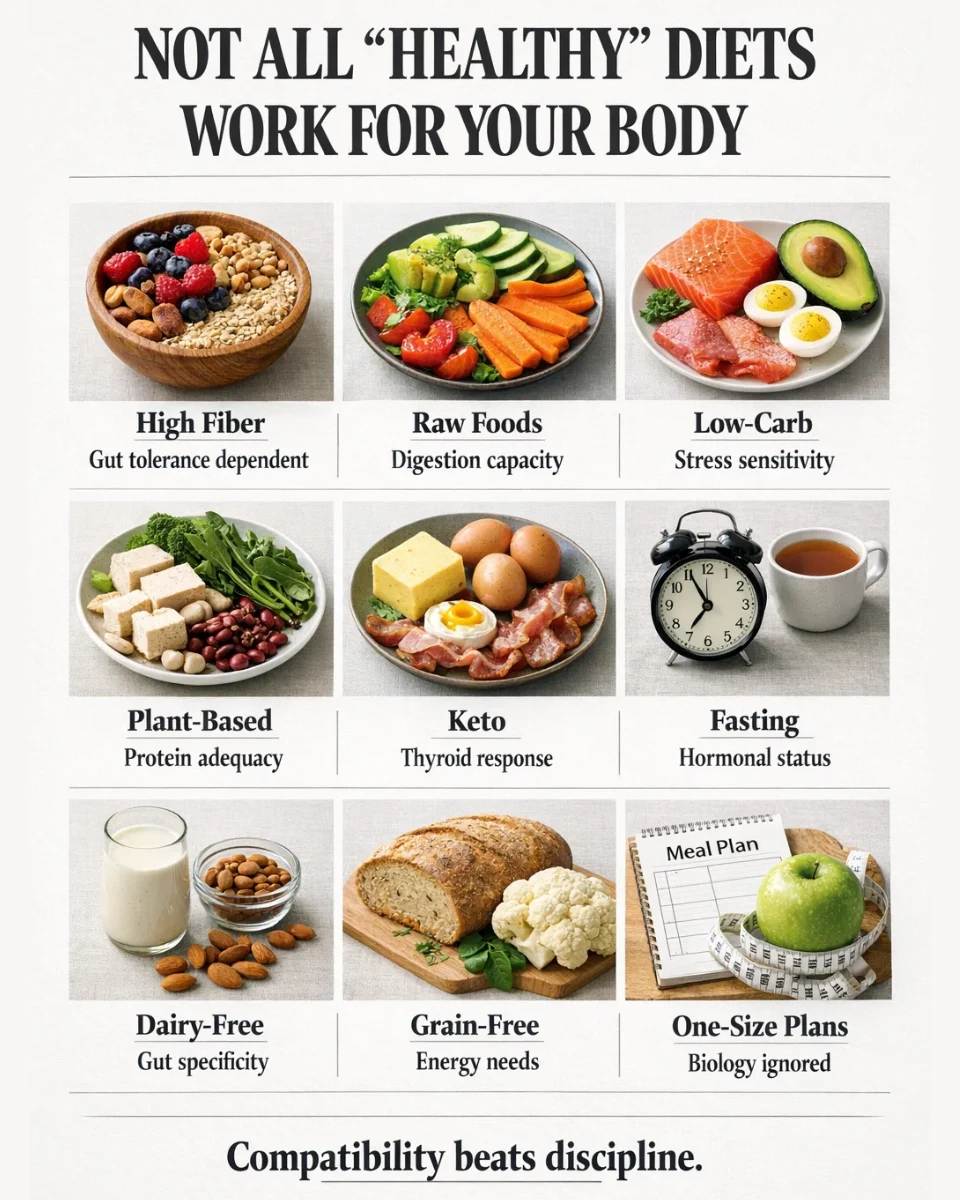
Why Popular “Healthy” Diets Backfire
High-Fiber Diets
High fiber supports gut health — but only if your gut can tolerate it.
For some people, too much fiber causes bloating, gas, and discomfort.
That’s why searches like “fiber makes me bloated” and “how much fiber is too much” keep trending.
Raw Food Diets
Raw foods require strong digestive enzymes.
If your digestion is weak, raw vegetables can feel heavy instead of energizing.
This explains “raw food digestion problems” and “why raw veggies upset my stomach”.
Low-Carb & Keto
Low-carb diets reduce blood sugar swings — but they also increase stress hormones in some people.
If you’re already stressed or under-eating, keto can worsen fatigue and sleep.
That’s why “keto anxiety” and “keto not working anymore” are common searches.
Plant-Based Diets
Plant-based eating can be powerful — if protein needs are met.
Without enough complete protein, people experience low energy and muscle loss.
Many end up searching “plant-based protein deficiency” or “best protein for vegans”.
Intermittent Fasting
Fasting helps insulin sensitivity — unless your hormones are already strained.
For some, fasting increases cortisol, cravings, and burnout.
Hence the rise of “intermittent fasting fatigue” and “fasting messed up my hormones”.
Dairy-Free or Grain-Free
Removing foods isn’t automatically healthy.
Some bodies thrive without dairy or grains; others lose easy energy sources.
That’s why “should I cut out dairy” and “grain-free diet pros and cons” keep appearing in related searches.
The Real Problem With One-Size-Fits-All Diets
Most diet plans ignore:
-
Gut tolerance
-
Hormonal status
-
Stress levels
-
Energy needs
So people think they are the problem — when the plan simply isn’t compatible.
How to Choose a Diet That Actually Works
Instead of asking “What’s the healthiest diet?”, ask:
-
How is my digestion?
-
Do I feel calm or stressed on this plan?
-
Do I feel steady energy or constant cravings?
That’s the difference between forcing discipline — and eating in sync with your body.
Final Takeaway
There is no universally “best” healthy diet.
There is only the right diet for your body.
Once you stop copying trends and start listening to biological feedback, everything clicks.