Why chia seeds fail for many people has less to do with the seeds themselves and more to do with how they are used.
Chia seeds absorb water, expand in the gut, and form gel-like fiber. When used incorrectly, this process can lead to bloating, delayed satiety, or digestive discomfort instead of the benefits people expect.
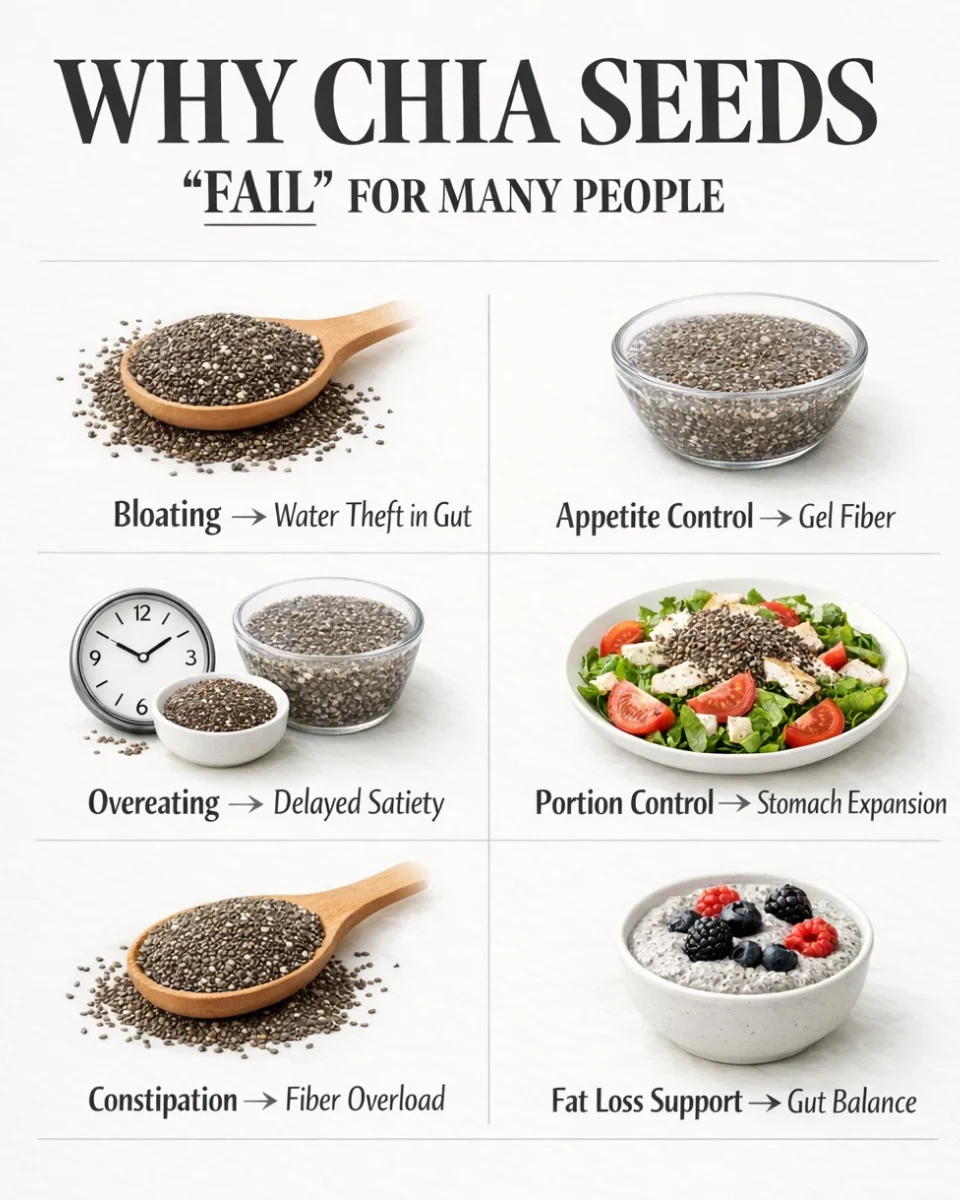
1. Bloating Happens Because Chia Seeds Pull Water Inside the Gut
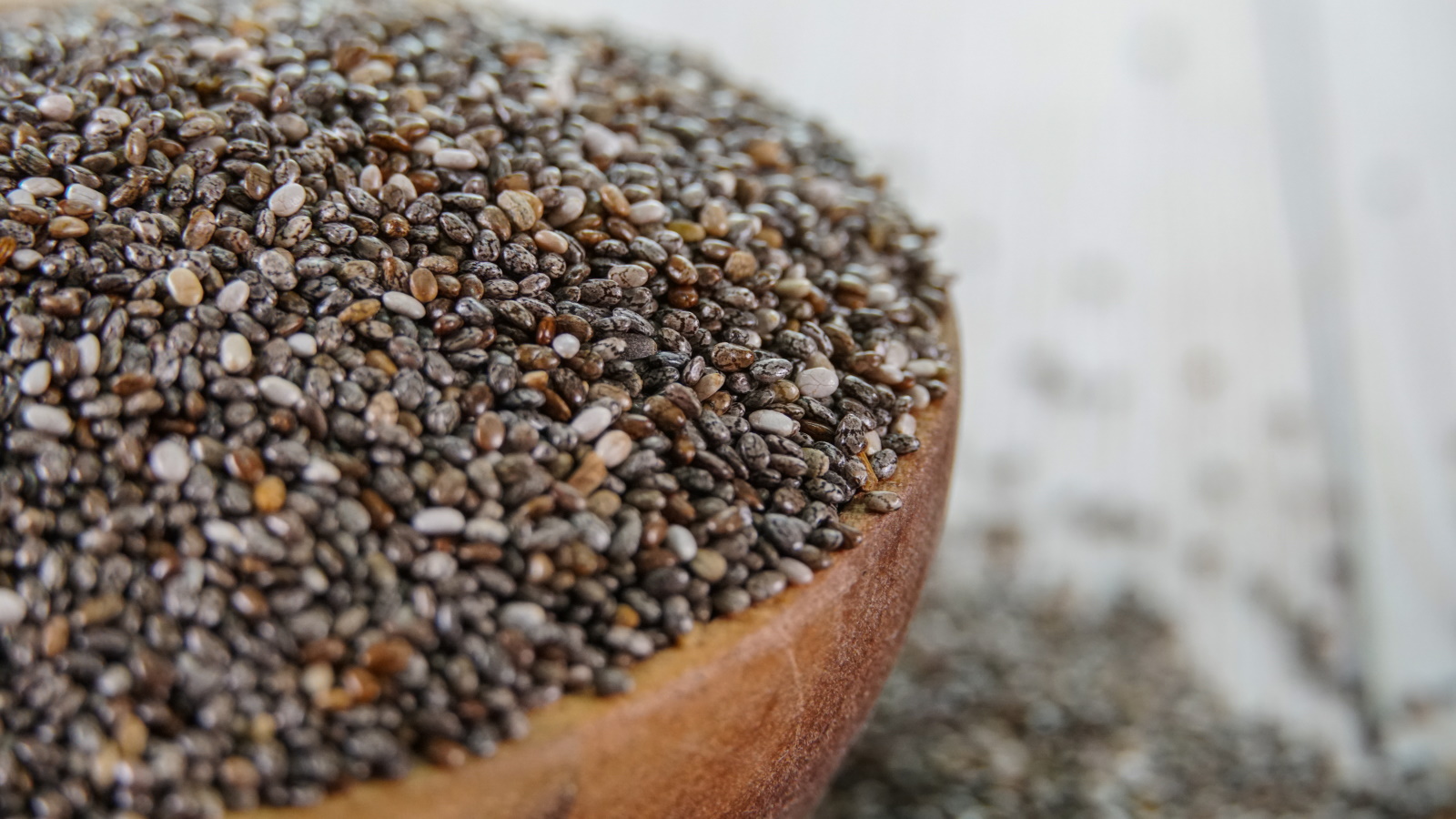
Chia seeds can absorb up to 10 to 12 times their weight in water. This is what creates their gel-like texture.
When chia seeds are eaten without enough soaking time, or when overall fluid intake is low, they may pull water from the intestinal tract instead of from the meal itself.
This can slow digestion and lead to bloating, heaviness, and discomfort.
From a physiological perspective, soluble fiber needs external water to function properly. Without it, the digestive system becomes stressed rather than supported.
2. Appetite Control Is Delayed, Not Immediate
Chia seeds are often recommended for appetite control. However, the satiety effect does not happen right away.
Chia gel takes time to form in the stomach. It does not provide chewing signals, and it does not strongly activate early satiety hormones such as CCK or GLP-1.
As a result, many people eat more food before feeling full, especially when chia is added to smoothies or liquids.
Compared to warm, chewable foods like cooked oats, eggs, or vegetables, chia seeds create a weaker early fullness signal.
3. Delayed Fullness Can Lead to Overeating
Because fullness comes later, chia seeds can unintentionally contribute to overeating.
People often feel unsatisfied right after eating, continue snacking, and only feel heavy or overly full afterward.
This effect is more common when chia seeds are consumed in cold foods or blended drinks, where digestion and sensory feedback are reduced.
Food structure matters more than isolated ingredients.
4. Gel Expansion Can Cause Stomach Discomfort
When chia gel expands in the stomach, it increases volume and pressure.
For individuals with sensitive digestion, mild IBS symptoms, or frequent bloating, this expansion may feel uncomfortable rather than soothing.
Not all bodies respond well to volume-expanding foods, even when those foods are technically healthy.
5. Constipation Can Occur from Fiber Overload
Chia seeds are very high in soluble fiber but contain little insoluble fiber.
When consumed in large amounts, without enough water or dietary fat, they can slow bowel movements instead of improving them.
This is a common example of fiber overload. More fiber is not always better.
Digestive health depends on balance, hydration, and variety.
6. When Chia Seeds Actually Support Fat Loss and Digestion
Chia seeds do not directly burn fat.
Their benefit comes from slowing carbohydrate absorption, stabilizing blood sugar, and supporting gut balance when used correctly.
When chia seeds are soaked properly and eaten with warm foods, protein, and healthy fats, they can help reduce cravings and support steadier energy levels.
Context determines outcome.
How to Use Chia Seeds Without Digestive Issues
Recommended
-
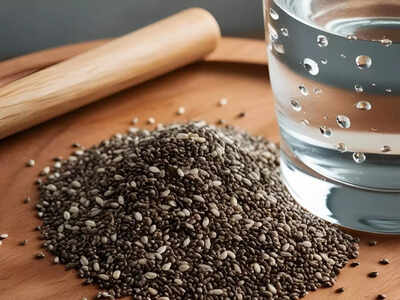
Soak chia seeds for at least 20 to 30 minutes, or overnight
-
Use 1 to 2 tablespoons per day
-
Combine with warm or neutral foods like oats, yogurt, eggs, or nut butter
-
Drink adequate fluids throughout the day
Avoid
-
Eating chia seeds dry
-
Adding large amounts to cold smoothies
-
Using them on a completely empty stomach
-
Treating chia seeds as a quick weight-loss solution
Final Thoughts
Chia seeds are not harmful. They are also not universally beneficial.
If you feel bloated, constipated, or unsatisfied after eating chia seeds, the issue is likely timing, preparation, or quantity.
Understanding how your digestive system responds is more important than following nutrition trends.
Scientific References
-
National Institutes of Health: Dietary Fiber and Digestive Health
-
Harvard T.H. Chan School of Public Health: Soluble Fiber and Satiety
-
Journal of Nutrition: Effects of Chia Seed Consumption on Digestion and Satiety