If you’ve ever searched “why oats make me bloated”, “best way to eat oats for weight loss”, or “oats digestion problems”, you’re not alone.
Many people eat oats expecting steady energy and fullness —
but end up with bloating, hunger, or even fat gain.
The surprising truth is this:
👉 It’s not the oats. It’s how and when you eat them.
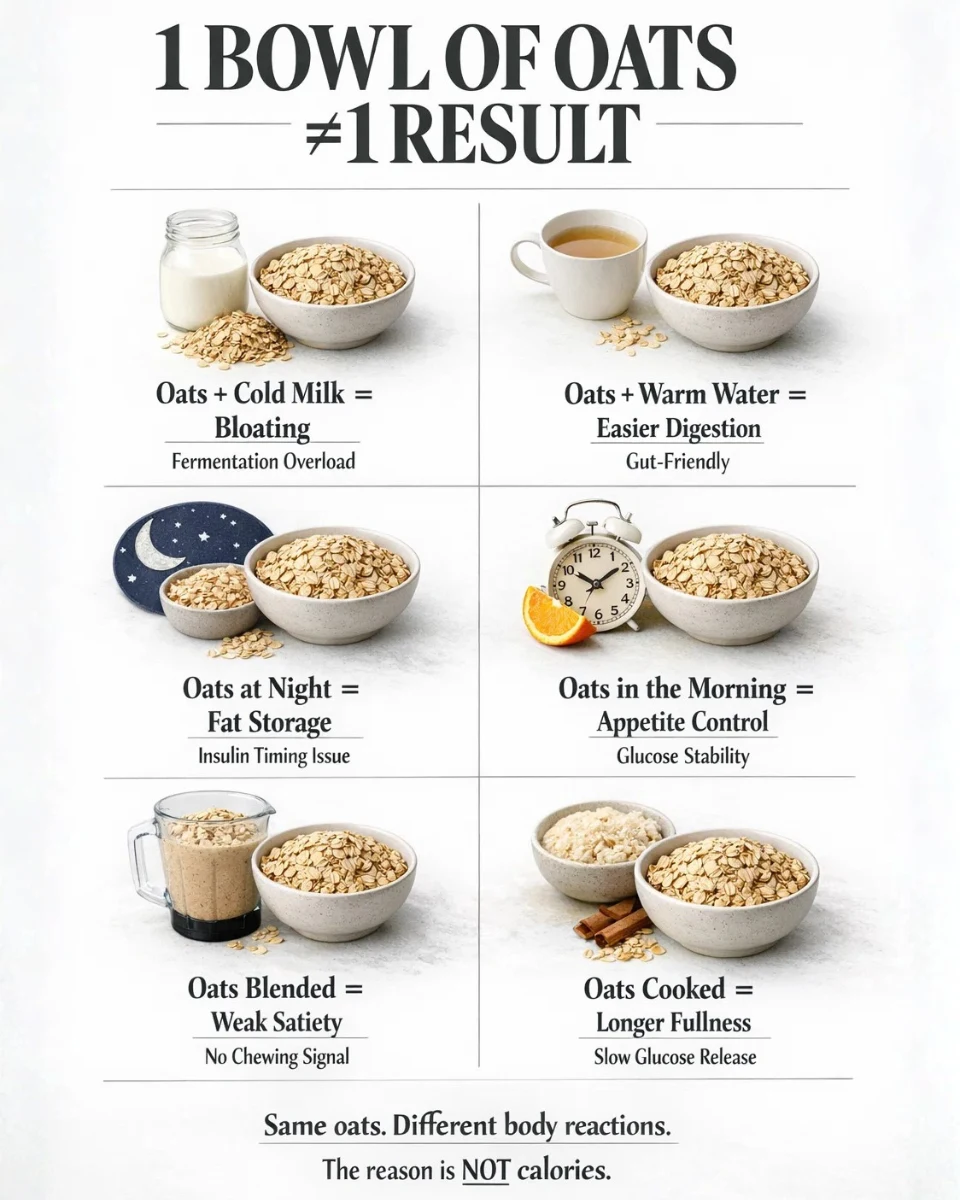
Same Oats, Different Body Reactions
Oats + Cold Milk = Bloating
Cold milk slows digestion and increases fermentation in the gut.
When combined with raw or lightly soaked oats, this often leads to gas and heaviness — especially in people with sensitive digestion.
That’s why searches like “oats bloating cause” and “oats and milk digestion” are so common.
Oats + Warm Water = Easier Digestion
Warm water helps soften oat fibers and supports stomach enzymes.
This combination is gentler on the gut and often recommended for people searching “easy to digest oats” or “oats for sensitive stomach”.
Oats at Night = Fat Storage
At night, insulin sensitivity drops.
Eating a carb-heavy bowl of oats late can push excess glucose toward fat storage instead of energy use.
This explains why “should I eat oats at night” is a trending question — and why many people feel oats “don’t work” for weight loss.
Oats in the Morning = Appetite Control
In the morning, your body handles carbs more efficiently.
Oats eaten earlier help stabilize blood sugar and reduce cravings later in the day — a key reason oats are often recommended in weight loss breakfast searches.
Blended Oats = Weak Satiety
When oats are blended into smoothies, chewing is removed.
Your brain receives a weaker “I’m full” signal, leading to faster hunger.
This is why “oat smoothie hunger” and “blended oats vs cooked oats” keep showing up in related searches.
Cooked Oats = Longer Fullness
Cooking oats slows glucose release and improves satiety hormones.
That’s why cooked oats keep you full longer than overnight or blended versions.
So… What’s the Best Way to Eat Oats?
There is no single “best” way — only the right way for your goal.
-
For digestion: Cooked oats + warm liquid
-
For weight control: Morning oats, not late at night
-
For fullness: Chew, don’t blend
-
For less bloating: Avoid cold milk
The Real Takeaway
One bowl of oats doesn’t guarantee one result.
Your timing, temperature, and texture matter more than calories.
Once you understand this, oats stop being “confusing” —
and start working with your body instead of against it.
Sources
-
Harvard Health – Glycemic response & digestion
-
Cleveland Clinic – Carbohydrates and insulin timing
-
NIH – Fiber digestion and satiety signaling