Juicing can feel like a “quick fix,” especially when you’re tired, congested, bloated, or dealing with low appetite. The truth is more balanced: juice won’t cure illness overnight, but the right ingredients can support hydration, micronutrient intake, and digestion which may help you feel better while your body does its job.
Most people never realize this works best when they keep it simple: 3–5 ingredients, drink it fresh, and use juice as a support tool not a replacement for meals or medical care.
How to Make Any Juice Cure in This List
Use this basic method for every recipe:
Option A: Juicer
- Wash produce well.
- Peel citrus (lemon/orange) and thick skins if needed.
- Juice everything and stir.
- Drink fresh (best within 15–30 minutes).
Option B: Blender (no juicer needed)
- Add ingredients + ½–1 cup cold water.
- Blend until smooth.
- Strain if you prefer a thinner juice.
Best time to drink: morning or between meals.
Portion: start with 8–12 oz (250–350 ml).
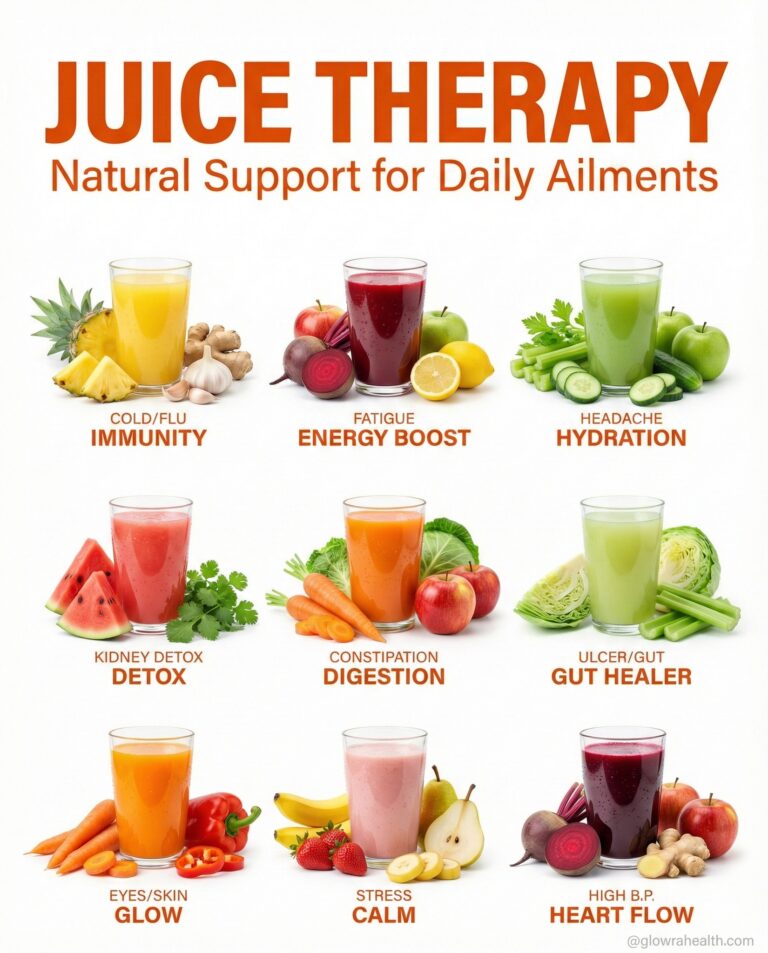
Juice Cure Recipes
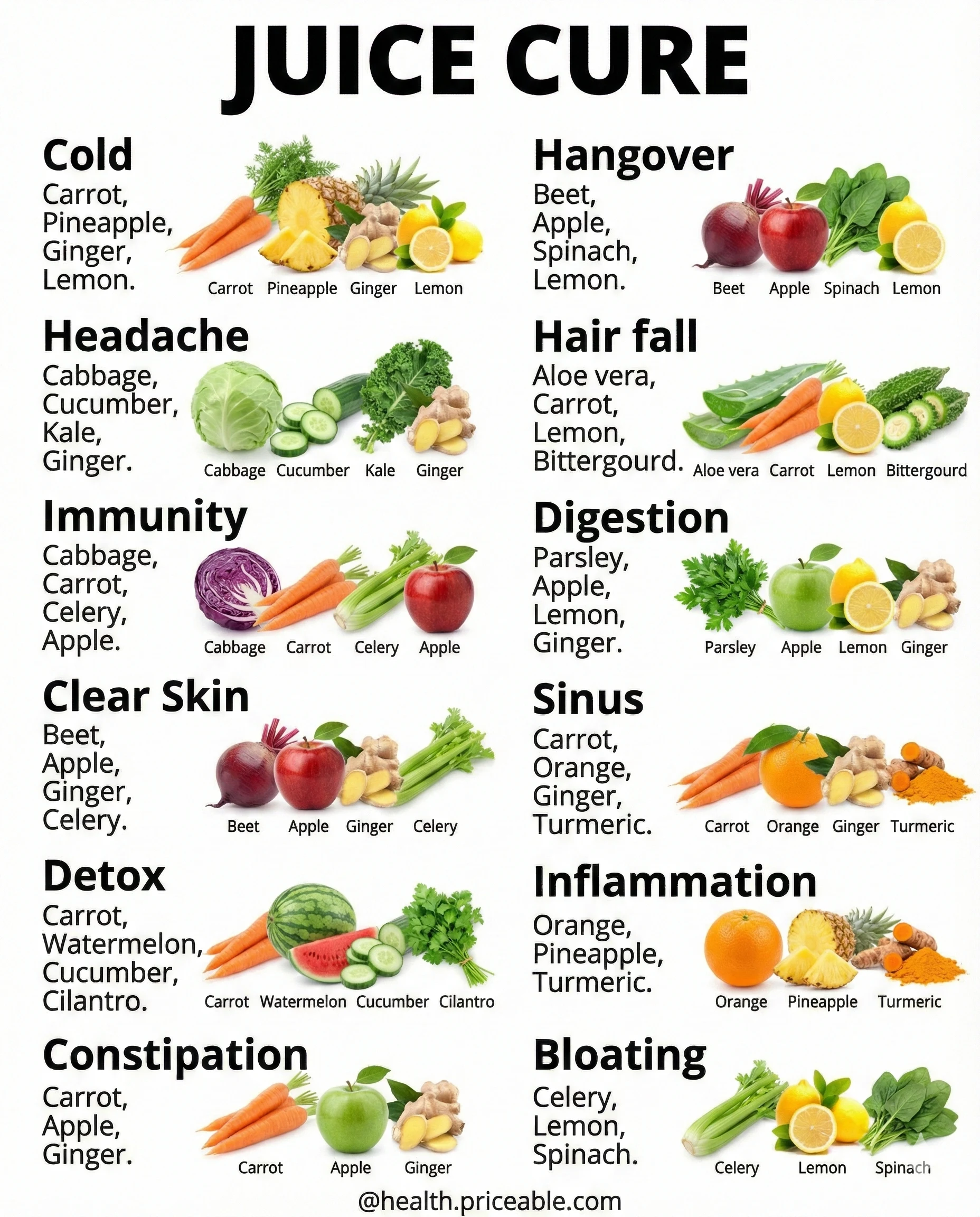
1. Cold
Ingredients: Carrot, Pineapple, Ginger, Lemon.
Why it may help: This combo is hydrating and bright. Carrot supports vitamin A intake, pineapple adds fluids and natural sweetness, ginger is commonly used for nausea and throat comfort, and lemon adds vitamin C and flavor.
How to use: Sip slowly if your stomach is sensitive.
2. Hangover
Ingredients: Beet, Apple, Spinach, Lemon.
Why it may help: A hangover often involves dehydration, low appetite, and electrolyte imbalance. This juice supports fluids plus micronutrients. Beet and spinach add plant nitrates and minerals, apple adds quick energy, and lemon improves taste so you actually drink it.
How to use: Pair with water and a salty meal if tolerated.
3. Headache
Ingredients: Cabbage, Cucumber, Kale, Ginger.
Why it may help: Many headaches get worse with dehydration and low food intake. Cucumber is water-rich, cabbage and kale add micronutrients, and ginger is traditionally used for nausea-type headaches.
Note: If headaches are severe, frequent, or sudden, do not rely on juice alone.
4. Hair fall
Ingredients: Aloe vera, Carrot, Lemon, Bittergourd.
Why it may help: Hair shedding can be linked to stress, illness recovery, low protein intake, iron status, and overall nutrition. This juice provides hydration and micronutrients, but it will not “stop hair fall” instantly. Think of it as supportive, not curative.
Important safety note: Bittergourd can affect blood sugar in some people. If you take diabetes medication, use caution.
5. Immunity
Ingredients: Cabbage, Carrot, Celery, Apple.
Why it may help: “Immune support” from juice mainly means improving hydration and giving your body vitamins and plant compounds. Carrot supports vitamin A intake, cabbage adds vitamin C and antioxidants, celery supports fluids, and apple makes it easier to drink.
Tip: Use this as part of a balanced day that includes protein and rest.
6. Digestion
Ingredients: Parsley, Apple, Lemon, Ginger.
Why it may help: Ginger is widely used for nausea and digestive comfort. Lemon adds acidity and flavor, apple adds pectin-like fiber (more if blended), and parsley adds phytonutrients.
How to use: Drink slowly after meals if you feel heavy or sluggish.
7. Clear Skin
Ingredients: Beet, Apple, Ginger, Celery.
Why it may help: Skin clarity is influenced by sleep, stress, hydration, and overall diet. This juice can support hydration and antioxidant intake. Ginger is often used for digestion, which can indirectly support skin in some people.
Reality check: Juice won’t erase acne overnight, but consistent habits can help your skin look more even over time.
8. Detox
Ingredients: Carrot, Watermelon, Cucumber, Cilantro.
Why it may help: Your liver and kidneys already “detox.” What this juice can genuinely do is support hydration, which helps normal elimination. Watermelon and cucumber are water-rich, carrot adds carotenoids, and cilantro adds flavor and plant compounds.
How to use: Great on hot days or when you feel puffy.
9. Constipation
Ingredients: Carrot, Apple, Ginger.
Why it may help: Constipation improves best with fluids + fiber. Juice is mostly fluid, so if constipation is your goal, the blender method (keeping pulp) can be more helpful than straining.
How to use: Drink 1 glass daily for a few days, plus water and fiber-rich meals.
10. Sinus
Ingredients: Carrot, Orange, Ginger, Turmeric.
Why it may help: Warm, spicy ingredients like ginger and turmeric can feel comforting when you’re congested. Orange adds vitamin C and flavor, carrot supports vitamin A intake (important for mucous membrane health).
Tip: Try it slightly warm (not hot) if you’re chilled.
11. Inflammation
Ingredients: Orange, Pineapple, Turmeric.
Why it may help: Turmeric contains curcuminoids studied for inflammation balance, while pineapple and orange add vitamin C and antioxidants. This does not replace medical care for chronic inflammation, but it can support a nutrient-dense pattern.
Absorption tip: Pair turmeric foods with a meal that contains healthy fat for better uptake.
12. Bloating
Ingredients: Celery, Lemon, Spinach.
Why it may help: Bloating is often related to digestion speed, salt balance, and food intolerance. This juice is light and hydrating. Celery and spinach add minerals, lemon improves taste and may help you drink more fluids.
If bloating is frequent: consider tracking trigger foods and eating slower.
When You’ll Feel Results (Realistic Timeline)
- Within a few hours: hydration support, lighter stomach, easier micronutrient intake
- 2–3 days: less “heavy” feeling if your digestion and water intake improve
- 2–4 weeks: more consistent energy/skin appearance if your overall diet and sleep improve too
Juice works best as a support tool, not a standalone solution.
Safety Notes
- If you are pregnant, on blood thinners, have kidney disease, or take diabetes medication, check with a clinician before using large amounts of ginger, turmeric, bittergourd, or high-potassium greens daily.
- If symptoms are severe (high fever, chest pain, dehydration, sudden headache), seek medical care.
- Juices can be high in natural sugar. If you have insulin resistance, use smaller portions and choose more greens.
Final Takeaway
This “juice cure” list is most useful when you treat it like a hydration + nutrient boost. Pick the symptom that matches your day, keep ingredients simple, and drink it fresh. Small, consistent habits beat extreme cleanses every time.
Read more “Juice Therapy You’ll Wish You Tried Sooner: Natural Support for Daily Ailments”