Autumn has a way of making the body feel a little “off.” The air gets drier, digestion can slow down, and stress tends to show up as restlessness, cravings, or poor sleep.
That’s why Ayurvedic traditions often lean on warm, aromatic drinks in fall. They are simple, comforting, and easy to repeat. Most people never realize how much these tiny rituals help because they expect one drink to “fix everything” overnight.
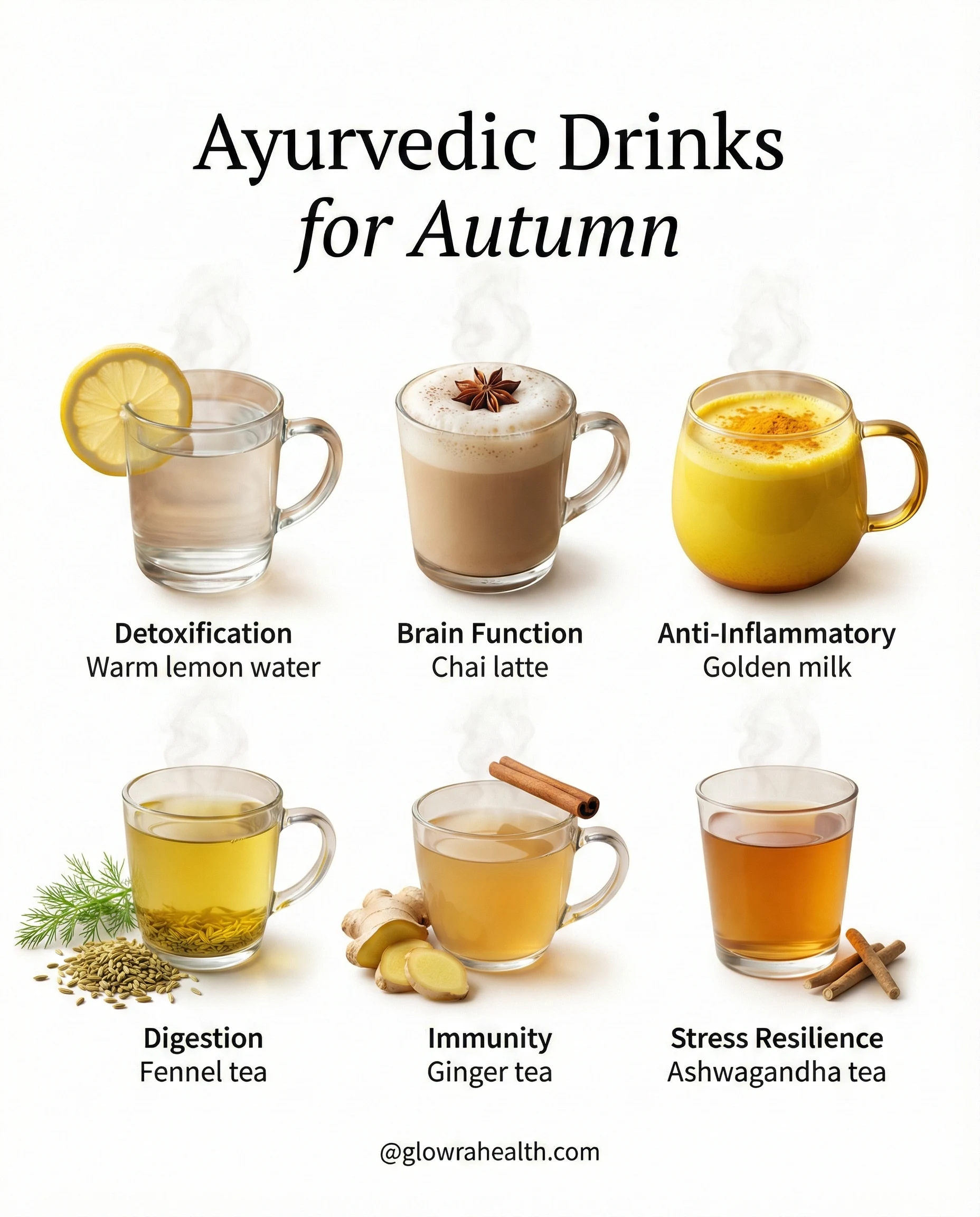
Warm Lemon Water (Detoxification)
Ayurveda often starts the day with warmth and hydration. “Detox” here is best understood as supporting the body’s natural elimination (your liver, kidneys, digestion), not a quick cleanse.
Ingredients
- 1 cup (240 ml) warm water (not boiling)
- 1–2 teaspoons fresh lemon juice
- Optional: 1 teaspoon honey (add only when water is warm, not hot)
How to prepare
- Warm the water.
- Stir in lemon juice.
- Sip slowly.
Best time to drink
- Morning, right after waking
Why it may help
Warm fluids can gently wake up digestion and hydration, which many people notice as less sluggishness and fewer cravings.
Chai Latte (Brain Function)
In Ayurveda, spices are used to “wake up” the senses. A chai-style latte can feel grounding while still boosting alertness.
Ingredients
- 1 cup (240 ml) milk or plant milk
- ½ cup (120 ml) water
- 1 black tea bag (or decaf if sensitive)
- ¼ teaspoon cinnamon
- 1–2 crushed cardamom pods (or ¼ teaspoon ground)
- 1 thin slice fresh ginger (optional)
- Optional: pinch of cloves or star anise
- Sweetener to taste (1 teaspoon honey or maple)
How to prepare
- Simmer water with spices for 3–5 minutes.
- Add tea bag for 2–3 minutes.
- Add milk and heat gently (do not boil).
- Strain and sweeten if desired.
Best time to drink
- Mid-morning or early afternoon
Why it may help
Warm spices can feel mentally “clearing,” and the ritual itself supports focus—especially when paired with a protein breakfast.
Golden Milk (Anti-Inflammatory)
Golden milk is one of the most popular Ayurvedic-inspired drinks for autumn because it feels soothing, especially in the evening.
Ingredients
- 1 cup (240 ml) milk or plant milk
- ½ teaspoon turmeric powder (or 1 teaspoon grated fresh turmeric)
- ¼ teaspoon cinnamon
- Pinch of black pepper
- 1 teaspoon honey or maple (optional)
- Optional: ½ teaspoon grated ginger
How to prepare
- Warm milk on low heat.
- Whisk in turmeric, cinnamon, and black pepper.
- Simmer 2–3 minutes, then turn off heat.
- Sweeten after cooling slightly.
Best time to drink
- Evening, 30–60 minutes before bed
Why it may help
Turmeric and ginger are commonly used for inflammatory balance, while the warm drink routine supports relaxation.
Fennel Tea (Digestion)
Fennel is a classic digestive herb. Many people reach for it after meals when they feel bloated or heavy.
Ingredients
- 1 teaspoon fennel seeds
- 1 cup (240 ml) hot water
How to prepare
- Lightly crush fennel seeds (optional, but helpful).
- Steep in hot water for 7–10 minutes.
- Strain and sip warm.
Best time to drink
- After meals, especially lunch or dinner
Why it may help
Fennel tea is often used to support gas relief and a calmer stomach—especially during seasonal shifts.
Ginger Tea (Immunity)
Ginger tea is warming, simple, and widely used during cold seasons. While it doesn’t “boost immunity overnight,” it can support comfort, circulation, and throat soothing.
Ingredients
- 1–2 inches fresh ginger, sliced (or ½ teaspoon ground ginger)
- 2 cups (480 ml) water
- Optional: 1 teaspoon honey + a squeeze of lemon
How to prepare
- Simmer ginger in water for 10 minutes.
- Strain.
- Add honey/lemon after cooling slightly.
Best time to drink
- Morning or afternoon
- During chilly weather or when you feel run down
Why it may help
Warm ginger can support nasal/throat comfort and digestion—two things that often feel off in autumn.
Ashwagandha Tea (Stress Resilience)
Ashwagandha is an Ayurvedic herb often used for stress support. It’s best treated like a steady routine, not an instant calming trick.
Ingredients
- ½ teaspoon ashwagandha powder or 1 ashwagandha tea bag
- 1 cup (240 ml) hot water or warm milk
- Optional: ¼ teaspoon cinnamon + 1 teaspoon honey
How to prepare
- Steep tea bag 5–7 minutes or whisk powder into warm liquid.
- Sweeten if desired.
Best time to drink
- Evening, or late afternoon if stress peaks then
Why it may help
Many people use it as part of a nightly wind-down routine to support resilience and more stable energy over time.
When You’ll Notice Benefits
- Same day: warmth, hydration, digestion comfort (lemon water, fennel, ginger)
- 1–2 weeks: steadier cravings, calmer evenings with consistent routines
- 3–8 weeks: stress resilience benefits are more realistic with ashwagandha and regular sleep habits
Quick Safety Notes
- If you have acid reflux, lemon and ginger may irritate symptoms—use smaller amounts or take with food.
- If pregnant, breastfeeding, or managing thyroid/autoimmune conditions, ask a clinician before using ashwagandha regularly.
- If you take blood thinners, turmeric/ginger in large supplemental doses may not be appropriate. Culinary amounts are usually gentler.
- These drinks support wellness habits but are not a substitute for medical care.
Final Takeaway
Autumn wellness is often about small daily rituals. If you want a simple starting point:
- Morning: warm lemon water
- After meals: fennel tea
- Evening: golden milk or ashwagandha tea
- Anytime: ginger tea when you want warmth and comfort

Read more “Romatic Wellness Drinks Recipes for Cozy Night And Special Moments”