Mental health is complicated, and food is never a “cure.”
But what you eat can absolutely influence the building blocks your brain uses for cell membranes, neurotransmitters, energy production, and inflammation balance.
Most people never realize this works because they look for one “superfood,” when the real magic is a pattern: healthy fats + key minerals + B vitamins + antioxidant rich plants.
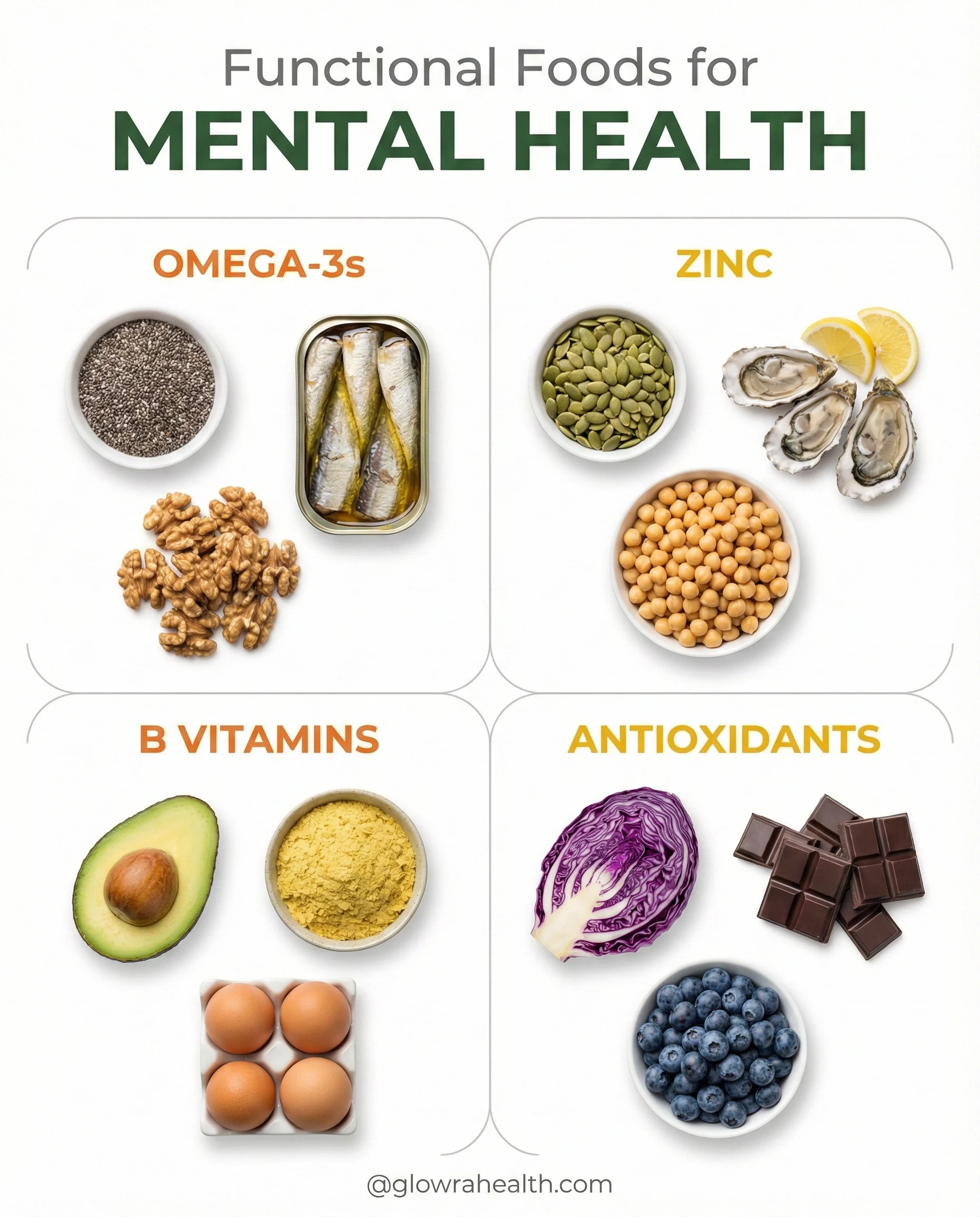
Omega-3s
Omega-3 fats are structural components of brain cell membranes and are involved in many body functions. The NIH notes the key omega-3s are ALA (plant-based), EPA, and DHA (mostly from seafood).
Research reviews and meta-analyses suggest omega-3s (especially EPA-rich formulas) may offer modest support for depressive symptoms, particularly as an add-on to standard care.
1. Chia seeds
Chia seeds are one of the richest plant sources of omega-3 (ALA) and are also high in fiber. Harvard’s Nutrition Source notes that 2 tablespoons (about 1 oz / 28 g) provide fiber, protein, unsaturated fats, and minerals.
How to use: Stir into yogurt, oatmeal, smoothies, or make chia pudding.
2. Sardines
Sardines provide omega-3s (EPA/DHA) in a convenient form. NIH fact sheets list fatty fish as a main dietary source of EPA/DHA.
How to use: Mash sardines with lemon and olive oil on toast, or add to salads.
3. Walnuts
Walnuts are a standout plant source of omega-3 (ALA). Research summaries often cite walnuts as a major ALA source.
How to use: Add to oatmeal, snack with fruit, or sprinkle onto salads.
Zinc
Zinc supports hundreds of enzyme reactions and is involved in immune and nervous system function. The NIH notes that oysters contain more zinc per serving than any other food.
Zinc status has also been studied in relation to mood, and reviews/meta-analyses suggest zinc may be relevant as an adjunct strategy for depressive symptoms in some cases.
1. Pumpkin seeds
Pumpkin seeds provide zinc, magnesium, and healthy fats—helpful for steady energy and stress support.
How to use: Sprinkle on yogurt, salads, or blend into pesto-like sauces.
2. Oysters
Oysters are the most concentrated dietary zinc source, according to NIH ODS.
How to use: Enjoy occasionally (raw or cooked), and pair with vitamin C foods (like citrus) to support iron absorption from meals.
3. Chickpeas
Chickpeas provide zinc plus fiber and plant protein, which supports stable blood sugar (helpful for mood steadiness). NIH lists beans as a zinc source, though zinc from plant foods can be less bioavailable than from animal foods.
How to use: Hummus, roasted chickpeas, or chickpea salads.
B Vitamins
B vitamins help convert food into usable energy and support neurotransmitter pathways.
Research has linked low folate and B12 status with higher depression risk in some populations, and supplementation has been studied in clinical trials.
1. Avocado
Avocado contributes B vitamins (especially folate), fiber, and monounsaturated fats great for a calmer, steadier energy curve.
How to use: Add to toast, bowls, or blend into smoothies for creaminess.
2. Nutritional yeast
Nutritional yeast is commonly used as a “cheesy” topper and is often fortified with B vitamins (check the label). It’s a popular way for plant-based eaters to support intake of certain B vitamins.
How to use: Sprinkle on popcorn, pasta, eggs, or roasted vegetables.
3. Eggs
Eggs provide several B vitamins plus choline, a nutrient involved in brain signaling. They’re also an easy protein anchor, which helps stabilize appetite and mood.
How to use: Boiled eggs for snacks, omelets, or egg-and-avocado toast.
Antioxidants
Oxidative stress and inflammation are active areas of research in brain health.
Antioxidant-rich foods are consistently associated with better overall health patterns, and specific foods like blueberries have been studied for cognition and mood outcomes.
1. Red cabbage
Red cabbage contains colorful plant compounds (anthocyanins) plus fiber.
How to use: Shred into slaw, sauté as a side, or add to salads.
2. Dark chocolate
Dark chocolate contains polyphenols and can be a pleasant “mood ritual” food when portioned mindfully.
How to use: A small square after meals, or shaved onto yogurt with berries.
3. Blueberries
Blueberries are rich in polyphenols and have been studied in randomized trials for cognitive and mood-related outcomes.
How to use: Add to oatmeal, smoothies, yogurt, or snack with nuts.
How to Build a “Mental Health Plate” Using These Foods
Try this simple formula 1–2 times per day:
- Protein: eggs, sardines, or chickpeas
- Healthy fat: avocado or walnuts
- Color: blueberries or red cabbage
- Mineral boost: pumpkin seeds
- Optional add-on: nutritional yeast as a topper
This keeps meals steady—less crash, less grazing, more stable energy.
When You’ll Notice Changes
Food is subtle, not instant:
- 3–7 days: steadier energy and fewer cravings (often from better meal balance)
- 2–4 weeks: improved digestion/satiety and more consistent mood stability
- 8–12 weeks: deeper changes show when diet, sleep, movement, and stress care align
Quick Safety Notes
- If you take blood thinners or have medical conditions, ask your clinician before high-dose omega-3 supplements (food sources are usually fine).
- If you’re pregnant or trying to conceive, follow seafood guidance and vary fish choices.
- If you struggle with disordered eating, keep this gentle: add foods, do not restrict.
Final Takeaway
These foods won’t replace therapy, medication, sleep, or support systems.
But they can help your brain feel more supported—because you’re feeding it the fats, minerals, B vitamins, and antioxidants it relies on.
Related Source Science
- NIH ODS: Omega-3 basics (ALA, EPA, DHA) and food sources. (National Institutes of Health)
- NIH ODS: Zinc food sources and oysters as the top zinc source. (National Institutes of Health)
- Meta-analyses: EPA-enriched omega-3 and depressive symptoms; zinc and depression; blueberries and mood/cognition outcomes. (ScienceDirect)