Muscle growth is not only about lifting heavier. It is also about giving your body the raw materials to train well, recover fast, and come back stronger.
Most people never realize this works because they focus only on protein. But when you add the right fruits and vegetables, your workouts often feel better and your recovery becomes more consistent.
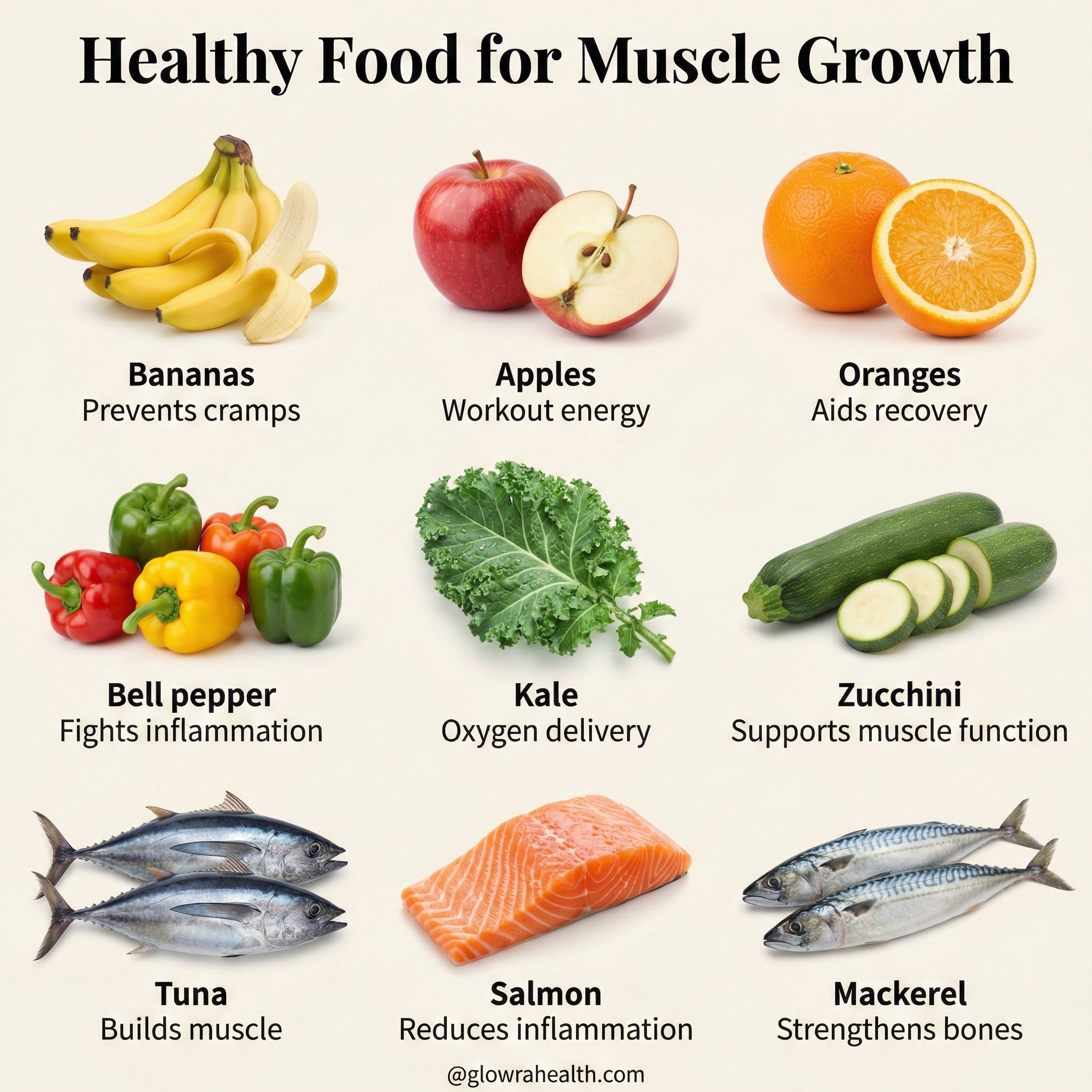
List 9 Healthy Foods for Muscle Growth
1) Bananas (helps prevent cramps)
Bananas are best known for potassium, an electrolyte involved in muscle contraction and fluid balance. They are a convenient pre-workout carb source, and many people like them when training volume is high.
That said, the evidence on bananas specifically “stopping cramps” is mixed, because cramps can also be caused by fatigue, hydration, and neuromuscular factors not just electrolytes.
Easy ways to use
- 30–90 minutes pre-workout
- Post-workout with yogurt or a protein shake
2) Apples (workout energy)
Apples provide carbohydrates + fiber, which can help steady energy and curb cravings between meals. They are not a “high-protein” food, but they support muscle growth indirectly by helping you hit your daily calories without feeling heavy.
USDA-based nutrition data shows apples (with skin) provide carbs, a bit of potassium, and very low fat/protein.
Easy ways to use
- Pre-workout snack with peanut butter
- Post-workout with cottage cheese or Greek yogurt
3) Oranges (aids recovery)
Oranges are rich in vitamin C, a key nutrient for collagen formation (important for tendons/ligaments) and antioxidant protection during recovery. Health.com notes that a whole orange can provide a large portion of the Daily Value for vitamin C.
Easy ways to use
- Add to a post-workout meal for vitamin C
- Pair with iron-rich foods (like kale, lentils, or fish) to support iron absorption
4) Bell pepper (fights inflammation)
Bell peppers especially red are one of the highest common food sources of vitamin C, which supports antioxidant defenses and tissue repair. Nutritional Outlook cites USDA data showing red bell pepper contains about 127 mg vitamin C per 100 g.
This does not mean peppers “erase inflammation,” but they can support an overall anti-inflammatory eating pattern through micronutrients and antioxidants.
Easy ways to use
- Slice raw into meals for crunch
- Roast and add to bowls, wraps, and eggs
5) Kale (supports oxygen delivery)
Kale supports training by providing iron + vitamin C (vitamin C helps your body absorb iron from plant foods), along with vitamin A and other protective compounds. USDA-sourced nutrition summaries list kale as a notable vitamin A and vitamin C source.
Better oxygen delivery starts with overall nutrition status, including iron and red blood cell support – not one single food – but kale is a helpful piece.
Easy ways to use
- Sauté with olive oil and garlic
- Blend into smoothies (start with a small handful)
6) Zucchini (supports muscle function)
Zucchini is light, hydrating, and adds volume to meals without weighing you down. It contributes potassium and magnesium in smaller amounts, which are involved in muscle contraction and recovery.
Easy ways to use
- Sauté as a side with fish
- Spiralize into “zoodles” and mix with pasta for easier digestion
7) Tuna (builds muscle)
Tuna is a high-protein food that supports muscle repair by delivering a concentrated dose of essential amino acids.
USDA-based data sources list tuna at roughly ~29 g protein per 100 g (varies by type and preparation).
Easy ways to use
- Tuna salad with olive oil + lemon
- Add to rice bowls with kale and bell peppers
Safety note: If you eat tuna often, vary your seafood choices due to mercury concerns (especially for pregnant people).
8) Salmon (reduces inflammation)
Salmon provides high-quality protein plus omega-3 fats (EPA/DHA), which are widely studied for inflammation balance. A 2024 systematic review of randomized trials examined omega-3 supplementation and outcomes related to post-exercise inflammation, muscle damage, and recovery.
This does not mean salmon eliminates soreness overnight, but consistent intake can support a recovery-friendly diet.
Easy ways to use
- Bake salmon and pair with zucchini + peppers
- Add salmon to grain bowls for a complete muscle meal
9) Mackerel (strengthens bones)
Mackerel is rich in protein and omega-3 fats, and it is also known for vitamin B12 density in USDA-based nutrition summaries.
Omega-3 content tables from Oregon State’s seafood resources also list fish omega-3 levels, including mackerel varieties.
Strong bones support training capacity over time. Mackerel helps by contributing nutrients that support overall musculoskeletal health.
Easy ways to use
- Grill or pan-sear with lemon
- Pair with kale for a micronutrient boost
How to Build a Muscle-Growth Plate With These Foods
Use this simple formula:
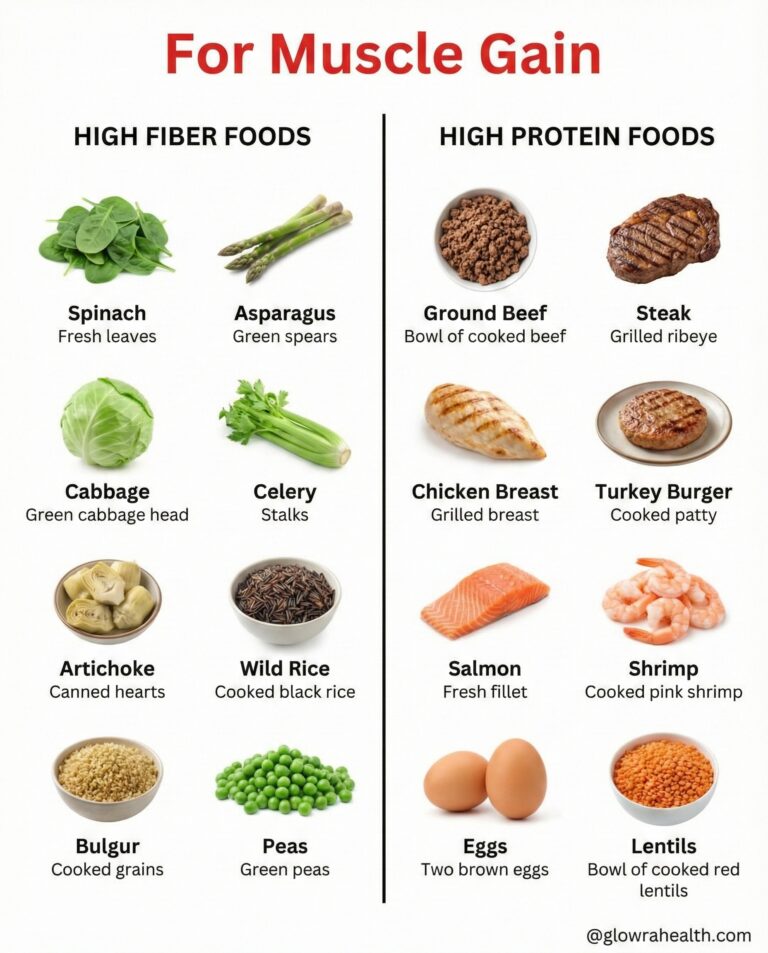
- Protein: tuna, salmon, or mackerel
- Color + recovery micronutrients: bell pepper + kale
- Volume + digestion support: zucchini
- Training carbs: banana or apple
- Optional: add a starch (rice, potatoes, oats) if your workouts are intense
When You’ll Notice Changes
- 1–7 days: better energy and fewer “crash” feelings when you add fruit carbs around training
- 2–4 weeks: improved recovery consistency when protein + micronutrients are steady
- 8–12 weeks: visible muscle changes when nutrition + progressive training + sleep line up
Quick Safety Notes
- If you have kidney disease or are on a protein-restricted diet, talk with a clinician before increasing protein.
- Rotate fish choices (not only tuna) to reduce mercury exposure.
- If citrus triggers reflux, have oranges with meals instead of on an empty stomach.
Final Takeaway
Muscle growth is built on consistency. These foods help you train harder and recover smarter because they cover the “big 3”: fuel (fruit carbs) + repair (fish protein) + recovery support (vitamin C greens/veg + omega-3s).
Related Source Science
- Omega-3s and post-exercise inflammation/recovery outcomes (systematic review). (MDPI)
- USDA-based nutrient profiles for tuna and kale. (Food Struct)
- Vitamin C content in red bell peppers (USDA-cited). (nutritionaloutlook.com)
Read more “16 muscle gain foods that work better together”