What if you could eat the same exact meal… but get a different blood sugar response? That’s the idea behind meal sequencing: the order you eat your foods can change how quickly glucose rises after a meal. Most people never realize this works because they focus only on what they eat, not the order they eat it.
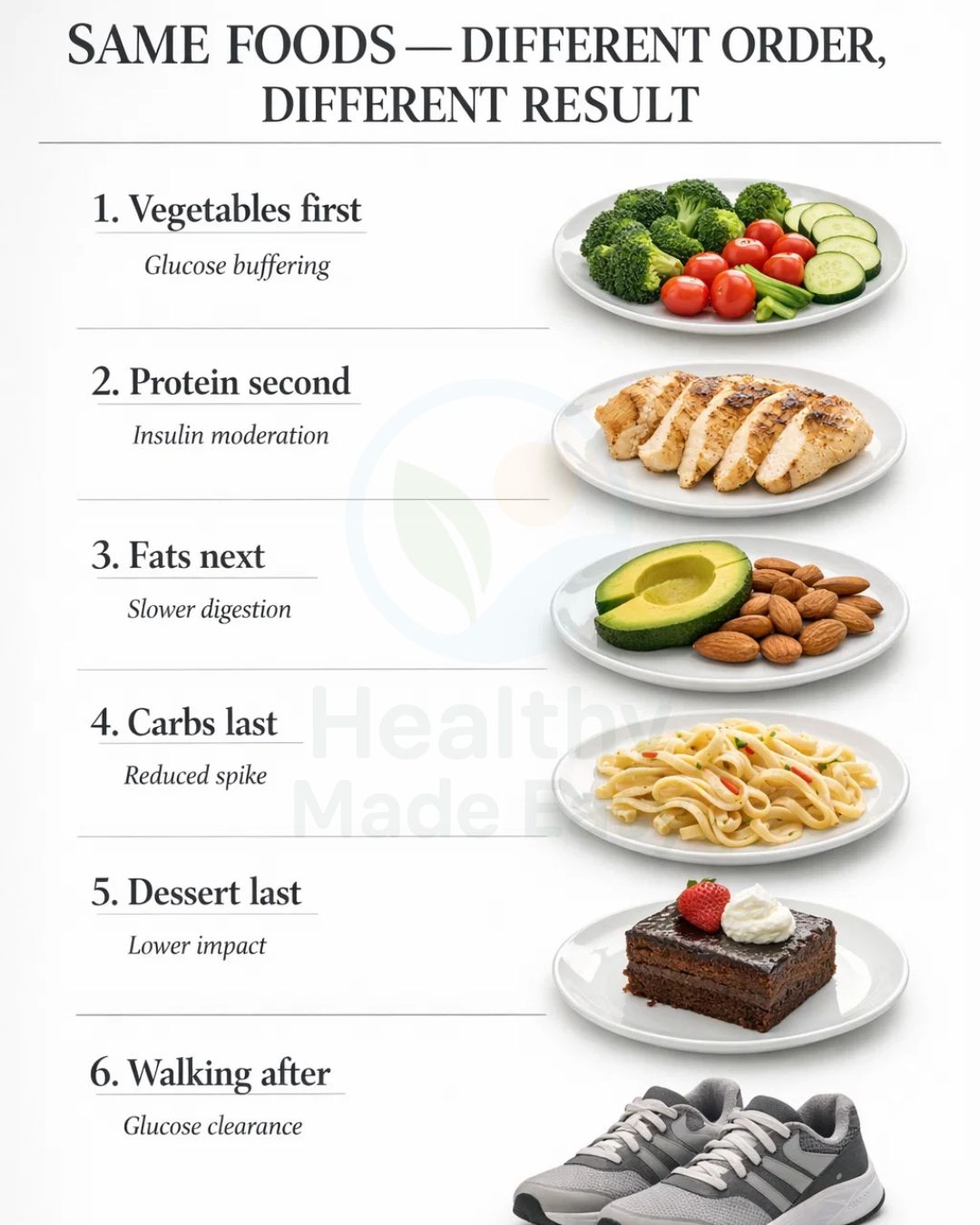
1) Vegetables First: “Glucose Buffering”
Starting with vegetables – especially non-starchy ones – adds fiber and volume before the more glucose-raising parts of the meal.
Research shows that eating vegetables before carbohydrate portions can reduce post-meal glucose excursions compared with eating carbs first.
Try it like this:
- Start with a salad, sautéed greens, cucumber/tomatoes, broccoli, or mixed veggies.
- Aim for 5–10 minutes of veggie-first eating before moving on.
Why it helps: fiber and the “bulk” of vegetables can slow the speed at which carbs are absorbed.
2) Protein Second: “Insulin Moderation”
Protein tends to slow gastric emptying and can change the post-meal glucose curve.
A large review of clinical studies notes that adding protein to a carbohydrate meal can influence postprandial glucose and insulin responses.
Good protein choices:
- Eggs, chicken, fish, tofu, lentils, Greek yogurt, lean meat
Easy move: take a few bites of your protein portion before you start your rice, bread, pasta, or dessert.
3) Fats Next: “Slower Digestion”
Dietary fat can slow digestion and reduce how fast glucose enters the bloodstream.
This is one reason meals with protein and fat before or alongside carbs often create a more gradual glucose rise (instead of a sharp spike).
Examples of “fats next”:
- Avocado, olive oil dressing, nuts, seeds, cheese
Keep it realistic: you do not need a high-fat meal. Even a small amount can make the meal more satisfying.
4) Carbs Last: “Reduced Spike”
This is the core of the method.
A recent Diabetes Care clinical trial reported that a carbohydrates-last eating pattern improved glucose outcomes (including glucose peaks and time-in-range) in people with type 2 diabetes under controlled and free-living conditions.
Carbs that often “hit harder” when eaten first:
- White rice, pasta, bread, sweets, sugary drinks
Carbs that may be easier to manage:
- Oats, beans, lentils, quinoa, sweet potato
This step is not about removing carbs. It’s about timing them after fiber + protein.
5) Dessert Last: “Lower Impact”
If you’re having dessert, eating it after a balanced meal may lower its glucose impact compared to eating sugar on an empty stomach.
It won’t make dessert “free,” but it may help avoid that fast spike-and-crash feeling especially when dessert comes after vegetables + protein.
Practical tip:
- If dessert is happening, keep it small and intentional, and eat it after the meal—not as a stand-alone snack.
6) Walk After: “Glucose Clearance”
This is one of the most underrated steps.
A systematic review and meta-analysis found that physical activity around meals – especially post-meal movement can reduce postprandial glucose excursions.
Other studies also show that 10–20 minutes of walking after meals can reduce post-meal glucose levels.
Best version (simple):
- Walk 10–15 minutes after eating.
- Keep it light to moderate. You should be able to talk.
Who Benefits Most
This strategy is especially useful for people who:
- Feel sleepy or foggy after carb-heavy meals
- Deal with cravings 1–2 hours after eating
- Have prediabetes, insulin resistance, or type 2 diabetes (with clinician guidance)
- Want a simple habit that supports weight and appetite control
When You’ll Notice Changes
Set realistic expectations:
- Same day: many people feel fewer energy crashes when they start with veggies and protein.
- 1–2 weeks: cravings and snacking urges often improve with consistency.
- 8–12 weeks: blood markers (A1C, triglycerides) may shift if this habit is paired with an overall balanced diet and activity.
Quick Safety Notes
- If you use insulin or glucose-lowering medications, changing meal timing/order can affect blood sugar. Work with your clinician to avoid lows.
- If you have a history of disordered eating, avoid rigid “rules.” Use this as a gentle option, not a control tool.
- If walking right after meals causes reflux, try a slower pace or wait 10–15 minutes.
Final Takeaway
You do not need a new diet to support steadier blood sugar.
Try this simple order:
Vegetables → Protein → Fats → Carbs → Dessert (if any) → Short walk
Same foods. Different order. Often, a different result.