Foods for gut health are not limited to probiotics alone.
While yogurt, kimchi, and fermented foods often get the spotlight, true gut support depends on a broader mix of nutrients that feed, protect, and balance the microbiome over time.
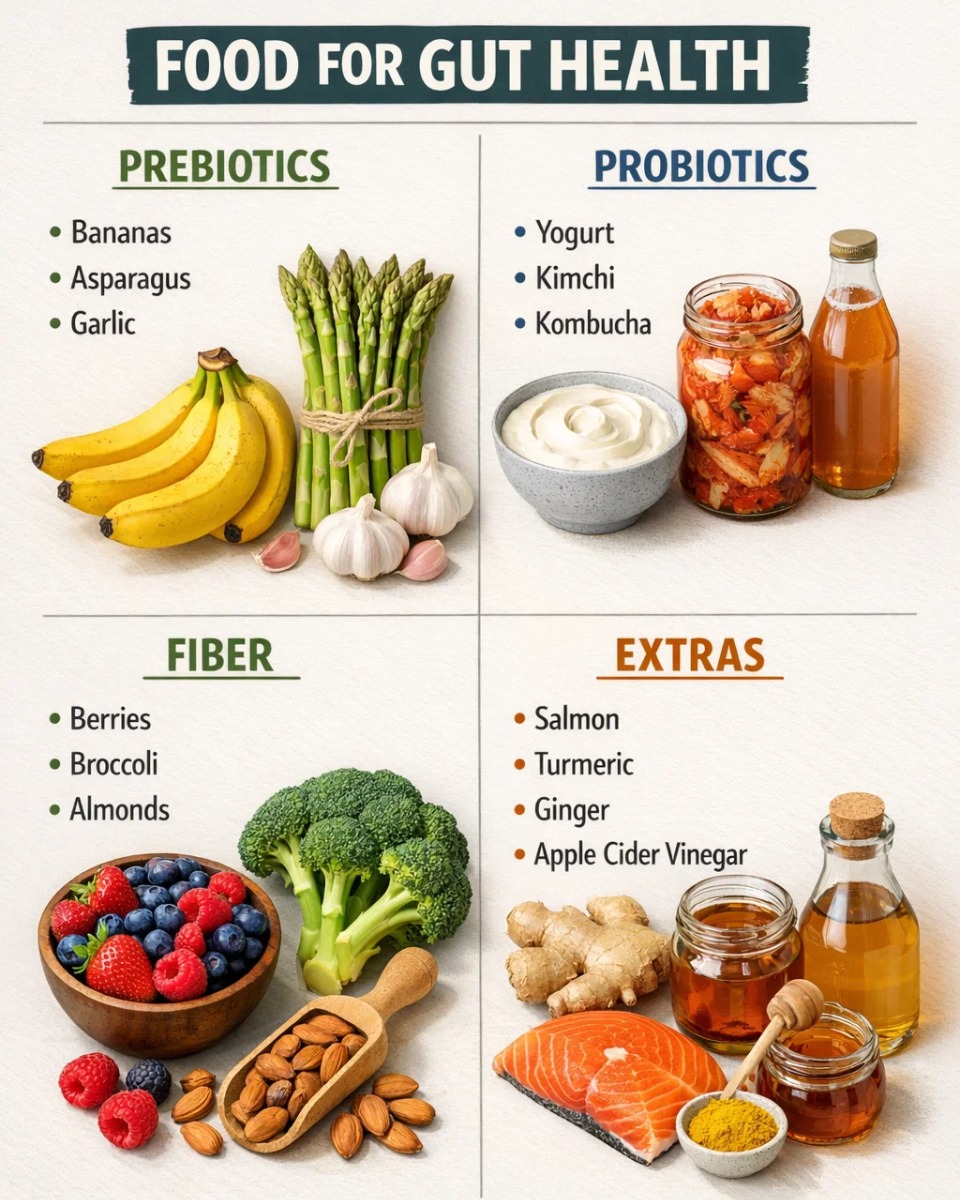
This guide breaks down the four food groups shown in the infographic and explains how each one supports gut health in a different but complementary way.
1. Prebiotic Foods for Gut Health That Feed Good Bacteria
Prebiotics are non-digestible fibers that serve as fuel for beneficial gut microbes. Instead of adding bacteria from outside, they help existing microbes grow and function better.
Prebiotic foods help nourish beneficial gut bacteria by providing fermentable fibers they can feed on.
Common prebiotic-rich foods include:
-
Bananas, especially slightly unripe ones
-
Asparagus, onions, garlic, and leeks
-
Oats and barley
-
Chicory root and Jerusalem artichokes
-
Legumes such as lentils and chickpeas
Including a variety of prebiotic foods helps support a more resilient and balanced microbiome over time.
Why prebiotics matter:
-
Support microbial diversity
-
Increase short-chain fatty acid production
-
Help regulate digestion and bowel regularity
Without prebiotics, probiotics struggle to survive or colonize effectively.

2. Probiotic Foods for Gut Health and Microbial Diversity
Probiotics are live microorganisms found in fermented foods. When consumed regularly, they can help reinforce the gut ecosystem.
Probiotic foods introduce live microorganisms that may support microbial diversity when consumed regularly.
Examples of probiotic-containing foods include:
-
Yogurt with live and active cultures
-
Fermented vegetables such as kimchi and sauerkraut
-
Kefir and cultured dairy products
-
Fermented soy foods like miso and tempeh
-
Kombucha, when consumed in moderation
Probiotic foods work best when paired with fiber-rich and prebiotic foods that help those microbes thrive.
How probiotics help:
-
Support microbial balance
-
Compete with harmful bacteria
-
Assist digestion of certain nutrients
For best results, probiotics work best when paired with prebiotic fibers, not taken in isolation.
3. Fiber-Rich Foods for Gut Health and Regular Digestion
Dietary fiber plays a structural role in gut health. It helps move waste through the digestive tract and provides fuel for fermentation in the colon.
Fiber-rich foods support gut health by feeding beneficial bacteria and helping move waste through the digestive tract.
Good sources of dietary fiber include:
-
Berries such as blueberries, raspberries, and strawberries
-
Cruciferous vegetables like broccoli, cauliflower, and Brussels sprouts
-
Nuts and seeds, including almonds, walnuts, and chia seeds
-
Legumes such as lentils, chickpeas, and black beans
-
Whole fruits with skin, like apples and pears
These foods provide different types of fiber, including soluble and insoluble fiber, which work together to support regular digestion and microbial diversity.
Why fiber is essential:
-
Supports regular bowel movements
-
Helps regulate blood sugar and appetite
-
Encourages production of beneficial metabolites
Different fibers feed different microbes, which is why variety matters.
4. Extra Foods for Gut Health That Support Inflammation Balance
Some foods do not directly feed bacteria but help create a calmer, more supportive gut environment.
Certain foods support gut health indirectly by helping manage inflammation and supporting the gut lining.
These supportive foods include:
-
Fatty fish such as salmon, sardines, and mackerel
-
Olive oil and other sources of monounsaturated fats
-
Spices like turmeric and ginger
-
Nuts and seeds
-
Fermented vinegar-based foods, used in small amounts
While these foods do not directly feed gut bacteria, they help create a more stable internal environment for digestion.
How these help:
-
Omega-3 fats support gut barrier integrity
-
Spices like turmeric and ginger may help reduce irritation
-
Fermented acids support digestion and stomach acidity
These foods help the gut function smoothly rather than aggressively stimulating it.
Gut Health Is a System, Not a Supplement
A resilient gut depends on interaction, not one magic food.
-
Prebiotics feed microbes
-
Probiotics add diversity
-
Fiber supports movement and fermentation
-
Anti-inflammatory foods protect the gut lining
Focusing on one category alone often leads to limited results.
How to Build a Gut-Supportive Plate
Instead of chasing trends, aim for meals that include:
-
At least one fiber source
-
One prebiotic or fermented food
-
One healthy fat or anti-inflammatory ingredient
Small, consistent choices tend to support digestion better than drastic cleanses or short-term fixes.
Want to Learn More?
You may also find these related articles helpful:
-
How fiber type affects digestion and bloating
-
Prebiotics vs probiotics: when each matters
-
Gentle foods for sensitive digestion
Explore more in the Food & Nutrition section of the blog to continue building a gut-friendly routine that feels sustainable and calm.
According to research published by the National Institutes of Health, dietary fiber and prebiotics play a key role in maintaining microbial diversity and gut function.