There’s a quiet kind of satisfaction in knowing exactly how long it takes for food to grow.
Spinach in 30–50 days.
Cucumbers in 45–70 days.
Tomatoes in 60–90 days.
Corn and potatoes in 90–120 days.
Understanding the average time from planting to harvest changes the way you garden. It shifts you from reacting… to planning. From guessing… to managing with intention.
And when you combine smart planting timelines with thoughtful livestock management and sustainable farming practices, something powerful happens:
Your garden feeds your animals.
Your animals feed your soil.
Your soil feeds your future harvest.
Let’s walk through how to build that kind of system — step by step, like a seasoned mentor standing beside you.
Understanding Crop Timelines: The Foundation of Smart Gardening
One of the most overlooked gardening tips is simply knowing how long crops need to mature.
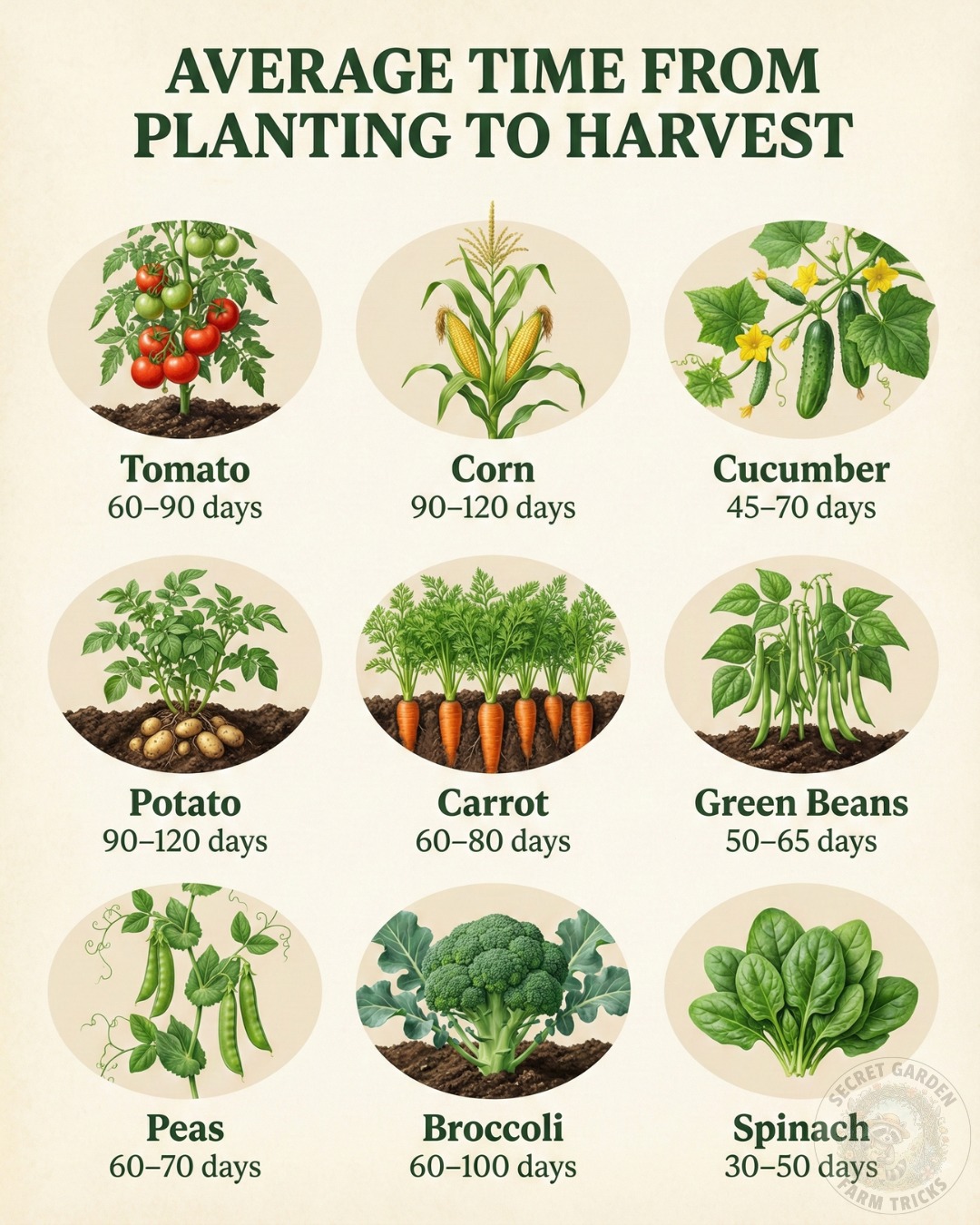
From the image:
- Spinach: 30–50 days
- Green beans: 50–65 days
- Cucumbers: 45–70 days
- Peas: 60–70 days
- Carrots: 60–80 days
- Tomatoes: 60–90 days
- Broccoli: 60–100 days
- Corn & Potatoes: 90–120 days
These numbers aren’t just trivia — they are planning tools.
How to Use Harvest Timelines Strategically
- Stagger plantings every 2–3 weeks for short-season crops like spinach and green beans.
- Pair quick crops with slow crops. Plant spinach between tomato rows — harvest it before tomatoes fully spread.
- Plan animal feed cycles. Extra green beans and cucumbers become poultry supplements.
When you understand timing, your garden becomes continuous instead of chaotic.
Soil First: The Real Engine of Organic Gardening
Healthy crops begin below ground.
Strong soil supports consistent harvest timelines and reduces disease pressure.
Actionable Soil-Building Practices
- Add compost before each planting cycle.
- Rotate crops yearly (especially corn and tomatoes).
- Incorporate livestock manure — properly composted — to enrich nutrients.
- Mulch heavily to retain moisture and suppress weeds.
Sustainable farming begins with feeding soil life. Earthworms, microbes, and fungi are your invisible workforce.
If your soil improves each year, your productivity compounds.
Plant Care That Boosts Yield — Not Just Survival
Growing vegetables isn’t about keeping plants alive. It’s about helping them thrive.
Water Deeply, Not Frequently
Most crops need about 1 inch of water per week.
Shallow watering creates shallow roots.
Deep watering encourages resilience — especially for tomatoes and corn.
Prune with Purpose
- Remove lower tomato leaves for airflow.
- Harvest green beans frequently to trigger more production.
- Cut spinach leaves individually to extend harvest time.
Small maintenance habits multiply harvest weight.
Companion Planting: A Quiet Form of Livestock Management
Companion planting reduces pest pressure and improves pollination naturally.
- Corn + Beans + Squash (Three Sisters method)
- Tomatoes + Basil
- Carrots + Onions
This reduces reliance on chemical sprays and aligns with organic gardening principles.
Think of plants as teammates, not individuals.
Integrating Livestock Into Your Farm Care System
True farm care means plants and animals support each other.
Chickens: The Garden Assistants
- Eat overripe produce.
- Provide nitrogen-rich manure.
- Scratch through post-harvest beds to reduce pests.
Rotate chickens through empty beds before replanting. This reduces insects and adds fertility.
Cattle or Goats: Manure Management Done Right
Properly composted manure becomes premium soil amendment.
Never apply fresh manure directly to growing vegetables — compost it first to avoid pathogens and plant burn.
Livestock management isn’t separate from gardening — it completes it.
Daily Animal Care Basics That Improve Farm Productivity
Healthy animals produce better manure, eggs, milk, and meat.
Nutrition
- Balanced feed with minerals.
- Fresh water daily.
- Supplement with garden trimmings (in moderation).
Housing
- Dry bedding.
- Good ventilation.
- Predator-proof fencing.
Observation
Walk through your coop or barn daily.
Look for:
- Changes in appetite.
- Limping.
- Lethargy.
- Feather condition.
Early intervention prevents costly problems.
Sustainable farming relies more on observation than medication.
Pest and Disease Management Without Panic
Every garden faces pests.
But healthy soil and balanced systems reduce outbreaks.
Prevention Over Reaction
- Rotate crops.
- Space plants properly.
- Avoid overhead watering.
- Remove infected leaves immediately.
Organic Solutions
- Neem oil for aphids.
- Diatomaceous earth for crawling insects.
- Encourage beneficial insects.
Resilient systems reduce intervention needs.
Harvesting at the Right Time — A Skill That Increases Value
Timing isn’t just about days — it’s about readiness.
- Spinach: Harvest young for tenderness.
- Cucumbers: Pick before they enlarge too much.
- Tomatoes: Fully colored but firm.
- Corn: Kernels release milky juice when pressed.
- Potatoes: After foliage yellows.
Frequent harvesting increases plant productivity. Especially green beans and cucumbers — the more you pick, the more they produce.
Post-Harvest Efficiency: Waste Nothing
Sustainable farming means maximizing output.
- Store carrots and potatoes in cool, dark spaces.
- Freeze green beans.
- Can tomatoes.
- Feed damaged produce to chickens.
- Compost plant scraps.
Closed-loop systems increase long-term profitability.
Planning Your Season Like a Modern Farmer
If you want to elevate your gardening and livestock management skills:
- Map out planting dates based on harvest timelines.
- Assign garden surplus to animal feed.
- Schedule manure compost cycles.
- Track yields in a simple notebook.
- Evaluate which crops gave highest return per square foot.
This shifts your mindset from hobbyist to steward.
Why This Approach Transforms Your Daily Routine
When gardening tips align with smart farm care:
- Labor decreases.
- Soil improves.
- Animal health stabilizes.
- Yields increase.
- Stress reduces.
You stop chasing problems and start building systems.
The Modern Farmer’s mindset is practical, intentional, and regenerative.
It’s not about perfection.
It’s about consistency.
Final Thoughts: From Effort to Ecosystem
Gardening and livestock management are not separate skills — they are parts of one living cycle.
Understand harvest timing.
Build soil health.
Care for animals attentively.
Close nutrient loops.
When you integrate organic gardening with thoughtful livestock management, you don’t just grow food.
You grow resilience.
And over time, that resilience transforms your farm — and your confidence — into something steady, productive, and deeply connected to the land.
That’s sustainable farming in action.