If you want to eat more produce without overspending on organic, the Clean Fifteen idea is popular for a reason. It highlights conventionally grown fruits and vegetables that tend to have lower pesticide residues than many other produce items, based on EWG’s analysis of USDA testing data. EWG’s 2025 guide says the Clean Fifteen had the lowest pesticide residues among 47 tested produce types, and almost 60% of samples had no detectable residues. EWG also says washing produce helps reduce residues, dirt, and bacteria, though it does not remove pesticides entirely. (EWG)
Why the Clean Fifteen Matters
This list is not a reason to fear produce. In fact, EWG explicitly says fruits and vegetables remain essential for health whether they are organic or conventional. The more practical takeaway is this: if organic does not fit your budget, these foods are often reasonable conventional buys, especially when you still rinse, scrub, and prepare them well.
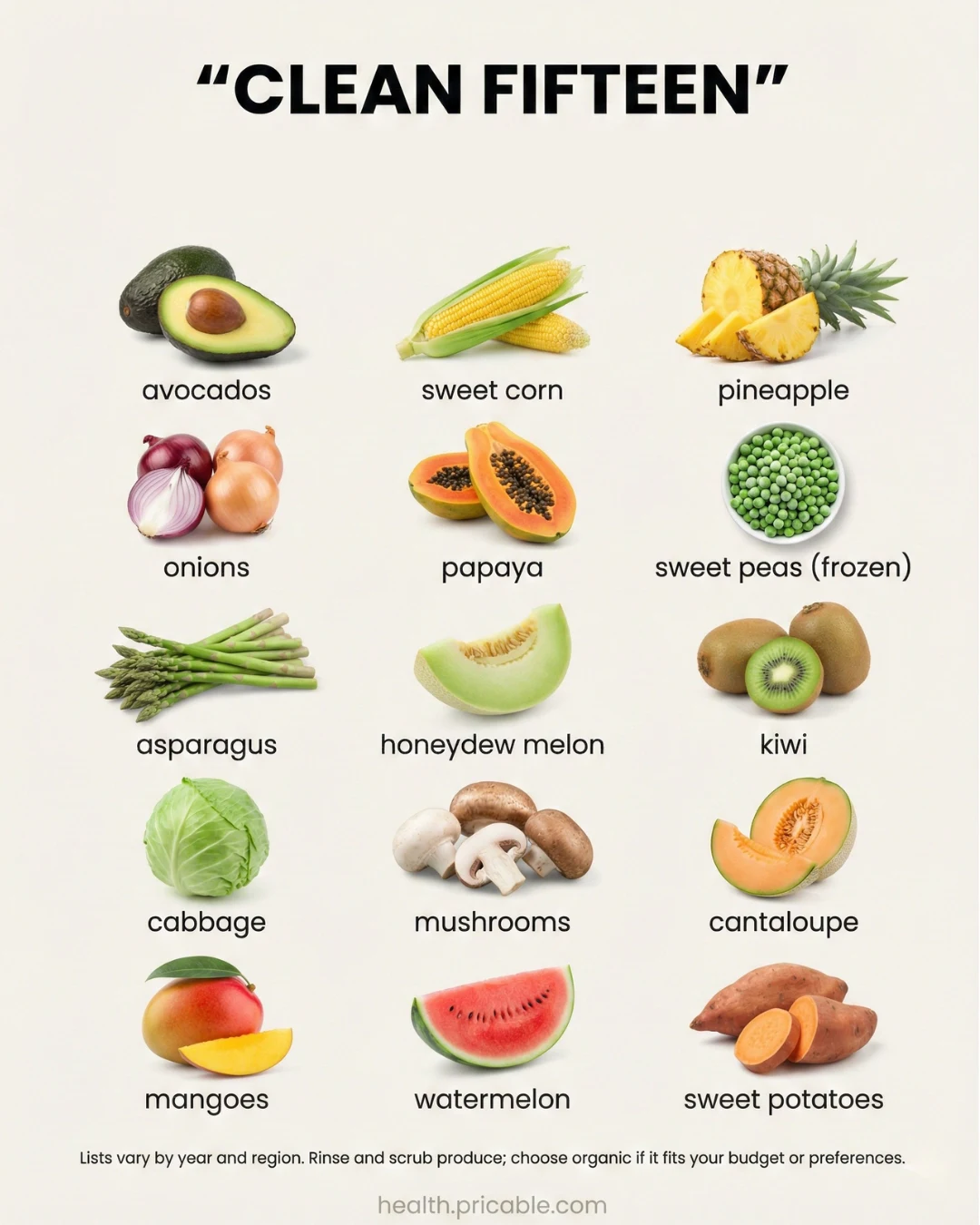
Avocados
Avocados are a strong budget-friendly pick because their thick peel helps limit residue on the edible part. They also provide monounsaturated fats, fiber, potassium, and vitamin E, which support heart health and satiety. They work well in salads, toast, grain bowls, or smoothies.
Sweet Corn
Sweet corn appears near the top of both the 2024 and 2025 Clean Fifteen lists. It provides carbohydrates, fiber, and carotenoids for energy and eye support. Buy fresh or frozen, and note that EWG says some U.S. sweet corn is grown from GMO seedstock, so organic is the better choice if avoiding GMOs matters to you.
Pineapple
Pineapple consistently ranks very low for pesticide residues, likely helped by its thick outer skin. Nutritionally, it offers vitamin C, water, and bromelain-containing compounds, making it a refreshing fruit for snacks or smoothies.
Onions
Onions are another conventional produce staple with low pesticide residues in both years. They bring flavor, fiber, and sulfur compounds that fit well into savory, whole-food meals. Use them in soups, stir-fries, salads, and roasted dishes.
Papaya
Papaya was on both the 2024 and 2025 Clean Fifteen lists. It provides vitamin C, carotenoids, and digestive enzymes like papain. EWG notes that some papaya sold in the U.S. may also come from GMO seedstock, so organic is the better option if that is important to you.
Sweet Peas (Frozen)
Frozen sweet peas are one of the most practical foods on the list. They offer plant protein, fiber, vitamin C, and convenience, which makes them ideal for budget meals. Add them to pasta, rice, soups, or quick stir-fries.
Asparagus
Asparagus appears on both lists and is a useful source of folate, fiber, and vitamin K. It is easy to roast, grill, or sauté, and it pairs well with eggs, fish, or grain bowls.
Honeydew Melon
Honeydew melon was on the 2024 list but not the 2025 one. It is still a hydrating fruit with vitamin C, potassium, and water, making it a good warm-weather snack or breakfast add-in.
Kiwi
Kiwi stayed on the Clean Fifteen list in both years. It is especially useful for vitamin C, fiber, and antioxidant support. Eat it on its own, with yogurt, or sliced into fruit bowls.
Cabbage
Cabbage is affordable, versatile, and remains on the 2025 Clean Fifteen. It provides fiber, vitamin C, and glucosinolate compounds that fit well into slaws, soups, stir-fries, and roasted sheet-pan meals.
Mushrooms
Mushrooms were on the 2024 list and remain on the 2025 list. They are low in calories but useful for texture, umami flavor, and nutrients such as selenium and B vitamins, depending on the variety.
Mangoes
Mangoes are another fruit that made both versions of the list. They provide vitamin C, carotenoids, and natural sweetness, making them a practical swap for processed desserts.
Watermelon
Watermelon was on the 2024 list and moved higher in 2025. It is mostly water, which makes it helpful for hydration, and it also supplies vitamin C and lycopene.
Sweet Potatoes
Sweet potatoes were on the 2024 list but dropped off the 2025 top 15. They are still an excellent whole-food staple because they provide fiber, potassium, and beta-carotene. Roast them, bake them, or mash them for an affordable base meal.
Carrots
Carrots round out the image list and still appear on the 2025 Clean Fifteen. They are rich in beta-carotene, plus fiber and water, which supports eye health and everyday snacking. Raw, roasted, blended, or added to soups, they are one of the easiest vegetables to use often.
How to Shop Smart With the Clean Fifteen
A simple approach works best. Buy these foods conventional when needed, wash and prep them well, and save your organic budget for items that tend to carry more residues. Consumer Reports also advises that washing helps but does not remove all pesticides, which is one reason prioritizing certain produce choices can still make sense. (EWG)
Final Takeaway
Every food is a practical, nutrient-dense produce choice, and most remain low-residue options in EWG’s newer guide. The most useful message is simple: eat more produce, rinse and scrub it well, and use organic strategically when your budget allows. (CDN Manager)