Healthy skin protection is not only about what you put on your skin.
It is also about what you put on your plate.
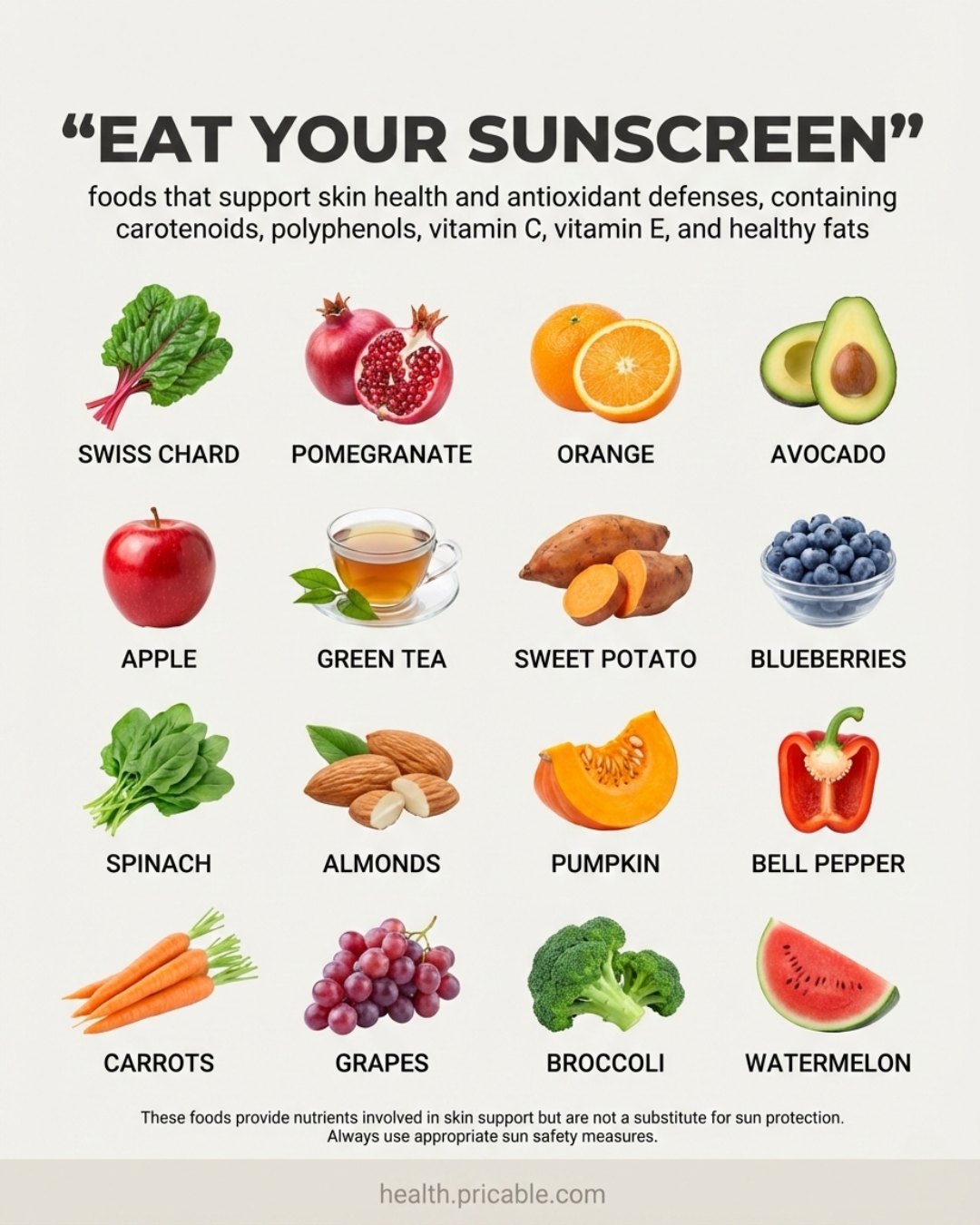
That is the idea behind “eat your sunscreen” foods. These are foods rich in carotenoids, polyphenols, vitamin C, vitamin E, and healthy fats that help support the skin’s natural antioxidant defenses. They may help the skin handle everyday environmental stress a little better over time.
But there is one important truth first.
These foods do not replace sunscreen, hats, shade, or smart sun habits.
Think of them as supportive skin nutrition, not a substitute for SPF.
What “Eat Your Sunscreen” Really Means
When skin is exposed to UV light, heat, pollution, and oxidative stress, it uses up antioxidants. A diet rich in colorful plant foods and healthy fats can help support that defense system.
The most helpful nutrients include:
- Carotenoids for skin and antioxidant support
- Vitamin C for collagen formation
- Vitamin E for cell protection
- Polyphenols for oxidative stress balance
- Healthy fats for skin barrier support
This is why variety matters more than one single superfood.
Swiss Chard
Swiss chard provides beta-carotene, vitamin C, and magnesium. These nutrients support antioxidant defenses and overall skin function.
How to use it:
Sauté with olive oil and garlic, or add to soups and egg dishes.
Pomegranate
Pomegranate is rich in polyphenols, especially compounds linked to antioxidant activity. It is often included in skin-supportive eating patterns because it helps the body manage oxidative stress.
How to use it:
Sprinkle seeds over yogurt, oatmeal, or salads.
Orange
Oranges are packed with vitamin C, which is essential for collagen production. Collagen helps support skin structure and resilience.
How to use it:
Eat fresh as a snack or add slices to salads.
Avocado
Avocado gives you healthy monounsaturated fats and vitamin E, both helpful for skin barrier support and moisture balance.
How to use it:
Add to toast, bowls, salads, or smoothies.
Apple
Apples provide polyphenols and fiber. While apples are not a direct sun-protection food, they support an overall antioxidant-rich diet.
How to use it:
Eat with almond butter or chop into oats.
Green Tea
Green tea is well known for its catechins, plant compounds studied for antioxidant and skin-supportive effects. It may help the body deal with oxidative stress more efficiently.
How to use it:
Drink 1 cup warm or iced between meals.
Sweet Potato
Sweet potatoes are rich in beta-carotene, which your body can convert into vitamin A. This nutrient supports skin renewal and healthy surface tissues.
How to use it:
Roast, mash, or bake and pair with olive oil or avocado.
Blueberries
Blueberries contain anthocyanins and vitamin C, making them a strong antioxidant food. They help support the skin by reducing the burden of oxidative stress.
How to use it:
Add to yogurt, smoothies, or eat as a snack.
Spinach
Spinach provides carotenoids, vitamin C, and folate. It is one of the easiest leafy greens to use regularly for skin-supportive nutrition.
How to use it:
Blend into smoothies, sauté, or toss into salads.
Almonds
Almonds are rich in vitamin E, one of the key nutrients involved in skin protection and cell membrane support.
How to use it:
Eat a small handful daily or add to oats and salads.
Pumpkin
Pumpkin offers beta-carotene and vitamin C, making it a useful food for both skin renewal and antioxidant support.
How to use it:
Roast cubes, make soup, or stir puree into oatmeal.
Bell Pepper
Bell peppers, especially red ones, are very high in vitamin C. This helps support collagen formation and skin structure.
How to use it:
Eat raw in slices, roast, or add to stir-fries.
Carrots
Carrots are one of the best-known sources of beta-carotene. They support skin renewal and help the body maintain healthy tissues.
How to use it:
Eat raw, roast, or blend into soups and juices.
Grapes
Grapes contain polyphenols, including resveratrol in some varieties. These compounds help support antioxidant defenses.
How to use it:
Eat chilled as a snack or add to fruit bowls.
Broccoli
Broccoli provides vitamin C, carotenoids, and sulfur compounds that support detox pathways and skin-friendly nutrition.
How to use it:
Steam, roast, or add to grain bowls.
Watermelon
Watermelon helps with hydration and also provides lycopene, a carotenoid linked to skin-supportive antioxidant effects.
How to use it:
Eat fresh on hot days or pair with mint and citrus.
How to Build a Skin-Supportive Daily Plate
A simple pattern works best:
- Add one leafy green
- Add one orange or red vegetable
- Add one berry or polyphenol-rich fruit
- Include healthy fats like avocado or almonds
- Drink green tea if it suits you
This creates a more consistent antioxidant intake across the week.
When You’ll Notice Changes
Food-based skin support is gradual.
- Within 1–2 weeks: better hydration and diet quality may help skin look less dull
- Within 4–8 weeks: consistent intake may support a more even, resilient skin appearance
- Long term: these foods help build a stronger nutrition foundation for skin health
Important Safety Note
These foods help support skin health, but they are not a substitute for sun protection.
You still need:
- Broad-spectrum sunscreen
- Hats and protective clothing
- Shade during strong midday sun
Final Takeaway
The best “eat your sunscreen” foods are not magic.
They work because they supply carotenoids, vitamin C, vitamin E, polyphenols, and healthy fats that help your skin defend itself from daily stress.
The easiest place to start is this:
carrots, sweet potato, blueberries, green tea, avocado, almonds, and bell pepper.
Eat them regularly, not perfectly, and let consistency do the work.
Related Source Science
For deeper reading, explore:
- Carotenoids and skin antioxidant defenses
- Vitamin C and collagen production
- Vitamin E and skin barrier support
- Polyphenols and UV-related oxidative stress