Budget-friendly foods are becoming more important as grocery prices rise in many parts of the world. For many households, the challenge is not only buying less food but learning how to build meals around affordable ingredients that provide nutrition, protein, and fiber.
Stretching a grocery budget usually works best when meals start with low-cost staples and are complemented with smaller add-ons that add flavor and nutrients.
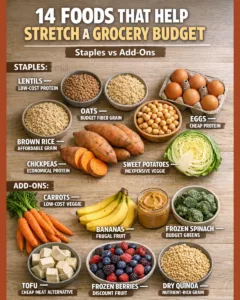
The budget-friendly foods in this guide fall into two useful categories:
- Staples – the affordable foundation of many meals
- Add-ons – inexpensive ingredients that improve variety and nutrition
Together, these foods can help households build filling meals without dramatically increasing grocery spending.
Budget-Friendly Staple Foods That Form the Base of Meals
Many of the most effective budget-friendly foods are staple ingredients that provide energy, protein, and fiber while remaining affordable.
Lentils: One of the Most Budget-Friendly Foods for Protein
Lentils are widely recognized as one of the most affordable sources of plant-based protein.
They provide:
-
protein
-
fiber
-
iron
-
complex carbohydrates
Because lentils cook relatively quickly and absorb flavors well, they work well in soups, stews, curries, and grain bowls.
For households looking to reduce food costs, lentils can also stretch dishes like chili or pasta sauce by replacing part of the meat.
Oats: A Budget-Friendly Whole Grain
Oats are one of the most versatile budget-friendly foods available in grocery stores.
They contain soluble fiber known as beta-glucan, which is associated with improved satiety and heart health.
Oats can be used for:
-
oatmeal breakfasts
-
overnight oats
-
smoothies
-
baked goods
Because they store well and are easy to prepare, oats are a reliable staple for many households.
Brown Rice: Affordable and Versatile
Brown rice is another classic example of budget-friendly foods that serve as the base for many meals.
Compared to refined grains, brown rice retains more fiber and micronutrients.
Large batches of rice can be cooked ahead and used in dishes such as:
-
vegetable stir-fries
-
rice bowls
-
soups and stews
This versatility helps reduce grocery costs over time.
Chickpeas: Economical Plant Protein
Chickpeas are a widely used ingredient in many cuisines and are among the most economical plant proteins.
They are commonly used in:
-
hummus
-
salads
-
roasted snacks
-
curries
Their combination of protein and fiber makes meals more filling while keeping food costs manageable.
Eggs: Affordable High-Quality Protein
Eggs remain one of the most accessible sources of high-quality protein in many regions.
They provide essential nutrients such as vitamin B12, selenium, and choline.
Eggs can be incorporated into many inexpensive meals, including:
-
breakfast dishes
-
fried rice
-
salads
-
vegetable scrambles
Because they cook quickly, they are also convenient for simple meals.
Sweet Potatoes: Inexpensive and Filling
Sweet potatoes are an inexpensive vegetable that provides complex carbohydrates, fiber, and beta-carotene.
They can be roasted, baked, mashed, or added to soups and stews.
Their naturally filling nature helps create satisfying meals without relying on expensive ingredients.
Budget-Friendly Add-On Foods That Improve Nutrition
In addition to staple ingredients, smaller budget-friendly foods can add nutrients, color, and flavor to meals.
These ingredients may not be the main calorie source, but they help improve balance and variety.
Carrots: A Low-Cost Vegetable
Carrots are inexpensive and widely available in most grocery stores.
They are rich in beta-carotene and can be eaten raw, roasted, or added to soups and stir-fries.
Because they store well, carrots are a practical addition to budget-conscious meal planning.
Bananas: A Frugal Fruit Option
Bananas are often among the most affordable fruits available.
They provide potassium, natural carbohydrates, and quick energy.
Bananas can be used in smoothies, oatmeal bowls, yogurt, or eaten as simple snacks.
Frozen Spinach: Budget-Friendly Greens
Frozen vegetables are often cheaper than fresh produce and help reduce food waste.
Frozen spinach can easily be added to:
-
soups
-
pasta sauces
-
omelets
-
rice dishes
This makes it a convenient way to add nutrients to meals without increasing grocery costs.

Tofu: A Cheap Meat Alternative
Tofu is another budget-friendly food that provides plant-based protein.
It absorbs marinades well and works in dishes such as:
-
stir-fries
-
soups
-
noodle bowls
-
grain bowls
Using tofu occasionally in place of meat can help reduce grocery expenses.
Frozen Berries: Affordable Antioxidant-Rich Fruit
Frozen berries are usually less expensive than fresh berries while still providing antioxidants and fiber.
They are commonly used in smoothies, yogurt bowls, and oatmeal.
Because frozen berries last longer, they also help prevent food waste.
Dry Quinoa: Nutrient-Dense Grain
Dry quinoa may cost slightly more than some grains, but it remains economical when purchased in bulk.
It provides plant protein, fiber, and minerals such as magnesium.
Combining quinoa with vegetables and legumes can help stretch meals while maintaining nutritional balance.

Why Budget-Friendly Foods Help Reduce Grocery Costs
The advantage of budget-friendly foods is that they provide high nutritional value relative to their cost.
Staples such as grains and legumes provide calories and protein, while fruits and vegetables add vitamins, fiber, and flavor.
According to research from the USDA Economic Research Service, meal planning around staple foods can significantly reduce household food expenses.
Many nutrition experts also recommend building meals around whole ingredients rather than heavily processed convenience foods.
Simple Strategies for Stretching a Grocery Budget
Households can make the most of budget-friendly foods by using a few practical strategies:
-
plan meals around staple ingredients
-
cook larger batches and reuse leftovers
-
buy frozen produce to reduce spoilage
-
choose seasonal fruits and vegetables
-
incorporate plant-based proteins regularly
These habits help create balanced meals while keeping grocery spending under control.
Final Thoughts
Stretching a grocery budget is not only about spending less money. It’s about building meals around budget-friendly foods that provide nutrition, flexibility, and long-term value.
Staples like lentils, oats, rice, and eggs create the foundation of affordable meals. Add-ons like vegetables, fruits, and plant proteins bring color, flavor, and balance.
With thoughtful planning, simple ingredients can become nourishing meals without putting pressure on the household budget.
USDA Economic Research Service – Food price research
https://www.ers.usda.gov