One of the most powerful yet often overlooked gardening tips is companion planting. Instead of growing crops randomly, experienced gardeners arrange plants so they support each other. When done correctly, companion planting improves soil health, reduces pests, increases pollination, and boosts harvest yields.
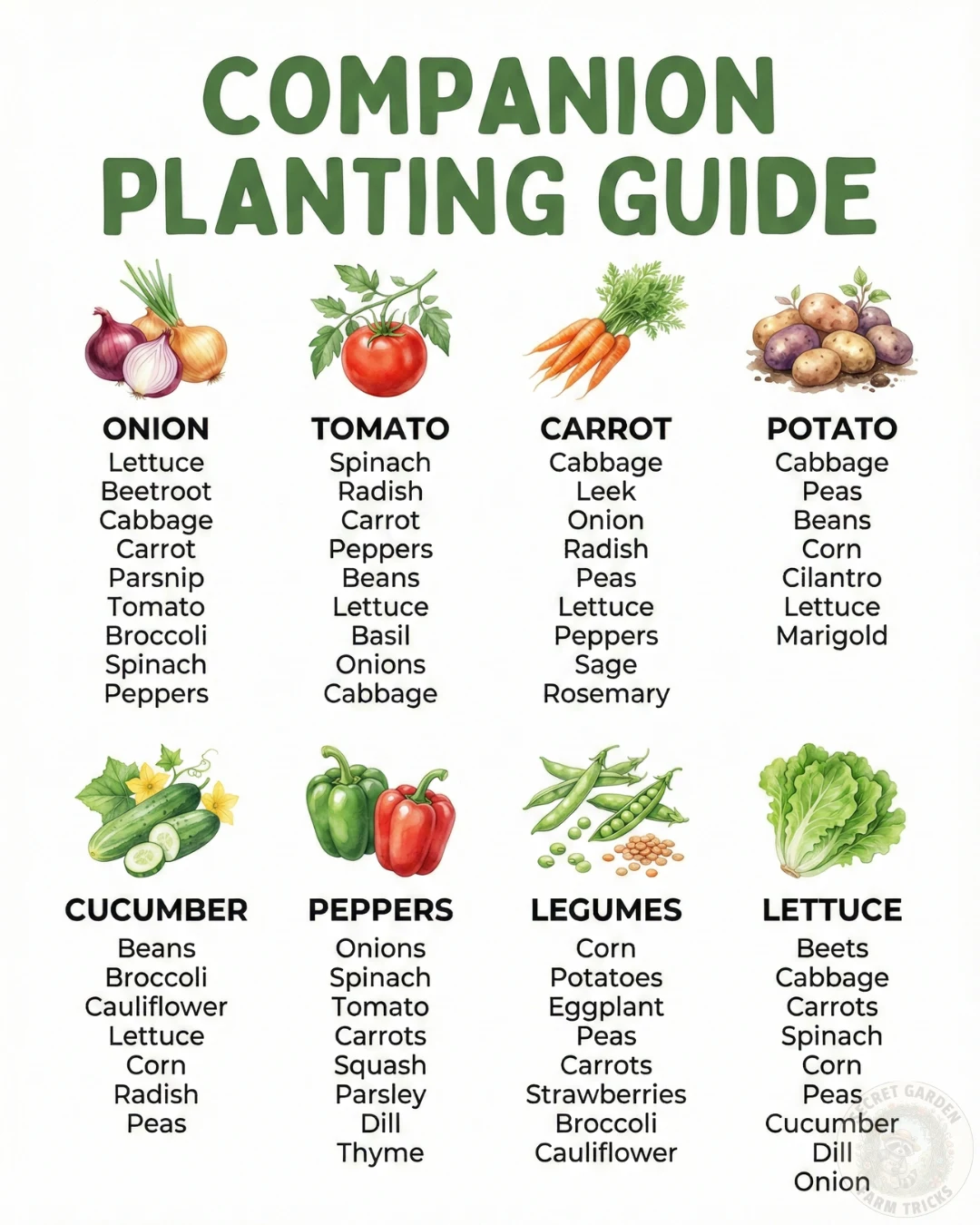
The chart highlights several vegetables such as onions, tomatoes, carrots, potatoes, cucumbers, peppers, legumes, and lettuce and shows which plants grow best together. These combinations are widely used in organic gardening and sustainable farming systems because they mimic natural ecosystems where plants cooperate instead of competing.
Let’s explore how companion planting works and how you can use it to build a healthier, more productive garden.
Why Companion Planting Works
In nature, plants rarely grow alone. Different species share nutrients, attract beneficial insects, and protect one another from pests.
Companion planting offers several key benefits:
- Natural pest control: Some plants repel harmful insects.
- Improved soil fertility: Certain plants add nutrients back to the soil.
- Better pollination: Flowers attract bees and beneficial insects.
- Efficient space use: Tall and short plants grow together without competing.
For farmers practicing sustainable farming and organic gardening, companion planting reduces the need for pesticides and synthetic fertilizers while improving overall garden health.
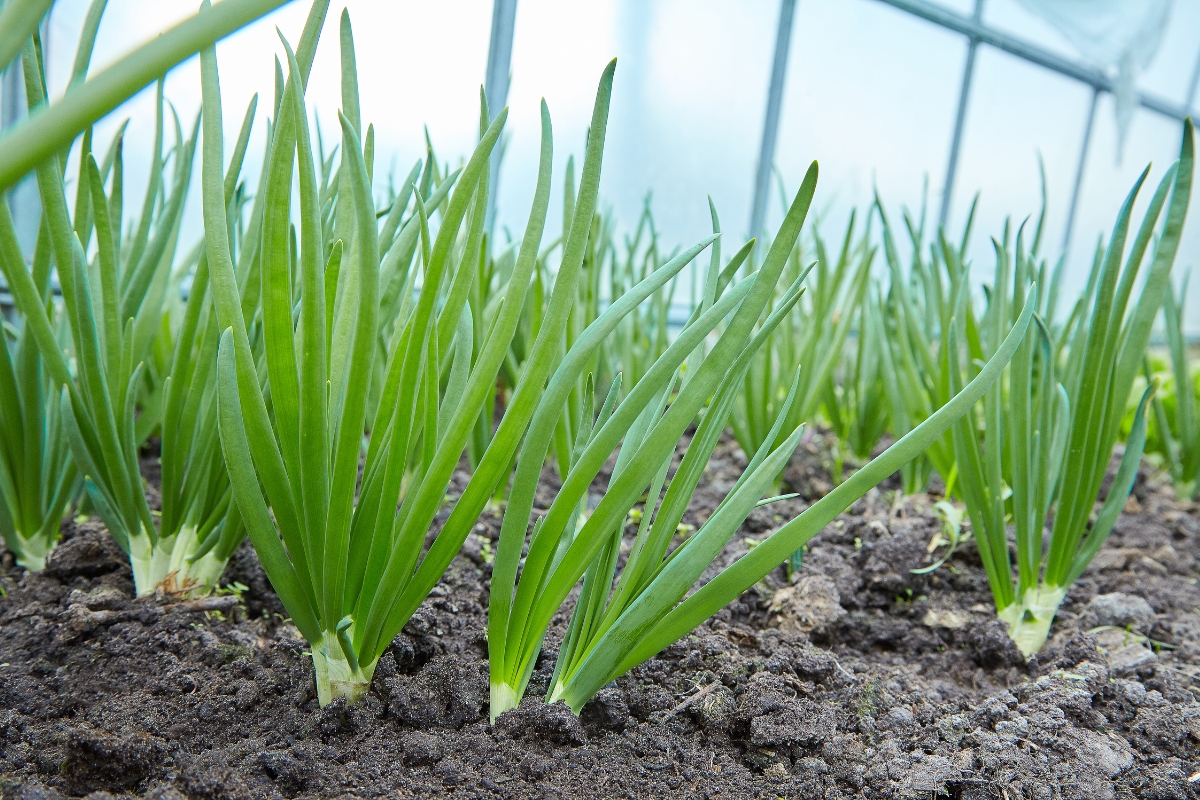
1. Onion Companion Plants
Onions are incredibly useful in companion planting because their strong scent helps deter pests such as aphids, carrot flies, and beetles.
Best Companion Plants for Onions
- Lettuce
- Beetroot
- Cabbage
- Carrots
- Parsnips
- Tomatoes
- Broccoli
- Spinach
- Peppers
Why These Plants Work Together
Leafy greens like lettuce and spinach grow quickly and provide ground cover, helping keep soil moist around onion roots. Carrots and parsnips grow underground without competing heavily for space.
Onions also act as a natural pest repellent, protecting nearby vegetables from insects that might otherwise damage crops.
2. Tomato Companion Plants
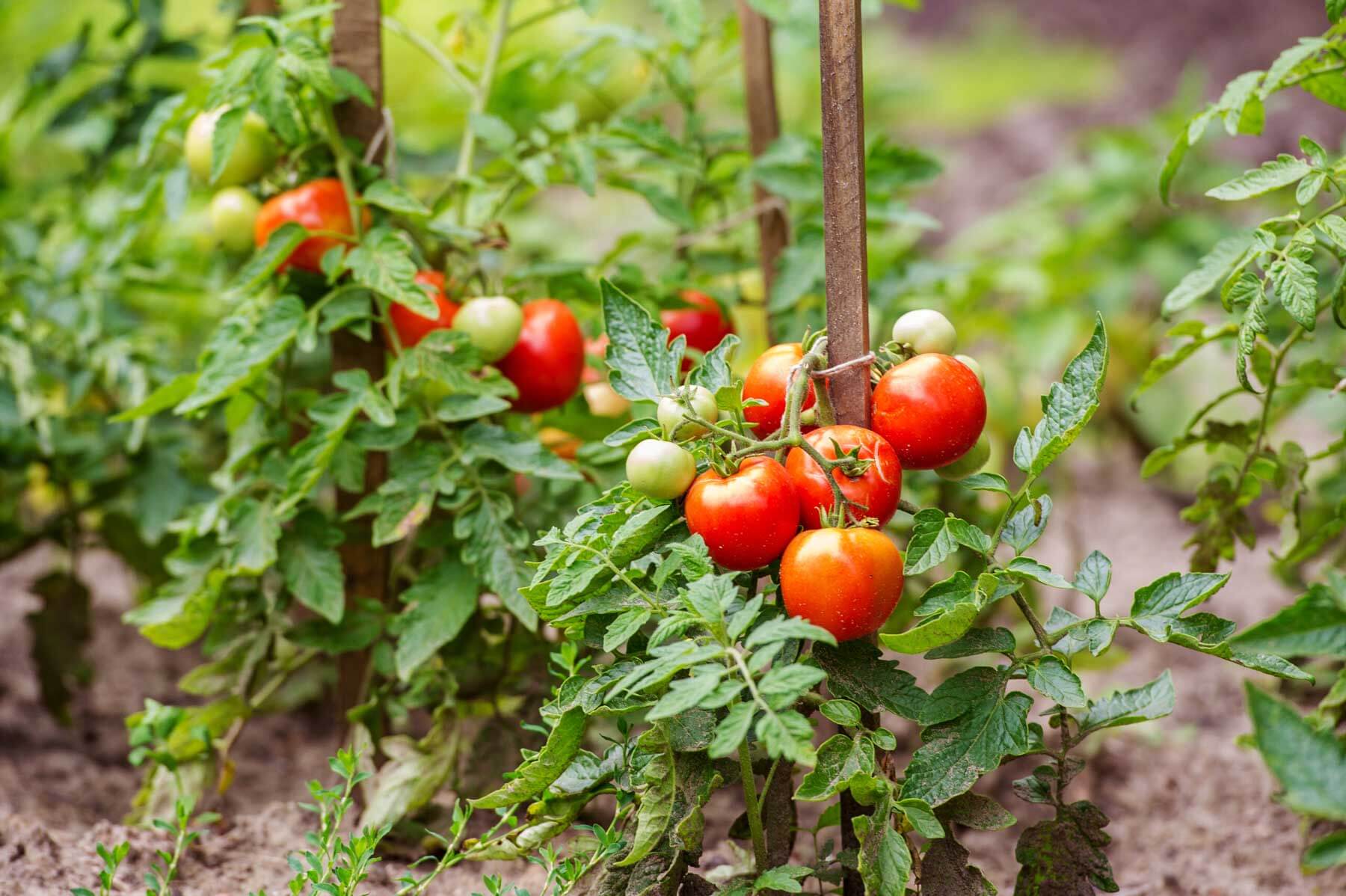
Tomatoes are one of the most popular garden crops, and pairing them with the right plants can significantly improve productivity.
Best Companion Plants for Tomatoes
- Spinach
- Radish
- Carrots
- Peppers
- Beans
- Lettuce
- Basil
- Onions
- Cabbage
Why These Plants Work Together
One of the most famous companion pairings is tomatoes and basil. Basil is believed to improve tomato flavor and repel pests like whiteflies and aphids.
Beans enrich the soil with nitrogen, which tomatoes need for strong growth. Meanwhile, lettuce and spinach grow low to the ground, reducing soil evaporation and helping maintain moisture levels.
This type of layered planting is common in organic gardening systems.
3. Carrot Companion Plants
Carrots grow underground and benefit greatly from companion plants that help repel pests or loosen the soil.
Best Companion Plants for Carrots
- Cabbage
- Leeks
- Onions
- Radishes
- Peas
- Lettuce
- Peppers
- Sage
- Rosemary
Why These Plants Work Together
Onions and leeks are especially helpful because they repel carrot flies. Radishes grow quickly and help loosen soil, allowing carrot roots to expand more easily.
Herbs like sage and rosemary also deter insects while attracting beneficial pollinators.

4. Potato Companion Plants
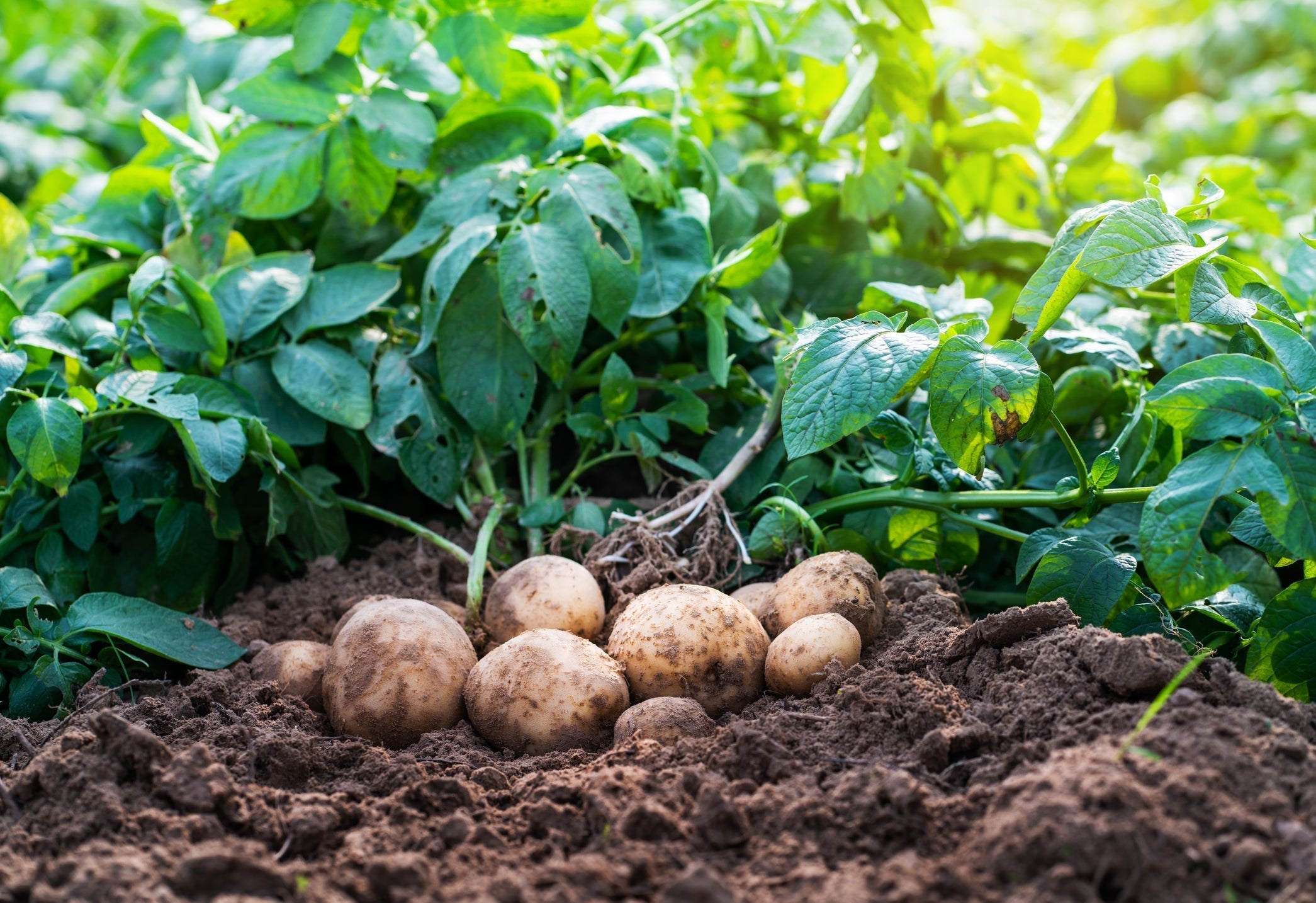
Potatoes grow best when paired with plants that either deter pests or improve soil health.
Best Companion Plants for Potatoes
- Cabbage
- Peas
- Beans
- Corn
- Cilantro
- Lettuce
- Marigolds
Why These Plants Work Together
Legumes like peas and beans enrich the soil with nitrogen, which potatoes need to grow strong foliage and produce large tubers.
Marigolds are especially valuable because they repel harmful nematodes and insects that attack potato plants.
5. Cucumber Companion Plants
Cucumbers grow quickly and benefit from companions that support pollination and pest control.
Best Companion Plants for Cucumbers
- Beans
- Broccoli
- Cauliflower
- Lettuce
- Corn
- Radish
- Peas
Why These Plants Work Together
Radishes are particularly useful near cucumbers because they deter cucumber beetles. Corn can provide partial shade in hot climates, while peas and beans improve soil fertility.
Many gardeners also use trellises so cucumbers grow vertically, saving space in raised beds.

6. Pepper Companion Plants
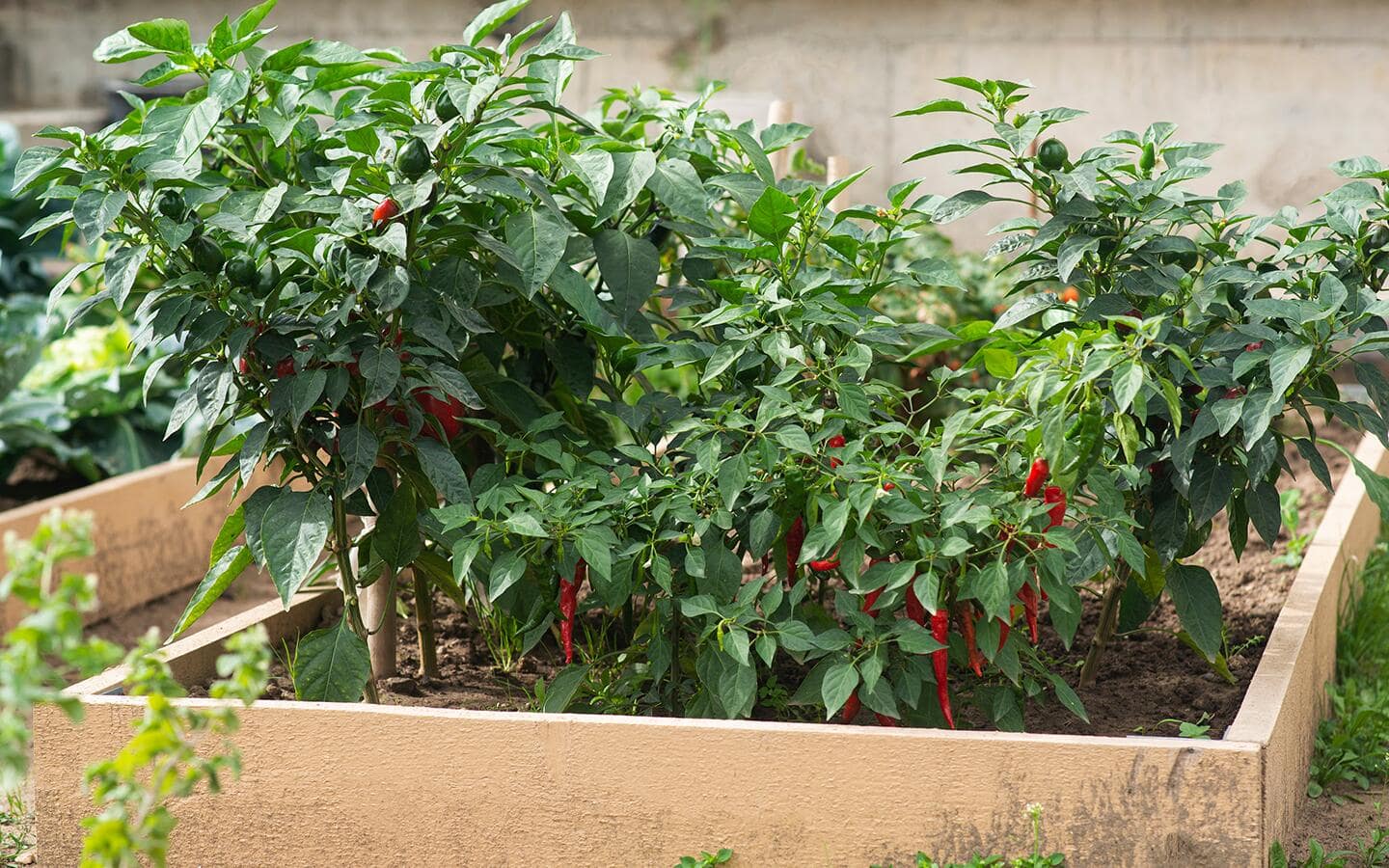
Peppers thrive when planted alongside crops that help maintain soil moisture and repel pests.
Best Companion Plants for Peppers
- Onions
- Spinach
- Tomatoes
- Carrots
- Squash
- Parsley
- Dill
- Thyme
Why These Plants Work Together
Herbs like dill and thyme attract beneficial insects such as ladybugs and parasitic wasps, which feed on aphids and caterpillars that damage pepper plants.
Leafy greens also help maintain soil moisture around pepper roots.
7. Legume Companion Plants
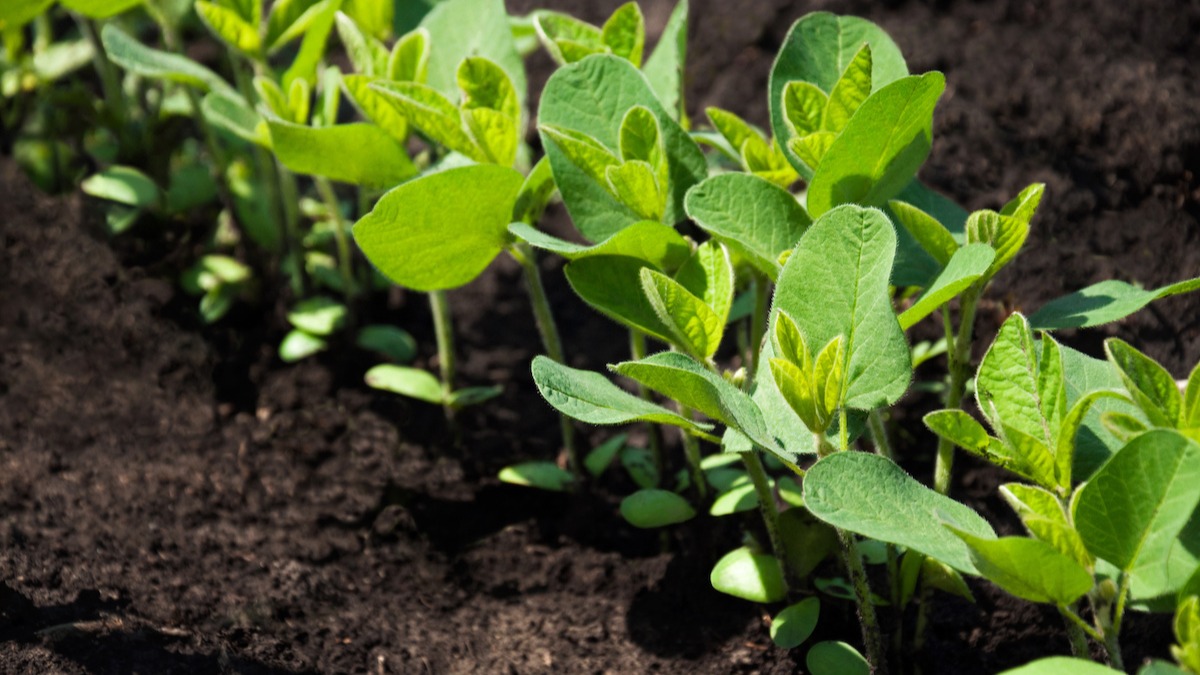
Legumes including beans and peas play a vital role in sustainable gardens because they fix nitrogen into the soil.
Best Companion Plants for Legumes
- Corn
- Potatoes
- Eggplant
- Peas
- Carrots
- Strawberries
- Broccoli
- Cauliflower
Why These Plants Work Together
Corn and beans are famously paired in the Three Sisters planting method, where beans climb corn stalks while enriching soil with nitrogen.
Brassicas like broccoli and cauliflower also benefit from the extra nutrients legumes provide.
8. Lettuce Companion Plants
Lettuce is a versatile crop that grows well with many vegetables because of its shallow root system.
Best Companion Plants for Lettuce
- Beets
- Cabbage
- Carrots
- Spinach
- Corn
- Peas
- Cucumbers
- Dill
- Onions
Why These Plants Work Together
Lettuce acts as a living mulch, shading soil and preventing weeds. Its fast growth also makes it ideal for filling gaps between slower-growing crops.
This technique helps maximize harvests in small gardens and raised beds.

Companion Planting and Livestock Integration
For small farms practicing integrated farm care, companion planting works even better when animals are part of the system.
For example:
- Chickens eat garden pests and fertilize soil.
- Ducks control slugs and snails in vegetable beds.
- Bees improve pollination for crops like cucumbers and squash.
Combining plant diversity with thoughtful livestock management creates a balanced farm ecosystem where plants and animals support each other naturally.
Final Thoughts: A Smarter Way to Garden
Companion planting is not just a gardening trick—it’s a strategy used by experienced farmers to create healthier, more resilient food systems.
By pairing the right plants together, you can:
- Reduce pest problems naturally
- Improve soil fertility
- Increase harvest yields
- Support pollinators and beneficial insects
Over time, your garden becomes more than a place where food grows. It becomes a living ecosystem where plants, soil, insects, and animals work together.
And that is the heart of sustainable farming and organic gardening growing food in harmony with nature rather than against it. 🌱