April is one of the most exciting months in the gardening calendar. The soil begins to warm, daylight stretches longer, and the promise of a productive growing season finally feels real. For gardeners and small farmers practicing organic gardening and sustainable farming, April is not just about planting seeds — it’s about laying the foundation for a thriving ecosystem that supports plants, livestock, and the land itself.
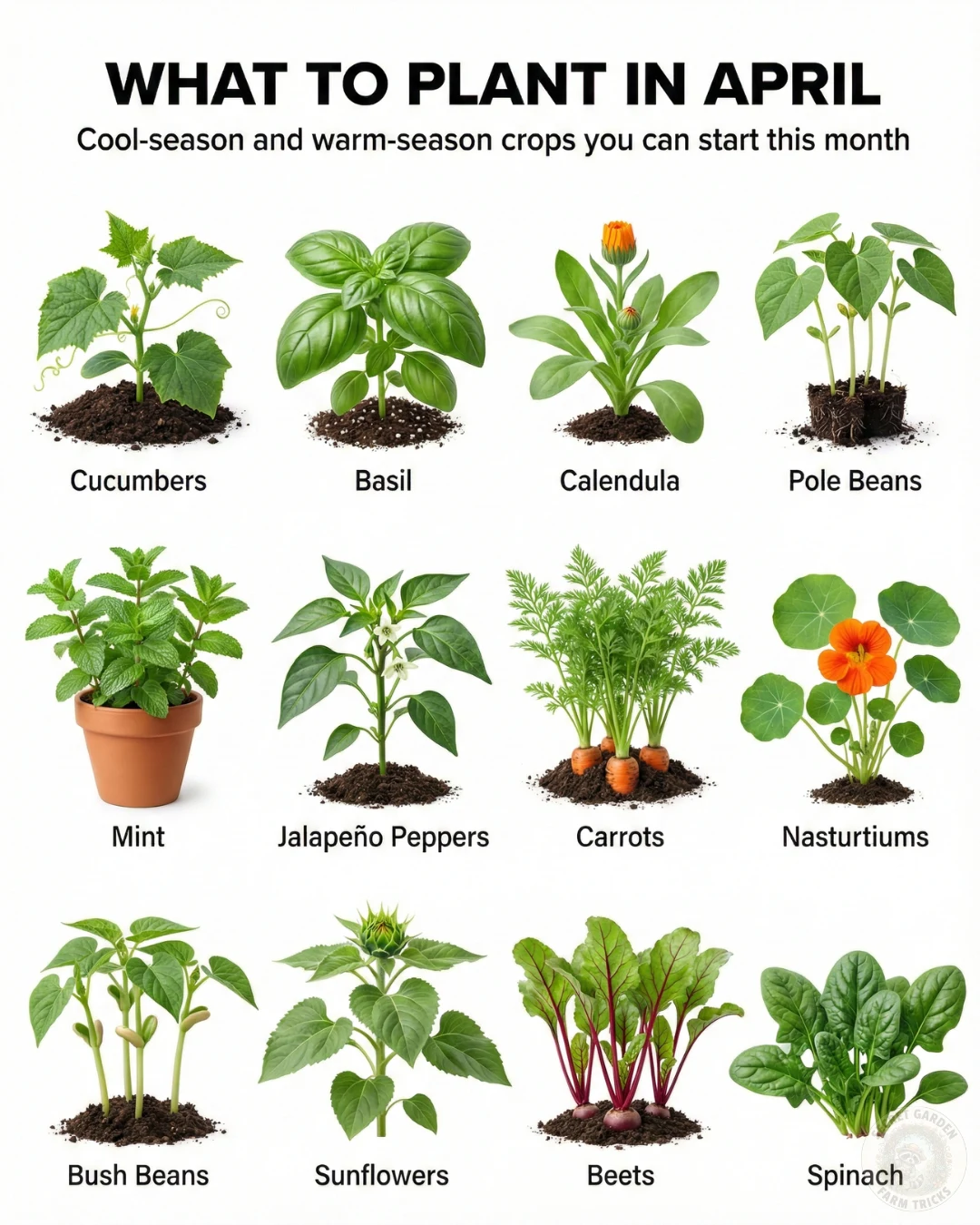
There are cucumbers, basil, calendula, pole beans, mint, jalapeño peppers, carrots, nasturtiums, bush beans, sunflowers, beets, and spinach — represent a powerful mix of cool-season and warm-season crops that can be started during this important transition month.
When planted thoughtfully, these crops help create a garden that is productive, resilient, and deeply connected to the rhythms of nature.
Let’s explore how to make the most of April planting season.
Why April Is a Critical Month for Garden Success
April sits at the intersection between winter preparation and summer productivity. In many climates, the soil is workable again, but temperatures are still cool enough for hardy vegetables.
This means April planting often includes two categories:
Cool-season crops that thrive in mild temperatures
Warm-season crops that begin indoors or are planted once frost risk passes
Understanding this balance is one of the most valuable gardening tips experienced farmers share.
When you stagger these plantings correctly, your garden produces food continuously from early spring into late summer.
Fast-Growing Cool-Season Crops
Some of the most rewarding crops to plant in April are those that mature quickly and tolerate cooler soil.
Spinach
Spinach is one of the earliest vegetables to thrive in spring. It germinates in cool soil and grows rapidly, often ready for harvest in about 30–45 days.
Planting tip:
Sow seeds directly into loose, compost-rich soil. Harvest outer leaves frequently to extend the season.
Spinach is also valuable for small farms because extra leaves can supplement poultry feed.
Carrots
Carrots prefer cool soil during germination. April planting allows roots to develop before summer heat intensifies.
Best practice:
Use loose, stone-free soil to avoid misshapen roots.
Carrots also pair well with companion crops like onions and lettuce, helping maximize space in raised beds.
Beets
Beets are remarkably resilient and produce both edible roots and leafy greens.
Farm care tip:
Thin seedlings early to encourage larger root growth. The thinned greens can be eaten or fed to chickens.
Warm-Season Crops That Thrive After Frost
Some plants in the image, like cucumbers and beans, prefer warmer soil and should be planted after the last frost date in your region.
Cucumbers
Cucumbers grow quickly once temperatures rise. April is a good time to prepare soil and start seeds indoors if frost risk remains.
Gardening tip:
Train cucumber vines vertically on trellises. This improves airflow, reduces disease, and produces cleaner fruit.
Ducks on small farms also help control cucumber pests like slugs and beetles.
Pole Beans and Bush Beans
Beans are excellent crops for sustainable farming systems because they fix nitrogen in the soil, improving fertility for future crops.
Pole beans climb vertically, while bush beans stay compact.
Planting advice:
Wait until soil temperatures reach at least 60°F (16°C) before sowing.
Jalapeño Peppers
Peppers require warm soil and steady sunlight. April is ideal for transplanting seedlings started indoors.
Organic gardening tip:
Mulch heavily around pepper plants to retain moisture and stabilize soil temperature.
Peppers also benefit from companion plants like basil and onions that deter pests naturally.
Herbs and Flowers That Support the Garden
April is not just about vegetables. Herbs and flowers play essential roles in farm care and pest management.
Basil
Basil is a classic companion plant for tomatoes and peppers.
It helps repel certain insects and improves flavor in nearby crops.
Start basil indoors in cooler climates or plant outdoors once temperatures warm.
Mint
Mint is vigorous and spreads easily, making containers the best option.
Beyond culinary use, mint can help deter ants and certain insects from vegetable beds.
Calendula
Calendula flowers attract beneficial insects and pollinators.
These insects help control pests naturally, reducing the need for chemical treatments.
For sustainable farms, flowering plants like calendula are essential components of healthy ecosystems.
Nasturtiums
Nasturtiums are often used as trap crops, attracting pests away from vegetables.
They also produce edible flowers and leaves.
Plant them along garden edges to protect crops like cucumbers and beans.
Sunflowers: A Powerful Addition to the Garden
Sunflowers are more than decorative.
They serve several important roles in sustainable farming:
- Attract pollinators
- Provide seeds for chickens and birds
- Act as windbreaks for delicate crops
- Improve soil structure with deep roots
Plant sunflowers along garden borders to create natural habitat for beneficial insects.
Integrating Gardening with Livestock Management
For homesteaders and small farmers, gardening and animal care should work together.
For example:
- Chickens consume damaged vegetables and insects.
- Duck manure enriches compost piles.
- Sunflower seeds become poultry feed.
This integration strengthens the farm ecosystem and reduces waste.
Healthy soil grows healthy crops, and healthy crops support livestock nutrition.
Practical April Gardening Tips for Success
To get the most from your April planting season, keep these strategies in mind:
1. Prepare soil carefully.
Add compost and loosen soil before planting.
2. Watch the weather closely.
Late frosts can still occur in early spring.
3. Use mulch.
Mulching protects seedlings and stabilizes moisture levels.
4. Rotate crops each year.
Crop rotation prevents disease and maintains soil fertility.
5. Plant successively.
Sow small amounts of seeds every few weeks for continuous harvests.
These habits are the backbone of effective organic gardening and sustainable farm management.
Final Thoughts: April Is the Beginning of the Growing Story
Every thriving garden begins with thoughtful planning in early spring.
April offers an opportunity not just to plant seeds, but to design a system where vegetables, herbs, flowers, and livestock all support one another.
When you plant spinach beside carrots, basil near peppers, and flowers among vegetables, you create a landscape that works with nature rather than against it.
And that is the heart of sustainable farming.
Each seed planted in April carries the promise of future harvests, healthier soil, and a deeper connection to the land.
With patience, observation, and consistent care, your garden will reward you season after season.