Folate does not get as much attention as protein, vitamin C, or magnesium, but it quietly supports some of the most important jobs in the body.
This B vitamin, also called vitamin B9, helps with normal cell division, DNA formation, and red blood cell production. That means it matters for everyday energy, tissue repair, and overall nutritional balance. It is especially important during periods of growth, and it gets even more attention in pregnancy because of its role in early fetal development.
Most people do not think about folate until they feel run down or start looking more closely at their nutrient intake. The good news is that many whole foods naturally provide it.
Why folate matters more than people think
Folate supports the body in a few key ways:
- It helps with normal cell division
- It supports red blood cell formation
- It plays a role in DNA synthesis
- It works with other B vitamins to support energy metabolism
When folate intake is too low over time, some people may feel more tired, weaker, or nutritionally depleted. That is one reason folate-rich foods are worth eating regularly, not just occasionally.
1. Broccoli
Broccoli is one of the easiest folate-rich vegetables to use often. It also provides fiber, vitamin C, and plant compounds that support overall health.
What makes broccoli especially helpful is that it fits almost any meal. It can be steamed, roasted, stir-fried, or added to soups without much effort.
Easy ways to use it
Roast broccoli with olive oil, add it to rice bowls, or serve it with salmon or eggs for a balanced meal.
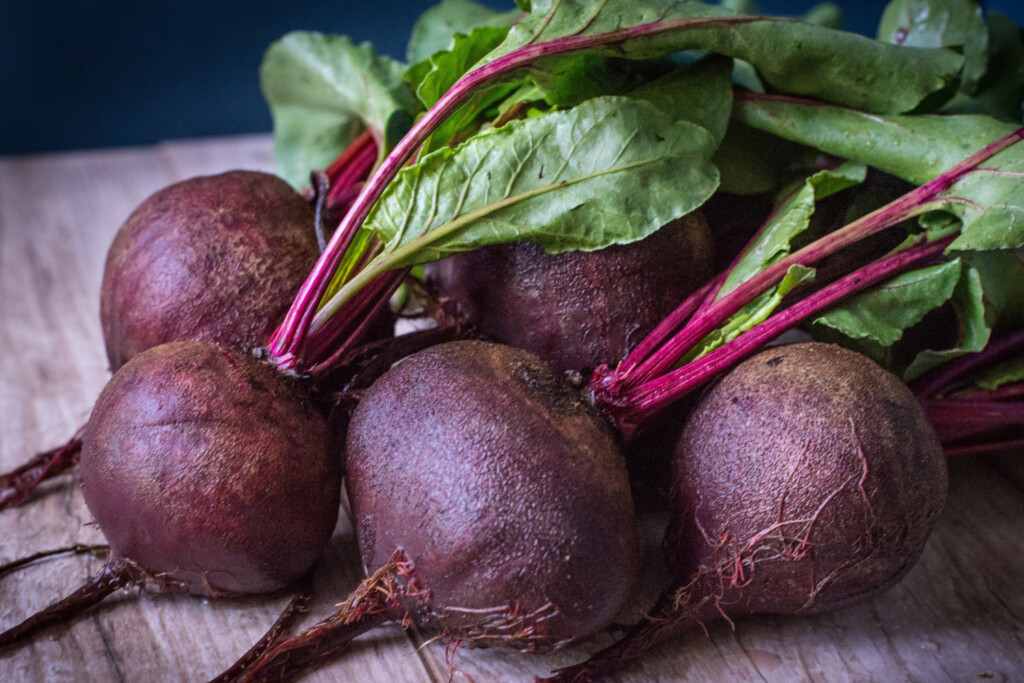
2. Beets
Beets are often mentioned for circulation and performance, but they are also a useful source of folate. They bring natural plant pigments, fiber, and minerals along with that.
Their earthy flavor is not for everyone at first, but they become much easier to enjoy when roasted or sliced thin into salads.
Easy ways to use them
Roast beets, blend them into soups, or pair them with citrus and greens for a colorful salad.
3. Cauliflower
Cauliflower is another practical vegetable that supports folate intake. It is mild in flavor, which makes it one of the easiest vegetables to repeat through the week.
It also provides fiber and vitamin C, so it helps more than one nutrition goal at the same time.
Easy ways to use it
Roast cauliflower, mash it, add it to curries, or toss it into sheet-pan dinners.
4. Spinach
Spinach is one of the classic foods associated with folate, and for good reason. It is also rich in vitamin K, magnesium, and antioxidants.
Leafy greens are one of the smartest ways to increase nutrient density without making meals heavy. Even a small handful added to your plate improves the overall quality of the meal.
Easy ways to use it
Stir spinach into omelets, soups, smoothies, pasta, or grain bowls.
5. Asparagus
Asparagus is one of the most underrated folate-rich vegetables. It is light, elegant, and surprisingly filling when paired with protein and healthy fat.
It also adds fiber and vitamin K, which makes it a great spring and summer vegetable for balanced meals.
Easy ways to use it
Roast asparagus with olive oil, grill it, or serve it with eggs, chicken, or fish.

6. Brussels Sprouts
Brussels sprouts bring folate along with fiber and antioxidant plant compounds. They are especially helpful for people who want vegetables that feel hearty and satisfying.
When cooked well, Brussels sprouts become slightly sweet and nutty instead of bitter.
Easy ways to use them
Roast them until caramelized, then finish with lemon or garlic for more flavor.
7. Avocado
Avocado is not only about healthy fats. It also provides folate, which makes it a useful addition when you want a meal that feels both satisfying and nutrient-dense.
Because avocado contains fat, it can also make a high-fiber meal feel more complete and steady.
Easy ways to use it
Add avocado to toast, salads, grain bowls, or eggs for a simple folate-supportive meal.
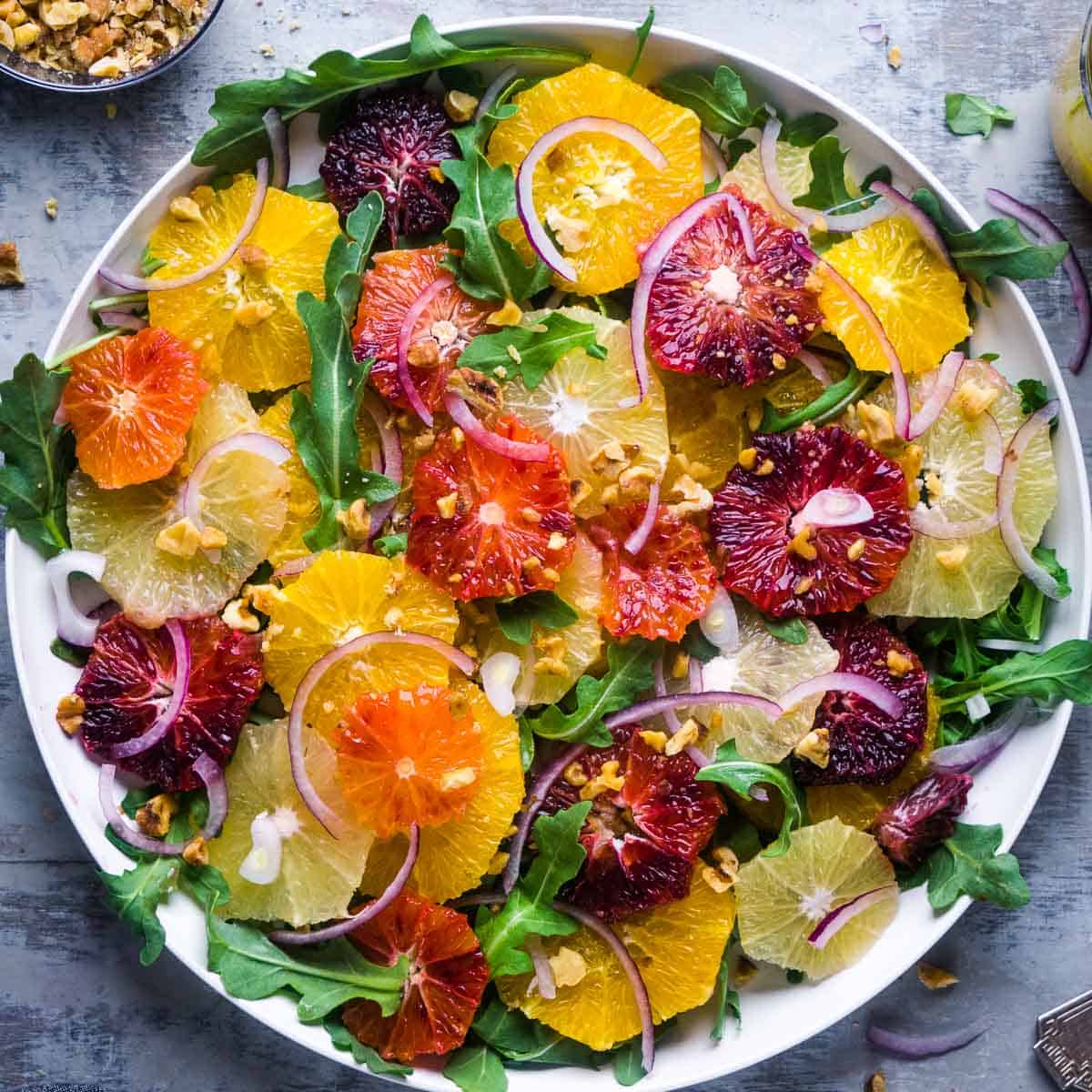
8. Citrus (Orange)
Oranges and other citrus fruits are not the most famous folate foods, but they still contribute. They also add vitamin C, which supports collagen formation and helps improve iron absorption from plant foods.
That makes citrus especially helpful when paired with folate-rich beans, lentils, or greens.
Easy ways to use it
Eat an orange as a snack, add citrus to salads, or pair it with breakfast oats or yogurt.
9. Lentils
Lentils are one of the strongest foods on this list because they deliver folate, fiber, and plant protein all at once.
They are especially helpful for people who want steadier energy and better fullness from meals. Lentils also work beautifully in budget-friendly cooking.
Easy ways to use them
Make lentil soup, add them to salads, or serve them with roasted vegetables and olive oil.
10. Beans
Beans are another excellent folate-rich food. Whether you choose black beans, kidney beans, or white beans, they offer a strong mix of fiber, plant protein, and minerals.
They help make meals more filling, which is one reason they work so well in nutritious everyday eating.
Easy ways to use them
Add beans to soups, tacos, bowls, salads, or mash them into spreads.
11. Peas
Peas are small, but nutritionally very useful. They provide folate along with fiber, plant protein, and vitamin C.
Frozen peas are especially convenient because they are affordable, easy to store, and quick to cook.
Easy ways to use them
Add peas to pasta, soups, rice dishes, or simple vegetable sautés.

How to build a folate-rich plate
The easiest way to get more folate is not to obsess over one food. It is to combine a few of them regularly.
A simple folate-supportive plate could look like this:
- Lentils or beans for the base
- Spinach, broccoli, or asparagus for the vegetable
- Avocado or olive oil for satisfaction
- Orange on the side for extra vitamin C
That kind of meal supports energy, fullness, and better overall nutrient coverage.
When you may notice a difference
Folate is not a quick-fix nutrient, so do not expect overnight changes.
What people often notice first is:
- meals feel more balanced
- digestion improves from more fiber
- energy feels steadier when nutrient quality improves overall
Longer-term benefits come from consistency.
Final takeaway
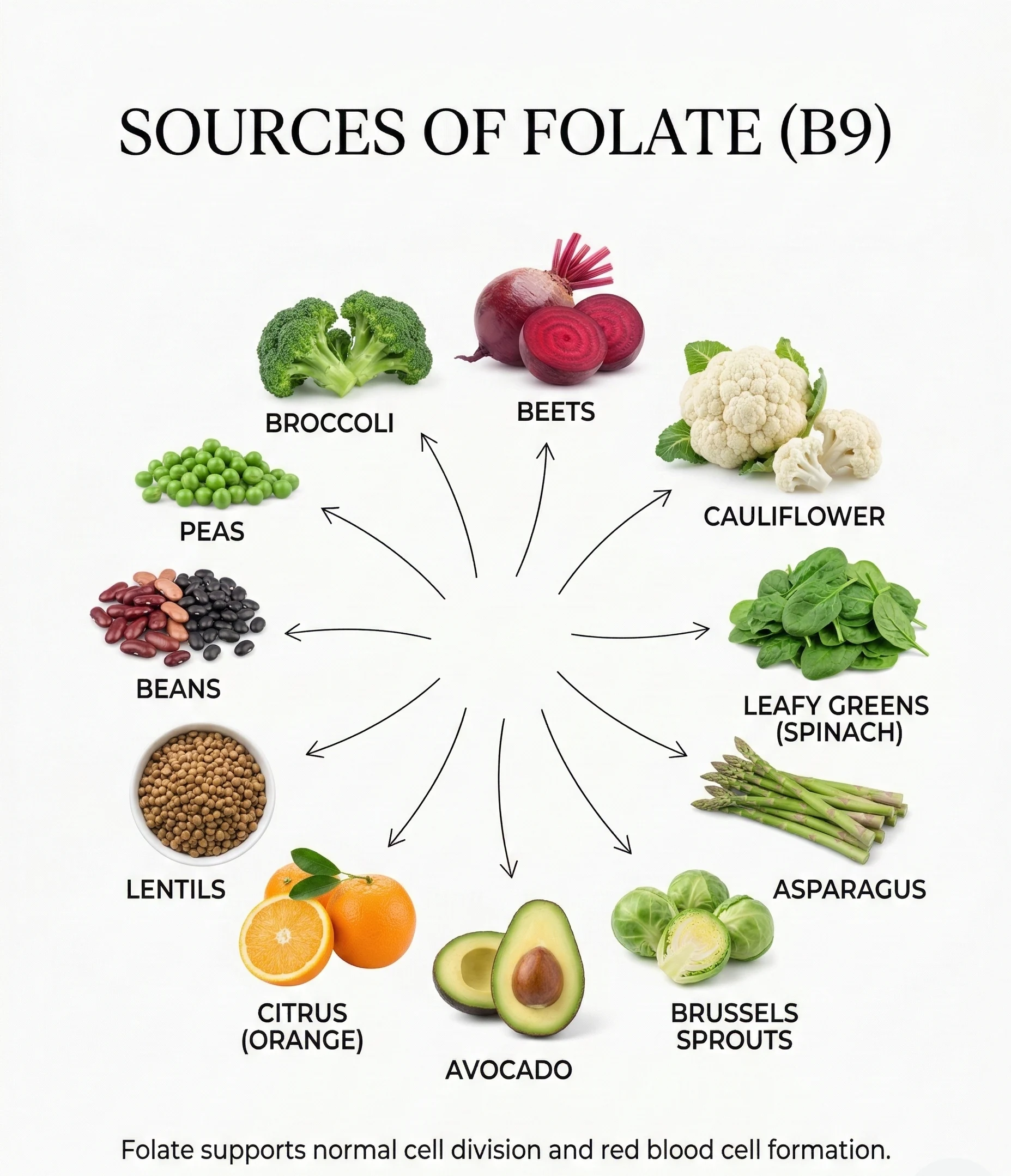
If you want to eat more folate-rich foods, you do not need anything fancy. Start with the foods in this image: broccoli, beets, cauliflower, spinach, asparagus, Brussels sprouts, avocado, oranges, lentils, beans, and peas.
They support more than one thing at once, and that is what makes them so valuable. They help you build meals that are not just healthier on paper, but more useful in real life.