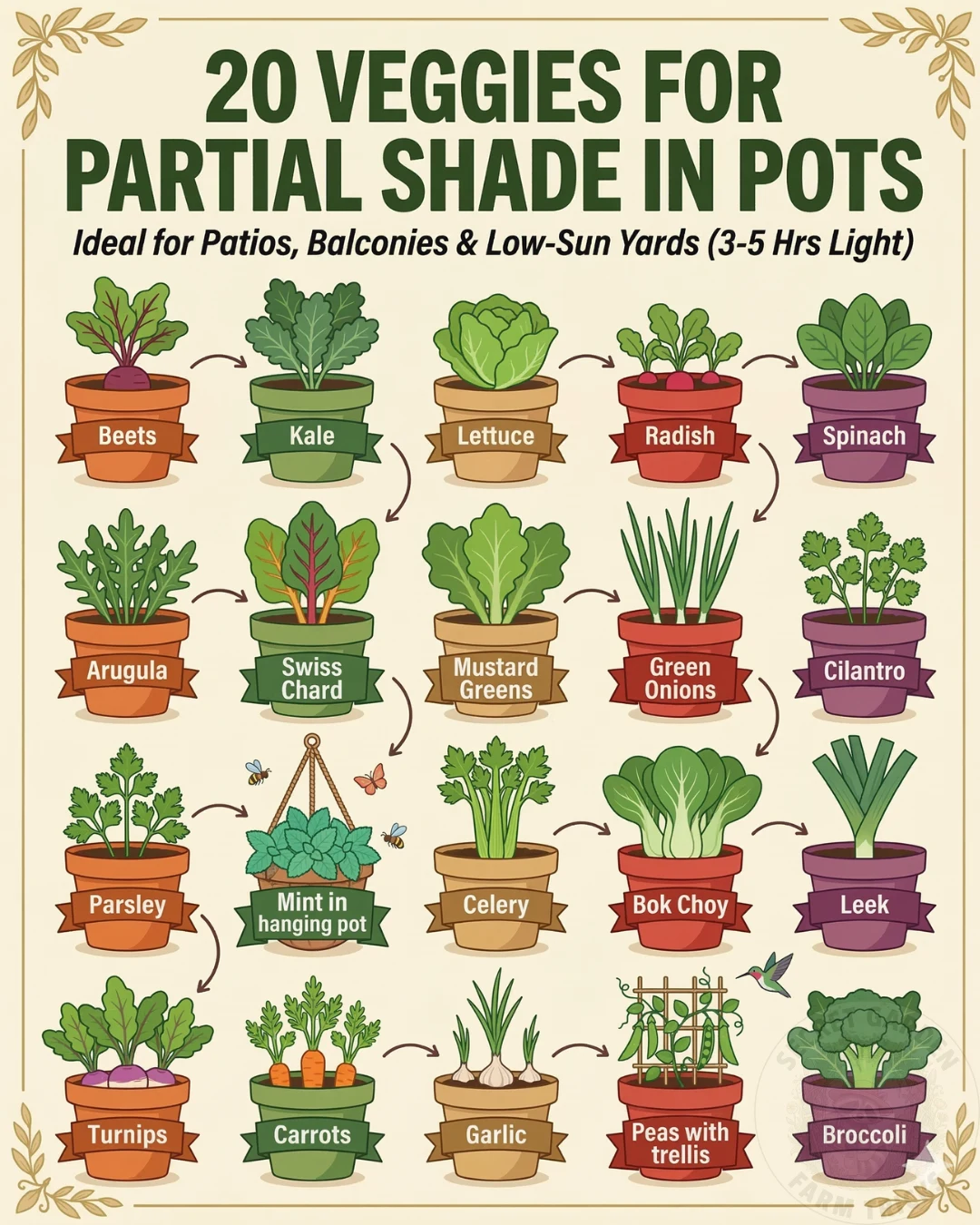
Not every gardener has a sun-drenched backyard. Some of the most rewarding container gardens grow on shaded patios, apartment balconies, side yards, and tucked-away corners that only receive 3 to 5 hours of light a day. That list is encouraging for a reason. It proves you do not need perfect conditions to grow useful, fresh food. You just need the right crops, the right containers, and a few habits that make low-light gardening work in your favor.
Why Partial Shade Can Still Produce An Excellent Harvest
Many new gardeners assume “less sun” means “less chance of success.” That is only partly true. Fruiting crops like tomatoes, peppers, and cucumbers usually want more intense sun. But leafy greens, roots, herbs, and cool-season vegetables often perform beautifully in gentler light.
In fact, partial shade can be an advantage. Greens such as lettuce, spinach, arugula, bok choy, Swiss chard, and kale often stay softer and sweeter when protected from harsh afternoon sun. Herbs like cilantro and parsley may bolt more slowly. Even root crops such as radish, carrots, turnips, and beets can do well if they get steady care and enough light to keep growing steadily.
So instead of thinking of shade as a limitation, think of it as a specialty growing zone.
These include:
Leafy greens and brassicas: kale, lettuce, spinach, arugula, Swiss chard, mustard greens, bok choy, broccoli
Roots and bulbs: beets, radish, turnips, carrots, garlic, leek
Herbs and flavor builders: cilantro, parsley, mint, green onions, celery
Climbers and extras: peas with a trellis
This is a practical lineup because it gives you salads, cooking greens, soup ingredients, garnish herbs, and a few compact staple crops without needing a full-sun plot.
How much light is enough?
There focuses on 3–5 hours of light, which is a very workable range for these crops. But the quality of that light matters too.
Morning sun is usually gentler and often ideal. Bright filtered light can also help. A balcony that gets 4 hours of direct morning light may outperform a spot with 5 harsh afternoon hours followed by heat stress and dry soil.
Here is the easy rule: if the space is bright enough for you to comfortably read without artificial light during the day, and it receives a few hours of direct or strong indirect sun, many of these crops have a real chance to grow well.
Best container setup for partial-shade vegetables
Container gardening succeeds when the pot matches the crop.
Choose deeper pots than you think you need
This matters most for carrots, beets, turnips, radish, garlic, and leeks. Shallow containers dry out fast and restrict root development. Use:
- Deep pots for root crops
- Medium to large pots for broccoli, kale, Swiss chard, bok choy, and celery
- Wide bowls or window boxes for lettuce, spinach, arugula, cilantro, parsley, and green onions
Make drainage non-negotiable
Every pot should have drainage holes. Shade slows evaporation, so soggy soil becomes more likely if water cannot escape. This is especially important for mint, cilantro, lettuce, and spinach, which dislike sitting in stagnant, heavy soil.
Use a loose, rich potting mix
Do not use garden soil in containers. A good potting mix stays airy, drains well, and still holds enough moisture. For leafy vegetables, mix in compost before planting. That gives a gentle nutrient supply and improves moisture balance.
The smartest way to group these crops in pots
One of the easiest ways to improve results is to group plants by similar needs.
Group 1: Quick salad harvests
Plant lettuce, spinach, arugula, mustard greens, cilantro, and green onions together in containers near the kitchen. These are the crops you will harvest often. Keeping them close makes you more likely to notice dry soil, trim regularly, and enjoy the process.
Group 2: Steady producers
Use separate or larger containers for kale, Swiss chard, bok choy, celery, parsley, and broccoli. These crops need a little more room and tend to reward consistent care over a longer stretch.
Group 3: Root crops
Grow radish, beets, carrots, turnips, garlic, and leeks in deeper containers where roots can form properly without crowding.
Group 4: Vertical space savers
The image wisely includes peas with a trellis and mint in a hanging pot. Peas make use of upward space, while mint is best isolated because it spreads aggressively. A hanging container keeps it productive without letting it overtake everything else.
Practical care tips for each type of crop
Leafy greens: harvest often, not all at once
For lettuce, spinach, arugula, mustard greens, kale, and Swiss chard, the best method is “cut and come again.” Snip outer leaves first and let the center keep growing. This gives you repeated harvests from the same pot and encourages fresh growth.
Actionable tip: harvest in the morning when leaves are cool and crisp. They taste better and store better.
Root crops: thin early
With carrots, radish, beets, and turnips, overcrowding is one of the biggest reasons for disappointing roots. Seedlings often come up close together. Thin them early so each root has room to size up.
Actionable tip: do not feel bad about thinning. Crowded roots stay small, twisted, or woody. Giving up a few seedlings early usually means a better harvest later.
Herbs and stem crops: keep them actively growing
Cilantro, parsley, green onions, celery, leeks, and garlic do best when growth stays steady. Do not let them swing from bone-dry to soaked. Even moisture matters more than perfect feeding.
Actionable tip: trim parsley and cilantro regularly, but avoid stripping the whole plant at once. Small, repeated harvests keep them productive longer.
Peas and broccoli: give support and airflow
Peas need a trellis, even in pots. A simple bamboo frame or wire support works. Broccoli needs room and airflow so foliage stays healthier in humid conditions.
Actionable tip: rotate containers every week or so if one side gets more light. This helps plants grow evenly instead of leaning hard in one direction.
Watering in partial shade: the balance that matters most
Shadier pots dry more slowly than full-sun containers, but they still cannot be ignored. The mistake many gardeners make is watering on a fixed schedule instead of checking the soil first.
Push your finger into the top inch or two of the potting mix. If it feels dry, water thoroughly. If it still feels moist, wait. That small habit prevents both underwatering and overwatering.
In partial shade, overwatering can be the hidden problem. Yellowing leaves, slow growth, and limp plants are not always signs of thirst. Sometimes roots are sitting in overly wet soil.
Feeding container vegetables without overcomplicating it
Because pots have limited soil, nutrients get used up faster than in the ground. The easiest system is simple:
- Start with compost-rich potting mix
- Feed lightly every couple of weeks during active growth
- Focus on steady nutrition, not heavy doses
Leafy crops usually respond well to gentle, regular feeding. Root crops need a more balanced approach. Too much nitrogen can give you lots of leaves and tiny roots.
Common mistakes in low-light container gardening
Growing the wrong crops
Trying to force sun-loving fruiting plants into a 3-hour-light balcony usually leads to frustration. Build around crops that actually suit the space.
Using containers that are too small
Small pots dry out quickly and restrict roots. Bigger containers are often easier to manage, not harder.
Letting plants crowd each other
A full pot looks nice at first, but overcrowded containers reduce airflow and weaken growth.
Ignoring harvest timing
Many partial-shade vegetables are at their best when picked young and often. Waiting too long can turn tender crops into tough ones.
A simple weekly routine for better results
A good container garden does not need constant fussing. It needs regular attention.
Once or twice a week:
- Check soil moisture by hand
- Harvest outer leaves from greens
- Thin crowded seedlings
- Remove yellow or damaged foliage
- Rotate pots if growth is leaning
- Tie peas to their trellis
- Trim herbs lightly to encourage new growth
This routine takes very little time, but it keeps problems small and plants productive.
Final thoughts
The image’s list of 20 best vegetables for partial shade in pots is more than inspiring – it is practical. Beets, kale, lettuce, radish, spinach, arugula, Swiss chard, mustard greens, green onions, cilantro, parsley, mint, celery, bok choy, leek, turnips, carrots, garlic, peas, and broccoli all offer real possibilities for gardeners working with limited sun.
That matters because good gardening is not about having ideal conditions. It is about understanding your space and making smart choices within it. When you match the right crops to the right light, use containers that support healthy roots, and build a steady care routine, even a quiet low-sun corner can become a productive, beautiful food garden.
That is where confidence grows. One pot of lettuce. One container of carrots. One hanging basket of mint. Small successes become daily habits, and daily habits become a thriving, sustainable practice.