Many people don’t realize that even “healthy” meals can lead to energy crashes if they digest too quickly.
This is often related to how fast glucose enters the bloodstream. Foods that digest rapidly can lead to spikes and drops in energy, while meals rich in fiber, protein, and healthy fats tend to digest more gradually.
Chia pudding is a simple example of this balance done right.
Thanks to its high soluble fiber content, chia seeds absorb liquid and form a gel-like texture that slows digestion. When combined with protein or fats, the effect becomes even more balanced.
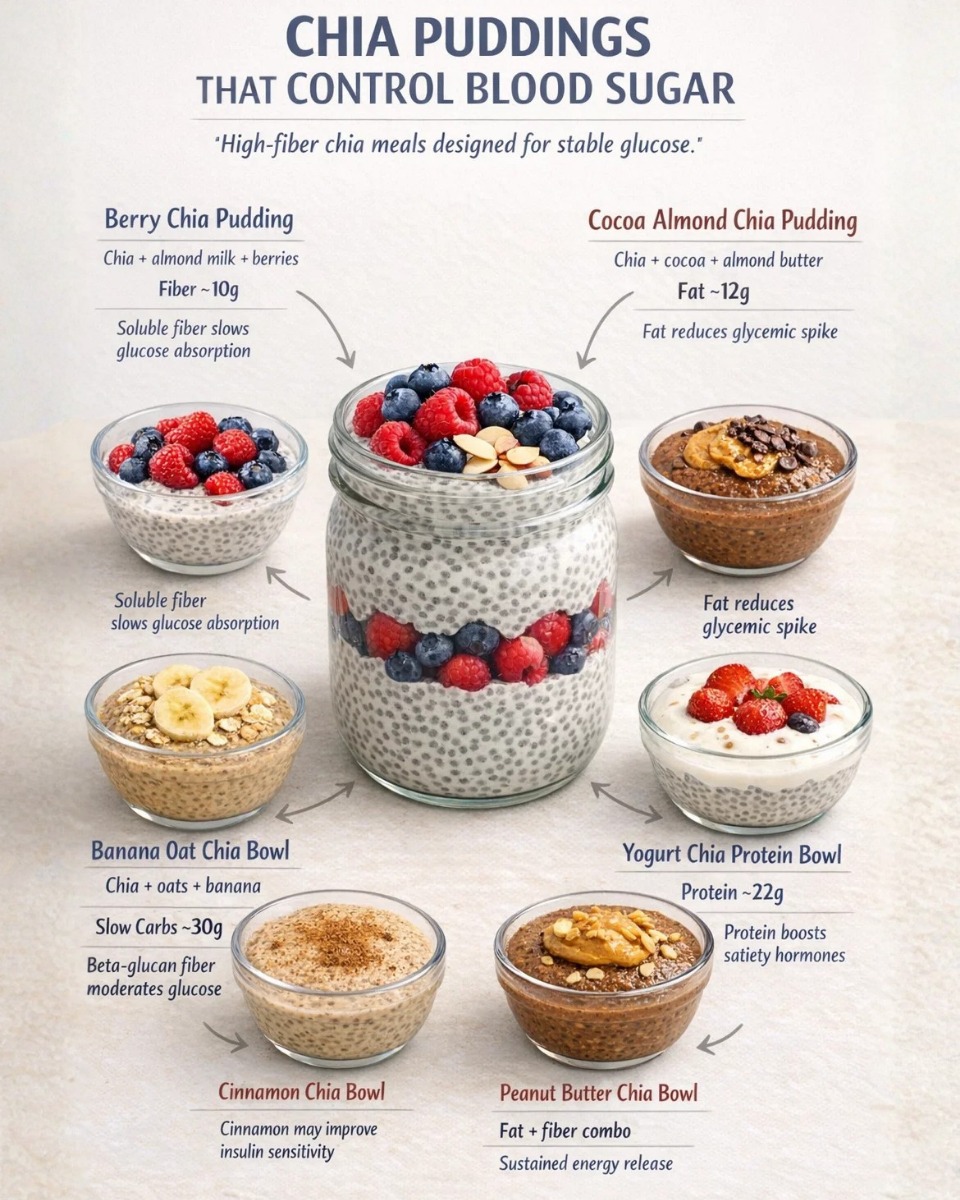
Below are 6 chia pudding recipes from the infographic, explained in detail so you can easily use them.
Why Chia Seeds Work for Blood Sugar Balance
Chia seeds are rich in soluble fiber, which:
- Slows carbohydrate absorption
- Helps reduce rapid glucose fluctuations
- Supports longer-lasting energy
They also pair well with both protein (like yogurt) and healthy fats (like nut butter), making them highly adaptable.
Basic Chia Pudding Formula
Before the recipes, here’s the simple base:
- 2 tablespoons chia seeds
- 1 cup liquid (milk or plant milk)
- Let sit 2–4 hours or overnight
Then add toppings depending on your goal.
1. Berry Chia Pudding
Focus: Fiber + antioxidants
Ingredients:
- Chia seeds
- Almond milk
- Mixed berries
Why it works:
Berries are naturally lower in sugar compared to many fruits and provide additional fiber. Combined with chia, this helps slow glucose absorption.

2. Cocoa Almond Chia Pudding
Focus: Fat + fiber combination
Ingredients:
- Chia seeds
- Cocoa powder
- Almond butter
- Milk
Why it works:
Healthy fats from almond butter may help reduce rapid spikes in blood sugar when combined with carbohydrates.

3. Banana Oat Chia Bowl
Focus: Slow-release carbohydrates
Ingredients:
- Chia seeds
- Oats
- Banana
- Milk
Why it works:
Oats provide beta-glucan fiber, which slows digestion. Banana adds natural sweetness, while chia helps moderate the overall glucose response.

4. Yogurt Chia Protein Bowl
Focus: High protein (~22g)
Ingredients:
- Chia seeds
- Greek yogurt
- Berries
Why it works:
Protein helps regulate appetite and slows digestion. This combination is one of the most balanced options in the list.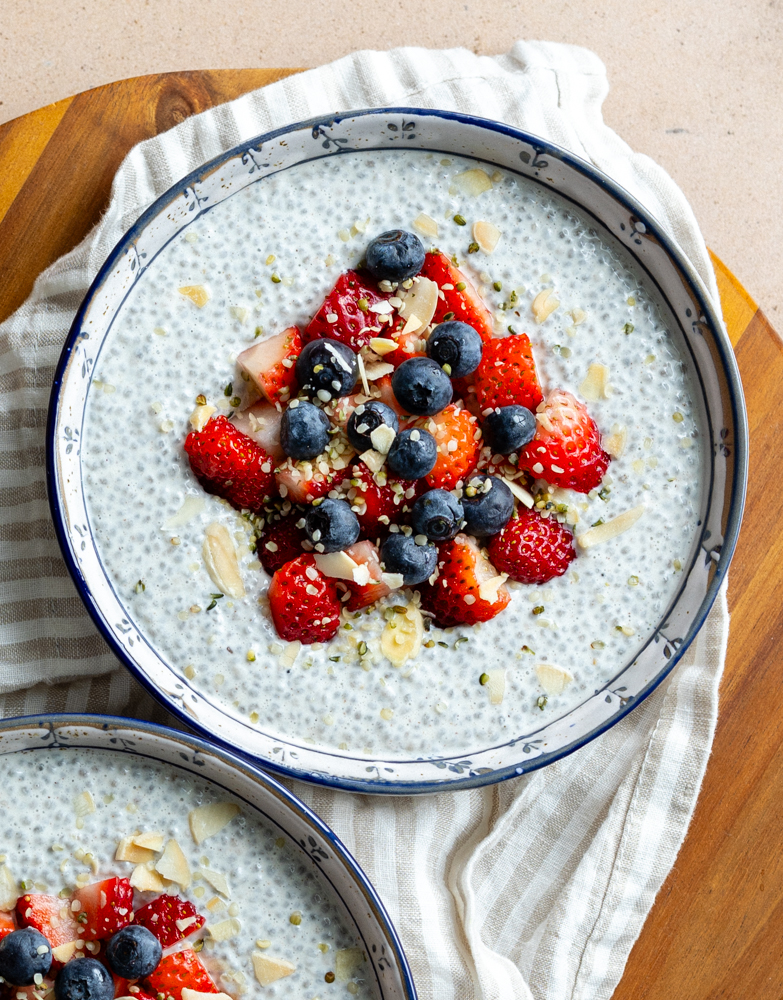
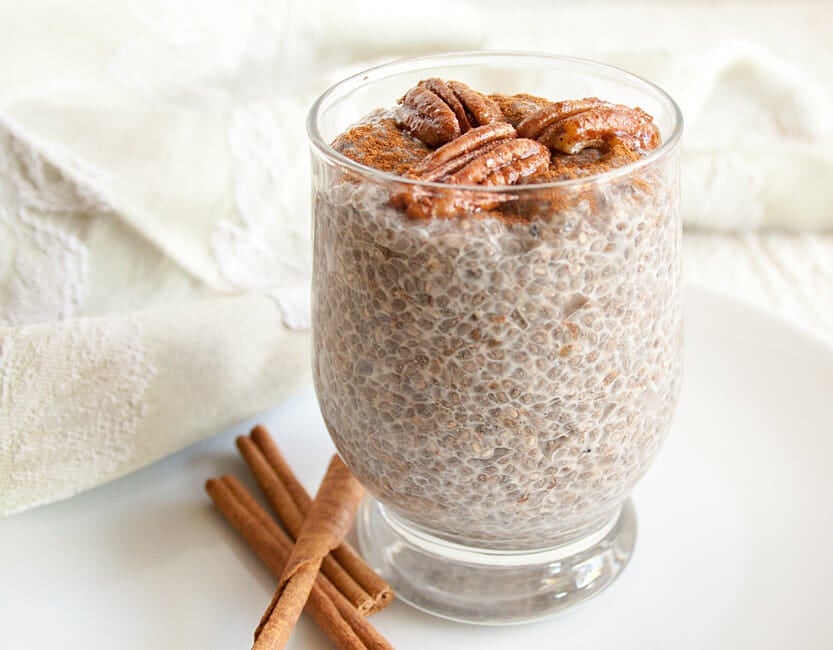
5. Cinnamon Chia Bowl
Focus: Flavor + metabolic support
Ingredients:
- Chia seeds
- Milk
- Cinnamon
Why it works:
Cinnamon is often associated with supporting insulin sensitivity, though effects may vary. It also enhances flavor without adding sugar.
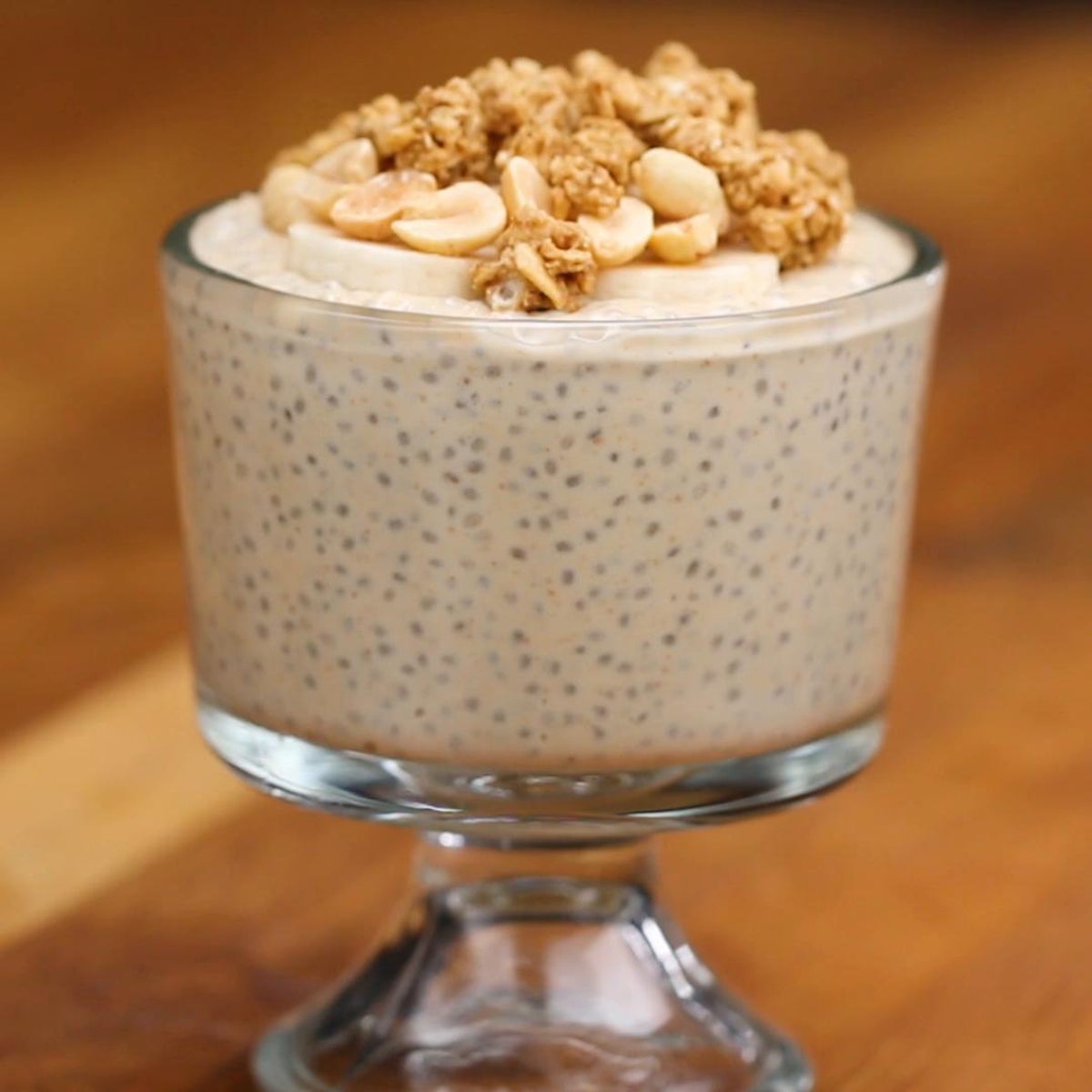
6. Peanut Butter Chia Bowl
Focus: Sustained energy
Ingredients:
- Chia seeds
- Peanut butter
- Milk
Why it works:
The combination of fat and fiber slows digestion and supports more gradual energy release.
How to Build a More Balanced Chia Pudding
The most effective chia bowls follow this structure:
Step 1: Base
- Chia seeds + milk
Step 2: Add fiber or carbs
- Berries
- Oats
- Fruit
Step 3: Add protein or fat
- Greek yogurt
- Nut butter
- Seeds
Practical Tips for Better Results
- Let chia soak fully to improve texture and digestion
- Avoid adding too many sweet toppings at once
- Combine chia with protein or fat for better balance
- Use unsweetened milk if possible
A Note on Monitoring and Individual Response
While chia-based meals are often used as part of balanced eating patterns, individual responses to carbohydrates can vary.
Some people choose to track how meals affect their energy or glucose levels using:
- Routine blood tests like fasting glucose or HbA1c
- Continuous glucose monitoring (CGM) devices
- Nutrition guidance from a registered dietitian
These approaches are often part of standard care pathways in many regions, though access and coverage can vary depending on location and health systems.
Why This Matters Long-Term
Small, consistent choices—like combining fiber, protein, and fat—can influence how stable your energy feels throughout the day.
Meals that digest more slowly are often associated with:
- Fewer energy dips
- Better appetite regulation
- More consistent focus
Final Thoughts
Chia puddings are simple, flexible, and easy to prepare ahead of time.
By combining chia seeds with the right ingredients, you can create meals that are more balanced and satisfying—without complicated recipes or strict rules.
Consistency matters more than perfection, and small adjustments in how you build your meals can make a noticeable difference over time.