A healthy houseplant does not begin with fertilizer. It does not begin with a watering schedule either. More often, it begins with something simpler and far more overlooked: the pot.
Plant care gets much easier when the container suits the plant’s natural habits. When the pot is wrong, you end up fighting avoidable problems: soggy roots, dried-out soil, weak growth, broken stems, or plants that simply never look settled. When the pot is right, everyday care feels calmer, clearer, and much more successful.
Why the right pot matters more than many people think
Most indoor plant struggles are not caused by a lack of effort. They come from a mismatch between the plant, the soil, and the container.
A moisture-loving plant in a fast-drying pot may wilt constantly. A drought-tolerant plant in a water-retentive container may rot. A trailing vine in a tabletop pot may get tangled and broken. A plant that loves humidity may struggle in dry indoor air unless its container helps hold moisture nearby.
That is why pot choice is not a decoration decision alone. It is part of the care system.
A well-matched pot helps with:
- Moisture balance
- Root health
- Airflow
- Plant shape and growth habit
- Ease of maintenance
- Overall appearance in the home
If you get this right, everything else becomes more manageable.
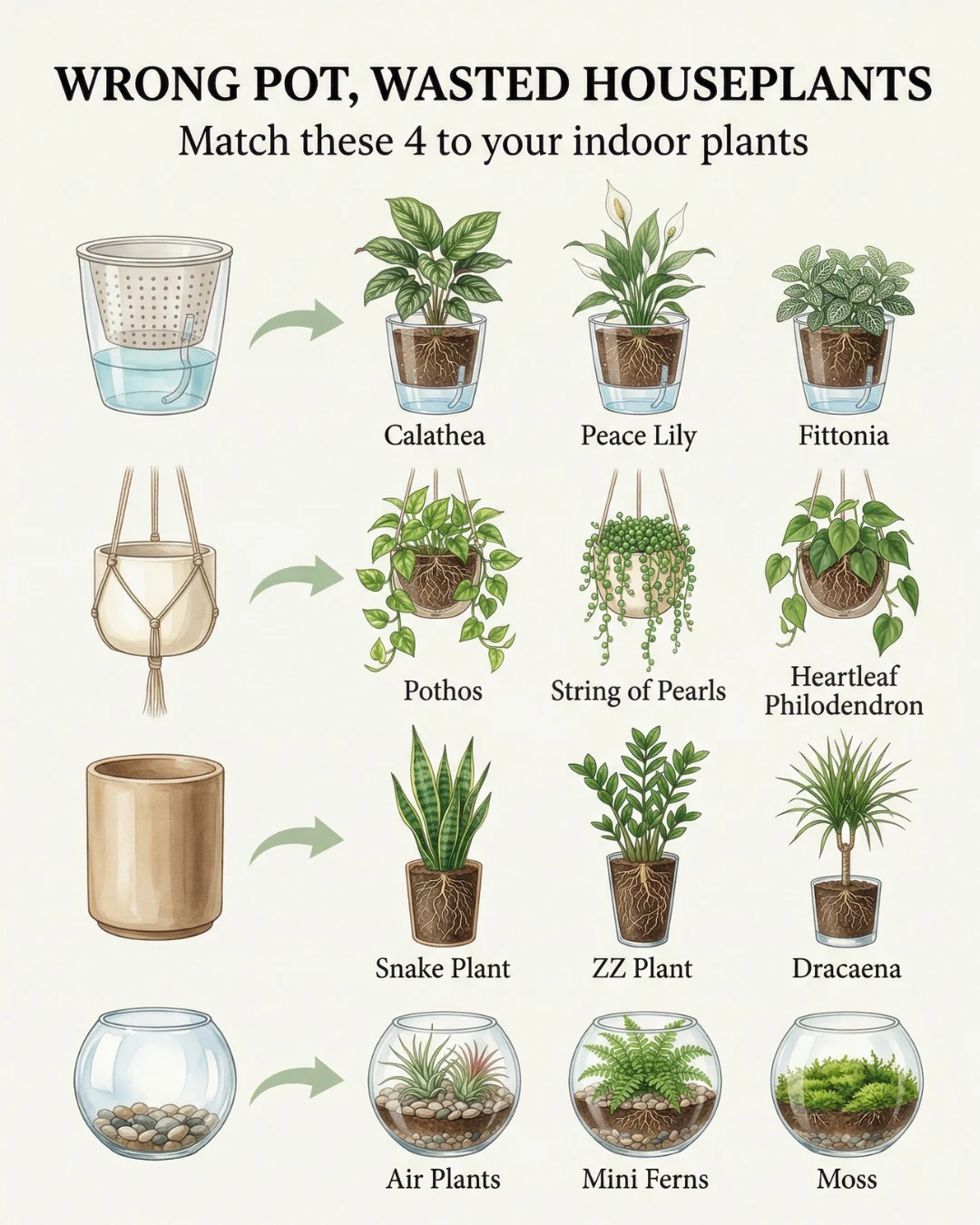
4 pot types matched to 12 houseplants
The image organizes indoor plants into four useful container categories.
1. Self-watering or reservoir-style pots
Matched with:
- Calathea
- Peace Lily
- Fittonia
These plants generally appreciate more even moisture and can react quickly when they dry out too far.
2. Hanging planters
Matched with:
- Pothos
- String of Pearls
- Heartleaf Philodendron
These plants either trail naturally or look better when allowed to spill downward instead of crowding a shelf.
3. Standard upright pots
Matched with:
- Snake Plant
- ZZ Plant
- Dracaena
These are upright growers that do best in stable containers with good drainage and a simple watering routine.
4. Glass bowl or terrarium-style containers
Matched with:
- Air Plants
- Mini Ferns
- Moss
These plants are often used in humidity-friendly decorative displays, especially where a softer, enclosed look is desired.
The visual is simple, but the principle behind it is powerful: match the pot to the plant’s growth style and moisture needs.
Best pot choice for moisture-loving houseplants: Self-watering pots
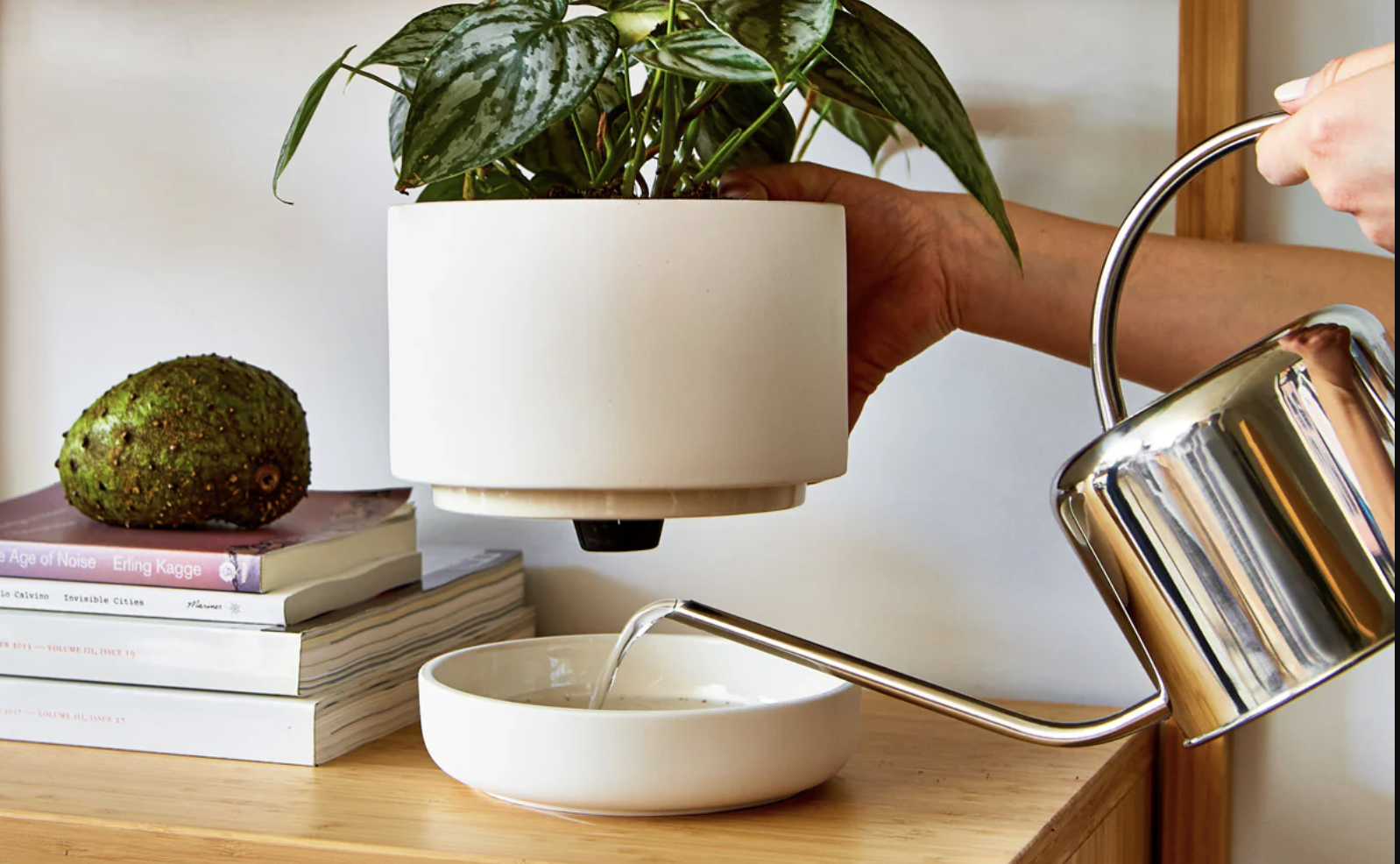
These are the kinds of plants that usually prefer consistent moisture rather than dramatic wet-dry swings.
Why this works
A self-watering pot can help keep the root zone more evenly moist, especially for plant owners who occasionally forget a watering day or live in homes with dry indoor air.
Practical tip
Do not assume self-watering means “set it and forget it.” Check the reservoir and the soil regularly at first. Some plants drink more than expected, while others may stay wetter longer depending on season, room temperature, and light.
Best care note for these plants
- Calathea prefers steady moisture and dislikes drying out hard.
- Peace Lily often droops dramatically when thirsty, but repeated extreme drying stresses it.
- Fittonia is beautiful but can be very quick to wilt if the soil becomes too dry.
A self-watering setup can smooth out those extremes and make care much easier.
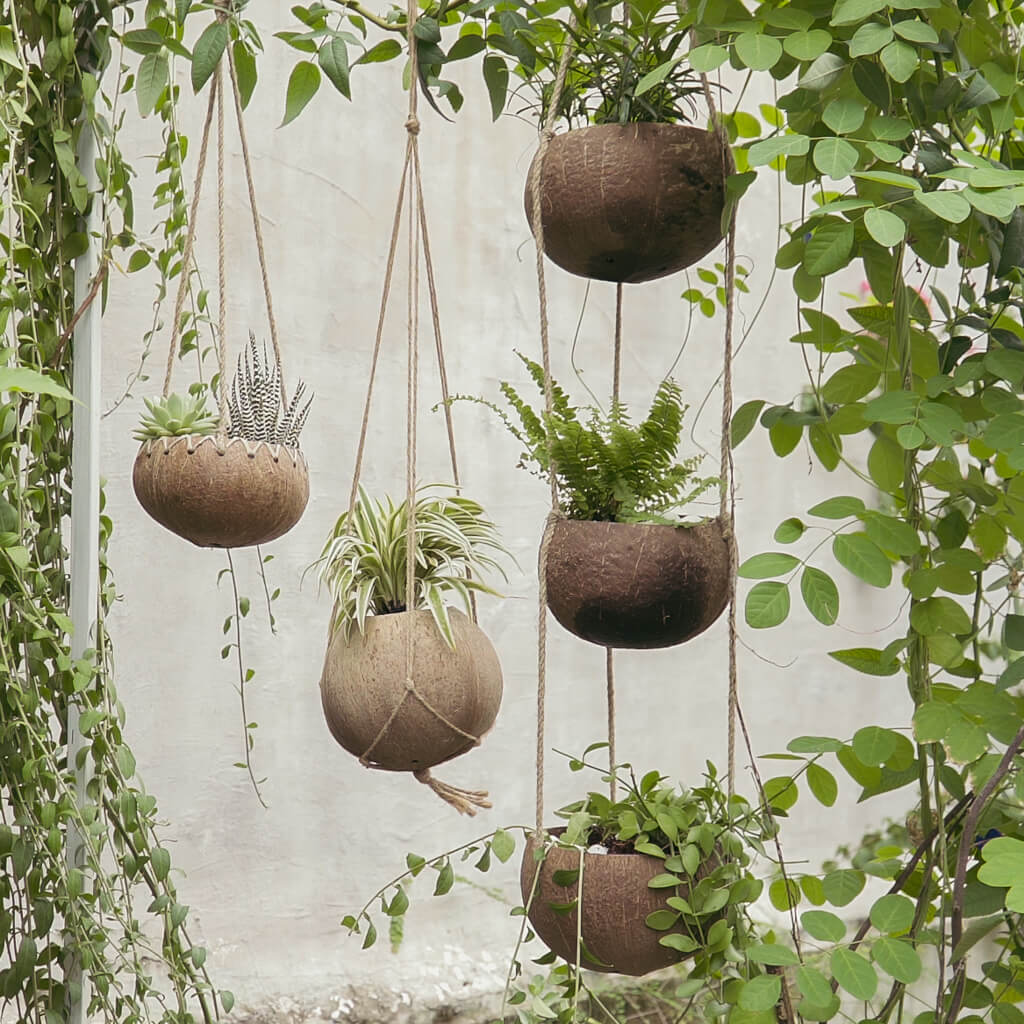
Best pot choice for trailing houseplants: Hanging planters
Why this works
Trailing plants naturally want space to spill downward. In hanging containers, their stems stay visible, attractive, and less likely to break. They also take up less horizontal space, which is especially useful in apartments or smaller homes.
Practical tip
Place hanging plants where you can still inspect them easily. People often hang them too high, then forget to check soil moisture, pests, or vine health.
Plant-specific notes
- Pothos is forgiving and excellent for beginners.
- Heartleaf Philodendron grows beautifully in hanging baskets and responds well to regular trimming.
- String of Pearls needs more caution with watering than the other two. It trails well, but it dislikes staying wet too long.
For trailing plants, the pot is not just a container. It is part of the display and part of the plant’s structure.
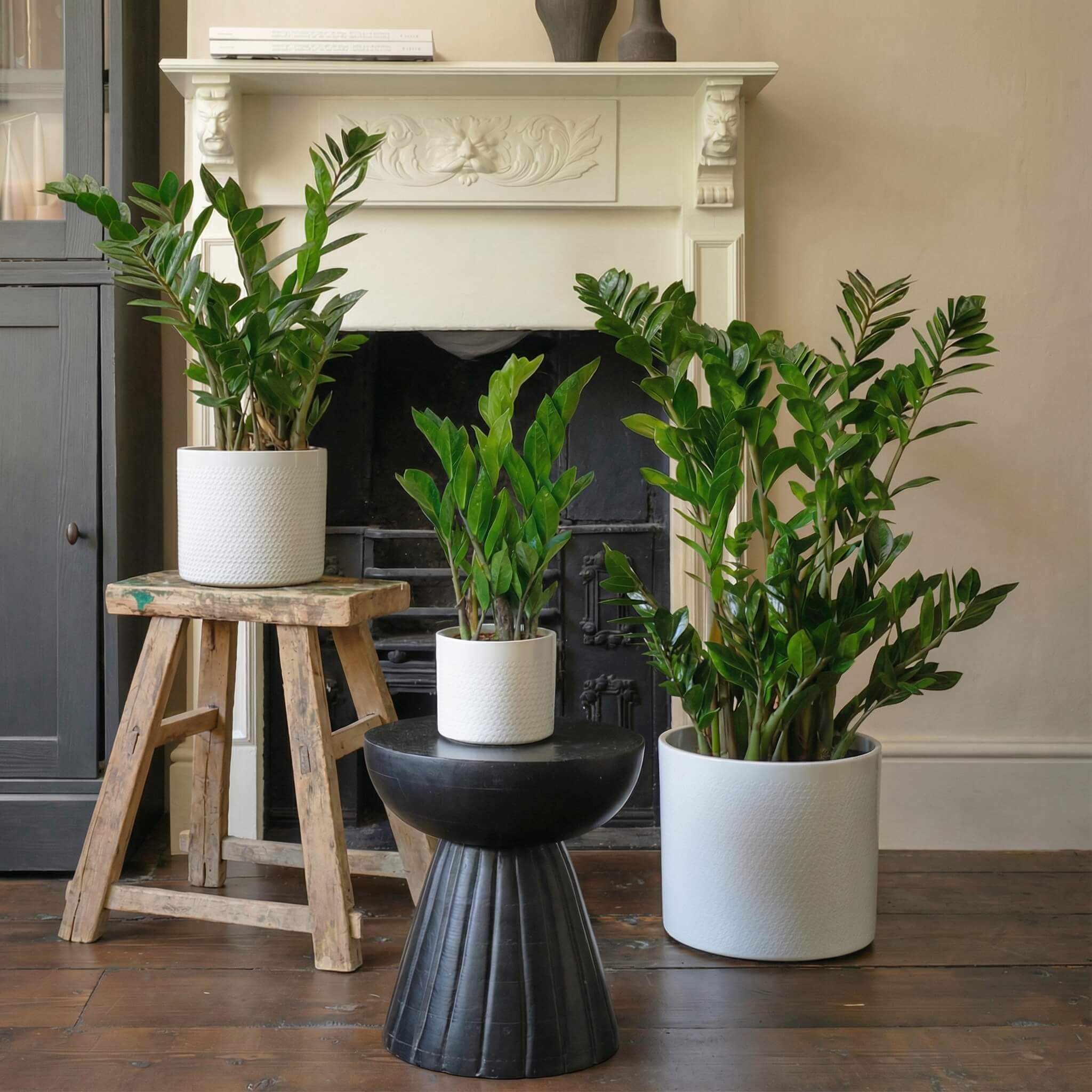
Best pot choice for upright, low-fuss plants: Standard pots
Why this works
These plants are generally more upright and architectural. They do not need hanging space or a moisture reservoir. What they do need is stability, drainage, and soil that does not remain soggy.
Practical tip
Choose a pot only slightly larger than the root ball when repotting these plants. Oversized pots hold too much unused wet soil, which can increase the risk of root problems.
Plant-specific notes
- Snake Plant likes to dry somewhat between waterings.
- ZZ Plant stores water and is very sensitive to chronic overwatering.
- Dracaena likes moderate moisture but still benefits from drainage and a steady, simple container setup.
These are strong choices for people who want houseplants that are attractive without being overly demanding.
Best display choice for humidity-loving mini setups: Glass bowls and terrarium-style containers

Why this works
Glass containers can help maintain a more humid microclimate, which is especially helpful for delicate small plants that prefer moisture in the air around them.
Practical tip
If you use glass containers without drainage, be extra careful with watering. Decorative displays are appealing, but stagnant moisture can cause problems fast. Use a very light hand and avoid water pooling at the bottom.
Plant-specific notes
- Air Plants do not want to sit buried in wet soil. They need airflow even when displayed decoratively.
- Mini Ferns like moisture and humidity, but they still need ventilation.
- Moss often does well in enclosed or semi-enclosed displays if it is not waterlogged.
This kind of setup works best when you think of it as a miniature environment, not just a pretty container.
How to choose the right pot for any indoor plant
When deciding on a pot, ask four simple questions:
1. Does this plant like even moisture or dry cycles?
Moisture-loving plants often do well in containers that retain or regulate water. Drought-tolerant plants usually need drainage and drying time.
2. Does it grow upright or trail?
Trailing plants often look healthier and more natural in hanging or elevated containers. Upright plants usually need balance and support.
3. How large is the root system?
Avoid dramatic pot upgrades. Most houseplants prefer a modest increase in size when repotted.
4. Will I realistically maintain this setup?
A beautiful pot is only helpful if it matches your care habits. Pick systems you will actually monitor.
Common pot mistakes that waste healthy houseplants
Choosing style over function
A pot without drainage may look elegant, but it can quietly create root problems.
Potting into containers that are too large
More soil is not always better. Extra soil often means extra moisture around roots.
Hanging plants too high to care for properly
Out of sight often becomes out of mind.
Using moisture-retentive pots for dry-loving plants
This is especially risky for plants like Snake Plant, ZZ Plant, and String of Pearls.
Treating all indoor plants the same
The image’s strongest lesson is that different plants need different setups. That is exactly right.
A simple weekly routine to keep potted houseplants healthy
A successful plant routine does not need to be complicated. Once a week:
- Check soil moisture with your finger
- Inspect leaves for yellowing, browning, or pests
- Empty standing water from outer containers if needed
- Rotate pots for even growth
- Trim dead leaves or overly long vines
- Check whether roots are crowding the pot
This kind of quiet observation is what turns plant care into confidence.
Final thoughts
When the container supports the plant’s needs, daily care becomes more intuitive. Watering makes more sense. Growth becomes more balanced. Problems show up less often. And your home begins to feel like a place where plants genuinely belong.
That is the kind of knowledge that changes routines for the better. Not because it is complicated, but because it is useful, repeatable, and rooted in how plants actually live.