A garden can have rich soil, careful watering, and strong seedlings, yet still underperform for one simple reason: the plants are not supported the right way.
This is one of the most overlooked skills in gardening. Many vegetables and flowers do not fail because they were planted badly. They fail because they are allowed to sprawl, bend, snap, crowd each other, or collapse under their own weight. Once that happens, airflow drops, disease rises, fruits get dirty, stems break, and harvesting becomes frustrating.
The good news is that this problem is highly fixable. When you match the right support system to the right crop, the whole garden changes. Plants grow straighter. Leaves dry faster after rain. Fruits stay cleaner. Flowers hold their form. Vines use vertical space instead of swallowing paths. And you spend less time rescuing plants after storms.
The most useful support systems include the single bamboo stake, tomato cage, obelisk or tripod, horizontal netting or grid, vertical panel trellis, cage trellis, string trellis, A-frame trellis, lean-to trellis, and arch trellis. Each one suits a different growth habit. Once you understand that principle, staking and trellising stop feeling like guesswork and start becoming part of a smart, productive garden routine.
Why plant support matters more than most gardeners realize
Support is not just about making plants look tidy. It affects plant health and harvest quality in very practical ways.
A supported plant gets better light exposure. That matters because leaves can photosynthesize more efficiently when they are not folded into a dense, tangled mass. Better structure also means better airflow, which reduces the damp conditions that encourage fungal problems. On food crops, support keeps fruits off the ground, reducing rot, slug damage, and soil splash. On flowers, it keeps stems straighter and blooms cleaner, which is especially important if you cut flowers for the house or for market.
Support also saves labor. A plant guided early is easy to manage. A plant rescued late is a weekly struggle.
The first rule: match the support to the plant’s growth habit
Before choosing a structure, ask one simple question: How does this plant naturally grow?
Does it have one main upright stem?
Does it bush outward from the base?
Does it climb by tendrils, twisting stems, or scrambling growth?
Does it grow in a dense block of tall stems that need support together?
Those answers tell you almost everything.
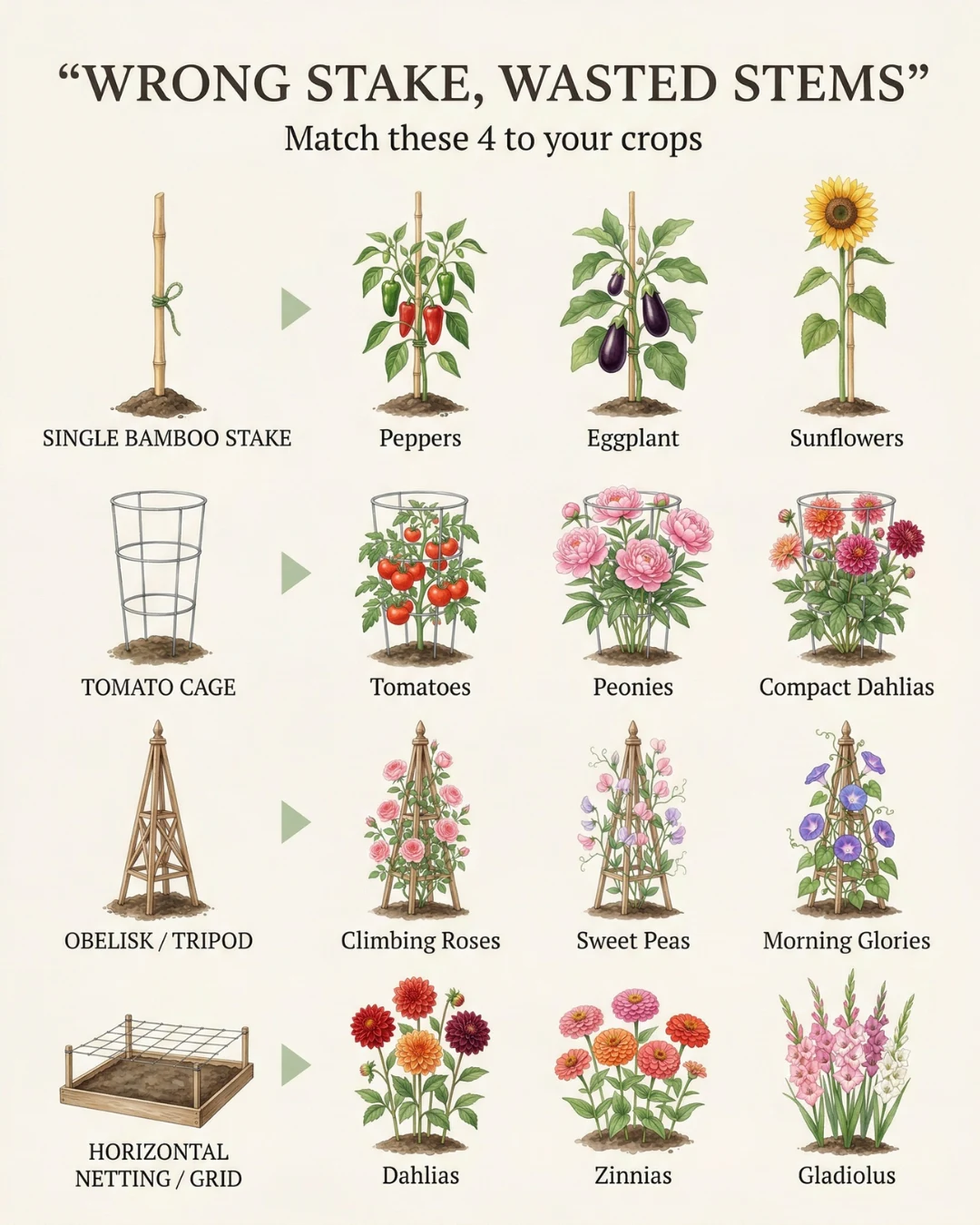
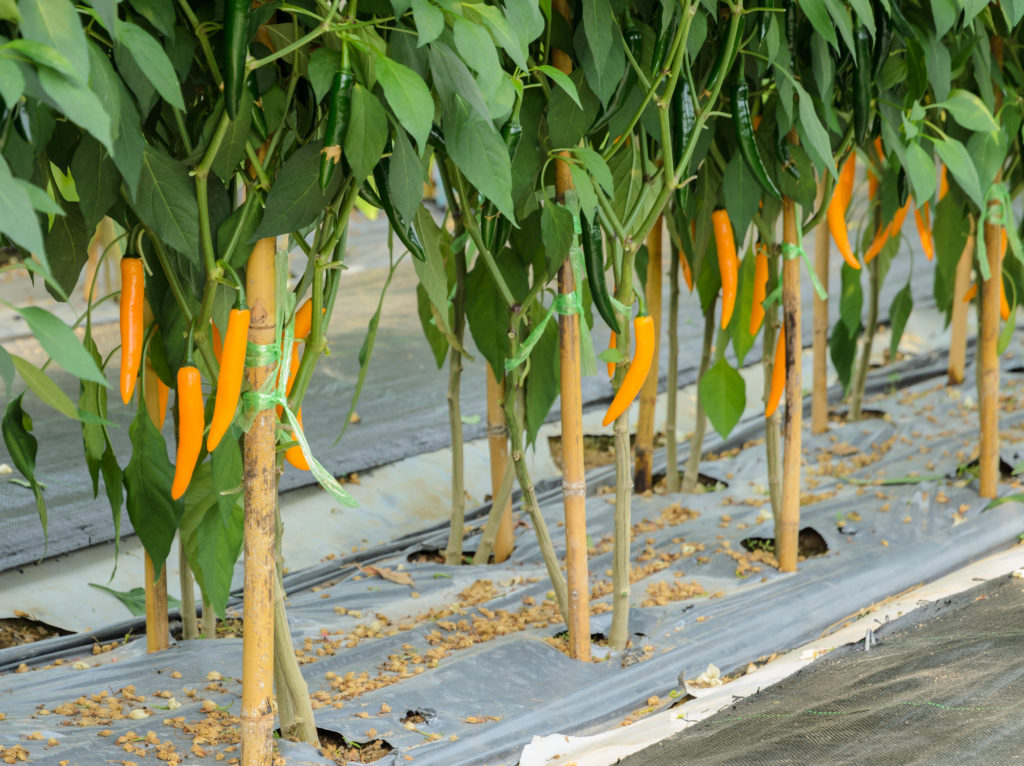
1. Single bamboo stake: best for upright plants with a clear main stem
A single bamboo stake is ideal for crops that mostly grow upward and only need help staying stable. It is simple, affordable, and effective when used at the right time.
Best crops for a single stake
- Peppers
- Eggplant
- Sunflowers
Why it works
These plants usually have a central stem or a strong upright structure, but once fruit or flowers become heavy, that structure can fail. A stake gives the plant an anchor without overcomplicating the setup.
How to use it well
Install the stake early, while the plant is still small. Push it into the soil a short distance from the stem to avoid root damage. Tie the plant loosely with soft ties, cloth strips, or flexible garden tape. Leave room for movement. A plant that can sway slightly develops strength, but a plant whipping wildly in the wind is at risk.
Practical gardening tip
Peppers and eggplant often look fine until the crop begins to load up. Then the side branches spread and split. If you wait until the plant is leaning, you are already late. Stake them before they look like they need it.
2. Cage trellis: a strong option for tomatoes and other heavy growers
Tomato cages are far more useful than their name suggests. They are excellent for plants that branch from the base or carry weight in all directions.
Best crops and flowers for a cage
- Tomatoes
- Peonies
- Compact dahlias
Why it works
A cage supports the plant from every side. Instead of tying each stem individually, you create a frame that the plant grows into naturally. This is especially helpful for crops or flowers that become top-heavy and wide.
Best use for tomatoes
Place the cage at planting time. This is important. Many gardeners wait until the tomato is already large, then struggle to force a cage over sprawling stems. Early placement makes training much easier. As the plant grows, guide stems back inside the cage every few days or once a week.
Best use for peonies
Peonies often look strong until bloom time, then a rainstorm turns them into a collapsed ring of beautiful flowers on the ground. A cage hidden early in the season allows stems to rise through it, giving support without an obvious tied-up look.
Best use for compact dahlias
Compact dahlias still carry surprisingly heavy blooms. A cage keeps the plant upright and symmetrical, especially after summer wind or rain.

3. Obelisk or tripod: best for climbing flowers and ornamental vines
Some plants do not want restraint from the outside. They want something to climb.
Best plants for obelisks and tripods
- Climbing roses
- Sweet peas
- Morning glories
Why it works
An obelisk or tripod provides vertical direction and visual structure. It turns loose, wandering growth into an organized form that is easier to maintain and much more attractive.
How to use it well
Set the structure in place before vines begin searching for support. Gently guide young stems where you want them. Sweet peas usually catch on quickly once started. Morning glories grow fast, so direct them early before they take over neighboring plants. Climbing roses benefit from loose tying and patient shaping rather than tight, vertical forcing.
Practical gardening tip
With climbing roses, slightly angled canes often flower better than canes tied straight up. A little shaping makes a big difference.

4. Horizontal netting or grid: best for tall flowers grown in blocks
This system is one of the smartest tools in a productive flower garden. It supports groups of stems together rather than treating each stem as a separate problem.
Best flowers for horizontal netting
- Dahlias
- Zinnias
- Gladiolus
Why it works
A horizontal grid acts like a support ceiling. Stems grow through the openings and remain upright as they lengthen. This keeps entire patches straighter and greatly reduces the amount of individual tying needed.
How to use it well
Install the grid while plants are still young. Stretch it low over the bed so stems grow up through it. As the plants gain height, the netting holds them in place. In taller plantings, a second level may be helpful.
Practical gardening tip
This is especially valuable for cut-flower growers. Straight stems and upright blooms make harvest cleaner, faster, and more profitable.
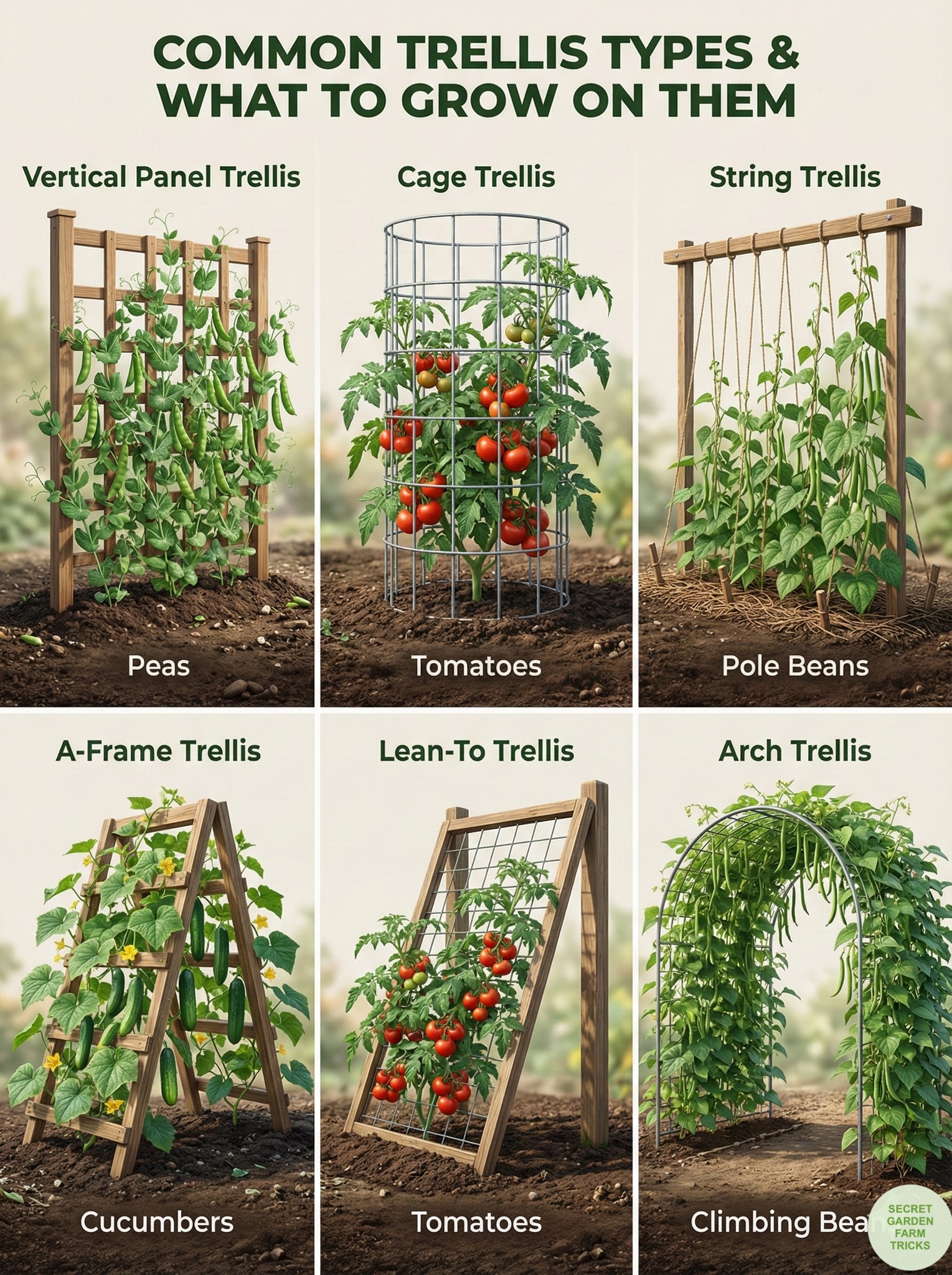
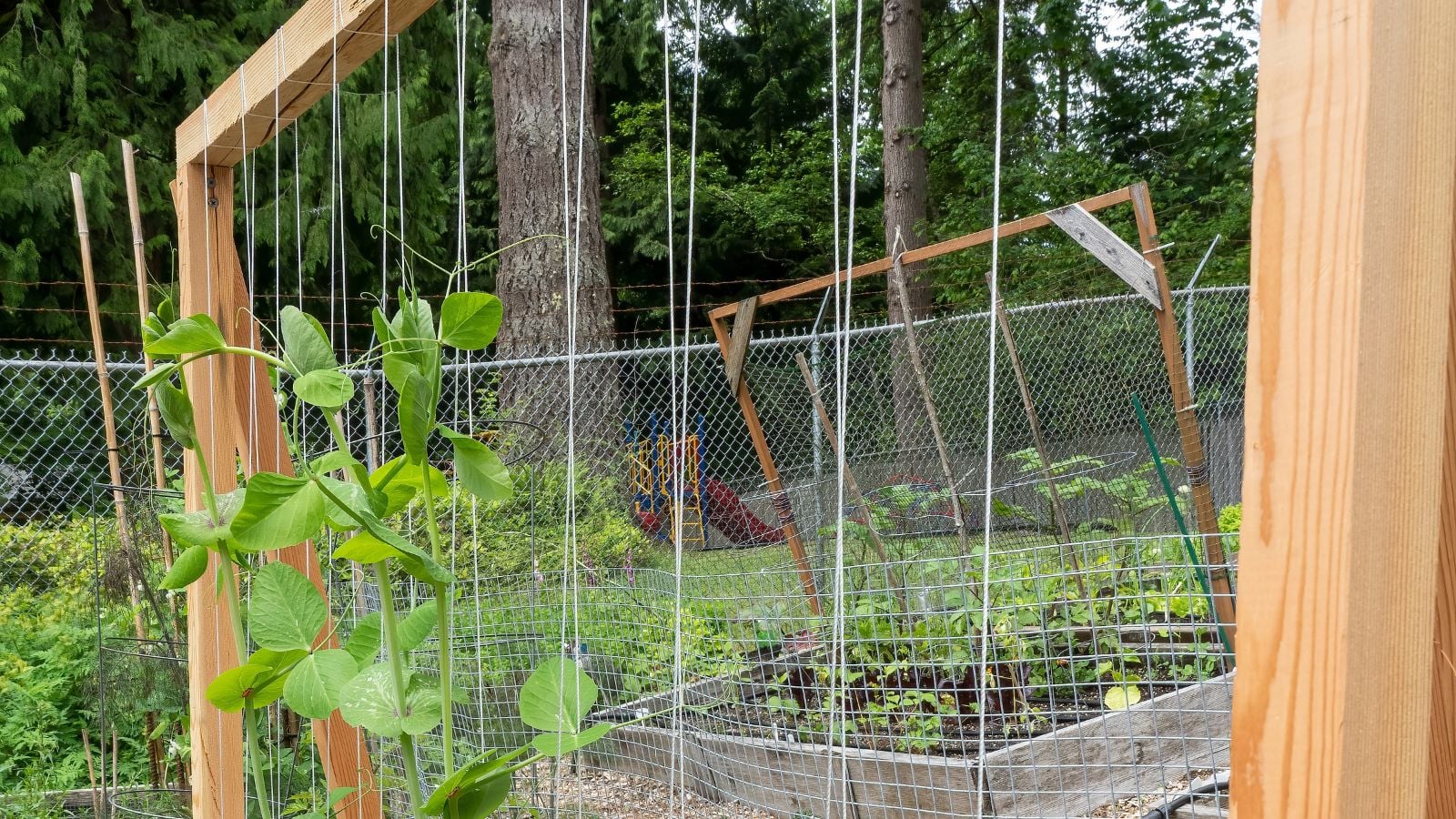
5. Vertical panel trellis: simple, efficient, and excellent for peas
A vertical panel trellis is one of the easiest structures to build and one of the most useful for cool-season climbers.
Best crops for a vertical panel
- Peas
Why it works
Peas climb readily and do not need a huge framework. A flat panel gives them a clean wall to grab onto. It also makes picking easier because pods hang visibly instead of hiding in a tangled mat.
Practical gardening tip
Install the panel at sowing time. Peas do best when they find support early rather than sprawling first and climbing later.

6. String trellis: ideal for pole beans and narrow rows
A string trellis is efficient, low-cost, and very effective for crops that twine upward naturally.
Best crops for a string trellis
- Pole beans
Why it works
Pole beans climb by wrapping themselves around vertical supports. Strings give them exactly that. The result is a neat vertical wall of growth that is easy to harvest.
Practical gardening tip
Keep the strings taut. Loose lines sag under plant weight and wind, making the whole system less effective.
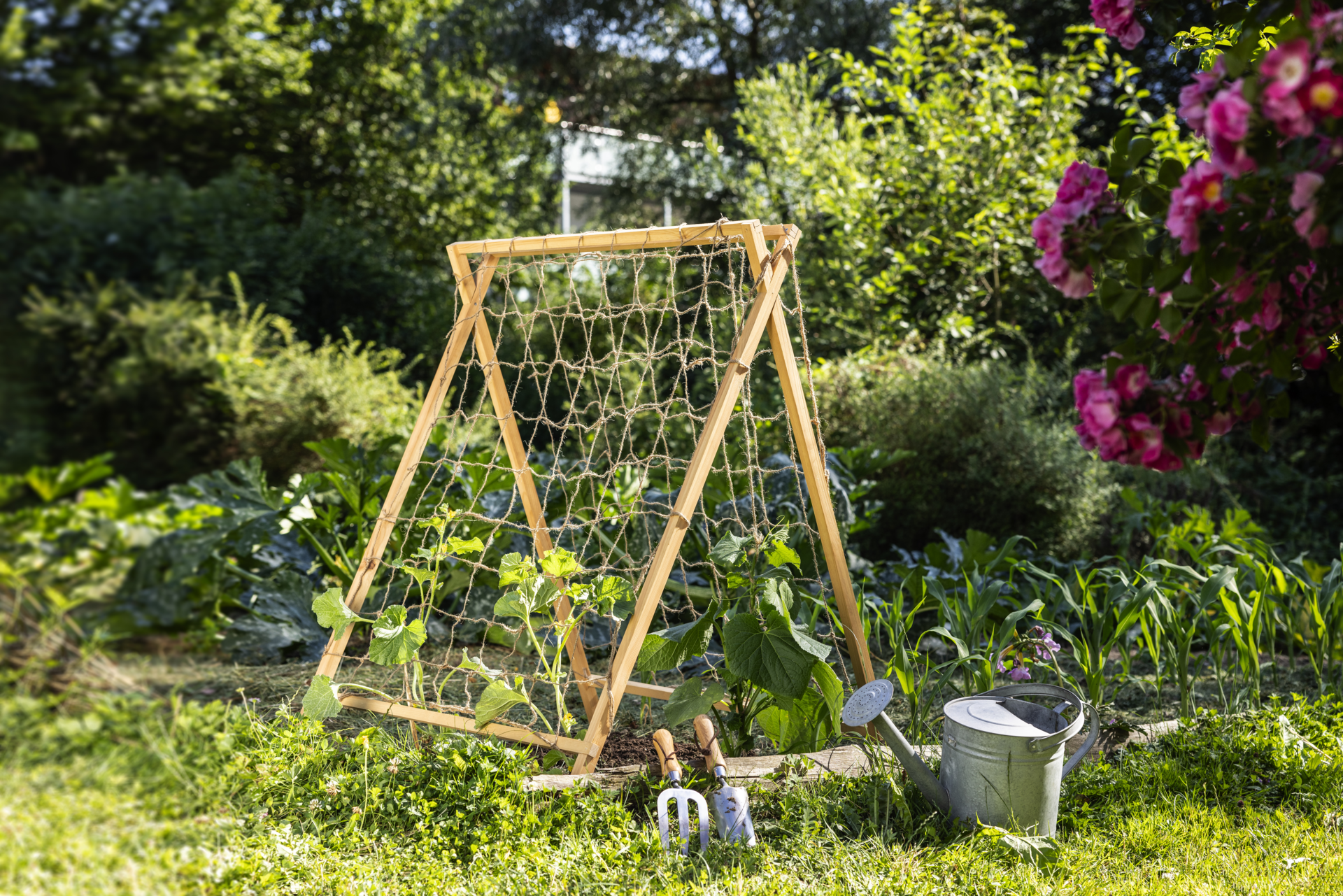
7. A-frame trellis: perfect for cucumbers
The A-frame is one of the most gardener-friendly trellis styles because it creates stability, access, and airflow all at once.
Best crops for an A-frame
- Cucumbers
Why it works
Cucumbers benefit from being lifted off the ground. It improves airflow, reduces mildew pressure, and keeps fruits straighter and cleaner. An A-frame also allows easy harvesting from both sides.
Practical gardening tip
Check cucumbers frequently once they start producing. On a trellis, fruits can size up faster than you expect.
8. Lean-to trellis: useful for tomatoes in tight spaces
A lean-to trellis is excellent when space is limited and you want a strong angled support system.
Best crops for a lean-to trellis
- Tomatoes, cucumbers
Why it works
The angle helps distribute weight and can make pruning and harvesting easier. It also opens the plant up to light more effectively in some small garden layouts.
Practical gardening tip
This style works particularly well in narrow raised beds or along garden edges where a vertical cage would feel bulky.

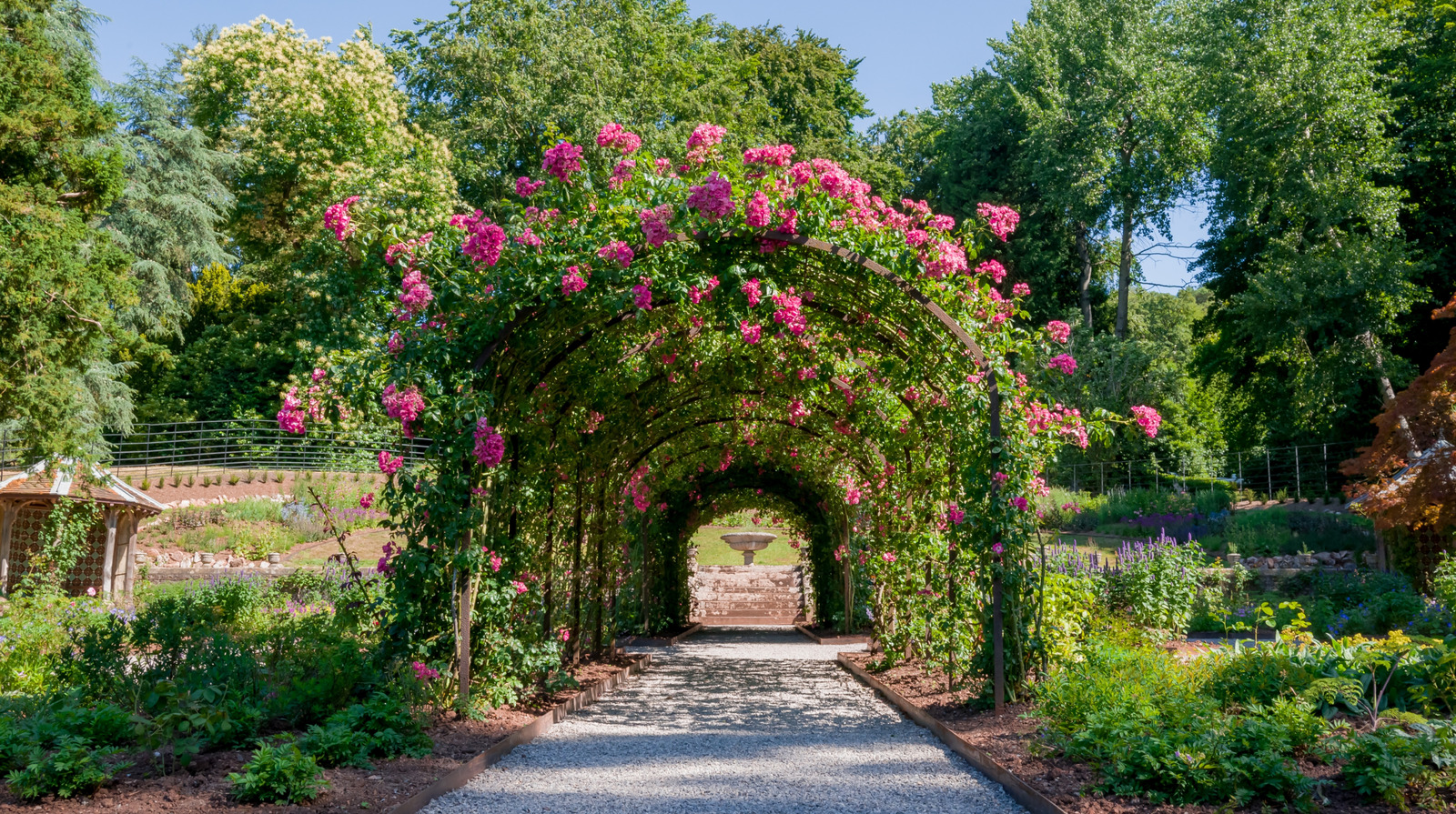
9. Arch trellis: beautiful and productive for strong climbing beans
An arch trellis is both practical and visually striking. It turns vertical growing into a garden feature.
Best crops for an arch
- Climbing beans
Why it works
Strong bean vines can cover an arch quickly, creating shade, beauty, and abundant harvests. It also uses overhead space that often goes wasted.
Practical gardening tip
Do not underestimate the final weight of mature vines. Build the arch sturdier than you think you need.
Common mistakes that lead to broken stems and disappointing harvests
Waiting too long
Late staking is one of the biggest causes of damage. By the time a plant looks desperate, roots are more established, stems are less flexible, and training becomes harder.
Using support that is too weak
A heavy tomato, storm-loaded sunflower, or mature bean arch can easily overwhelm flimsy materials.
Tying too tightly
Plants need support, not strangling. Tight ties scar stems and restrict growth.
Using one method for every crop
This is where many gardeners lose efficiency. Support should follow plant habit, not convenience.
Ignoring maintenance
A trellis is not a one-time job. Plants need occasional guidance, ties need checking, and structures need tightening after wind and rain.
A simple weekly support routine that prevents major problems
Once a week, walk the garden and look for:
- leaning stems
- branches outside cages
- loose or sagging strings
- ties cutting into stems
- vines wandering off course
- heavy flowers or fruit pulling plants sideways
This takes only a few minutes, but it prevents the kind of damage that can undo weeks of good growth.
Final thoughts
A well-supported garden is easier to care for, more productive, and more beautiful. Single stakes keep peppers, eggplant, and sunflowers stable. Cages support tomatoes, peonies, and compact dahlias. Obelisks and tripods give climbing roses, sweet peas, and morning glories the structure they need. Horizontal netting transforms beds of dahlias, zinnias, and gladiolus. Vertical panels suit peas, string trellises suit pole beans, A-frames suit cucumbers, lean-to trellises help with tomatoes, and arches turn climbing beans into both harvest and architecture.
This is the kind of gardening knowledge that improves everything else. When plants are held the right way, watering is easier, disease pressure is lower, harvesting is cleaner, and the whole garden becomes more manageable. That is how a simple support system becomes a serious productivity tool.