Filling a raised bed can feel exciting right up until you price out enough soil to fill the whole thing. That is the moment many gardeners realize that raised beds are not expensive because of the frame alone they are expensive because of the volume inside them.
The good news is that you do not need to fill the entire bed with premium bagged soil. A far more practical approach is to layer bulky organic materials in the lower portion and finish with a deep, high quality soil and compost planting layer on top. Done properly, this method is less expensive, uses materials you may already have on hand, suppresses weeds, and improves the bed over time as everything breaks down.
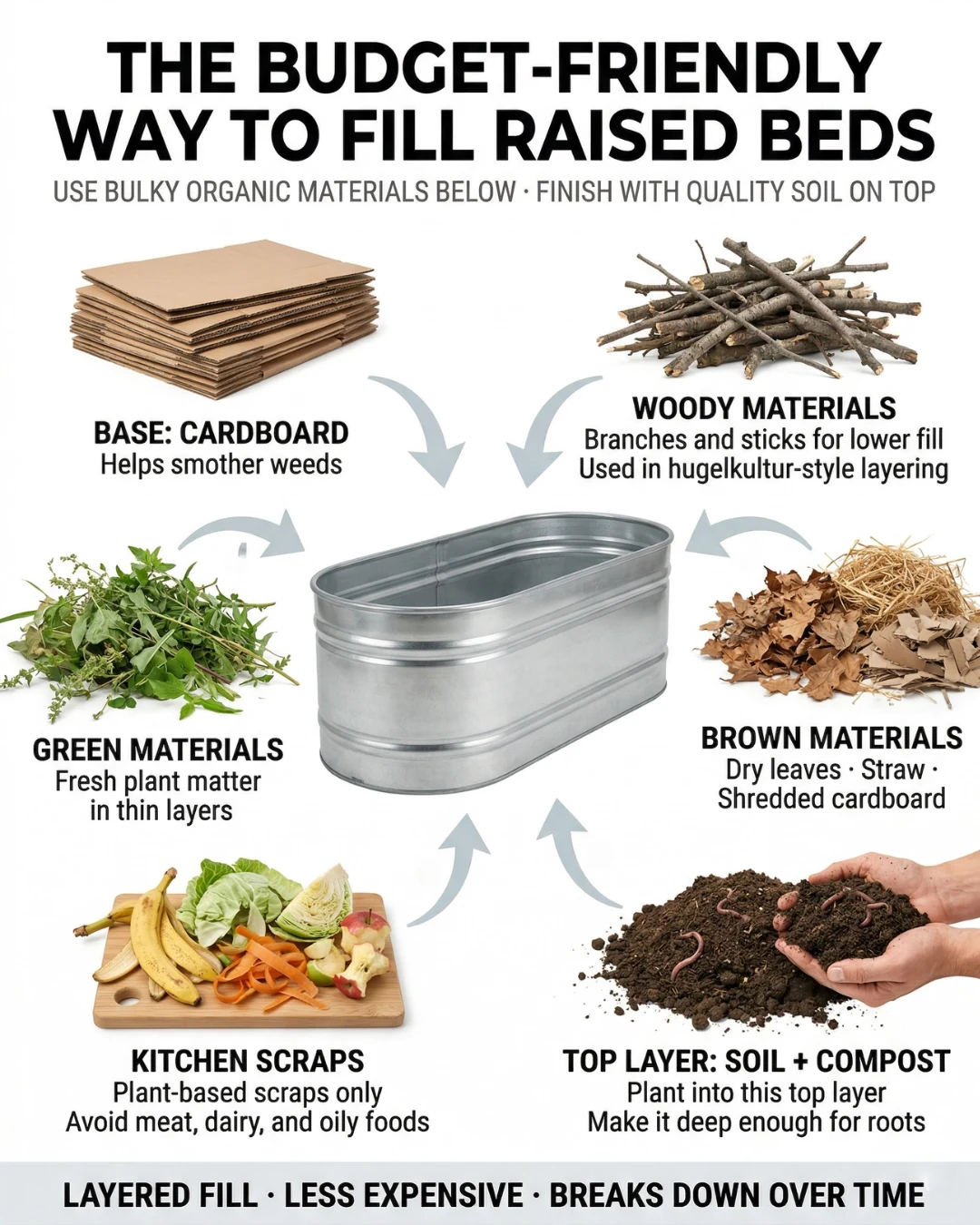
Useful materials for this layered approach include cardboard, woody materials, green materials, brown materials, kitchen scraps, and a final top layer of soil plus compost. This is one of the most sensible ways to build a productive raised bed without overspending, especially for deep beds.
Why layering works so well in raised beds
A raised bed is essentially a contained growing environment. That means you can think in layers instead of treating the whole space like one giant pot of finished soil.
The lower section of the bed does not need to be perfect planting mix on day one. What it needs to do is:
- take up space economically
- break down gradually
- improve structure over time
- support moisture retention and soil life
- reduce the total amount of purchased soil required
The top layer, by contrast, is where roots will do most of their early work. That layer needs to be rich, loose, and deep enough for planting.
This is the important distinction: not every inch of the bed needs to be premium growing mix immediately, but the rooting zone absolutely does.
Start with cardboard at the base
One of the simplest and most useful base materials is plain cardboard.
Why use it
Cardboard helps smother weeds and grass beneath the bed. Instead of digging out everything below, you create a barrier that blocks light and starts the bed off cleaner.
Best way to use it
Lay down plain brown cardboard in overlapping sheets on the bottom of the bed area before adding other materials. Remove tape, glossy coatings, and labels when possible.
Practical tip
Water the cardboard before layering on top of it. Damp cardboard settles better and starts integrating into the system more quickly.
What to avoid
Do not use heavily printed, waxed, or plastic-coated cardboard. Keep it simple and biodegradable.

Add woody materials for the lower fill
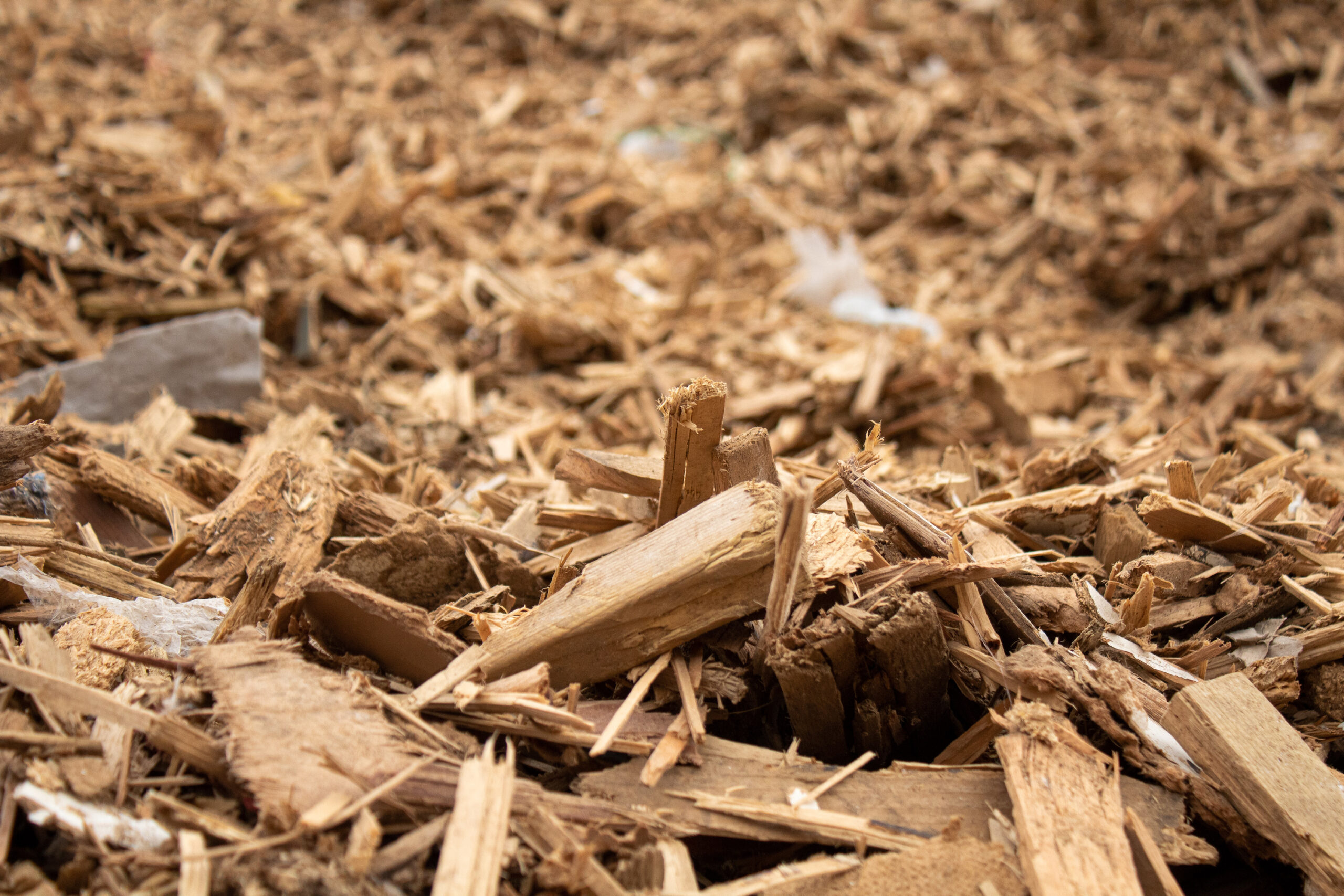
Woody materials are excellent for the lower part of a deep raised bed. Think:
- small branches
- sticks
- prunings
- coarse twiggy debris
Why this layer is useful
Woody material fills volume cheaply and slowly breaks down over time. It creates air pockets early on and gradually turns into organic matter. This approach is similar to hugelkultur-style layering, but scaled for raised beds.
Best way to use it
Place the coarsest materials low in the bed, especially in the bottom third of a deeper frame. Spread them somewhat evenly so you do not end up with one side sinking much faster than the other.
Practical tip
Use smaller branches rather than large logs in most raised beds. Huge chunks take too long to break down and can create awkward settling. Medium and small woody material is usually easier to manage.
What to keep in mind
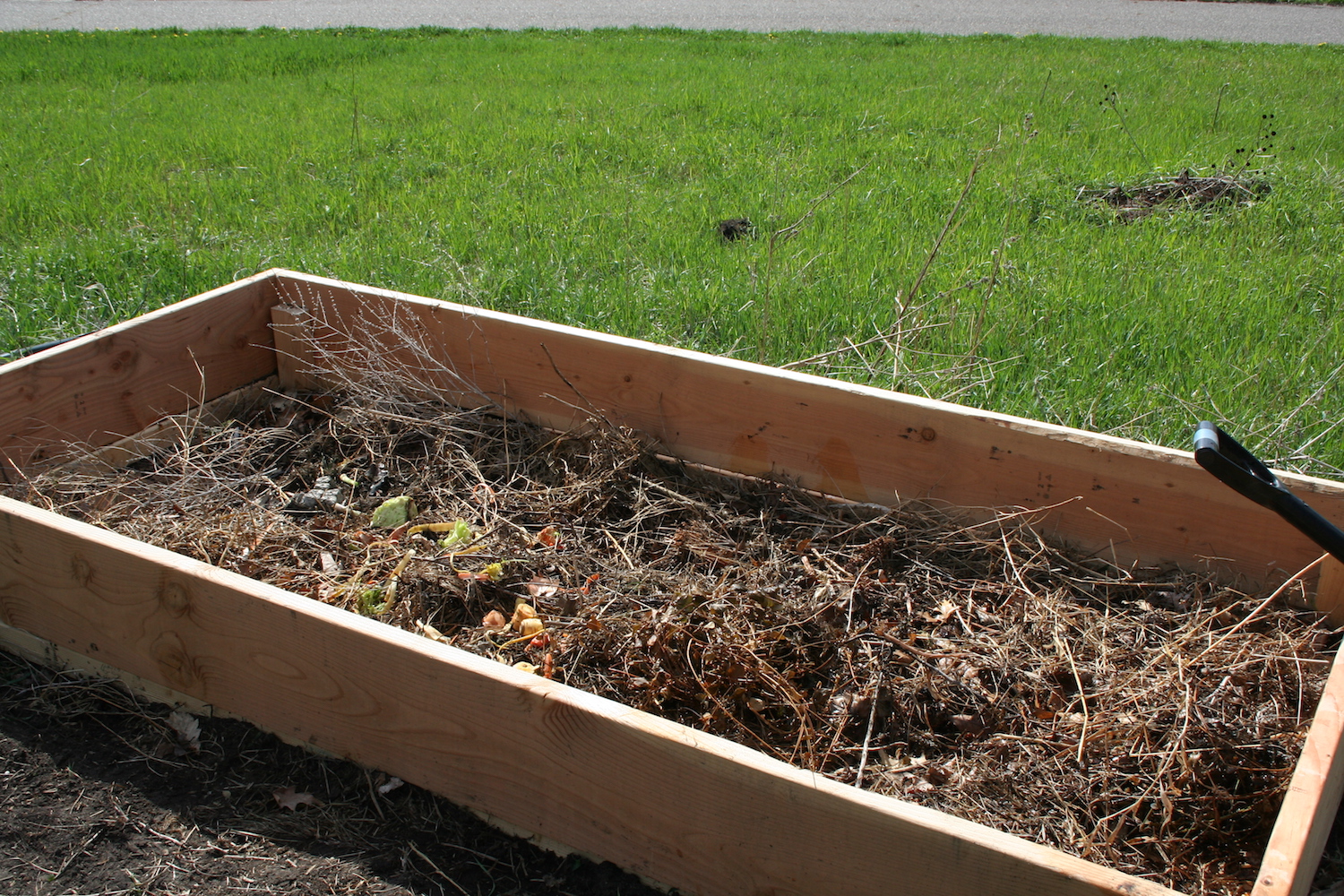
As the wood decomposes, the bed will settle. That is normal. Expect to top up the bed with compost or soil in future seasons.
Add brown materials to create balance and bulk
Brown materials are dry, carbon-rich layers that help balance fresher, wetter materials.
Good examples include:
- dry leaves
- straw
- shredded cardboard
Why they matter
These materials fill space, improve texture, and help prevent the bed from becoming a wet, dense mass if you are also adding greener materials and kitchen scraps.
Best way to use them
Layer them over and among woody materials rather than dumping everything in one tight block. Brown materials help knit the system together.
Practical tip
Dry leaves are one of the best free raised-bed fillers available. Save them in autumn if you can. They are light, easy to handle, and valuable in both raised beds and compost.
What to avoid
Do not use hay full of weed seeds if you want a cleaner bed. Straw is usually safer than hay.
Add green materials in thin layers
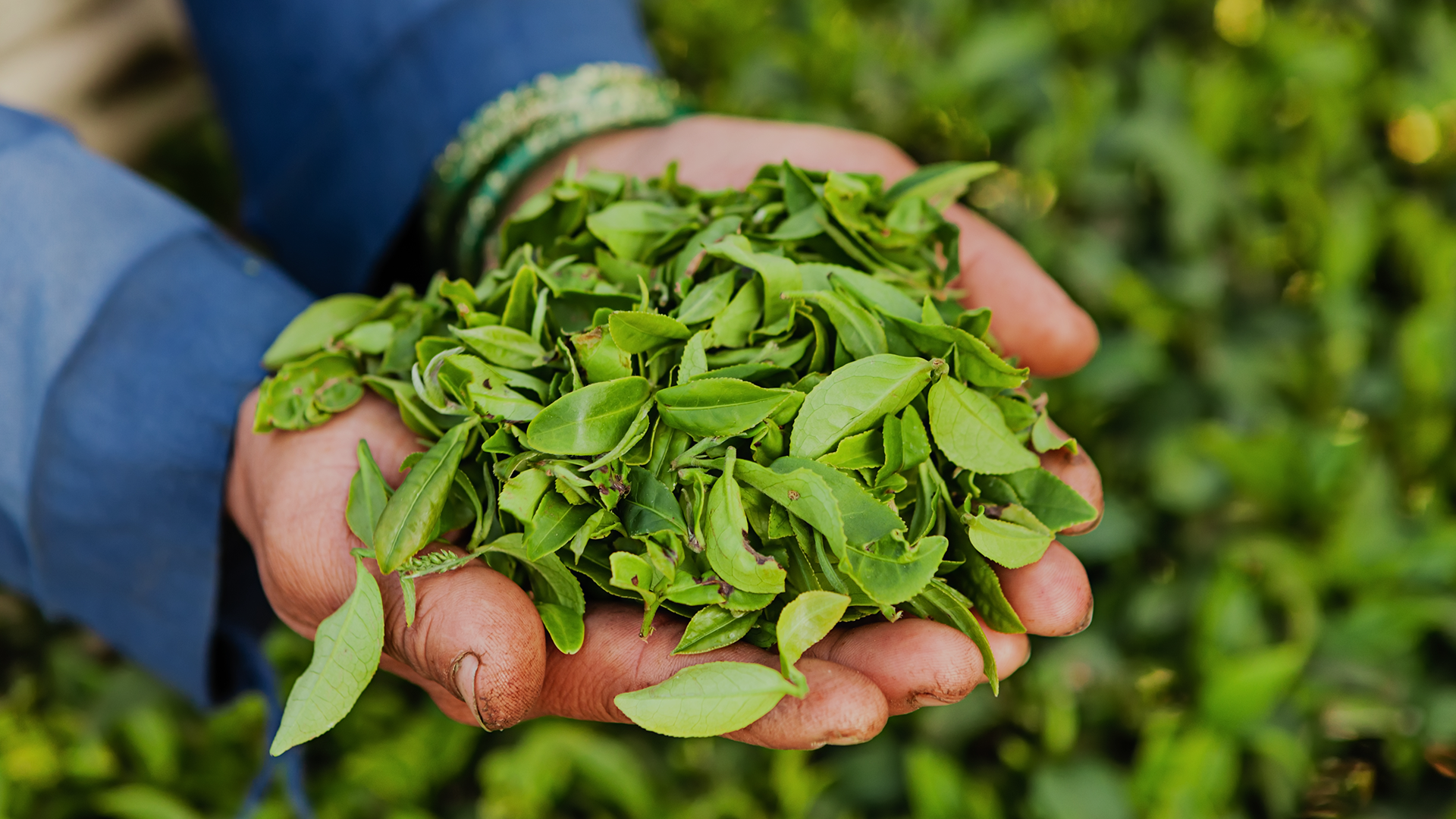
Green materials are fresh plant-based materials that contain more moisture and nitrogen. These can include:
- pulled weeds that have not gone to seed
- garden trimmings
- soft plant matter
- fresh leafy debris
Why they help
Green materials decompose faster than woody or brown materials and help activate the breakdown of the layers around them.
Best way to use them
Use them in thin layers, not heavy wet clumps. Spread them through the middle section of the bed between brown layers.
Practical tip
Think “sprinkle and layer,” not “dump and pack.” Thin applications break down better and smell better.
What to avoid
Do not add diseased plant material or invasive weeds that can reroot easily. Raised beds are not the place to gamble with persistent pests or diseases.
Kitchen scraps can work but only if you use the right kind
Kitchen scraps are tempting because they are abundant and free, but they need to be handled carefully.
Good choices
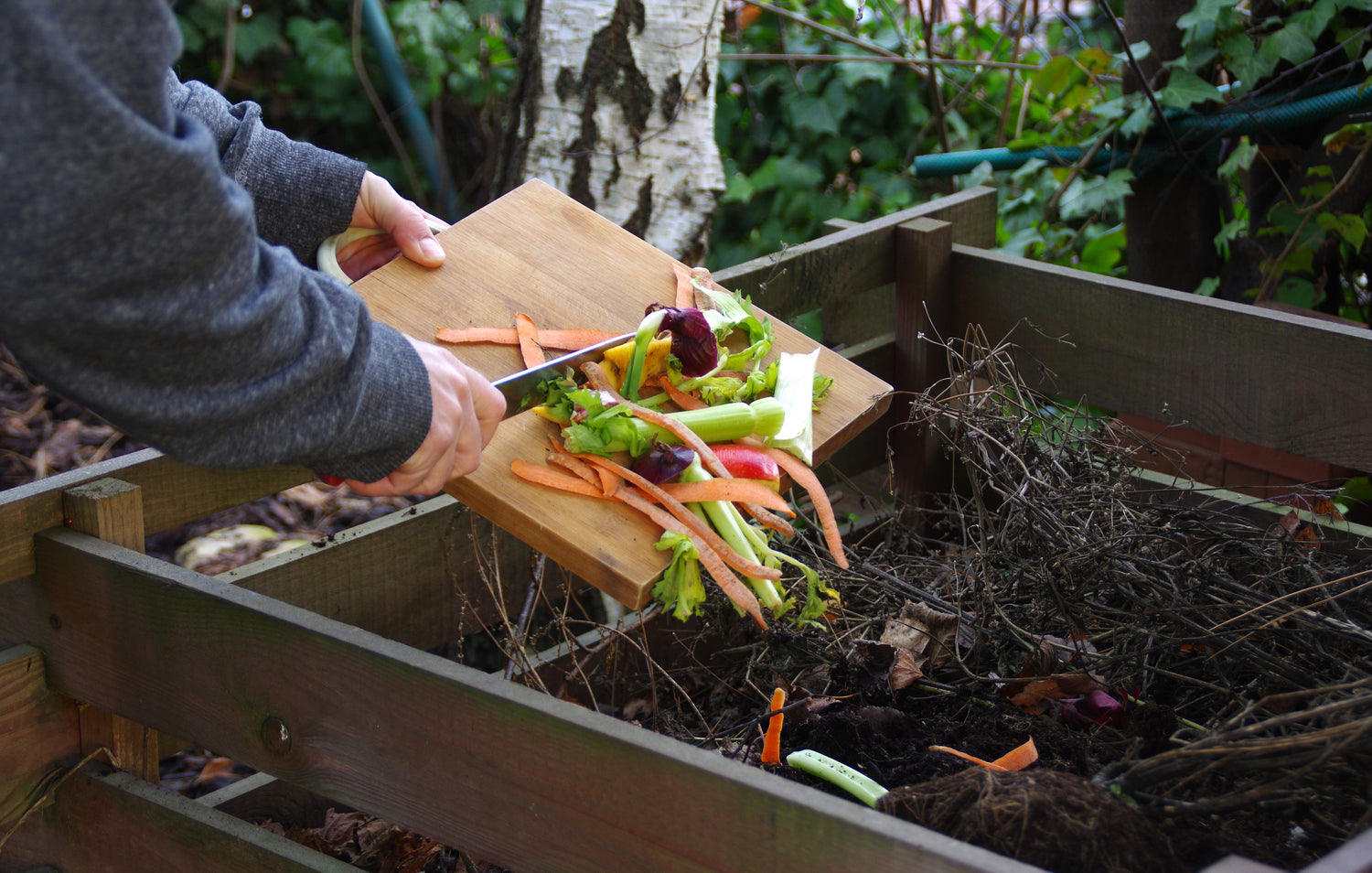
Use plant-based scraps only, such as:
- vegetable peels
- fruit scraps
- wilted greens
- clean plant trimmings
Why they can help
They add moisture and decomposable organic matter, which supports the breakdown process in the lower and middle layers.
Best way to use them
Bury them within the bed layers rather than leaving them exposed. Cover them with brown material and then more fill so they do not attract pests.
Important caution
Avoid:
- meat
- dairy
- oily foods
- cooked leftovers
- anything likely to smell strongly or attract rodents
Practical tip
Use kitchen scraps modestly unless the bed is large and deep. A little buried plant waste helps. Too much concentrated food waste creates odor and imbalance.
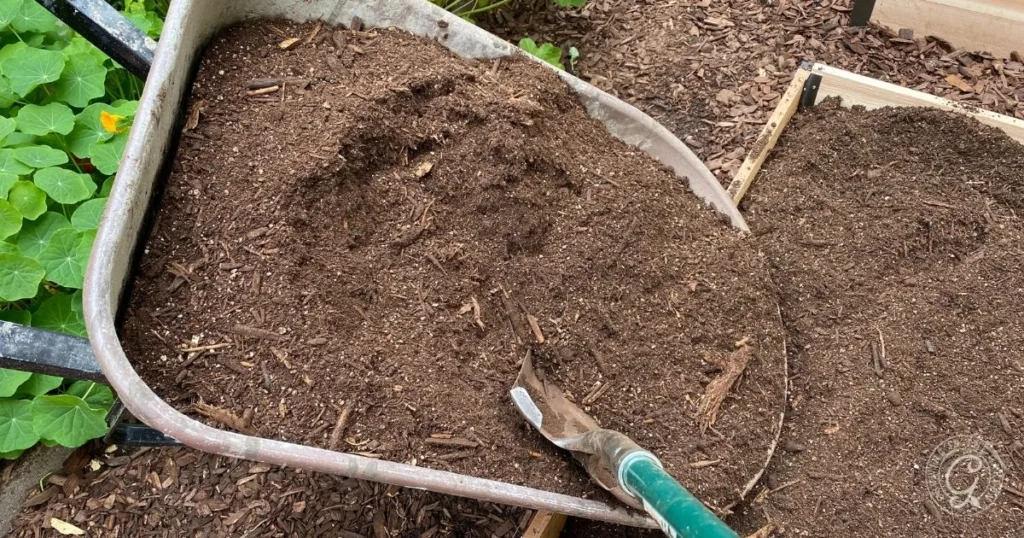
Finish with a real planting layer: soil plus compost
This is the most important part of the whole system.
The top layer needs to be made of quality soil mixed with compost, deep enough to support the crops you plan to grow.
Why this layer matters most
This is where seeds germinate, seedlings establish, and roots spend their early life. If this layer is weak, the whole bed feels disappointing even if the lower layers are well built.
Best way to build it
Use a loose, rich mix that drains well but still holds moisture. Compost improves fertility and biological activity, while good soil gives structure.
How deep should it be?
Deep enough for roots. That means the top planting zone should not be a token layer.
A useful practical guide:
- for shallow-rooted greens, a moderate layer may be enough
- for root crops, tomatoes, peppers, cucumbers, and other larger vegetables, go deeper
- when in doubt, err on the side of a thicker finished soil-and-compost layer
Practical tip
Do not plant directly into raw layered fill. Plant into the finished top layer only.
How to build the bed in the right order
A simple working order looks like this:
1. Base: cardboard
To suppress weeds and create a clean start.
2. Lower fill: woody materials
Branches and sticks to occupy volume and break down slowly.
3. Middle bulk: brown materials
Dry leaves, straw, or shredded cardboard to add carbon and prevent sogginess.
4. Thin additions: green materials
Fresh plant matter in moderate amounts.
5. Occasional buried extras: kitchen scraps
Plant-based only, well covered.
6. Final planting layer: soil plus compost
This is the layer your crops actually grow in.
That structure keeps the bed affordable, functional, and biologically active.
What this method does over time
One of the best things about layered raised beds is that they improve with age.
As materials break down, they:
- create richer organic matter
- improve water-holding capacity
- support worms and soil life
- soften and settle into a more unified root zone
This means the bed evolves. It is not static. The first year may require a little more topping up or observation, but later seasons often become easier and more productive.
Common mistakes to avoid
Using too little topsoil
This is the biggest mistake. If the planting layer is too shallow, roots hit unfinished material too quickly and growth becomes uneven.
Packing layers too tightly
Raised beds need structure, not compaction. Materials should settle naturally, not be stomped flat.
Adding too much food waste
A little is useful. Too much invites odor, pests, and imbalance.
Using weedy or diseased material
A raised bed is supposed to make gardening easier, not create future problems.
Expecting the bed to stay the same height forever
Layered fill breaks down. Plan to top up with compost or soil over time.
Best crops for a newly layered raised bed
In the early stages, these beds often do especially well with:
- leafy greens
- basil and other herbs
- peppers
- tomatoes
- bush beans
- cucumbers
- squash, if the bed is deep and well topped
If you want to grow carrots or other root crops, make sure the finished planting layer is deep and fine-textured enough for good root formation.
A smart seasonal routine for maintaining the bed
Once the bed is built, maintenance becomes simple:
- top-dress with compost each season
- refill low areas as the bed settles
- mulch the surface to hold moisture
- keep adding healthy organic matter over time
- observe how quickly the bed dries and adjust watering accordingly
This turns the raised bed into a living system rather than a one-time construction project.
Final thoughts
The budget-friendly way to fill raised beds is not to buy premium soil from bottom to top. It is to build intelligently: cardboard at the base, woody materials below, brown and green materials layered through the middle, plant-based kitchen scraps used carefully, and a generous top layer of soil plus compost for planting.
This layered method is less expensive, makes use of materials that might otherwise be wasted, and improves over time as everything breaks down. More importantly, it helps gardeners build productive raised beds without feeling priced out of the process.
That is the kind of gardening knowledge that changes how you work. You stop seeing a raised bed as something that must be filled all at once with costly materials, and start seeing it as a living structure you can build wisely, affordably, and sustainably.