Hydrangeas are generous plants. They bring bold flowers, lush foliage, and a sense of abundance that can anchor an entire garden bed. But hydrangeas look even better when they are not planted alone. The right companion plants soften their base, extend seasonal interest, reduce empty-looking soil, and create a layered planting that feels calm, polished, and natural.
This matters for more than appearance. A smart companion planting plan helps conserve moisture, suppress weeds, protect roots, and make the whole bed easier to care for through the season. For gardeners and growers managing ornamental spaces around a home, guesthouse, farm entrance, or landscape border, this is one of the simplest ways to increase beauty while lowering maintenance pressure.
A successful hydrangea border is not about crowding plants together. It is about pairing hydrangeas with companions that enjoy similar light, moisture, and soil conditions. When those needs match, the planting settles in more quickly, stays healthier, and improves year after year.
Why hydrangeas benefit from companion planting
Hydrangeas often thrive in locations with morning sun, afternoon shade, or bright filtered light. They prefer soil that stays evenly moist but drains well, and they perform best when their roots do not have to compete with aggressive, thirsty neighbors.
That makes them ideal partners for shade-loving or part-shade perennials and shrubs that appreciate similar conditions. Good companions do three important jobs at once. They cover the soil, add contrasting texture, and keep the border attractive before, during, and after hydrangea bloom.
A bed built this way feels more complete. Instead of one shrub flowering for a short season and leaving large blank spaces around it, the entire planting works together across the year.
What to look for in a hydrangea companion plant
Before choosing companions, use this simple filter:
- Prefers part shade or filtered light
- Enjoys evenly moist, well-drained soil
- Does not overpower hydrangea roots
- Adds a different leaf shape, height, or bloom time
- Helps the bed look intentional even when hydrangeas are not in peak flower
If a plant meets those conditions, it is much more likely to become a long-term partner rather than a short-term problem.
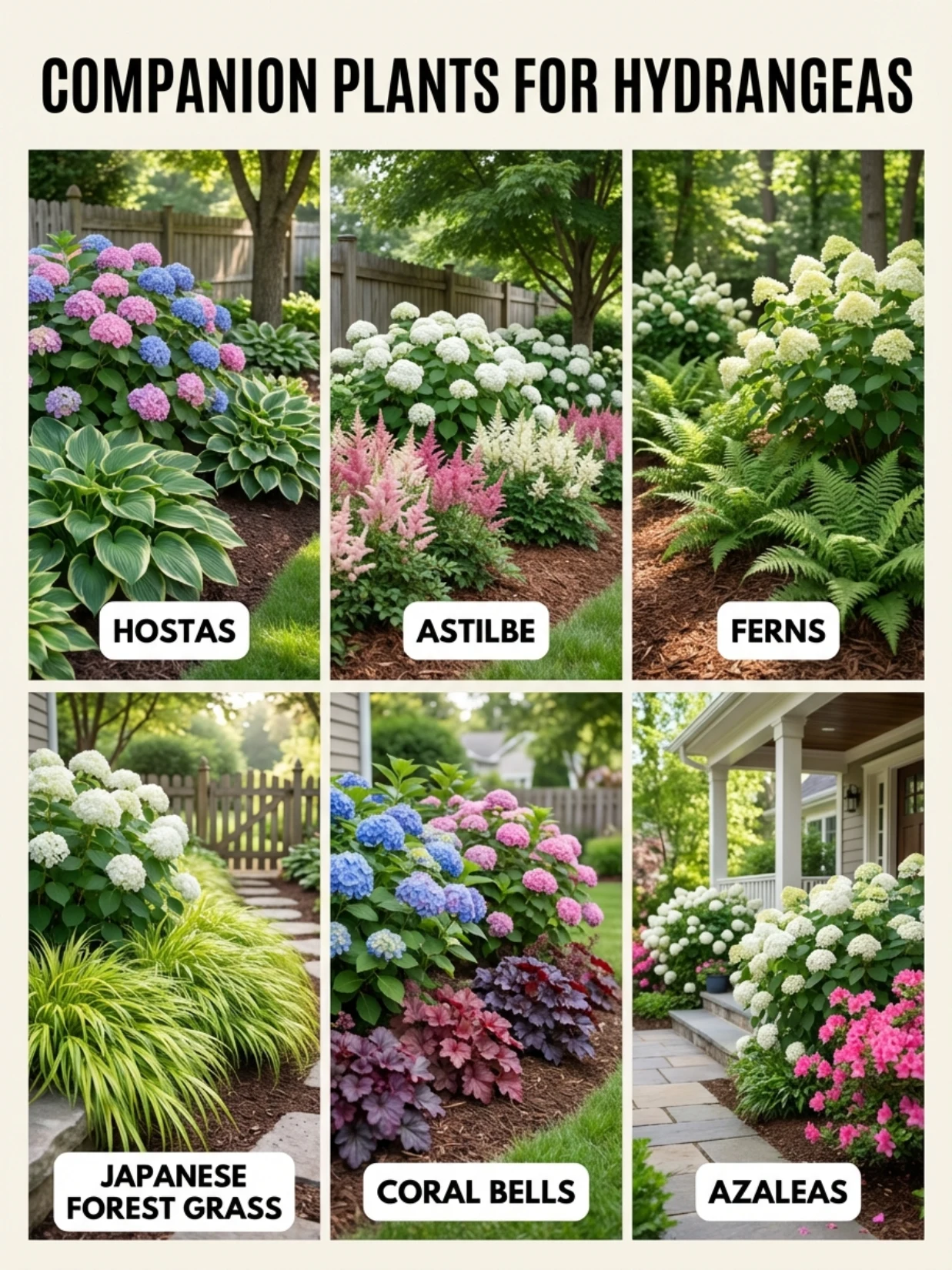
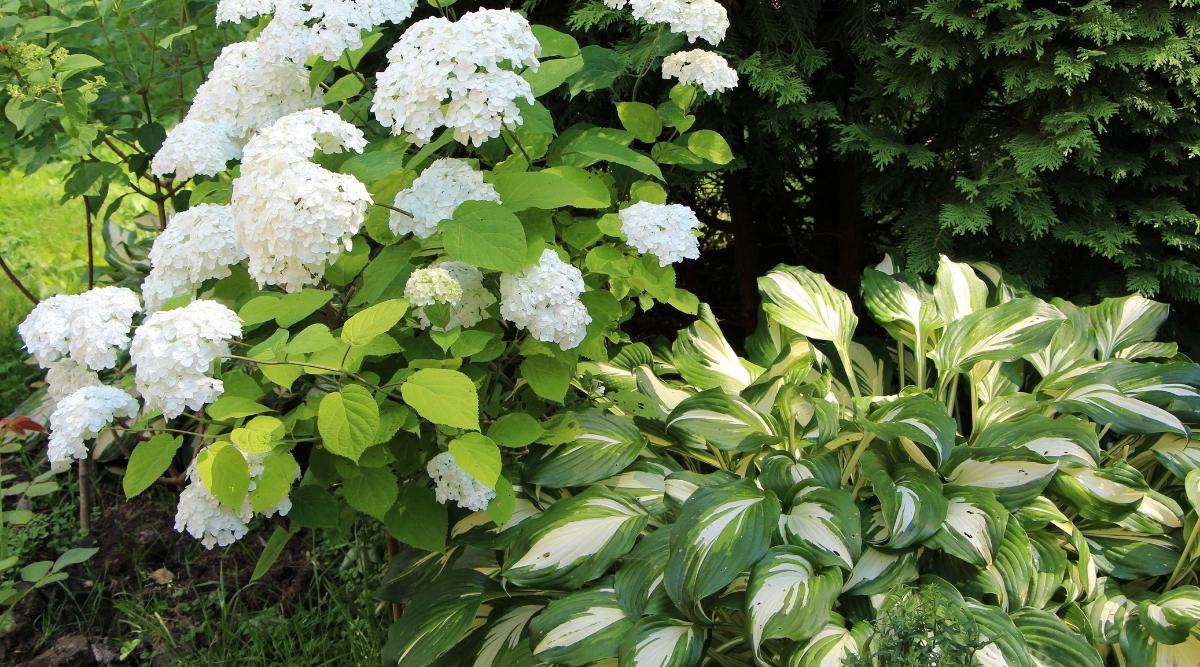
1. Hostas: the easiest way to make hydrangeas look fuller
Hostas are one of the most dependable companions for hydrangeas because they thrive in similar light and moisture conditions. Their broad leaves create a calm, rich base around hydrangea shrubs, and the contrast in texture makes the large flower heads stand out even more.
Large hostas are especially useful in foundation beds, along fences, or in shaded borders where hydrangeas can otherwise look a little bare near the ground.
Practical planting tip:
Place hostas far enough from the hydrangea crown that air can still move between plants. You want a layered look, not a crowded one. A little space now prevents mildew and slug-friendly dampness later.
Care tip:
Water deeply during dry periods instead of sprinkling lightly. Both hostas and hydrangeas respond better to consistent root-zone moisture than to quick surface watering.
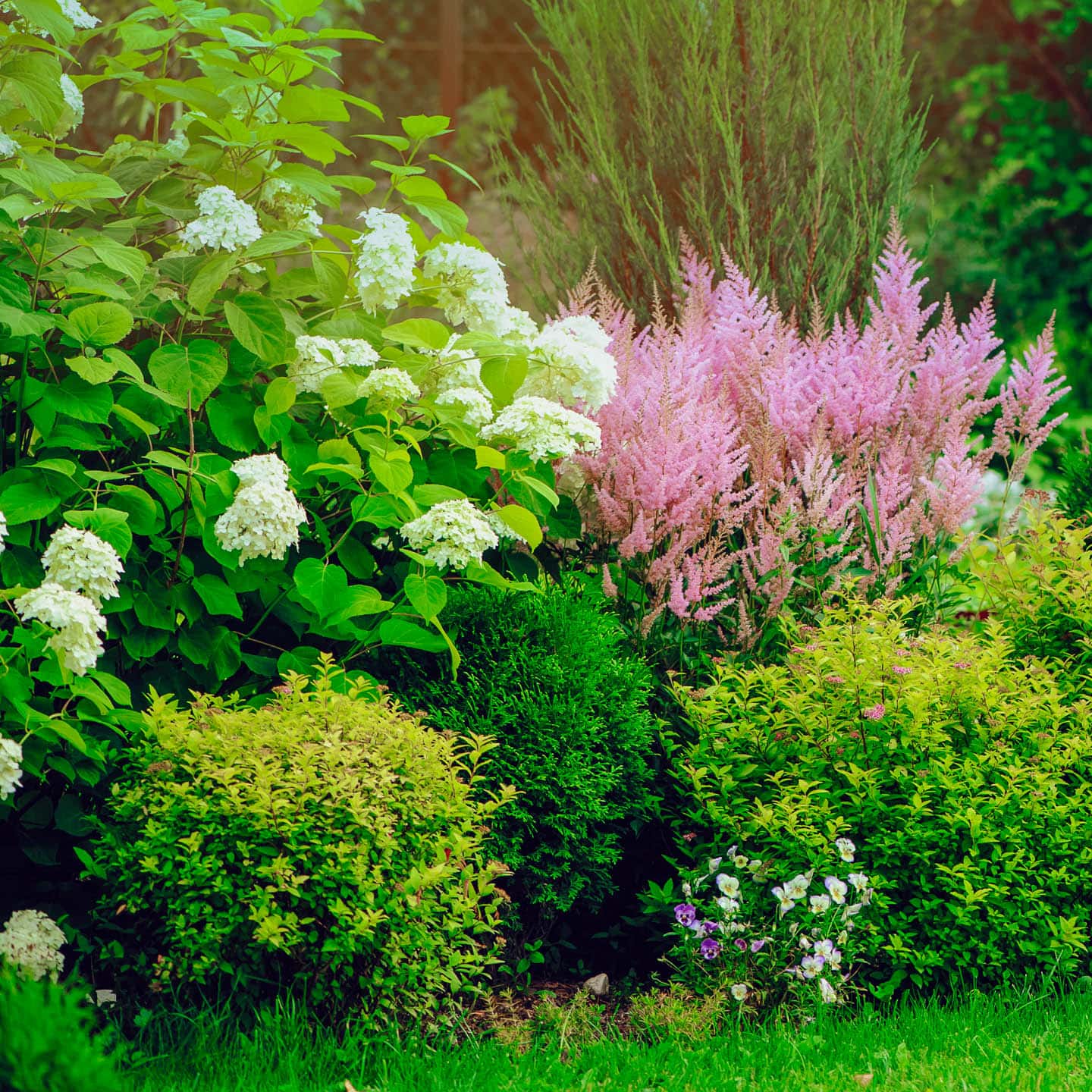
2. Astilbe: soft plumes that brighten the hydrangea bed
Astilbe is an excellent companion if you want more bloom without overwhelming the space. Its feathery flower plumes add lightness and movement around the heavier form of hydrangea blooms. The effect is especially beautiful in beds that aim for a soft, romantic, woodland style.
Astilbe also helps bridge the gap between spring foliage growth and the fuller summer display.
Practical planting tip:
Use astilbe in repeating groups rather than as single plants. Three or five planted together create a stronger visual rhythm and make the bed look more intentional.
Care tip:
Do not let astilbe dry out repeatedly. If the soil swings from moist to bone dry, foliage quality drops quickly. Mulch helps a lot here, especially in warmer climates.
3. Ferns: the best choice for a cooler, woodland look
Ferns bring graceful texture and a cooling effect to hydrangea beds. Their finely divided foliage contrasts beautifully with the broad leaves and rounded flower clusters of hydrangeas. In deeper shade, they are often one of the best choices for keeping the bed lush without depending entirely on flowers.
Ferns are especially effective in side-yard gardens, shaded boundaries, and woodland-style borders where you want the planting to feel layered and settled.
Practical planting tip:
Plant ferns toward the front or side of hydrangeas, where their texture can be seen clearly. If they disappear behind dense shrub growth, you lose much of their visual value.
Care tip:
Top-dress with compost or leaf mold once or twice a year. Ferns appreciate soil that stays cool and humus-rich, and this also supports hydrangeas without pushing overly soft growth.

4. Japanese Forest Grass: movement, color, and a softer edge
Japanese forest grass is one of the most elegant companions for hydrangeas. Its arching habit softens the edge of a bed, path, or walkway, and its flowing shape creates a beautiful contrast with the heavier structure of hydrangea shrubs. In some varieties, the golden or striped foliage also adds brightness to shady areas.
This is a strong choice when you want the bed to feel designed, not just planted.
Practical planting tip:
Use it where the planting meets stone, paving, or lawn. The gentle spill of the grass helps blend hard surfaces into the softer garden border.
Care tip:
Cut old foliage back in late winter or early spring before fresh growth begins. This keeps the clump tidy and makes room for the new season’s leaves.

5. Coral Bells: color at ground level that lasts all season
Coral bells are valuable because they contribute even when nothing is flowering. Their leaves come in shades of burgundy, plum, caramel, lime, and silver, which makes them perfect for adding depth beneath blue, pink, or white hydrangeas.
They also solve a common design problem: a hydrangea bed can sometimes feel top-heavy, with all the drama happening above eye level. Coral bells pull interest downward and make the whole space feel more balanced.
Practical planting tip:
Choose foliage color based on the hydrangea bloom you want to emphasize. Dark coral bells make pale hydrangeas glow more, while lighter foliage brightens deeper-colored blooms.
Care tip:
Check crowns every season. In some climates, frost heave or shallow rooting can push plants upward, and a quick reset with fresh soil helps keep them vigorous.

6. Azaleas: a flowering shrub partner for layered structure
Azaleas pair beautifully with hydrangeas when you want more than one shrub layer in the planting. Because they often bloom earlier, they help extend seasonal color, allowing the bed to begin strong before hydrangeas reach their peak. Their smaller leaves and mounded shape also contrast well with the broader, heavier look of hydrangeas.
This combination works especially well near porches, entries, and foundation plantings where a long decorative season matters.
Practical planting tip:
Do not place azaleas so close that the two shrubs fight for the same center space. Stagger them slightly, or offset them in drifts, so each plant has its own shape.
Care tip:
Keep soil acidity and moisture in mind. Both azaleas and many hydrangeas appreciate rich, organic soil and benefit from a mulch layer that keeps roots cool.
How to arrange companion plants around hydrangeas
Build in layers
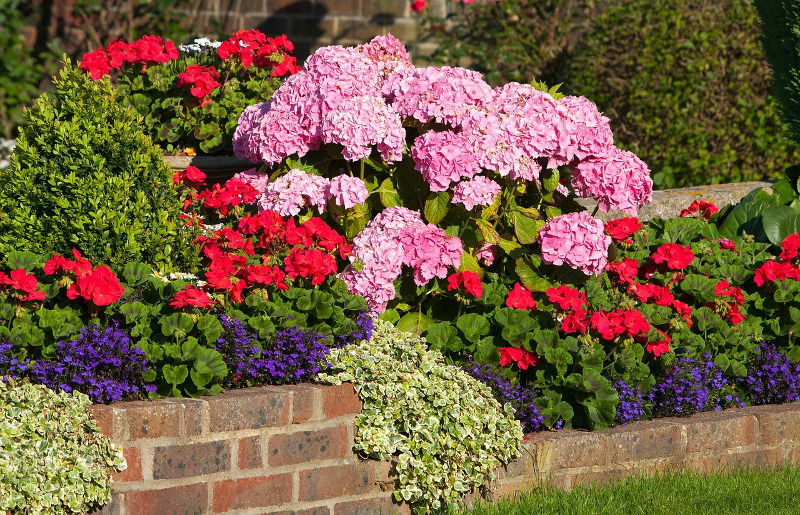
A good hydrangea bed usually looks strongest when built in three layers:
- Back or anchor layer: hydrangeas and azaleas
- Middle layer: astilbe, ferns, or coral bells
- Front edge: hostas or Japanese forest grass
This structure helps the bed look full without becoming chaotic. Each plant has a clear visual job, and the whole border gains depth.
Repeat, do not scatter
One of the easiest mistakes is using one of every plant. That usually makes the bed feel busy and disconnected. Instead, repeat the same companion in several places. A drift of hostas or a ribbon of forest grass makes the planting calmer and more professional.
Leave room for mature size
Hydrangeas need airflow. Their companions should soften the bed, not smother the shrub base. When planting, picture the bed two or three years from now, not just the day everything goes into the ground.
Practical care habits that keep the planting thriving
Mulch the whole bed, not just the shrub
A shared mulch layer helps all the plants hold moisture, suppresses weeds, and improves soil over time. Keep mulch a little away from crowns and stems so rot does not build up at the base.
Water deeply and consistently
Hydrangea companions usually enjoy the same kind of watering: deep, steady moisture rather than shallow daily sprinkles. This encourages better root development and reduces stress during hot spells.
Feed with restraint
Rich compost and organic matter often do more good than heavy fertilizer. Too much feeding can create lush, weak growth that flops, crowds, or becomes more disease-prone.
Edit the bed each season
If one companion begins to dominate, divide it or move part of it. Good garden design is not fixed forever. It improves through observation and small corrections.
A hydrangea bed should feel generous, not crowded
The most beautiful hydrangea plantings are the ones that feel settled and breathable. Hostas bring bold foliage, astilbe adds softness, ferns cool the scene, Japanese forest grass creates movement, coral bells deepen the palette, and azaleas stretch the season of interest.
Together, these companions do more than fill space. They turn a hydrangea planting into a complete garden composition, one that looks richer, functions better, and becomes easier to maintain as the plants mature.
That is the kind of planting that changes how gardening feels. Less patching. Less guessing. More rhythm, more confidence, and more pleasure every time you step outside.