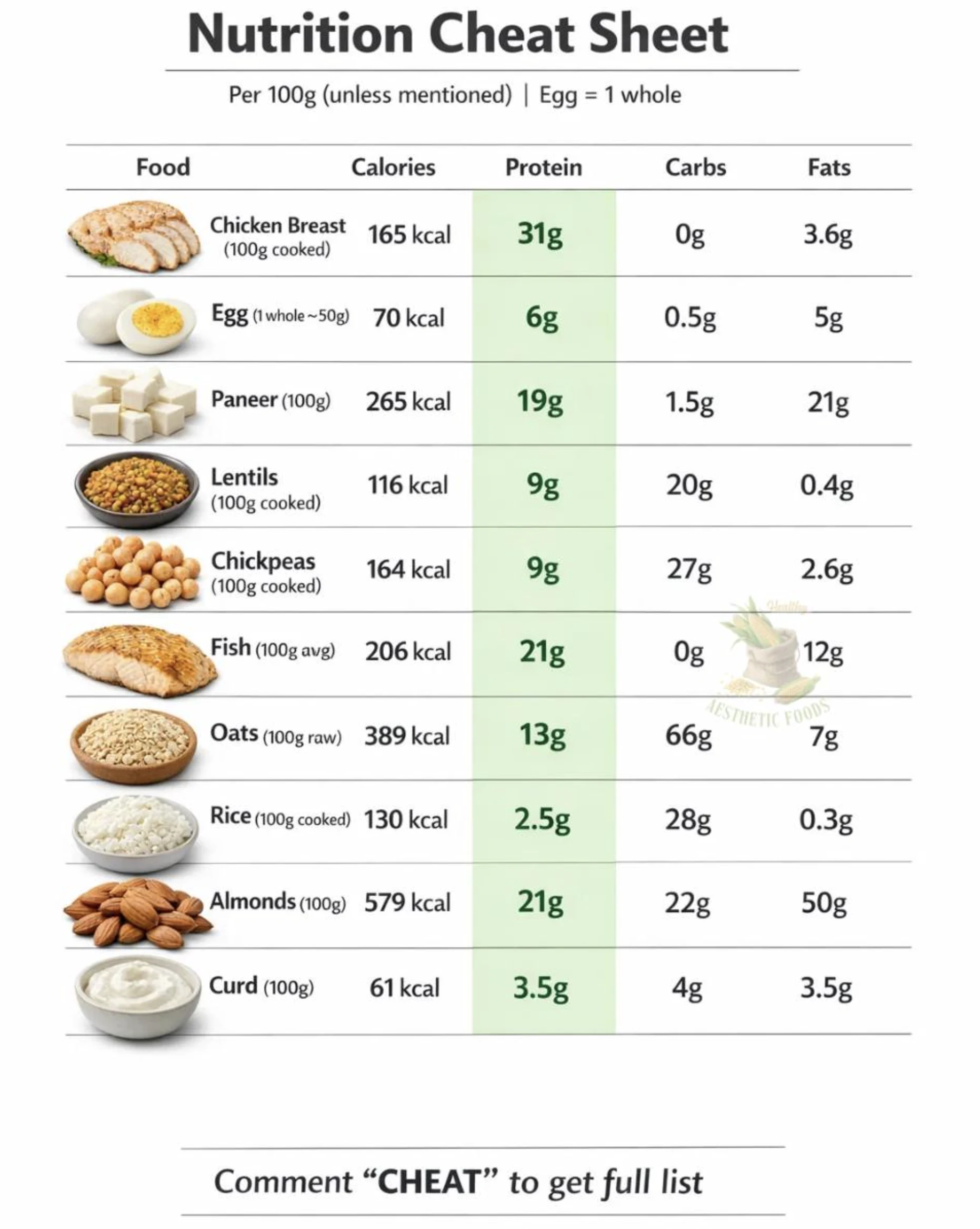
Most people look at charts like this and think:
👉 “Okay… protein, carbs, fats… cool.”
Then go right back to eating the same way.
Because knowing numbers ≠ knowing what to do with them.
Why This Cheat Sheet Actually Matters
This isn’t just random nutrition info.
It shows you one thing:
👉 How different foods affect your body differently — even in the same portion
For example:
-
100g chicken = 31g protein
-
100g rice = 2.5g protein
👉 Same weight
👉 Completely different impact
The Biggest Mistake People Make
Most people build meals like this:
-
Rice + bread + snacks
👉 mostly carbs
And then wonder why:
-
they’re always hungry
-
energy drops fast
-
they can’t lose fat
What These Numbers Are Really Telling You
Instead of memorizing everything, focus on this:
Protein = fullness + muscle + stable energy
-
Chicken
-
Eggs
-
Fish
-
Paneer
-
Yogurt
👉 If your meal has low protein → you’ll get hungry faster
Carbs = energy (but timing matters)
-
Rice
-
Oats
-
Lentils
-
Chickpeas
👉 Too much = crash
👉 Balanced = fuel
Fats = slow energy + satiety
-
Almonds
-
Paneer
-
Eggs
👉 Helps you stay full longer
👉 But high calories → easy to overeat
How to Actually Build a Meal (Simple Formula)
Instead of guessing, use this:
👉 Every meal should include:
-
1 protein source
-
1 carb source
-
1 fat source
Real Meal Examples Using This Chart
Meal 1 — Balanced & Filling
Chicken + rice + vegetables + a few almonds
→ Protein + carbs + fats
→ Stable energy
Meal 2 — Vegetarian Option
Lentils + chickpeas + yogurt
→ Plant protein + carbs + gut support
Meal 3 — Quick & Easy
Eggs + oats + fruit
→ Fast, simple, still balanced
Meal 4 — Fat Loss Friendly
Fish + vegetables + small portion of carbs
→ High protein, controlled calories
The Truth Most People Miss
You don’t need to track every gram.
But you do need to understand this:
👉 Not all calories are equal
👉 Not all foods fill you the same
That’s why:
-
500 kcal of almonds ≠ 500 kcal of rice
-
100g chicken ≠ 100g carbs
Simple Rule to Remember
If your meals feel like:
-
mostly carbs → you’ll crash
-
mostly fats → easy to overeat
-
balanced → stable energy
👉 That’s the difference
Final Thought
Nutrition charts aren’t meant to confuse you.
They’re meant to show you one simple thing:
👉 What you eat matters more than how much you eat.
Once you understand how to balance protein, carbs, and fats…
👉 eating healthy becomes way easier.