Zucchini is one of the most generous crops in the garden. Give it warmth, fertile soil, and steady moisture, and it can reward you with armfuls of fruit for weeks. But zucchini also asks for a lot in return. It spreads wide, shades the soil heavily, attracts hungry insects, and can make a garden bed feel crowded fast.
That is why companion planting around zucchini is such a useful skill. The right low-growing herbs, flowers, and vegetables can help you use every inch of bed space more intelligently. They can draw in pollinators, support beneficial insects, cover bare soil, and give you extra harvests without fighting the zucchini for the spotlight.
This is not about stuffing random plants into one bed. It is about building a small working ecosystem. Once you understand which companions fit under and around zucchini, your raised bed becomes more productive, more resilient, and much easier to manage through the season.
Why zucchini benefits from companion planting
Zucchini grows fast and creates a broad leaf canopy. That canopy is useful because it shades roots and suppresses weeds, but it also leaves pockets of space at the bed edge and near the base that can either stay bare or be used strategically.
A good zucchini companion plant should do at least one of these jobs well:
- attract pollinators and beneficial insects
- help distract or confuse pests
- occupy shallow surface space without competing heavily
- provide a quick harvest before zucchini fills out
- soften the bed edge and reduce exposed soil
The best combinations do more than look good. They make the entire bed function better.
What makes a good underplanting for zucchini?
Zucchini is a hungry, sun-loving crop, so companions must be chosen carefully. Good partners are usually:
- shallow-rooted or compact
- fast-growing and easy to harvest
- tolerant of partial shade once zucchini gets larger
- not overly tall or aggressive
- helpful for insect diversity
Plants that become too woody, too tall, or too thirsty can create competition. The goal is support, not crowding.
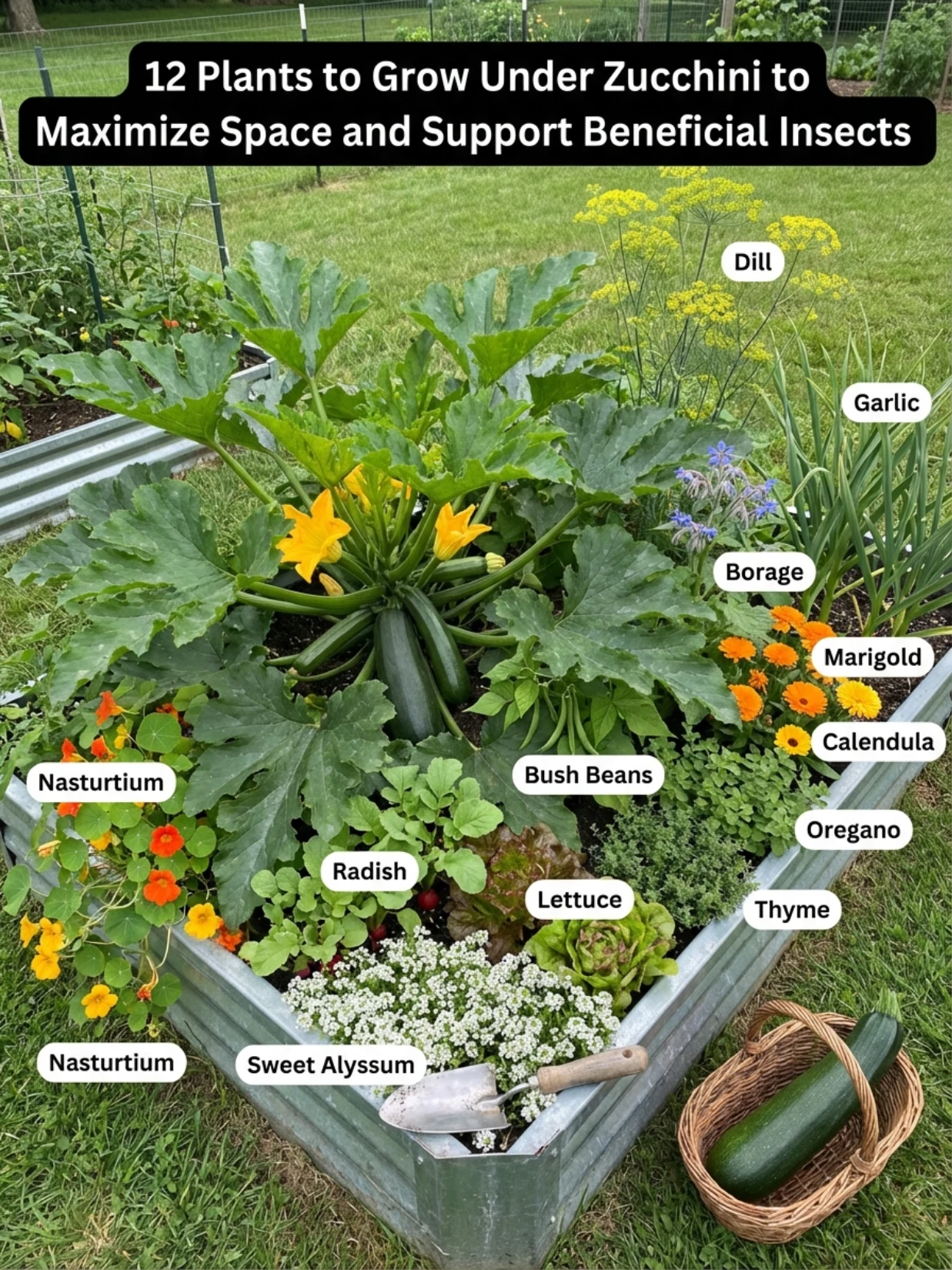
1. Nasturtiums: one of the most useful zucchini companions
Nasturtiums are a favorite in productive vegetable beds because they spill beautifully, flower generously, and help the garden feel alive. Around zucchini, they soften the edges of the planting and make use of the lower, open spaces without overpowering the main crop.
Their flowers also attract pollinators, which matters because zucchini relies on good pollination for strong fruit set.
Practical tip: Let nasturtiums trail outward over the bed edge rather than inward under the main crown. That keeps airflow open around the zucchini base while still giving you the benefits.
2. Dill: an excellent insect-support herb
Dill is one of the most useful herbs to weave into vegetable beds. Its airy growth and umbrella-shaped flowers bring in beneficial insects, which can help create a more balanced garden environment.
Because zucchini flowers heavily during summer, pairing it with dill increases activity in the bed and makes it more likely that pollinators and predatory insects will keep visiting.
Practical tip: Place dill toward the back or side of the bed so it gets enough light and does not disappear beneath mature zucchini leaves.
3. Garlic: a strong companion for spacing and rhythm
Garlic works well around zucchini because it occupies vertical root space differently and does not spread aggressively above ground. It also helps the bed feel more structured, especially when larger summer plants begin to sprawl.
Garlic is especially useful if you are trying to make a small raised bed carry more than one kind of harvest without becoming chaotic.
Practical tip: Keep garlic in a clear ring or row rather than scattering cloves randomly. That makes watering, mulch placement, and harvest much simpler later on.
4. Borage: a pollinator magnet with real garden value
Borage is one of the best flowering companions for fruiting vegetables. It attracts bees eagerly, and anything that increases bee traffic in a zucchini bed is worth serious attention. Better pollination usually means better-shaped fruit and more reliable production.
Borage also gives the bed a looser, more natural feel, which is useful in mixed edible gardens.
Practical tip: Give borage its own little pocket of space. It is helpful, but it does need room. Do not wedge it so tightly near the crown that it competes with young zucchini leaves.
5. Marigolds: bright flowers with practical purpose
Marigolds earn their place in vegetable beds because they are easy to grow, bloom for a long time, and bring strong visual energy to productive spaces. Around zucchini, they help break up the large green mass of foliage and support insect diversity.
Their real strength is not magic pest control. It is that they make your bed more active, more visible, and more inviting to beneficial life.
Practical tip: Deadhead marigolds often. Frequent bloom removal keeps them flowering longer and makes them work harder for the garden.
6. Calendula: soft color and long-season usefulness
Calendula is a wonderful flower for edible gardens because it is practical as well as beautiful. Its blooms bring in pollinators and beneficial insects while staying manageable in size. Around zucchini, it brightens the bed and adds color at a lower level where the squash leaves can otherwise dominate the whole scene.
Practical tip: Harvest calendula blooms regularly. That encourages more flowers and keeps the plant compact enough to coexist neatly with zucchini.
7. Oregano: a low, aromatic ground-layer herb
Oregano is especially useful along the edge of a raised bed because it stays relatively low, spreads gently, and helps fill the surface layer. It can reduce the sense of empty soil around the base of larger crops and makes harvesting the bed feel more abundant.
Practical tip: Place oregano near corners or bed edges where it can spread outward, not into the center of the zucchini root zone.
8. Thyme: compact, drought-tolerant, and tidy
Thyme is one of the easiest herbs to tuck into a productive bed. It stays low, does not ask for much, and creates a neat, fragrant front edge. In a zucchini planting, thyme is especially useful because it does not interfere with airflow and helps frame the bed neatly.
Practical tip: Keep thyme slightly raised or near the driest edge of the bed. Zucchini likes more moisture than thyme does, so positioning matters.
9. Sweet Alyssum: a small flower with big value
Sweet alyssum is one of the best insectary flowers for small spaces. It stays low, blooms heavily, and creates a soft white edging that makes the whole bed look fuller and more intentional. Around zucchini, it works as a living border while also inviting beneficial insects into the planting.
Practical tip: Use alyssum along the front edge or in a band near the path. That placement lets you enjoy the flowers while keeping them out of the densest squash growth.
10. Radishes: fast harvest before the canopy closes
Radishes are a smart choice because they mature quickly. You can sow them near young zucchini plants, harvest them early, and free the space again before the squash reaches full size. This is one of the most efficient ways to increase output in a raised bed.
Practical tip: Sow radishes while zucchini is still small. Once the squash canopy expands, radishes may not size up as well.
11. Lettuce: a quick crop for the cooler early phase
Lettuce works well in the early life of a zucchini bed. While the zucchini is still establishing, lettuce can make use of the open surface area and give you a harvest before summer heat and shade intensify.
This is a very practical pairing for gardeners who want each bed to do more than one job across the season.
Practical tip: Choose loose-leaf lettuce rather than large heading types if space is tight. Loose-leaf varieties are easier to tuck in and harvest gradually.
12. Bush Beans: productive companions if spaced carefully
Bush beans can pair nicely with zucchini when the bed is large enough and spacing is thoughtful. They give you an extra edible crop and help the bed feel truly productive rather than decorative only. Because they stay lower than pole beans, they fit more naturally into mixed raised beds.
Practical tip: Do not crowd bush beans directly against the zucchini stem. Give both crops breathing room so neither one becomes stunted or overly humid.
How to arrange a zucchini companion bed so it stays healthy
Keep the zucchini as the anchor plant
The biggest mistake in companion planting with zucchini is forgetting who the main crop is. Zucchini needs room for leaf spread, easy pollinator access, and clear airflow around the crown. Build the bed around that reality.
A smart layout usually looks like this:
- zucchini in the center or slightly off-center
- taller companions like dill or borage toward the back
- flowers such as marigold, calendula, or alyssum at the edges
- quick crops like radish and lettuce in open pockets early
- trailing companions like nasturtium spilling outward
That pattern keeps the bed usable and prevents a crowded, disease-prone center.
Think in timing, not just placement
Some companions are best early in the season, such as lettuce and radish. Others are there for the long haul, like thyme, oregano, marigolds, and nasturtiums. When you think in stages, the bed becomes much more productive.
Early season: radish, lettuce
Mid to late season: dill, borage, marigold, calendula, oregano, thyme, alyssum, nasturtium
Flexible support crops: garlic, bush beans
This is how one bed starts working like a full system rather than a single crop patch.
Practical care tips for a mixed zucchini bed
Water the root zone, not the whole jungle
Zucchini loves steady moisture, but mixed beds can become dense. Water deeply at the soil level whenever possible. That keeps leaves drier and reduces mildew problems.
Mulch early
A light mulch layer around the base of the bed helps all the companions work better. It protects soil, reduces splash-up, and makes the space between plants easier to manage.
Remove damaged zucchini leaves promptly
As the season progresses, older leaves may yellow, mildew, or rest too heavily on neighboring companions. Prune selectively to restore airflow and light.
Harvest often
Frequent zucchini harvest keeps the plant producing. It also lets you inspect the whole bed closely, which is when you notice pest issues, crowding, or thirsty companions before they become real problems.
Final thoughts: one zucchini plant can anchor an entire mini-ecosystem
A zucchini bed does not have to be a big plant surrounded by empty soil. With the right companions, it can become one of the most productive and beautiful parts of the garden. Nasturtiums soften the edges. Dill and borage bring beneficial insects. Marigolds and calendula brighten the bed. Garlic, oregano, and thyme add useful herbs. Lettuce and radishes give quick extra harvests. Bush beans help turn spare space into food.
That is where companion planting becomes truly valuable. It is not decoration. It is thoughtful garden design that turns one hungry summer crop into the center of a thriving, balanced, efficient planting.
When you start growing this way, your beds stop feeling crowded or wasteful. They begin to feel alive, layered, and deeply productive.
Read more