A raised bed depth guide can transform the way you grow food. It warms faster in spring, drains better in wet weather, and gives you more control over soil quality than many in-ground plots ever will. But one detail is often overlooked when people build their beds: depth.
That one choice affects almost everything. It influences root growth, water retention, crop size, overall plant health, and even how much work you will need to do during the season. A bed that is too shallow can leave larger crops cramped, thirsty, and disappointing. A bed that is deeper than needed can still work well, but it may cost more in soil, compost, and labor than necessary.
When you match bed depth to the crops you want to grow, gardening becomes more efficient and more satisfying. Plants establish faster. Roots go where they need to go. Watering becomes easier to manage. Harvests become more reliable. This is one of those practical skills that quietly upgrades your entire system.
Why raised bed depth matters more than most gardeners think
Roots are not just anchors. They are the plant’s working engine. They gather water, nutrients, and oxygen while also storing energy and supporting steady growth above the soil line. If the bed is too shallow, roots may hit hard ground early, twist back on themselves, or stay too close to the surface where they dry out fast.
That is why different crops perform best in different bed depths. Lettuce and herbs can produce beautifully in a shallower setup. Tomatoes, carrots, potatoes, asparagus, and artichokes need far more room to develop strong root systems or underground harvestable parts.
A smart grower does not treat all vegetables the same. They build or plan beds according to crop behavior.
The four practical raised bed depth categories
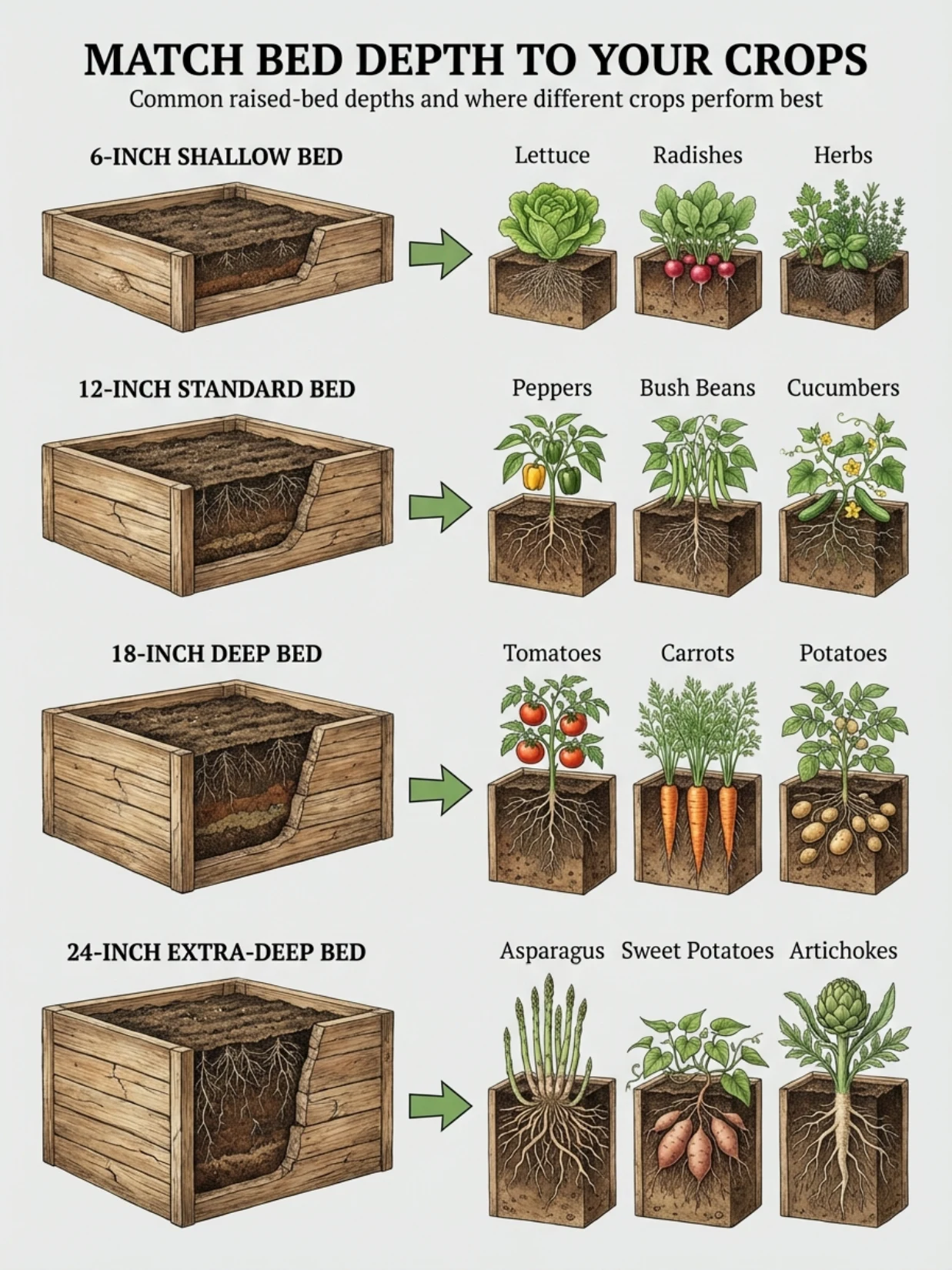
A simple way to think about raised beds is to group them into four working depths:
- 6-inch shallow beds
- 12-inch standard beds
- 18-inch deep beds
- 24-inch extra-deep beds
Each one has a clear role in the garden.
1. 6-inch shallow beds: best for quick crops and shallow-rooted plants
A 6-inch bed is ideal when you want a productive, lower-cost setup for crops that do not need deep soil to perform well. This depth works especially well for lettuce, radishes, and many herbs.
These crops grow fast, use the upper layer of soil efficiently, and are often harvested before they need a large root zone. Shallow beds also make sense in small spaces, on hard surfaces, or where you want to test a new growing area without committing too many materials at once.
When a 6-inch bed works best
Use shallow beds for:
- Cut-and-come-again lettuces
- Radishes
- Basil, cilantro, parsley, chives, and similar herbs
Practical advantage
These beds warm quickly and are easy to fill with high-quality soil. That makes them especially useful for spring production and succession sowing.
Important caution
Shallow beds dry out faster than deep ones. In hot weather, that means you must stay ahead of watering. A light mulch layer and close spacing can help conserve moisture.
Smart tip
If you build a 6-inch bed over loose, workable soil beneath it, many shallow crops will perform even better because roots can still explore below the frame. If the ground underneath is compacted, loosen it before filling the bed.
2. 12-inch standard beds: the most versatile choice for home food gardens
If you only build one raised bed depth, 12 inches is often the most practical starting point. This depth gives enough room for a wide range of crops while keeping material costs manageable. It works very well for peppers, bush beans, and cucumbers, and it supports many other common vegetables too.
A 12-inch bed is the sweet spot for growers who want flexibility. It offers enough root room for strong summer crops without requiring the larger soil volume of very deep beds.
Crops that do well in 12-inch beds
- Peppers
- Bush beans
- Cucumbers
- Many salad crops
- Compact brassicas
- Smaller root crops if soil is loose
Why this depth works
At 12 inches, the soil stays moist longer than in a shallow bed, but still drains well if your mix is balanced. Roots have room to develop, and plants are less likely to stall during hot spells.
Smart tip
Use this depth for mixed planting if you want one bed to carry multiple crop types through the season. For example, spring lettuce can be followed by summer peppers or beans, then finished with autumn greens.
Bed management advice
Do not waste this depth on poor soil fill. A shallow layer of good compost on top of weak subsoil is not enough. Fill the whole rooting zone with a loose, fertile blend so roots keep moving downward instead of stopping at a hard layer.
3. 18-inch deep beds: where large, hungry crops start to shine
When you move up to 18 inches, you open the door to stronger performance from crops that need more room, deeper root development, or better moisture buffering. This is where tomatoes, carrots, and potatoes become much easier to grow well.
This depth is especially helpful in places with poor native soil, rocky subsoil, or heavy clay. It gives you a full root environment that you control.
Crops that thrive in 18-inch beds
- Tomatoes
- Carrots
- Potatoes
- Larger peppers
- Eggplant
- Parsnips and other deeper root vegetables
Why 18 inches is powerful
This depth supports stronger root architecture, better drought resistance, and more consistent nutrient access. For crops like carrots, it can be the difference between straight, market-quality roots and short, forked ones.
Smart tip for tomatoes
If you grow tomatoes in deep beds, bury transplants slightly deeper than usual if the variety allows it. Strong stem burial encourages additional rooting and helps plants anchor better through summer growth.
Smart tip for carrots
Depth alone is not enough. The soil must also be stone-free and friable. A deep bed full of clods will still produce poor carrots. Sift or break up rough materials before planting.
4. 24-inch extra-deep beds: best for permanent crops and serious root space
A 24-inch raised bed is a premium growing zone. It is best used for crops that need major root room, longer-term occupancy, or large underground development. This depth is excellent for asparagus, sweet potatoes, and artichokes.
These beds cost more to build and fill, so they should be used intentionally. But when matched to the right crops, they provide exceptional growing conditions.
Crops suited to 24-inch beds
- Asparagus
- Sweet potatoes
- Artichokes
- Deep-rooted perennial edibles
- Large, long-season crops in difficult soil conditions
Why extra depth matters here
These crops either stay in place for a long time, produce large underground structures, or benefit from a broad moisture reserve. A deeper bed gives them stability and lowers stress during weather swings.
Smart tip for asparagus
Do not think only about depth. Also think about permanence. Asparagus will occupy that space for years, so place the bed where it will not interfere with crop rotation or annual replanting plans.
Smart tip for sweet potatoes
Loose, deep soil helps the tubers expand evenly and makes harvest easier. In tight or stony ground, sweet potatoes often come out misshapen or damaged.
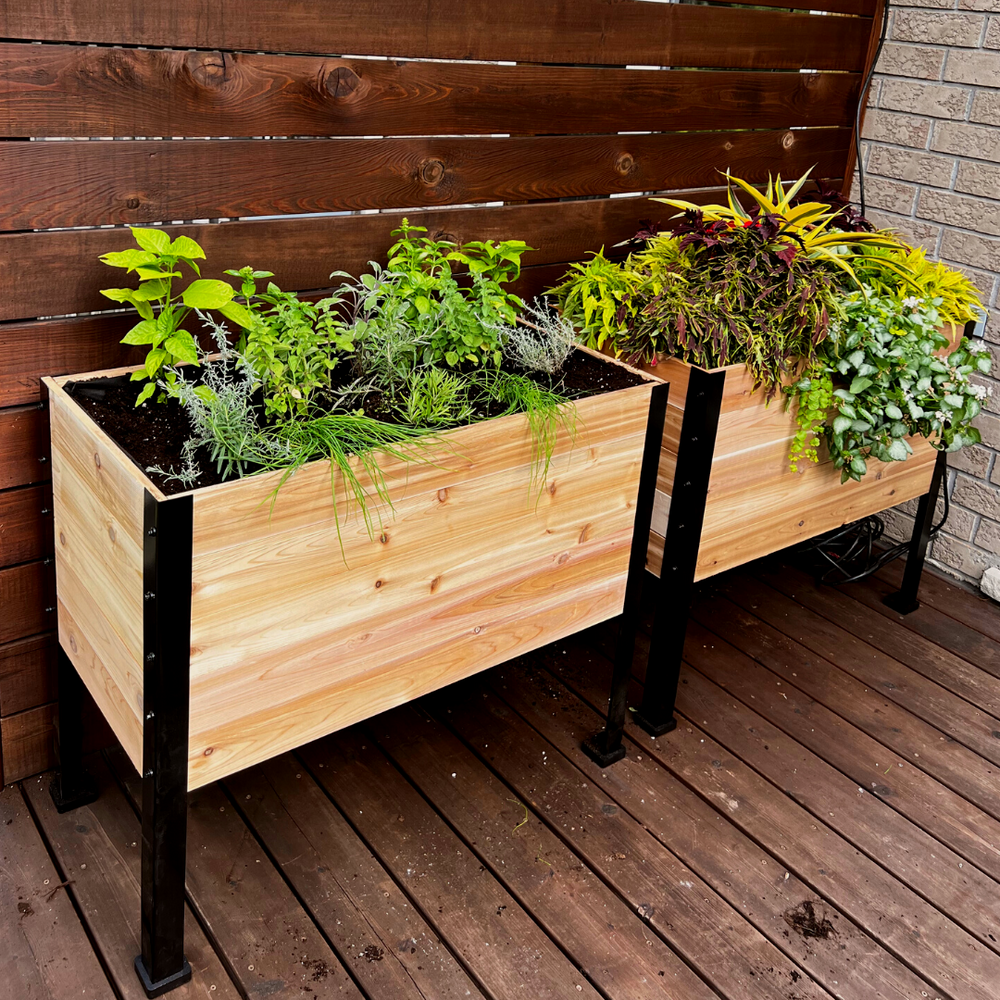
How to choose the right bed depth for your garden
Start with your crops, not the lumber
Many gardeners choose bed depth based on what boards are easiest to buy. That is understandable, but it is backwards. Start with what you want to grow most often, then build for those needs.
If your garden is mostly herbs and greens, shallow beds may be perfect. If you dream of tomatoes, carrots, and potatoes, go deeper. If you want a permanent edible bed with asparagus or artichokes, plan for extra depth from the beginning.
Think about your soil underneath
Raised beds do not exist in isolation. What lies below matters.
- If the ground is loose and healthy, roots may move downward beyond the frame.
- If it is compacted clay, construction debris, or rocky fill, the raised portion needs to do more of the work.
The worse the native soil, the more valuable extra depth becomes.
Consider watering and heat
Shallow beds dry quickly. Deep beds hold moisture longer. In hot climates, deeper beds can give you a much bigger buffer against heat stress. In cool, wet regions, a moderate depth may be enough, especially if drainage is already good.
The best soil strategy for any raised bed depth
No matter how deep the bed is, poor soil mix will hold you back. Aim for a blend that is:
- Loose enough for roots to move easily
- Rich in organic matter
- Moisture-retentive but not soggy
- Free of large rocks and compacted clumps
A reliable approach is to combine quality topsoil, finished compost, and a structure-improving material if needed. Do not use raw manure, dense clay fill, or unfinished woody material in the main root zone of annual crops.
A practical grower’s mindset: build once, grow smarter for years
The best raised bed systems are not only attractive. They are efficient. They reduce wasted water, improve crop performance, and make your daily garden work feel more purposeful. When bed depth matches the crop, your management becomes smoother. Plants need less rescuing. Roots stay stronger. Harvests feel more predictable.
That is where gardening shifts from trial-and-error to true skill.
A shallow bed for lettuce and herbs. A standard bed for peppers and cucumbers. A deeper bed for tomatoes, carrots, and potatoes. An extra-deep bed for asparagus, sweet potatoes, and artichokes. These are not just construction choices. They are decisions that shape the health and productivity of your whole growing space.
Build with intention, and your crops will show you the difference.