This grandma-style version focuses on a small thinning area instead of soaking the whole head.
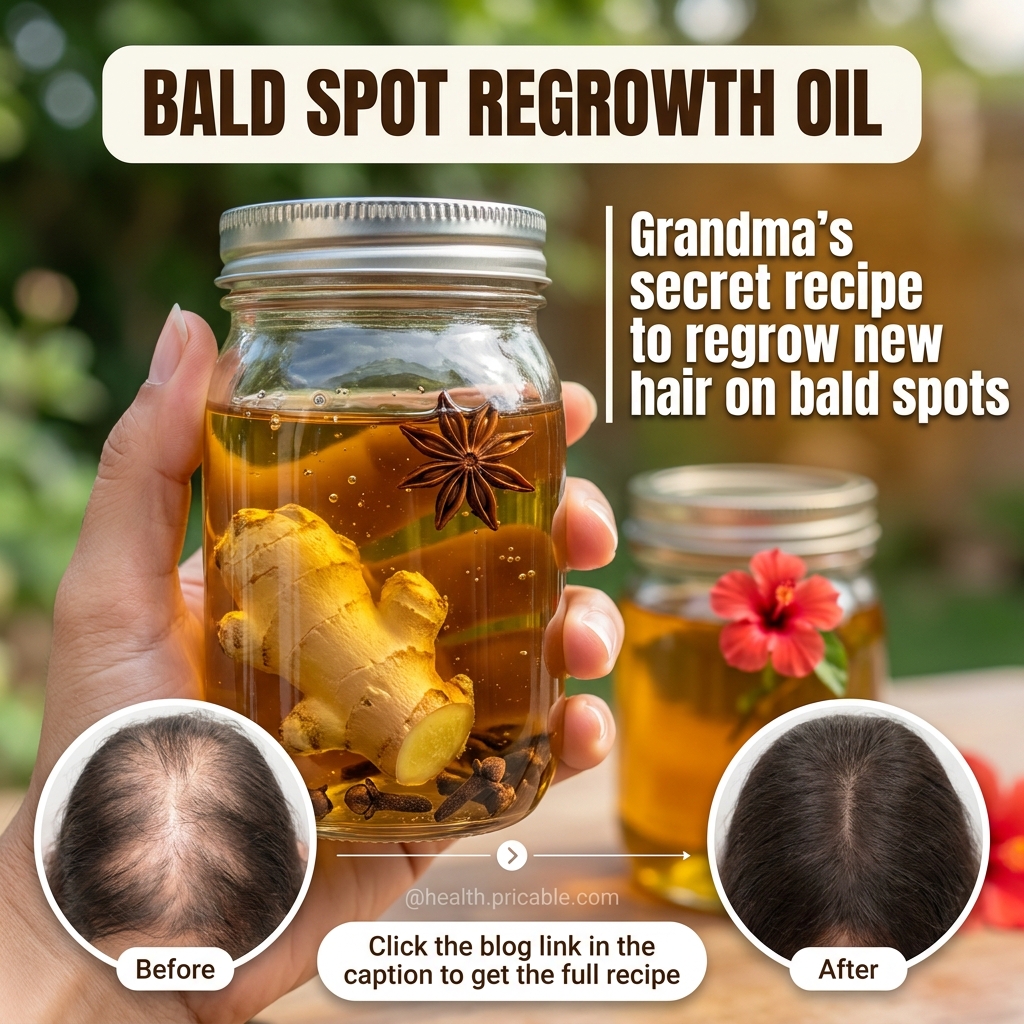
The goal is to nourish the scalp, reduce dryness, support a consistent massage habit, and help fragile hair look better cared for over time.
Here is the full recipe, the safest way to apply it, what to buy if you prefer a ready-made oil, and when a bald spot needs more than DIY care.
Why this scalp oil routine feels worth trying
- Carrier oil softens the scalp: Dry, tight scalp skin can feel more comfortable after light oiling.
- Herbs add a traditional hair-care boost: Rosemary, curry leaves, fenugreek, and onion are often used in home scalp oils.
- Massage supports consistency: Gentle massage makes the routine feel intentional and easier to repeat.
- Small-area application reduces greasiness: Treating only the thinning spot keeps the routine practical.
- Better hair care can reduce breakage: Conditioned hair often looks smoother and less fragile around thinning areas.
The smart next step is choosing whether your bald spot looks like dryness and breakage, traction damage, or true patchy hair loss. That decision changes how much you should rely on oil alone.
Best oil for bald spots and thinning hair
The best oil for bald spots and thinning hair is one your scalp can tolerate without itching, clogged follicles, burning, or heavy buildup.
For small thinning areas, use a carrier oil first, then add herbs carefully.
Best carrier oil options
- Jojoba oil: Lightweight and beginner-friendly for oily or sensitive scalps.
- Castor oil: Thick and coating; best used in small amounts or diluted with a lighter oil.
- Coconut oil: Rich and smoothing; better for dry, coarse, or curly hair.
- Grapeseed oil: Light and easy to wash out; useful for fine hair.
- Sesame oil: Traditional and medium-heavy; best for dry scalps that tolerate richer oils.
Best herbal add-ins
- Rosemary: Popular in scalp oils and easy to pair with carrier oils.
- Curry leaves: Traditionally infused into hair oils for shine and scalp care.
- Fenugreek seeds: Often used in DIY hair routines, but must be strained well.
- Onion: Strong-smelling and potentially irritating, so it should be used carefully.
- Black seed: Common in traditional hair oils and usually used in small amounts.
If you are unsure where to start, use jojoba oil with rosemary or curry leaves. It is simpler, lighter, and less likely to leave the scalp heavily coated.
How to make bald spot oil at home
This recipe is designed for small-area use. You do not need a large bottle, and you should not store homemade herbal oil for months.
Use dried herbs when possible because fresh ingredients can introduce moisture into oil.
Grandma-style herbal bald spot oil
- 2 tablespoons jojoba oil, grapeseed oil, coconut oil, or sesame oil
- 1 teaspoon castor oil
- 1 teaspoon dried rosemary
- 1 teaspoon dried curry leaves
- 1/2 teaspoon fenugreek seeds
- Optional: 2 to 3 drops rosemary essential oil only if your scalp already tolerates essential oils
Tools
- Small heat-safe bowl
- Small saucepan for double-boiler warming
- Fine mesh strainer or clean cheesecloth
- Clean dropper bottle or small glass jar
- Cotton swab or clean fingertips
Steps
- Add the carrier oil and castor oil to a heat-safe bowl.
- Add dried rosemary, dried curry leaves, and fenugreek seeds.
- Warm gently over a double boiler for 8 to 10 minutes. Do not fry the herbs or let the oil smoke.
- Turn off the heat and let the oil cool completely.
- Strain very well through cheesecloth or a fine strainer.
- Add rosemary essential oil only if using, then stir.
- Transfer to a clean bottle or jar.
- Label with the date and use within 2 weeks.
The finished oil should be smooth with no herb pieces. Small particles can stick to the scalp and make washing harder.
How to use oil on bald spots for hair growth
Use this oil as a focused scalp treatment, not as a heavy full-head coating.
The thinning area should feel lightly moisturized, not wet or greasy.
Focused application routine
- Start with a dry scalp and clean fingertips.
- Part the hair so the thinning spot is visible.
- Apply 2 to 4 drops of oil directly to the area.
- Massage with finger pads for 60 to 90 seconds using light circular pressure.
- Leave on for 30 minutes before washing, or overnight only if your scalp tolerates it well.
- Shampoo thoroughly if the area feels greasy or coated.
How often to use it
- Sensitive scalp: 1 time per week for 30 minutes.
- Normal scalp: 2 to 3 times per week.
- Very dry scalp: Up to every other night if there is no itching or buildup.
- Oily scalp: Use before shampoo only, not as a leave-in.
Do not scrape, press hard, or massage until the skin turns red. More friction can worsen breakage around a delicate thinning spot.
What to look for before you buy bald spot oil
A ready-made bald spot oil can be more convenient than DIY, especially if you want a cleaner formula and better shelf life.
Look for scalp-friendly ingredients, realistic claims, and packaging that lets you apply a small amount precisely.
- Clear carrier oil base: Look for jojoba, grapeseed, coconut, argan, almond, sesame, or castor oil.
- Precision applicator: A dropper or nozzle helps you target the spot without soaking the whole scalp.
- Low-fragrance formula: Strong perfume can irritate thinning or sensitive areas.
- Realistic claims: Avoid oils promising guaranteed regrowth, instant hairline repair, or overnight bald spot reversal.
- Scalp-supporting add-ins: Rosemary, peppermint, tea tree, amla, bhringraj, curry leaf, and black seed are common, but sensitive scalps should be cautious.
- Essential oil dilution: Essential oils should be diluted in a carrier oil, never applied straight to the scalp.
- Patch-test instructions: A serious product should tell you how to test before full use.
- Good packaging: Dark glass, sealed caps, and clean droppers help protect the oil.
- Texture match: Fine hair usually needs lighter oils; coarse or curly hair may tolerate richer oils.
If you are comparing products, choose the one that looks easiest to apply consistently without greasiness. A mild oil used three times a week is often more useful than a strong oil you quit after irritation.
Bald spot oil for women with thinning hair
Women can experience thinning around the temples, part line, crown, edges, or after hormonal changes.
Bald spot oil may be helpful as a supportive scalp-care step, but it should not replace checking the cause of new or worsening thinning.
Best routine for women with thinning areas
- Use oil only on the thinning area, not all over the roots.
- Massage gently for 1 minute, 2 to 3 times per week.
- Avoid tight ponytails, slick buns, heavy extensions, and rough brushing.
- Use a gentle shampoo that removes buildup without stripping the scalp.
- Track the area with photos every 2 weeks in the same lighting.
- Consider nutrition, iron status, stress, postpartum timing, thyroid health, and medication changes if shedding is sudden.
If the bald spot is smooth, round, spreading, painful, scaly, or suddenly noticeable, see a dermatologist. That pattern may need medical evaluation rather than oil alone.
Common mistakes and quick fixes
- Mistake: Using too much oil. Why it matters: heavy buildup can make thin areas look flatter. Fix: use 2 to 4 drops only.
- Mistake: Applying essential oil directly. Why it matters: undiluted essential oils can burn or irritate the scalp. Fix: dilute properly or buy a pre-diluted formula.
- Mistake: Rubbing the bald spot aggressively. Why it matters: friction can break fragile hairs. Fix: massage lightly with finger pads.
- Mistake: Leaving onion or herb pieces in the oil. Why it matters: particles can irritate skin and create residue. Fix: strain through cheesecloth.
- Mistake: Using old homemade oil. Why it matters: DIY oils can become stale or contaminated. Fix: make small batches and label dates.
- Mistake: Ignoring tight hairstyles. Why it matters: traction can worsen thinning around edges and temples. Fix: loosen styles and avoid constant tension.
- Mistake: Expecting results in a week. Why it matters: hair cycles move slowly. Fix: track changes over 8 to 12 weeks.
- Mistake: Treating every bald spot the same. Why it matters: patchy loss, breakage, and genetic thinning need different approaches. Fix: get help if the spot is sudden, smooth, or spreading.
Safety note before using bald spot oil
Patch test first. Apply a tiny amount behind the ear or on the inner arm, wait 24 hours, and do not use the oil if you notice burning, rash, swelling, bumps, or strong itching.
Do not apply oil to broken skin, infected areas, open sores, severe dandruff patches, eczema flares, psoriasis flares, or painful scalp spots.
Avoid strong essential oils if you are pregnant, breastfeeding, highly sensitive, or using scalp medications unless a qualified professional says it is appropriate.
Store homemade oil in a clean, sealed bottle away from heat and sunlight. If it smells rancid, looks cloudy, or changes texture, throw it out.
Realistic timeline: what you may notice
Same day
The scalp may feel less dry, and nearby hair may look shinier after washing. The bald spot itself will not fill in immediately.
After 1 week
You may notice better scalp comfort and less roughness around the thinning area. Shedding may still look the same.
After 2 to 4 weeks
Hair around the spot may look smoother and less brittle if dryness and breakage were part of the issue. New visible growth may still be minimal.
After 8 to 12 weeks
If follicles are active and the cause is not progressing, you may see small baby hairs or better density around the area. If the spot is larger or unchanged, it is time to consider professional guidance.
FAQ
What is the best oil for bald spots and thinning hair?
The best oil is a scalp-friendly carrier oil such as jojoba, grapeseed, coconut, sesame, or diluted castor oil. Choose based on your scalp type and avoid anything that causes itching or burning.
What should I look for before I buy bald spot oil?
Look for a clear carrier oil base, a precision applicator, low fragrance, realistic claims, patch-test instructions, and ingredients that are diluted properly. Avoid oils promising guaranteed overnight regrowth.
How do you make bald spot oil at home?
Warm 2 tablespoons carrier oil with 1 teaspoon castor oil, dried rosemary, dried curry leaves, and fenugreek seeds for 8 to 10 minutes using gentle heat. Cool, strain well, and store in a clean bottle.
How do you use oil on bald spots for hair growth?
Apply 2 to 4 drops directly to the thinning spot, massage gently for 60 to 90 seconds, and leave it on for 30 minutes before washing. Use 2 to 3 times weekly if tolerated.
Is bald spot oil helpful for women with thinning hair?
It can be helpful as a supportive scalp-care routine, especially when dryness or breakage is involved. However, sudden, patchy, spreading, or hormonal thinning should be evaluated instead of relying on oil alone.
Can bald spot oil regrow hair?
Bald spot oil may support scalp care and reduce breakage, but it cannot guarantee regrowth. Results depend on whether follicles are active and what caused the thinning.
Can I leave bald spot oil on overnight?
You can leave a mild oil overnight if your scalp tolerates it, but start with 30 minutes first. Wash it out if you notice itching, bumps, greasiness, or irritation.
How often should I apply oil to a bald spot?
Two to three times per week is a practical starting point. Sensitive scalps should begin once weekly, while oily scalps may prefer pre-shampoo use only.
Is castor oil good for bald spots?
Castor oil can condition hair and make it look thicker because of its heavy texture, but it should be diluted if it feels sticky or hard to wash out.
When should I see a doctor for a bald spot?
See a dermatologist if the spot is sudden, smooth, round, spreading, painful, scaly, or accompanied by heavy shedding. Those signs may need targeted treatment.
Before you buy or make another oil, compare your scalp reaction, hair texture, and the pattern of thinning. The best choice is the one that supports your scalp without irritation and gives you a routine you can repeat long enough to judge fairly.
Final takeaway
- Use bald spot oil as a focused scalp-care routine, not a guaranteed regrowth cure.
- Start with a light carrier oil like jojoba or grapeseed if your scalp is sensitive or oily.
- Dilute castor oil because it is thick and can leave buildup.
- Strain homemade herbal oils carefully and make small batches.
- Avoid harsh rubbing, tight hairstyles, and undiluted essential oils.
- Track the area for 8 to 12 weeks and seek help if the spot is sudden, spreading, painful, or smooth.