You do not need a large yard to grow fruit plants. In fact, some of the most satisfying fruit harvests come from pots placed on a sunny patio, balcony, front porch, or driveway edge. When May arrives and the weather settles, container fruit growing becomes one of the smartest ways to turn a small space into something beautiful, productive, and deeply rewarding.
This is the season when plants establish quickly, roots wake up, and warm days help fruit crops settle into active growth. If you choose the right plant, the right pot, and the right location, a container can become more than decoration. It can become a steady source of strawberries for breakfast, lemons for summer drinks, figs for fresh eating, and berries for daily picking.
The secret is not trying to grow every fruit tree in a pot. The secret is choosing plants that are naturally suited to container life, then caring for them with a little more intention than you would give a plant in the ground.
Why May is a great month to start fruit plants in pots
May offers a useful balance. In much of the United States, the danger of frost has passed or is nearly gone, the soil and air are warming, and plants have a long growing season ahead to root in before facing colder weather again.
That timing matters because container fruit plants need a strong start. Their roots are limited by the size of the pot, so they depend on you for water, feeding, and protection more than in-ground plants do. Starting in May gives them time to establish while conditions are still favorable.
For U.S. gardeners, USDA zones shape how these plants behave:
- In Zones 3–5, most potted fruit plants need winter protection or seasonal management.
- In Zones 6–8, many container fruits can thrive outdoors for much of the year, though some still need cold-weather protection.
- In Zones 9–11, warm-climate fruit plants like Meyer lemon can often stay outside year-round.
What makes a fruit plant good for containers?
A good fruit plant for pots usually has one or more of these traits:
- naturally compact growth
- strong performance in restricted root space
- good fruiting on smaller plants
- tolerance for pruning
- suitability for patios and sunny small spaces
The best container fruit plants do not merely survive in pots. They stay productive there.
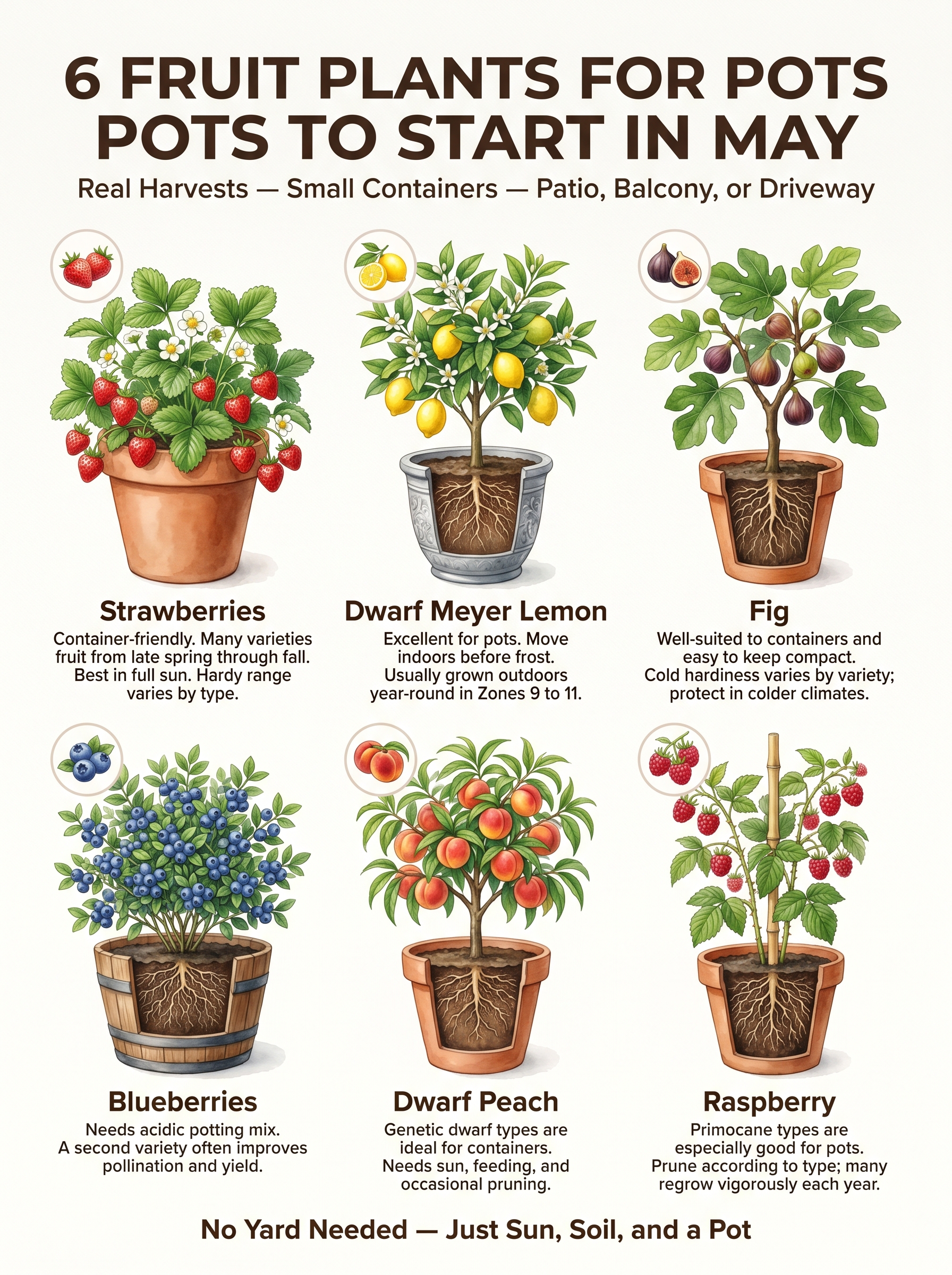
1. Strawberries: the easiest fruit to start in containers
Strawberries are one of the best fruits for beginners because they adapt beautifully to pots, hanging baskets, window boxes, and strawberry jars. They also reward you quickly, which is important when you want a garden that feels useful right away.
Plant character
Strawberries are low-growing, shallow-rooted, and eager to spread. They prefer full sun, steady moisture, and good drainage.
Best USDA zone use
Many strawberries grow well across a wide range of U.S. zones, but exact hardiness varies by type. In colder regions, containers may need winter protection so roots do not freeze too harshly.
Practical care tip
Choose the right type for your goal. Day-neutral and everbearing strawberries are often better for containers because they can fruit over a longer season. Keep the fruit off soggy soil by using mulch or raised pot edges.
Smart productivity habit
Replace tired plants every few years. Container strawberries are productive, but younger plants usually perform better.

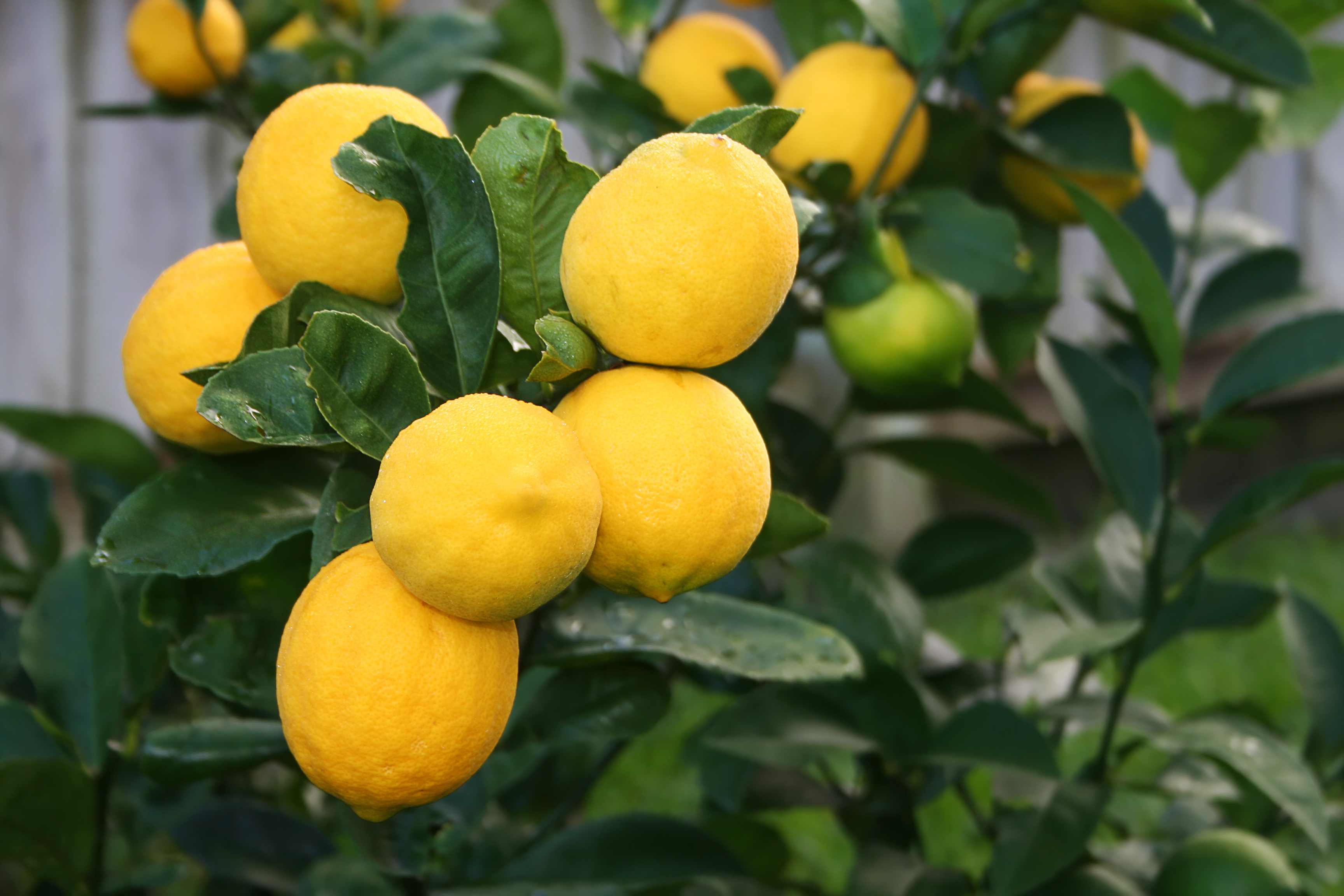
2. Dwarf Meyer Lemon: sunshine, fragrance, and real harvests
A dwarf Meyer lemon in a pot can make even a small patio feel luxurious. It offers glossy leaves, fragrant flowers, and bright fruit, all in one container.
Plant character
This is a compact citrus with ornamental value as well as practical harvest value. It wants warmth, abundant sun, and regular feeding.
Best USDA zone use
Meyer lemon is best kept outdoors year-round in Zones 9–11. In colder regions, it is usually grown in a pot and moved indoors or to protected shelter before frost.
Practical care tip
Do not underpot citrus for too long. It likes a container large enough to support root stability and even moisture, but not one so oversized that soil stays soggy for too long.
Smart productivity habit
Feed citrus regularly during active growth. Fruiting plants in pots run through nutrients quickly, and lemons need steady nutrition to flower and hold fruit well.
3. Fig: one of the smartest fruit trees for pots
Figs are surprisingly well suited to container growing. In fact, a pot can be an advantage because it helps control size and makes winter protection easier in colder climates.
Plant character
Figs are vigorous, sun-loving, and naturally responsive to pruning. They fruit well when given warmth and strong light.
Best USDA zone use
Cold hardiness depends on the variety. In colder regions, container figs are especially useful because they can be moved into a garage, shed, or protected area during severe winter weather.
Practical care tip
Use a large, stable container from the start or size up gradually. Figs can grow fast, and a pot that is too small dries out quickly in summer.
Smart productivity habit
Prune lightly for shape and size control, but do not overdo it. You want enough structure to keep the plant compact without cutting away too much fruiting wood.

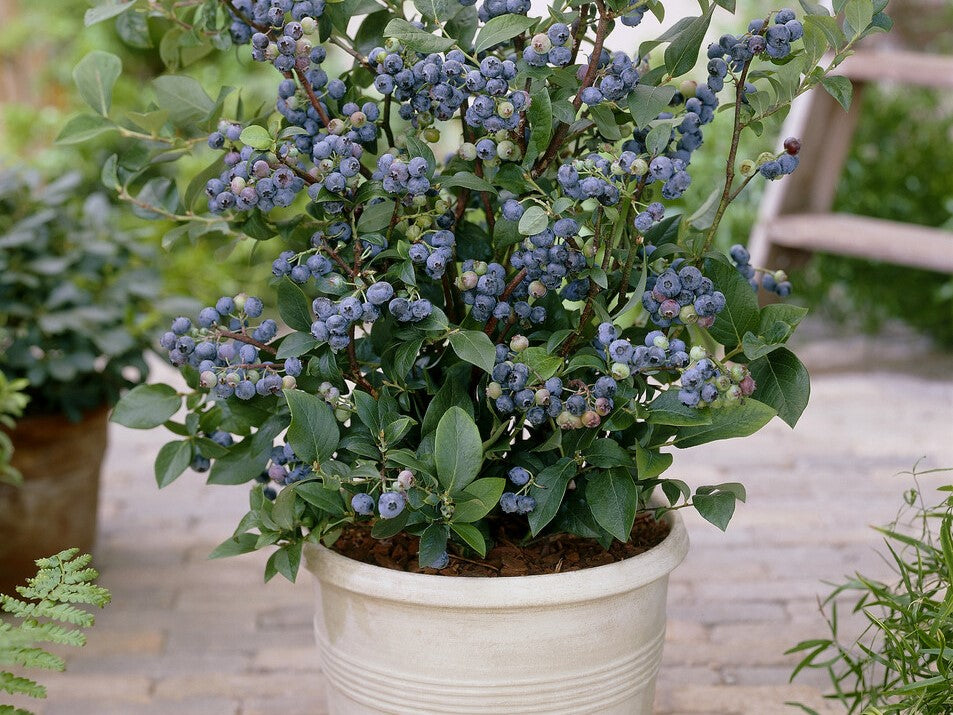
4. Blueberries: excellent for pots if you get the soil right
Blueberries can be wonderful container plants, but they ask for one thing that many gardeners overlook: the right potting mix. If the soil chemistry is wrong, the plant will never be truly happy.
Plant character
Blueberries are shrubby, attractive, and productive in containers. Their spring flowers, summer fruit, and often good fall color make them very rewarding.
Best USDA zone use
Many blueberries grow well in a broad range of U.S. climates, but variety selection matters. Southern highbush, northern highbush, and rabbiteye types all have different zone preferences.
Practical care tip
Blueberries need acidic potting mix. Standard all-purpose mix is often not enough. Use a blend suited to acid-loving plants and water carefully so the roots stay moist but never swampy.
Smart productivity habit
A second variety often improves pollination and yields. Even when one variety is self-fruitful, a companion can make a noticeable difference.
5. Dwarf Peach: big flavor from a smaller tree
A genetic dwarf peach tree can be an excellent container fruit for gardeners who want the look and harvest of a small fruit tree without needing orchard space.
Plant character
Dwarf peaches bring spring bloom, summer fruit, and a true tree form that adds beauty as well as usefulness.
Best USDA zone use
Peach varieties differ by chill requirement and winter hardiness, so matching the variety to your USDA zone is important. Container culture is possible across a wide range, but cold climates may require winter root protection.
Practical care tip
Dwarf peaches still need full sun, regular feeding, and occasional pruning. Do not assume “dwarf” means “no maintenance.” It means manageable size, not zero work.
Smart productivity habit
Thin heavy fruit sets. It feels hard at first, but removing some young fruit leads to better size, less branch stress, and a healthier tree overall.

6. Raspberry: especially useful in large containers
Raspberries can grow very well in pots, especially primocane types, which fruit on first-year canes and are often easier to manage in small spaces.
Plant character
Raspberries are upright to arching, fast-growing, and productive when they have good sun and support.
Best USDA zone use
Many raspberry varieties suit cooler and moderate regions especially well, though exact hardiness depends on the type. Container growing is especially useful where soil-borne issues or space limitations make in-ground growing difficult.
Practical care tip
Choose a strong container with room for roots and use a cane support or small trellis. Even compact raspberries often look and perform better with structure.
Smart productivity habit
Prune according to the type you grow. Primocane raspberries are especially simple because they can often be cut back hard after fruiting, depending on how you want to manage the crop cycle.

How to choose the right pot for fruit plants
Container fruit growing succeeds or fails on container choice more often than people expect.
Go bigger than for flowers
Fruit plants need more root room and more moisture stability than annual flowers. A tiny decorative pot may look charming, but it often creates constant stress.
Prioritize drainage
Every fruit container needs strong drainage holes. Fruit roots can tolerate many things, but standing water is rarely one of them.
Match the pot to the plant’s habit
- Strawberries can use wider, shallower containers
- Citrus, figs, peaches, and blueberries need deeper, sturdier pots
- Raspberries need width, depth, and support
The most important care habits for container fruit
1. Give them real sun
Most fruit plants need at least 6 to 8 hours of sun, and many do even better with more. No amount of good watering can replace insufficient light.
2. Water deeply and consistently
Container fruits dry out faster than in-ground plants. That is especially true on patios, balconies, and paved areas where reflected heat is strong.
3. Feed with intention
Fruiting plants use a lot of energy. A light, regular feeding schedule during active growth usually gives better results than occasional heavy feeding.
4. Refresh soil over time
Potting mix breaks down. Top-dress, refresh, or repot as needed so roots continue getting air as well as nutrients.
5. Protect roots in winter
In cold climates, roots in pots are more exposed than roots in the ground. Move containers, insulate them, or cluster them in protected spaces when winter gets severe.
Best beginner strategy for success
If you are just starting, begin with strawberries or blueberries if you want easier fruiting plants, or fig if you want a small fruit tree with strong container potential. Add Meyer lemon if you can manage seasonal movement indoors. Choose dwarf peach or raspberry when you are ready for a little more structure and pruning.
Final thoughts: fruit growing does not require a yard
A pot of strawberries by the steps, a lemon tree on the patio, a fig in a sunny corner, blueberries near the railing, a dwarf peach as a focal point, or raspberries in a large container can completely change the feeling of a small space. Suddenly, a porch becomes productive. A balcony becomes seasonal. A driveway edge becomes a place of harvest, not just hard surface.
That is the beauty of container fruit growing. It proves that real harvests do not begin with more land. They begin with better choices, a sunny spot, and the confidence to grow something worth picking.