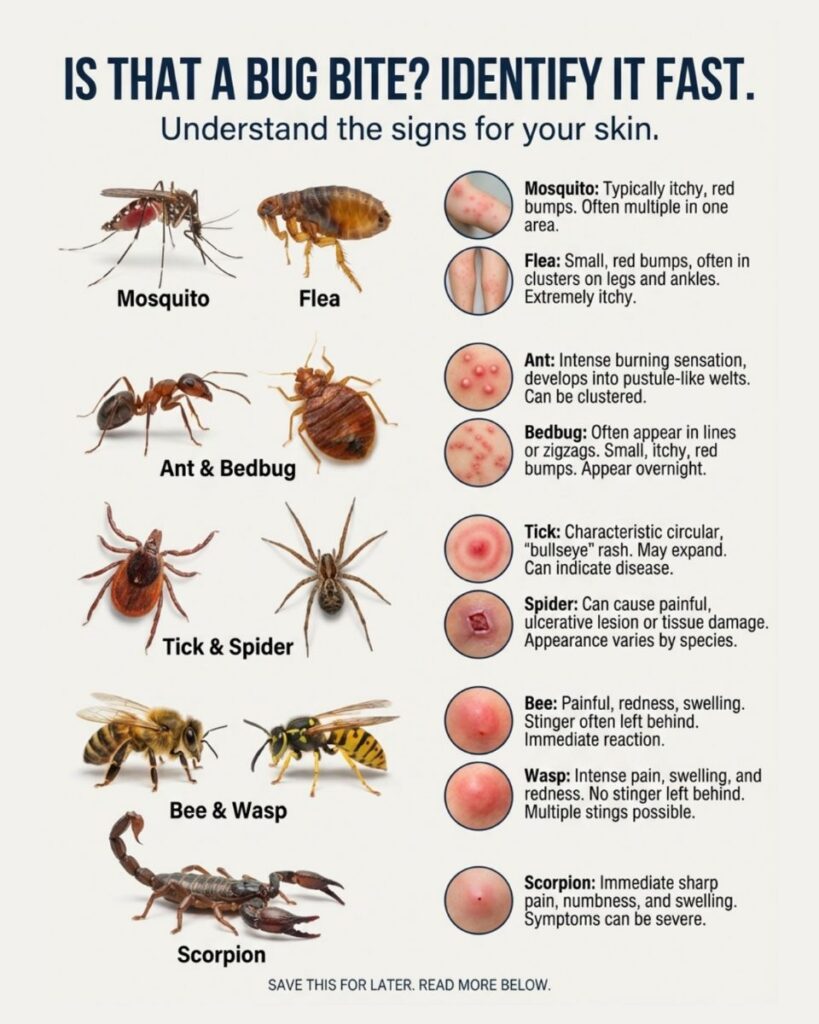
Most people react first and identify later when they notice a strange itchy bump on their skin. But different bug bites create different patterns — and understanding those patterns can help you treat irritation faster and avoid unnecessary panic.
Some bites cause mild itching that fades within hours, while others may lead to swelling, burning, allergic reactions, or skin infections. In this guide, we’ll break down the most common bug bites, how they usually look, what over-the-counter medications may help, and a few traditional home remedies people often use for relief.
Mosquito Bites: Itchy Red Bumps That Usually Appear in Groups
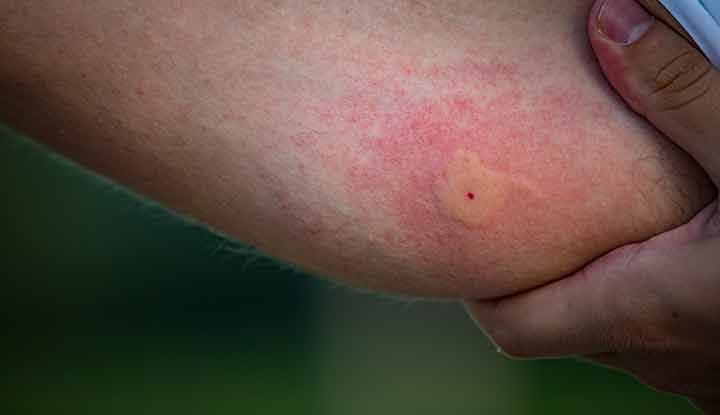
Mosquito bites are one of the most common skin irritations during warmer months. They typically appear as small, itchy, raised red bumps and often show up in clusters on exposed skin like arms, ankles, or shoulders.
The itching happens because mosquito saliva triggers a histamine response in the body. Some people barely react, while others develop larger swollen welts.
What Usually Helps
- cold compress
- calamine lotion
- hydrocortisone cream
- antihistamine tablets
- aloe vera gel
Popular Home Remedies
Many people use:
- ice packs
- oatmeal paste
- diluted tea tree oil
- baking soda mixed with water
Cooling the skin usually helps more than scratching.
Flea Bites: Small Clusters Around Ankles and Legs
Flea bites are usually smaller than mosquito bites and tend to appear in groups around:
- ankles
- lower legs
- socks line
They often itch intensely and may become more irritated after scratching.
Signs That Suggest Flea Bites
- tiny red dots
- clustered pattern
- severe itching
- bites appearing overnight
Treatment Options
- antihistamines
- anti-itch cream
- washing bedding
- vacuuming carpets and furniture
Traditional Relief Tips
Some people apply:
- witch hazel
- chamomile compress
- diluted apple cider vinegar
The environment often matters more than the skin treatment itself because fleas usually continue biting until the source is removed.
Ant and Bedbug Bites: Similar Patterns, Different Reactions
Ant bites and bedbug bites are commonly confused because both may appear in clusters.
Ant Bites
Certain ants — especially fire ants — can cause:
- burning sensation
- painful swelling
- pus-filled bumps
- redness
Unlike mosquito bites, ant bites often feel painful before they become itchy.
Common Treatments
- hydrocortisone cream
- cold compress
- antihistamines
Traditional Remedies
People often use:
- honey
- aloe vera
- turmeric paste
Turmeric is popular because curcumin may help calm inflammatory skin reactions.
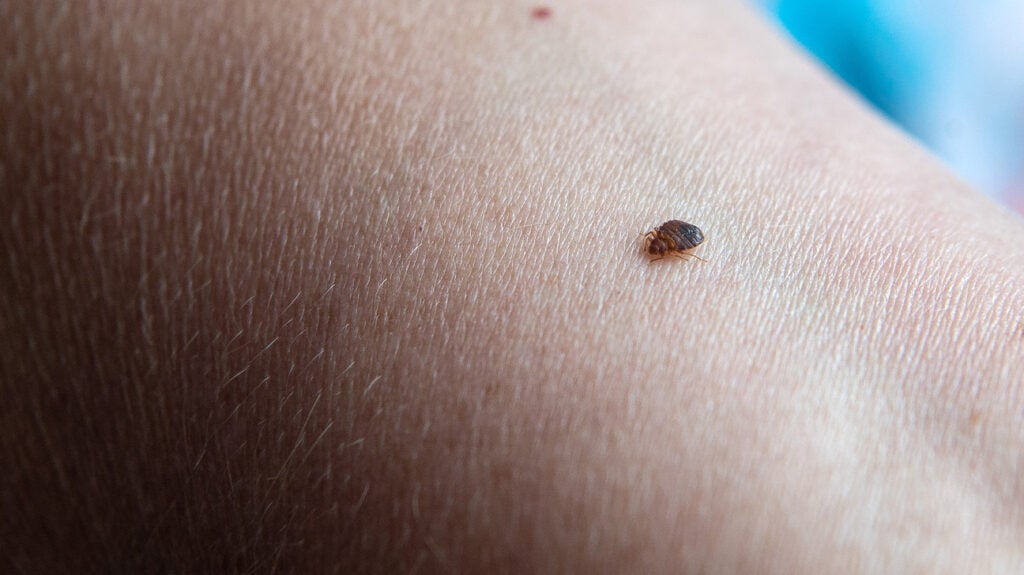
Bedbug Bites
Bedbug bites usually:
- appear in lines or zigzags
- show up after sleeping
- affect exposed skin
- itch intensely
Many people notice the classic “breakfast-lunch-dinner” bite pattern.
Helpful Treatments
- anti-itch cream
- antihistamines
- hot washing sheets and fabrics
- professional mattress cleaning if infestation continues
If bites keep reappearing every morning, treating the room becomes just as important as treating the skin.
Tick Bites: Why the “Bullseye Rash” Matters
Tick bites are important because some ticks may carry bacteria associated with Lyme disease.
Common Tick Bite Symptoms
- small red bump
- circular expanding rash
- “bullseye” appearance
- fatigue or fever in some cases
Not every tick bite becomes dangerous, but monitoring the rash over the next few days is important.
What To Do After a Tick Bite
- remove the tick carefully with tweezers
- avoid crushing it
- clean the skin thoroughly
- monitor for expanding redness
When To Seek Medical Care
Contact a doctor if:
- rash grows larger
- fever develops
- joint pain appears
- unusual fatigue begins
Early treatment matters with tick-borne illnesses.
Spider Bites: Mild Irritation vs Serious Reactions
Most spider bites are harmless and heal on their own, but some species may trigger stronger reactions.
Common Spider Bite Symptoms
- redness
- swelling
- pain
- blistering
- skin irritation
Basic Treatment
- cold compress
- antihistamines
- pain relievers
- keeping the area clean
Natural Remedies People Often Use
- aloe vera
- diluted lavender oil
- turmeric paste
- chamomile compress
However, worsening pain or darkening skin should always be evaluated medically.
Bee and Wasp Stings: Similar but Not the Same
Bee and wasp stings can feel similar initially, but they behave differently.
Bee Stings
Bee stings often leave the stinger behind.
Symptoms
- immediate pain
- swelling
- redness
- warmth around the sting
What Helps
- removing the stinger quickly
- ice packs
- antihistamines
- hydrocortisone cream
Common Folk Remedies
- baking soda paste
- honey
- aloe vera gel

Wasp Stings
Wasps usually do not leave a stinger and may sting multiple times.
Common Symptoms
- sharper pain
- burning sensation
- redness
- larger swelling
Treatment Options
- cold compress
- anti-inflammatory medicine
- antihistamines
People with severe swelling or breathing difficulty should seek urgent care immediately.
Scorpion Stings: Painful and Sometimes Serious
Scorpion stings may cause:
- sharp pain
- tingling
- numbness
- swelling
In some regions, symptoms can escalate quickly.
Seek Emergency Care If You Notice
- breathing changes
- vomiting
- muscle twitching
- dizziness
- severe swelling
Even when symptoms seem mild initially, monitoring is important.
Best Over-the-Counter Bug Bite Treatments
Most mild bug bites improve with simple treatments.
Commonly Used Products
- calamine lotion
- hydrocortisone cream
- oral antihistamines
- cold packs
- anti-itch creams
High-Search Health Keywords
These topics also perform well for search traffic and health-related ads:
- best anti itch cream
- bug bite relief
- hydrocortisone cream for itching
- natural remedies for bug bites
- swelling relief cream
- skin irritation treatment
- antihistamine for insect bites
Natural Home Remedies for Itching and Swelling
Many people prefer natural remedies before using stronger medications.
Common Home Treatments
- aloe vera gel
- oatmeal baths
- honey
- cold green tea compress
- baking soda paste
- chamomile
- diluted tea tree oil
Most of these remedies mainly work by cooling the skin or temporarily calming irritation.
Final Thought
Most bug bites are harmless — but patterns matter.
The body usually gives clues through:
- itch intensity
- swelling
- bite shape
- timing
- clustering
Learning to recognize those differences early can help you react calmly instead of immediately assuming the worst.
And sometimes the best treatment is simply:
- avoiding scratching
- reducing inflammation
- giving the skin time to heal properly
Sources
- Mayo Clinic — Insect Bites and Stings
- Cleveland Clinic — Bug Bite Symptoms and Treatment
- CDC — Tick Bite and Lyme Disease Information
- American Academy of Dermatology — Bedbug and Spider Bite Identification
- NIH MedlinePlus — Insect Bite Reactions and Skin Irritation