A good shade tree changes more than the look of a landscape. It changes how the whole property feels. Summer afternoons become more comfortable. Lawns and planting beds dry out more slowly. Outdoor seating areas become usable for longer parts of the day. Even the house itself can feel calmer and cooler when the right tree is planted in the right place.
That is why fast-growing shade trees are such a smart investment for gardeners, homeowners, and land stewards. They offer relatively quick returns, but only when chosen with care. Fast growth is useful. Fast growth in the wrong place is a headache. The real goal is not simply to plant a tree that grows quickly. It is to plant a tree that grows quickly and fits your climate, soil, space, and long-term landscape plans.
If you want a yard that feels more established, more functional, and more beautiful in less time, these nine trees are worth serious attention.
What makes a fast growing shade tree truly useful?
A strong shade tree does more than gain height quickly. It should also have:
- a canopy broad enough to cast meaningful shade
- roots suited to the planting site
- reasonable resilience for your climate
- visual interest through form, flowers, bark, or fall color
- enough structure to age well with proper care
The most successful choice is always the one that fits your site. A tree that thrives in a damp low area may fail on hot, dry ground. A tree that looks ideal in a large open yard may be completely wrong near patios, pipes, or foundations.
Start with the site before the species
Before choosing any fast-growing shade tree, ask four practical questions:
How much room does the mature tree need?
Fast-growing trees do not stay small for long. Look at mature height and spread, not just the young nursery size.
What is the soil like?
Some trees tolerate wet soil. Others want deep, well-drained ground. A poor soil match slows growth and weakens long-term health.
What USDA zone are you in?
Hardiness matters. A fast-growing tree is not a good investment if winter or summer extremes push it beyond its comfort zone.
What kind of shade do you want?
Some trees cast dense shade. Others create filtered light. Think about whether you want lawn shade, patio relief, or a cooler canopy over a larger section of yard.
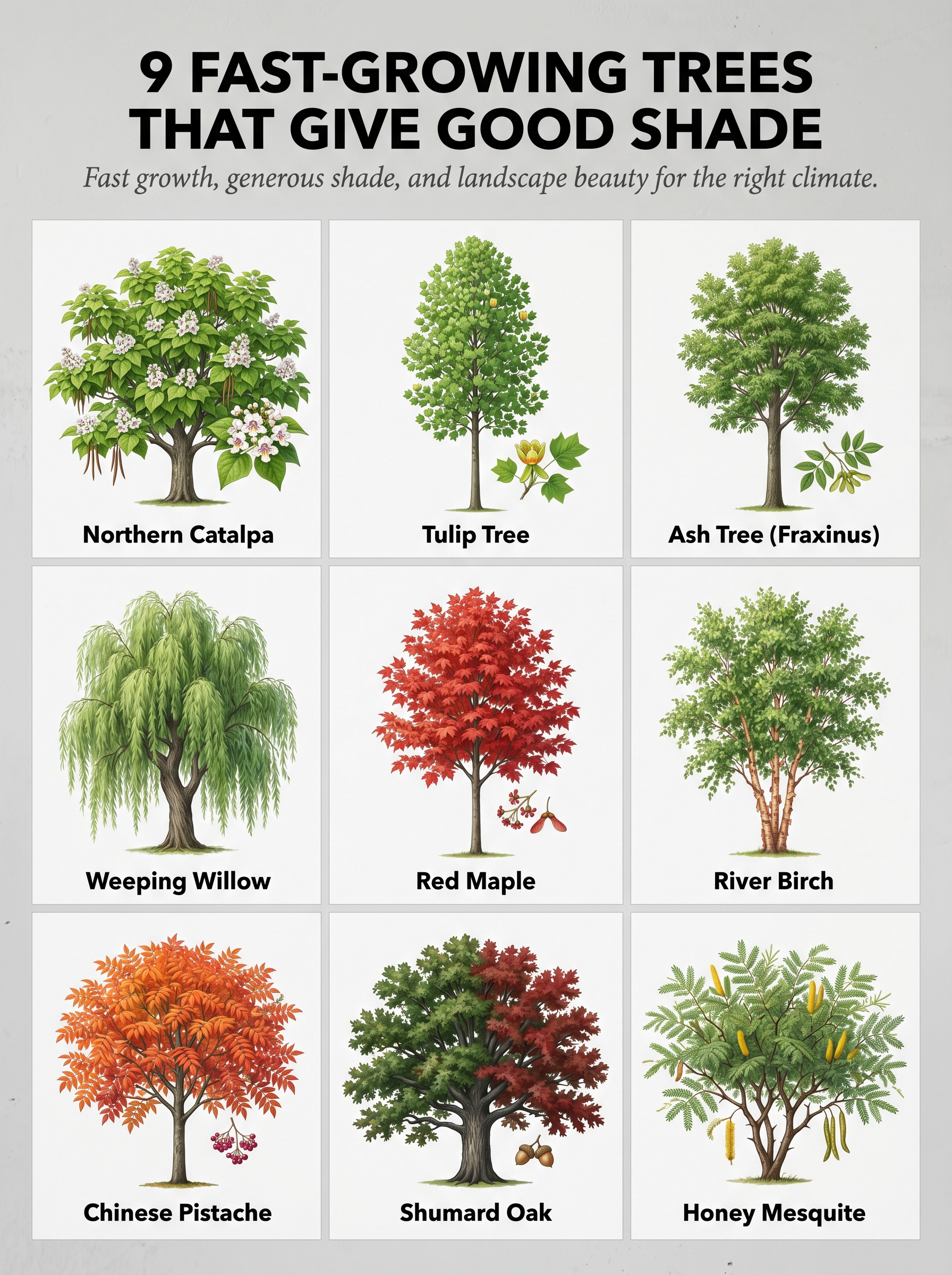
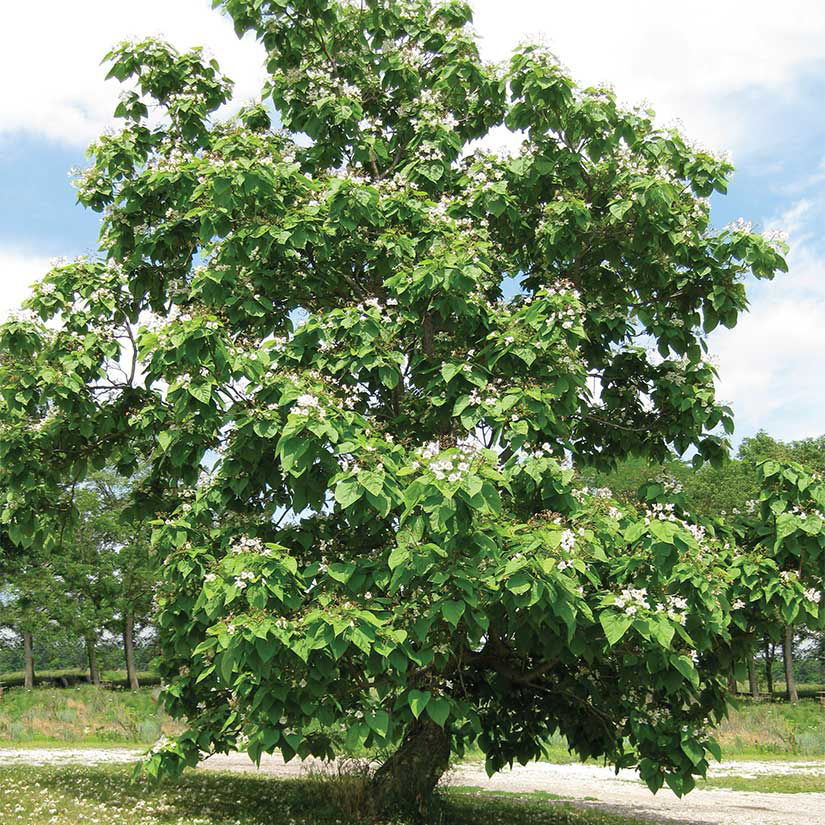
1. Northern Catalpa: bold leaves and fast canopy growth
Northern catalpa is one of the quickest ways to create a broad, generous shade presence in the landscape. Its large leaves give it a lush, almost tropical look, and its flower clusters add extra ornamental value.
Why gardeners choose it
This tree grows quickly and casts substantial shade with its oversized foliage. It is useful when you want noticeable impact without waiting decades.
Best USDA zones
Generally well suited to Zones 4–8.
Practical care tip
Give it space from the beginning. The canopy broadens with time, and the large leaves are best appreciated where they can spread naturally rather than crowding a narrow side yard.
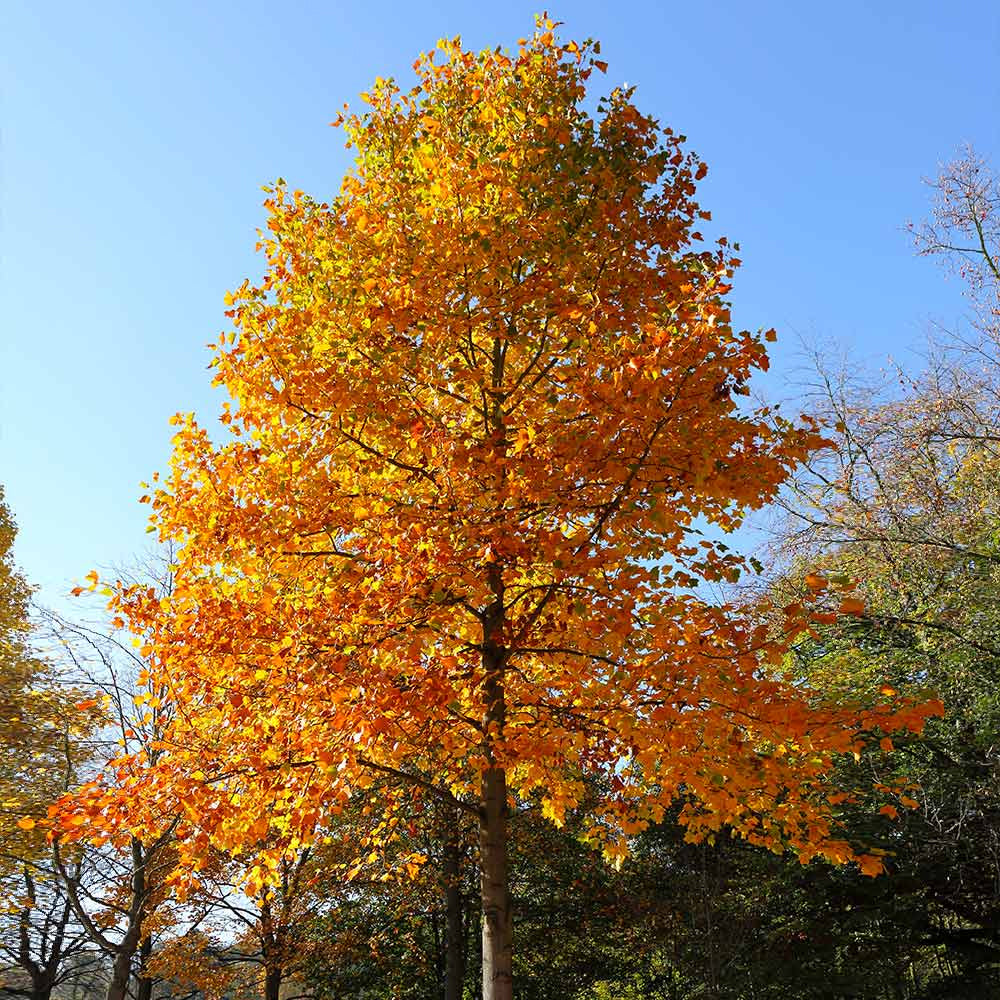
2. Tulip Tree: tall, elegant, and impressively fast
Tulip tree is one of the best fast-growing shade trees for larger properties. It brings a stately form, strong vertical growth, and attractive tulip-like flowers.
Why gardeners choose it
It grows fast but still has a refined shape. That makes it one of the better choices when you want quick shade without sacrificing a graceful look.
Best USDA zones
Usually reliable in Zones 4–9.
Practical care tip
Plant it where its eventual height makes sense. Tulip tree is not a small-space tree. It works best in open lawns or larger landscape settings where the root zone and canopy can develop properly.
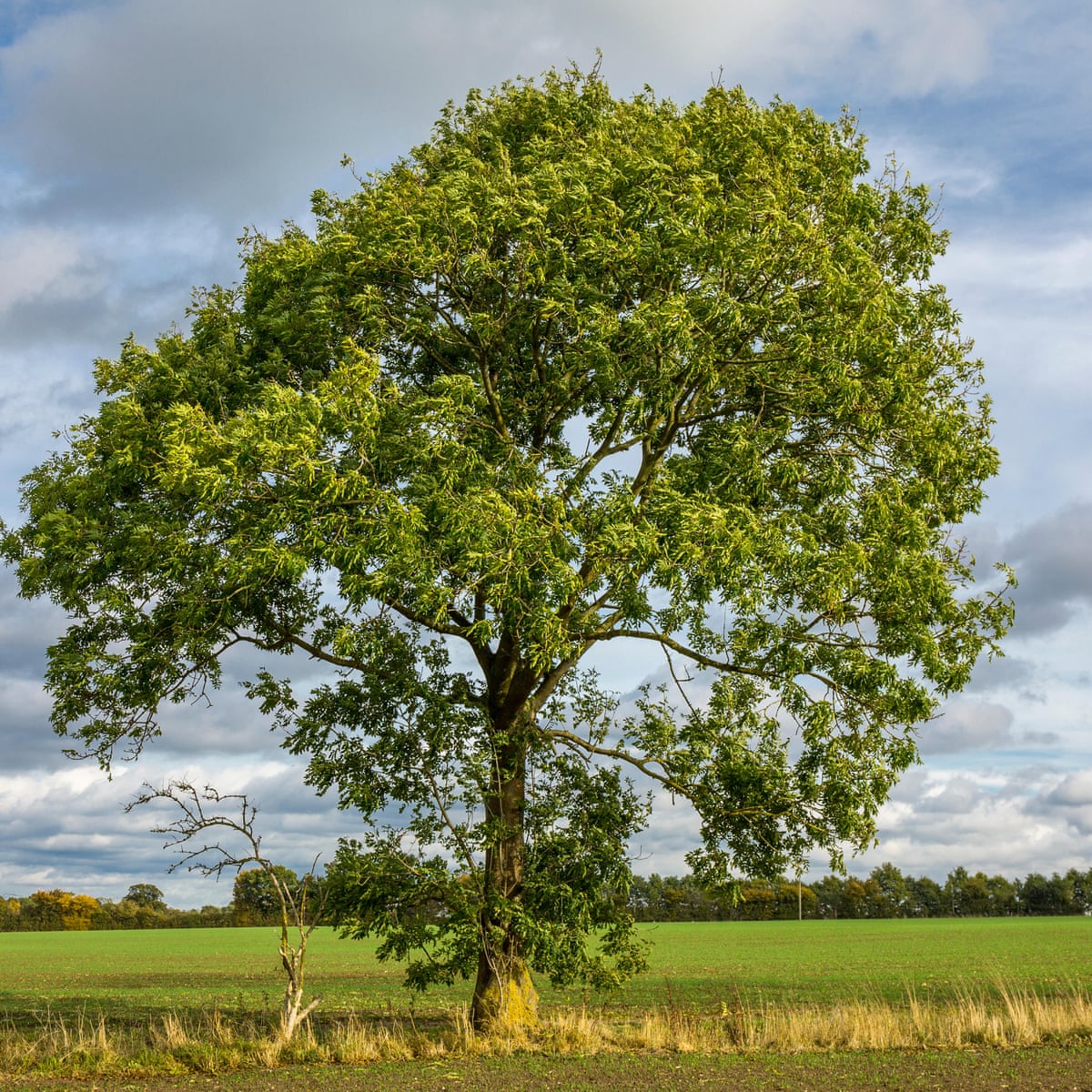
3. Ash Tree: useful shade, but choose carefully
Ash trees have long been valued for quick growth and strong shade, but species and regional disease pressures matter a great deal.
Why gardeners choose it
Many ash trees develop a high, useful canopy that allows filtered shade and good lawn use beneath.
Best USDA zones
Varies by species, but many fit Zones 3–9.
Practical care tip
Research current local conditions before planting. In many areas, ash trees face serious pest pressure. A fast-growing tree is only a wise choice if it has a realistic future in your region.
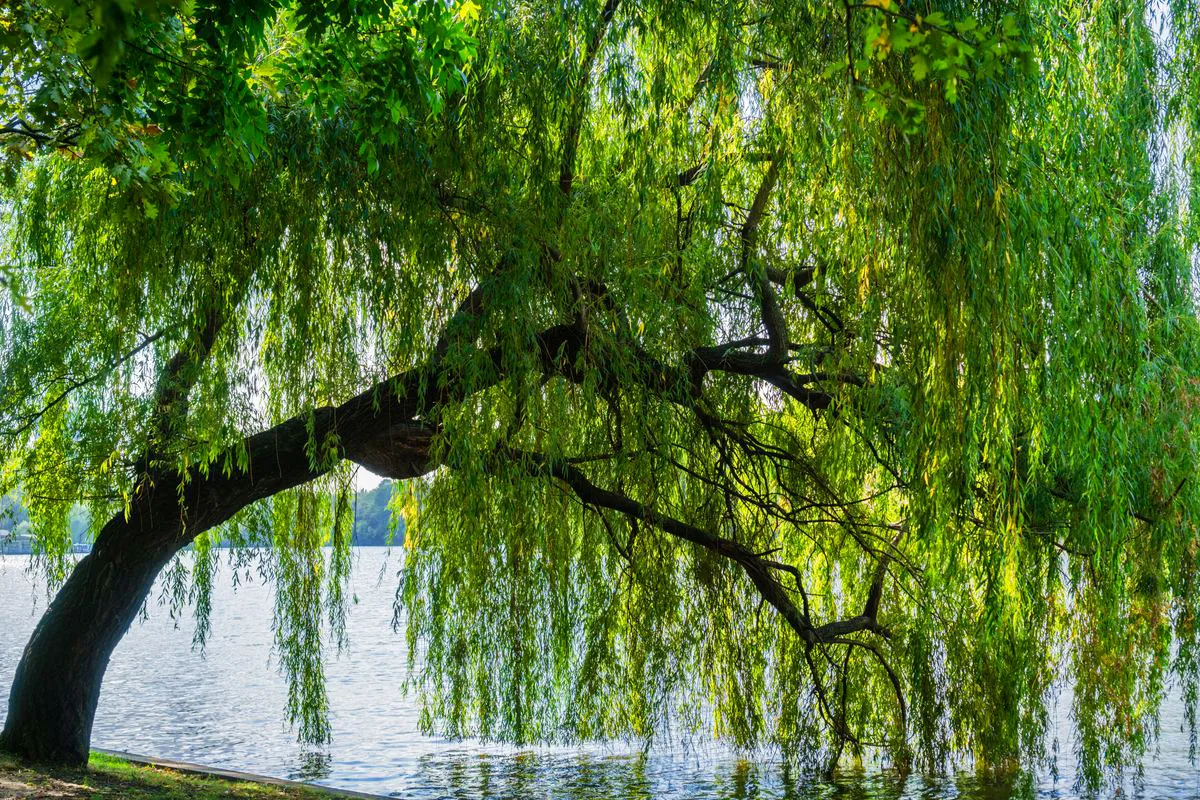
4. Weeping Willow: dramatic shape for moisture-loving sites
Weeping willow is one of the most recognizable shade trees in the world. It grows quickly, creates sweeping movement, and can transform the mood of a landscape almost by itself.
Why gardeners choose it
It provides rapid visual impact, graceful lines, and excellent shade in the right conditions.
Best USDA zones
Often suited to Zones 4–9.
Practical care tip
Only plant it where moisture is reliable and space is generous. Willows are best for larger landscapes, pond edges, and low spots, not tight foundation beds or dry, compacted corners.
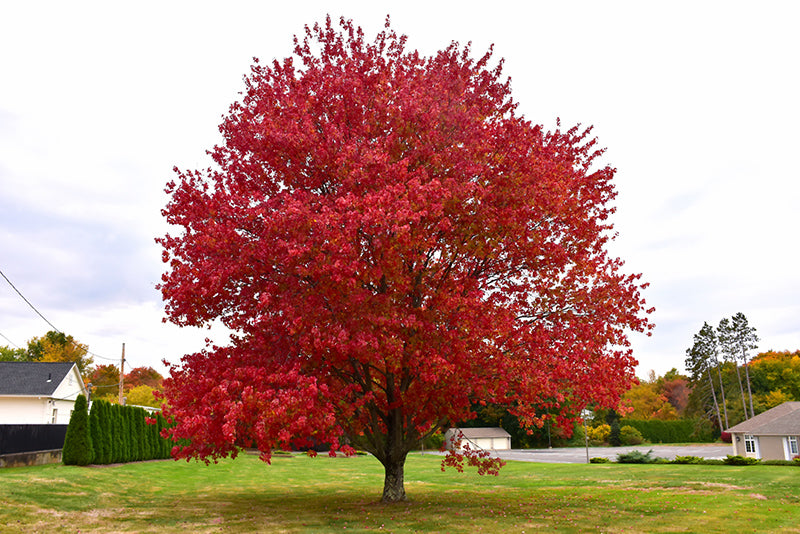
5. Red Maple: fast growth with strong seasonal color
Red maple is one of the most useful landscape trees because it combines speed, shade, and beautiful fall color. It can serve as both a functional cooling tree and a seasonal focal point.
Why gardeners choose it
It offers a balanced combination of quick establishment, dependable canopy growth, and excellent ornamental value.
Best USDA zones
Commonly grown in Zones 3–9, depending on cultivar.
Practical care tip
Choose the cultivar carefully. Red maples vary in size, fall color strength, and adaptability. Match the selection to your soil and local climate, not just the name.
6. River Birch: fast, multi-season interest in a useful shade tree
River birch is one of the best choices if you want a shade tree with character. It grows fairly quickly, develops attractive peeling bark, and handles sites that stay moister than average.
Why gardeners choose it
The bark alone gives winter interest, and the canopy provides light to moderate shade with a softer look than a denser tree.
Best USDA zones
Often strong in Zones 4–9.
Practical care tip
Use river birch where the soil is not excessively dry. It is especially effective in rain gardens, near low areas, or in landscapes where you want a more natural woodland feeling.

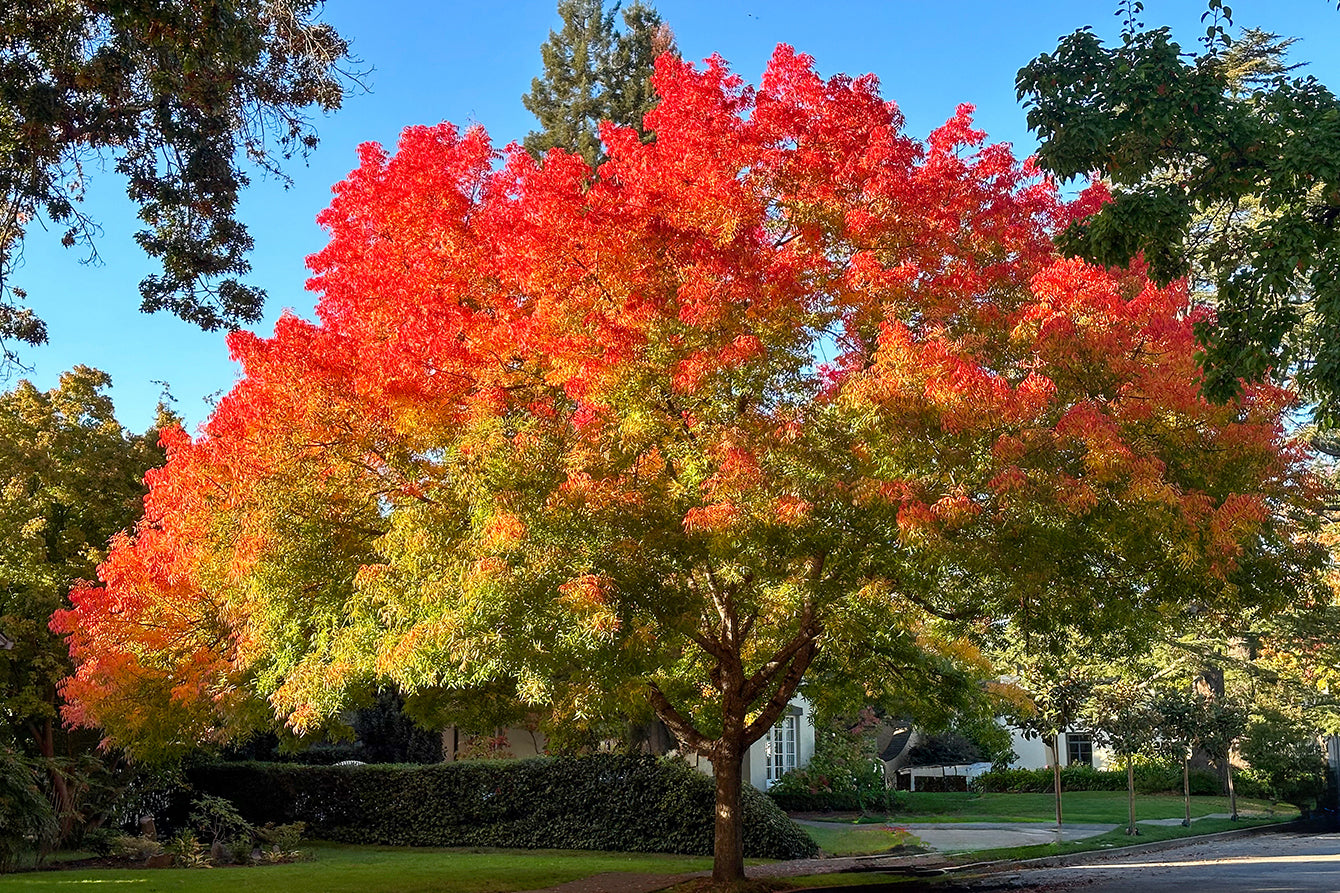
7. Chinese Pistache: a smart heat-tolerant shade option
Chinese pistache is an excellent tree for gardeners in warmer climates who want a durable, attractive shade tree with impressive autumn color.
Why gardeners choose it
It handles heat well, develops a rounded shade canopy, and brings striking fall color in the right conditions.
Best USDA zones
Usually best in Zones 6–9.
Practical care tip
Give it sun and room to form properly. This tree becomes more valuable with age, especially when allowed to develop a strong canopy rather than being over-pruned early.
8. Shumard Oak: fast for an oak and excellent for long-term shade
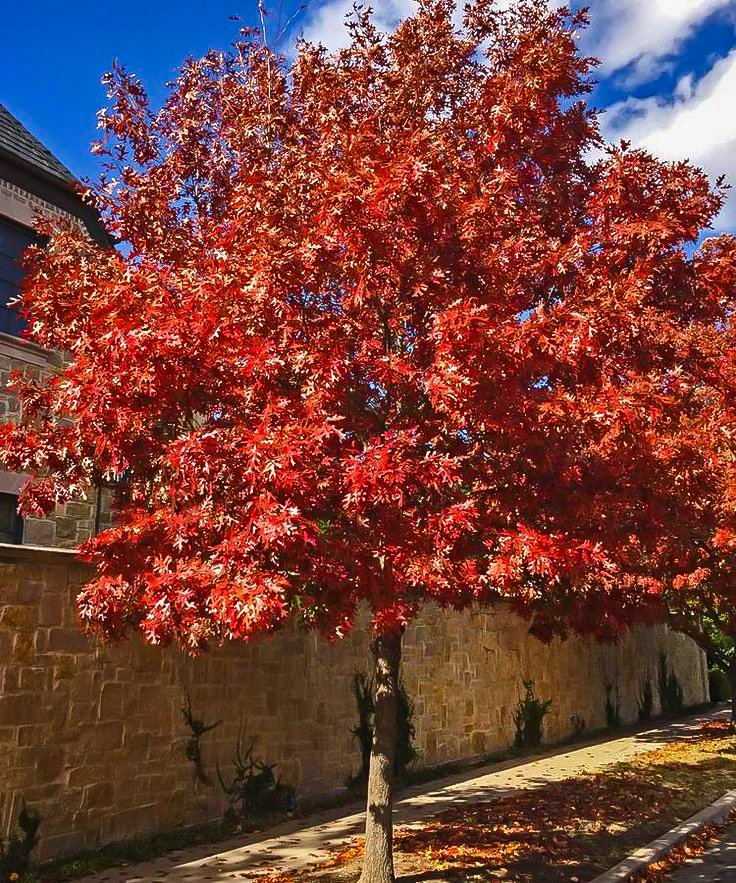
If you want a shade tree with both speed and long-term strength, Shumard oak is a very smart option. It grows faster than many people expect from an oak and develops into a strong, handsome landscape tree.
Why gardeners choose it
It offers a broad canopy, dependable shade, and the lasting value people associate with oaks, but without such a painfully slow start.
Best USDA zones
Usually suited to Zones 5–9.
Practical care tip
Think long-term placement. This is a serious shade tree, not a temporary filler. Put it where you want enduring structure, not where you may regret its mature size.
9. Honey Mesquite: filtered shade for hot, dry landscapes
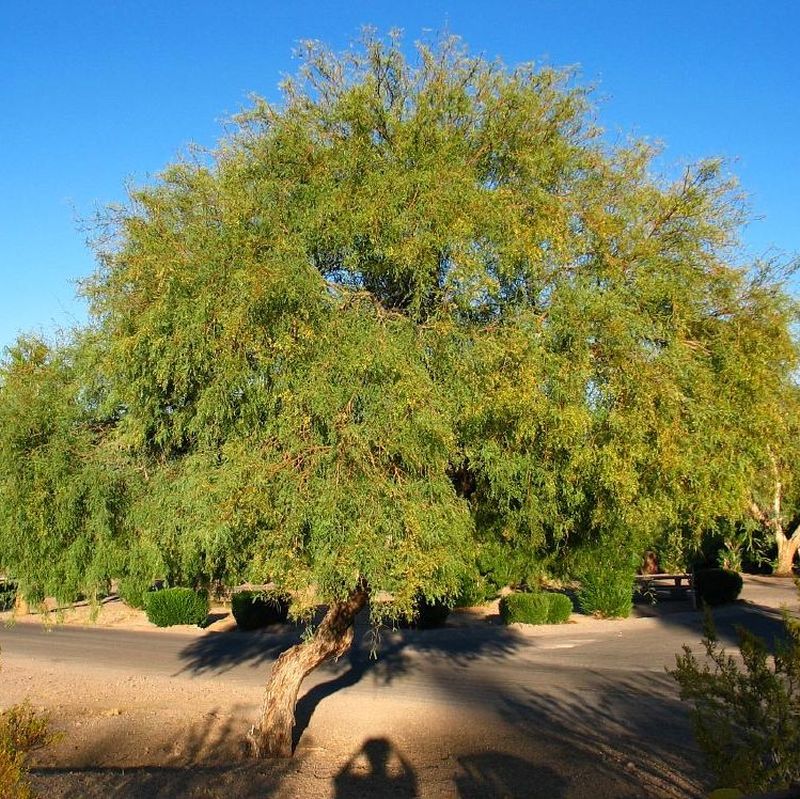
Honey mesquite is especially valuable in hotter, drier regions where dense, moisture-demanding shade trees may struggle. It offers a lighter, filtered shade and strong climate adaptability.
Why gardeners choose it
It grows relatively quickly in suitable climates and provides welcome cover where harsher sun and drought are normal.
Best USDA zones
Often well suited to Zones 7–10, depending on regional conditions.
Practical care tip
Use honey mesquite where dry climate performance matters more than dense lawn shade. Its lighter canopy is often a strength in desert and xeric landscapes.
How to choose the right tree for your yard
A simple way to narrow your choice is to match the tree to the landscape goal.
For bold, quick shade: Choose northern catalpa or tulip tree if you have space.
For moisture-prone sites: Choose river birch or weeping willow, with willow reserved for larger landscapes.
For beautiful fall color: Choose red maple, Chinese pistache, or Shumard oak.
For hot, dry climates: Choose Chinese pistache or honey mesquite.
For long-term structure with relatively fast return: Choose Shumard oak.
Practical planting habits that improve success
Plant high, not deep
A tree buried too deeply often struggles for years. Keep the root flare visible and above heavy settling soil.
Water deeply during establishment
Fast-growing trees still need steady support in the early years. Deep watering encourages stronger, deeper roots.
Mulch wide, not thick against the trunk
A broad mulch ring helps conserve moisture and reduce weed competition, but keep mulch pulled back from the trunk.
Prune for structure early
Fast growth can mean weak form if ignored. Light structural pruning when young can prevent major problems later.
Do not overfertilize
A fast-growing tree does not need to be pushed harder. Excess feeding can create weak, overly lush growth instead of strong structure.
A final thought about speed and patience
Fast growing trees are wonderful, but they still reward thoughtful planning more than impatience. The best result comes from balancing quick growth with long-term wisdom. A well-placed shade tree does not just cool a summer afternoon. It changes the whole landscape. It makes outdoor life more comfortable. It gives birds a place to land. It creates beauty that deepens year after year.
That is the kind of planting decision that keeps paying you back long after the first season of growth.