There is a special kind of satisfaction in a garden that gives back more every year. Not just with blooms, but with abundance you can actually expand. Some perennials do exactly that. As they mature, they form larger clumps, stronger crowns, and wider root systems that can be lifted, divided, and replanted into new spaces. One healthy plant becomes two. Two become four. And over time, a single planting can shape an entire border.
This is one of the smartest gardening skills to learn because it improves beauty and productivity at the same time. Dividing perennials helps renew overcrowded plants, restore bloom performance, reduce disease pressure, and give you free new plants for other beds, borders, paths, or containers. It is propagation, maintenance, and garden design all in one job.
If you want a garden that becomes fuller without becoming more expensive, these nine perennials are among the best plants to divide and multiply.
Why dividing perennials is so valuable
Many gardeners wait too long to divide. They notice fewer blooms, thinner centers, or crowded growth, but assume the plant is simply getting old. In many cases, the real issue is congestion. A mature clump can outgrow its own space. Roots compete with themselves. Airflow drops. Flowering declines.
Division solves that.
When done at the right time, dividing perennials can:
- improve vigor and flowering
- reduce overcrowding
- create more plants at no extra cost
- help you fill new beds faster
- keep spreading perennials under control
It also helps you understand your plants better. You begin noticing how crowns form, how roots spread, and which plants want room versus which plants want renewal more often.
The best time to divide most perennials
A simple rule helps: divide spring and summer bloomers in fall, and divide fall bloomers in spring. The goal is to avoid dividing when the plant is under peak flowering stress.
That said, garden conditions matter. Cool temperatures, moist soil, and a few quiet weeks before severe heat or hard frost make the best transplant window.
In practical terms:
- Spring division works well for asters, hostas, yarrow, and many late bloomers.
- Early fall division is often excellent for peonies, phlox, coral bells, and hardy geraniums in many climates.
Always water well after replanting, and give divisions time to settle before expecting a big floral show.
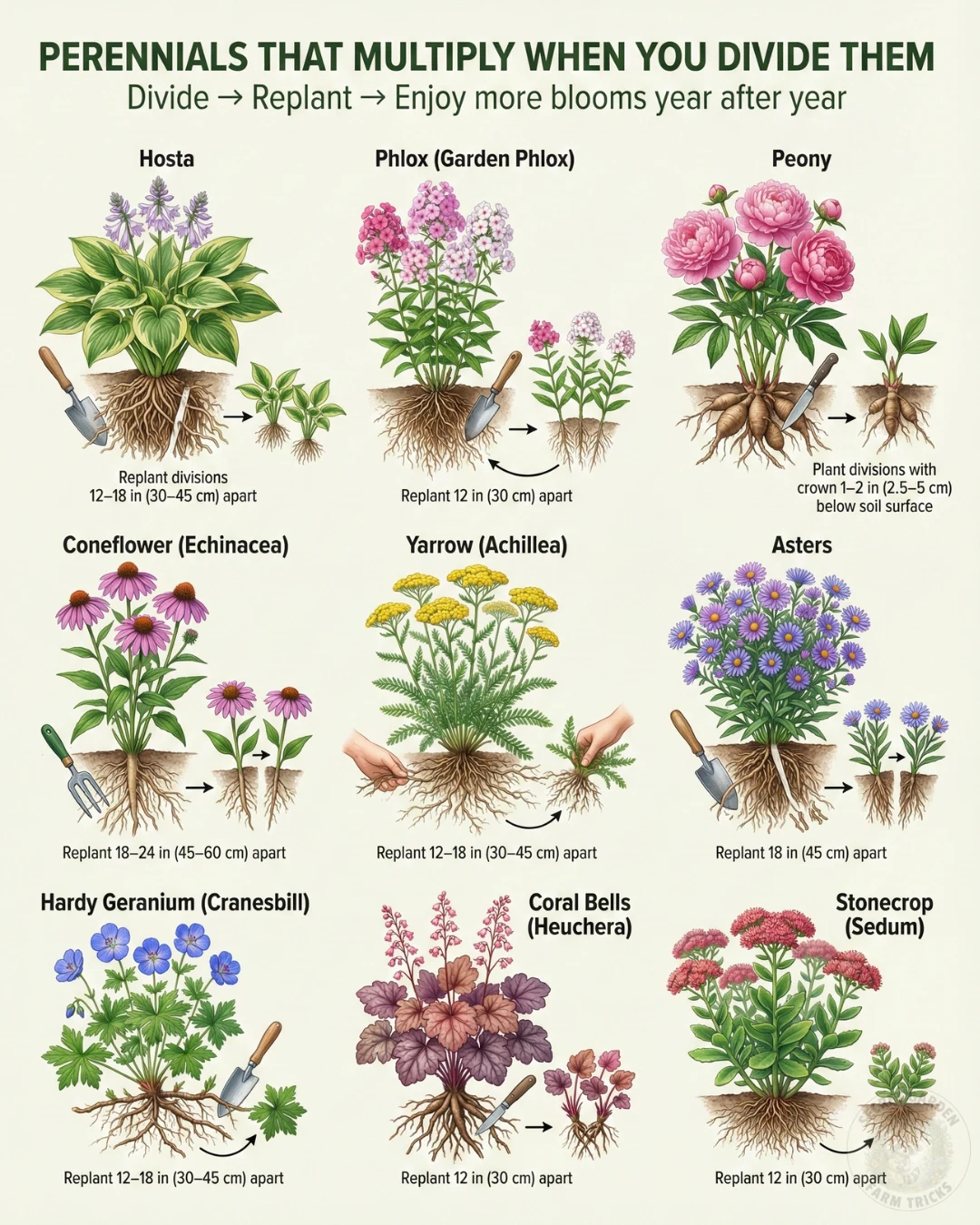
1. Hosta: one of the easiest perennials to divide
Hostas are famous for multiplying well. As they mature, they form expanding clumps that can be split into new sections and replanted in shady or part-shady areas.
Plant character
Hostas are foliage-driven perennials valued for broad leaves, cool colors, and strong shade-garden presence. They work beautifully along paths, under trees, and in layered woodland-style beds.
Best USDA zones
Most hostas thrive in Zones 3–9.
Division tip
Lift the clump and separate into healthy sections with visible crowns and roots attached. Replant divisions about 12–18 inches apart if you want them to fill in naturally.
Why divide it
Hostas often become more beautiful after division because the younger sections regain cleaner shape and stronger leaf production.
2. Garden Phlox: divide for stronger bloom and healthier airflow
Garden phlox is a classic border perennial that benefits from division when clumps become crowded or bloom less vigorously.
Plant character
Tall stems, fragrant flower clusters, and cottage-garden energy make phlox a favorite for midsummer color.
Best USDA zones
Generally strong in Zones 4–8.
Division tip
Replant divisions about 12 inches apart. Choose vigorous outer sections rather than tired central growth if the clump shows age in the middle.
Why divide it
Phlox benefits from better spacing and airflow. Division helps reduce congestion and often supports healthier growth.
3. Peony: long-lived, but divide with care
Peonies do not need frequent division, but they can be divided when necessary, especially if you want to multiply a treasured plant or move an established clump.
Plant character
Peonies are known for large, luxurious spring blooms and long life in the garden. They are often the kind of perennial gardeners keep for decades.
Best USDA zones
Most peonies perform beautifully in Zones 3–8.
Division tip
Each division should have healthy roots and several strong buds or “eyes.” Replant with the crown just 1–2 inches below the soil surface. Too deep, and flowering may suffer.
Why divide it
Peonies are less about frequent multiplication and more about preserving and expanding a beloved plant thoughtfully.
4. Coneflower (Echinacea): easy to multiply in sunny beds
Coneflowers are excellent for division once clumps establish well. They are practical, pollinator-friendly, and easy to use in naturalistic or structured plantings.
Plant character
Strong upright stems, daisy-like petals, and prominent cones make them a backbone plant in sunny perennial borders.
Best USDA zones
Typically reliable in Zones 3–9.
Division tip
Replant new sections about 18–24 inches apart so they have room to mature without crowding too quickly.
Why divide it
Division helps you spread pollinator plants across the garden while keeping older clumps vigorous and open.
5. Yarrow (Achillea): a tough perennial that responds well to renewal
Yarrow is one of the easiest and most forgiving perennials to divide. It spreads steadily and often benefits from being refreshed before clumps become exhausted in the center.
Plant character
Flat flower heads, ferny foliage, and excellent drought tolerance make yarrow useful in hot, sunny borders and lower-maintenance gardens.
Best USDA zones
Most yarrows grow well in Zones 3–9.
Division tip
Replant divisions about 12–18 inches apart. Use the strongest outer pieces and discard any weak, spent center sections.
Why divide it
Yarrow can become woody or patchy with time. Division gives you fresher plants and better bloom structure.
6. Asters: divide for more flowers and a better fall display
Asters are excellent candidates for division because they can become dense and crowded over time, especially in fertile soils.
Plant character
Late-season daisy flowers in shades of purple, blue, pink, or white make asters one of the best perennials for extending color into autumn.
Best USDA zones
Most asters perform well in Zones 3–8, depending on species.
Division tip
Set divisions about 18 inches apart so they have room to branch and flower well.
Why divide it
Asters divided in spring often grow back with stronger form and more manageable clumps by blooming season.
7. Hardy Geranium (Cranesbill): one of the best fillers to multiply
Hardy geranium is one of the most useful perennials for filling border edges, weaving around roses, or softening paths. Division is an easy way to create more of that effect quickly.
Plant character
Low mounding growth, finely cut leaves, and generous flowering make it a strong connector plant in perennial design.
Best USDA zones
Most hardy geraniums thrive in Zones 4–8, with some wider adaptability.
Division tip
Replant pieces about 12–18 inches apart depending on the variety and how quickly you want the space to fill.
Why divide it
This is one of the best plants to multiply for ground-layer beauty and practical weed suppression in sunny to lightly shaded areas.
8. Coral Bells (Heuchera): divide to refresh and expand foliage color
Coral bells are especially useful because they add color through foliage even when not in bloom. Division helps keep clumps youthful and lets you repeat favorite leaf colors across the garden.
Plant character
Mounded foliage in burgundy, green, silver, amber, or purple tones, often with airy flower stems above.
Best USDA zones
Generally strong in Zones 4–9.
Division tip
Replant divisions about 12 inches apart. Make sure each section has a healthy crown and roots, not just loose top growth.
Why divide it
Coral bells can lift or thin with age. Division refreshes them and keeps the foliage display strong.
9. Stonecrop (Sedum): one of the easiest plants to divide and replant
Stonecrop is a nearly ideal plant for beginner division because it is tough, forgiving, and quick to re-establish.
Plant character
Succulent foliage, sturdy stems, and late-season blooms make stonecrop a dependable perennial for sunny, drier gardens.
Best USDA zones
Most popular sedums grow well in Zones 3–9.
Division tip
Replant divisions around 12 inches apart. Sedum roots and settles quickly as long as drainage is good.
Why divide it
It is an easy way to create repeated drifts of low-maintenance structure and late color across sunny beds.
How to divide perennials successfully
A good division session is not complicated, but it should be deliberate.
Step 1: Water the plant beforehand
Moist soil is easier to lift, and hydrated roots handle the transition better.
Step 2: Lift the whole clump carefully
Use a garden fork or spade and work around the root zone rather than cutting straight through the middle too aggressively.
Step 3: Identify natural divisions
Many perennials naturally separate into crowns, fans, or rooted sections. Follow the plant’s structure instead of forcing random chunks.
Step 4: Replant promptly
Do not leave roots exposed in the sun for long. Replant quickly, water deeply, and mulch lightly if needed.
Step 5: Reduce stress after division
New divisions need moisture consistency more than fertilizer. Focus on root establishment first.
Common mistakes to avoid
Dividing in peak bloom
This puts too much stress on the plant and usually leads to poor recovery.
Replanting too deep
This is especially important with peonies and coral bells. Crown depth matters.
Keeping weak center growth
Often the best new plants come from the outer sections, not the oldest middle.
Forgetting spacing
A division may look small now, but many perennials expand quickly. Give them room based on their mature habit.
Final thoughts: divide once, garden more wisely for years
Perennials that divide well are some of the most generous plants in the garden. Hosta gives more shade beauty. Phlox offers more summer bloom. Peony lets you preserve something precious. Coneflower and yarrow spread pollinator value. Asters stretch the season. Hardy geranium fills the border. Coral bells repeat foliage color. Sedum multiplies structure and ease.
That is what makes division such a powerful gardening skill. You are not only maintaining plants. You are building abundance.
And over time, that abundance changes everything. Beds fill out more naturally. Costs drop. Confidence rises. The garden begins to feel less like something you are constantly buying and more like something you are learning to grow from within itself.