Sometimes the most surprising beauty remedies are the ones growing low to the ground, looking like ordinary grass.
This plant appears to be goosegrass, a common wild grass that many people ignore until they learn it has been used in simple traditional hair rinses. In home remedies, this type of grass is often boiled into a dark herbal wash and poured over the scalp after shampooing. People usually turn to it when they want a more natural routine for scalp comfort, hair shedding support, and stronger-looking hair.
Most people never expect much from a handful of grass. That is exactly why this remedy feels so unexpected. It is basic, affordable, and easy to prepare, yet many people keep using it because it fits so well into a simple hair-care routine.
What This Remedy Is Usually Used For
This kind of herbal rinse is commonly used for:
- scalp cleansing
- oily scalp support
- reducing the feeling of buildup
- supporting less breakage
- helping hair feel stronger and fresher
It is important to stay realistic. A plant rinse will not magically regrow hair overnight or replace treatment for severe hair loss, fungal scalp problems, or medical conditions. What it may do is support a healthier scalp environment, and that often matters more than people think.
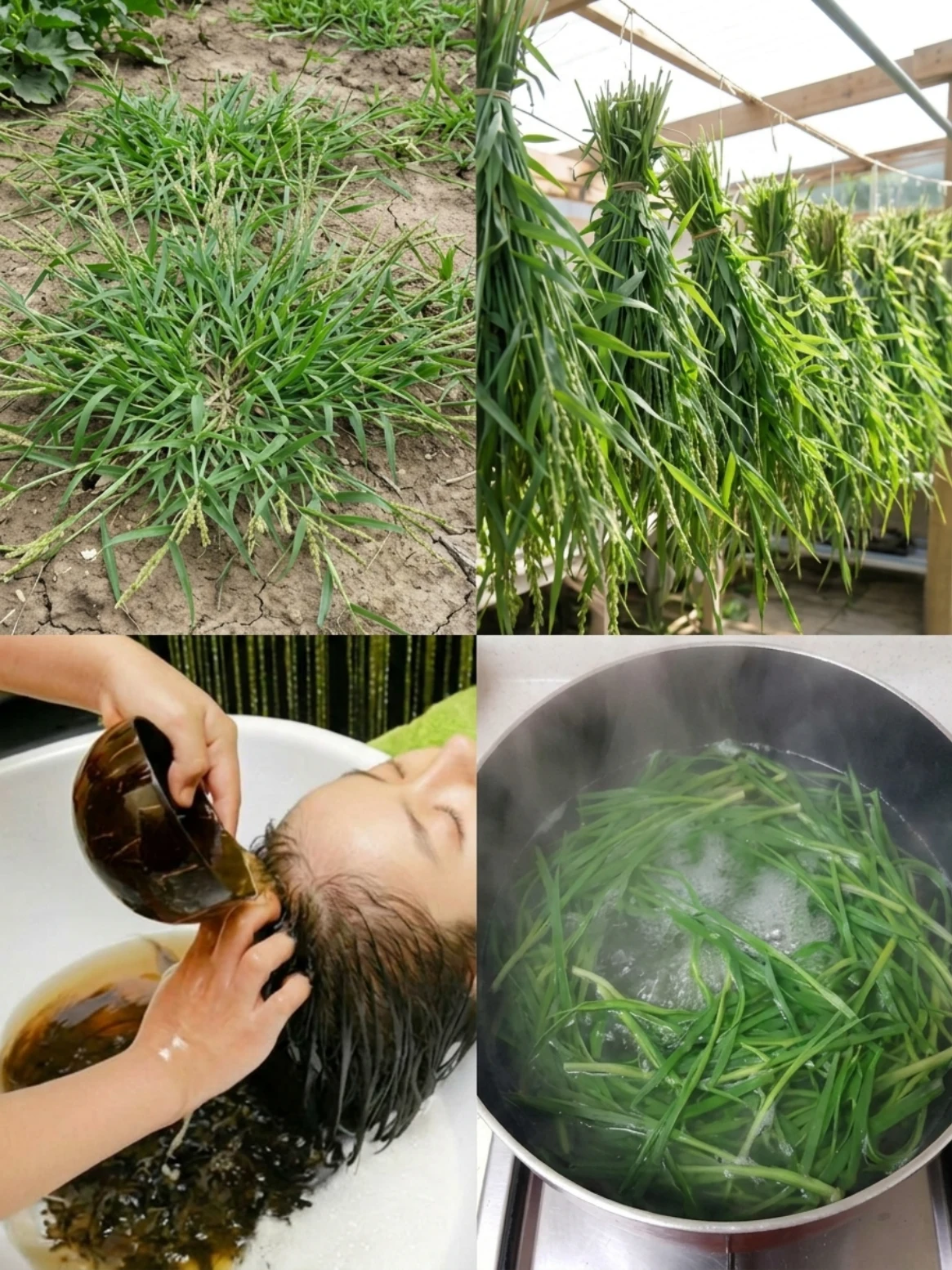
Ingredients
A simple traditional-style hair rinse uses only a few basics:
- 2 large handfuls fresh goosegrass, washed well
- 4 to 6 cups water
That is enough for one hair rinse session, depending on hair length and thickness.
How to Prepare the Goosegrass Hair Rinse
This remedy is easy to make, but cleaning the plant well matters.
Step 1: Gather and sort the grass
Choose fresh green goosegrass from a clean area away from roadsides, sprayed soil, or contaminated ground. Remove yellowed parts and dirt-covered stems.
Step 2: Wash thoroughly
Rinse the grass several times because low-growing plants often hold grit, dust, and sand.
Step 3: Cut into smaller pieces
Cut or tear the grass into shorter sections. This helps release more of its natural compounds into the water.
Step 4: Boil gently
Add the grass to a pot with 4 to 6 cups of water. Bring it to a gentle boil, then lower the heat and simmer for about 15 to 20 minutes.
Step 5: Let it steep
Turn off the heat and let the liquid sit for another 10 minutes.
Step 6: Strain and cool
Strain out the plant material and allow the rinse to cool until warm or room temperature before using.
How to Use It
This remedy is usually used as a final hair rinse, not as a drink.
After shampooing
Wash your hair as usual first. Then slowly pour the goosegrass liquid over the scalp and hair.
Massage into the scalp
Use your fingertips to gently massage the rinse into the roots for a minute or two. This helps spread the liquid more evenly.
Leave it briefly
Let it sit for about 5 to 10 minutes before rinsing lightly with plain water, or leave it on if your scalp tolerates it well.
Best time to use
Many people use this rinse 2 to 3 times a week, especially when the scalp feels itchy, greasy, or weighed down by buildup.
Why People Believe It Helps
The appeal of this remedy usually comes from the way it makes the scalp feel.
It feels cleansing
Herbal rinses like this are often used when the scalp feels heavy, oily, or less fresh than usual. A plain boiled grass rinse can feel lighter than thick commercial products.
It supports the scalp environment
Healthy-looking hair often starts with a calmer scalp. When the scalp feels cleaner and less irritated, hair routines tend to work better overall.
It fits a simple routine
This is one reason people keep returning to it. It does not require a long ingredient list, expensive oils, or complicated mixing.
It may reduce breakage-related shedding
Sometimes what people call “hair fall” is partly breakage from dryness, rough handling, or poor scalp care. A gentle rinse may help hair feel softer and easier to manage, which can reduce that problem.
Who May Benefit Most
This rinse may be especially appealing for people who:
- have an oily scalp
- want a simple herbal hair rinse
- prefer natural hair-care routines
- feel their scalp gets itchy or heavy quickly
- want stronger-looking hair without using harsh products
It may be especially useful during hot weather, when sweat and scalp oil tend to build up faster.
When You May Notice Changes
This is not the kind of remedy that works in one dramatic moment.
Some people notice a fresher scalp and lighter hair feel after the first use. For reduced breakage, better manageability, or a more balanced scalp feel, it often takes 2 to 4 weeks of regular use.
That is a more realistic timeline. Quick comfort can happen early. More visible hair-routine benefits usually take consistency.
Simple Tips to Make It Work Better
A few small details can improve the result.
Use fresh grass when possible
Fresh plant material usually gives a cleaner, stronger rinse than old dried clippings.
Do not make it too concentrated at first
A very strong rinse is not always better, especially for sensitive scalps.
Be gentle when washing
No rinse will help much if the scalp is scrubbed too hard or hair is constantly pulled tight.
Pair it with better hair habits
Less heat styling, gentler detangling, enough protein, and overall good nutrition matter just as much.
Safety Notes
This part matters.
- Be sure the plant is correctly identified before using it.
- Do not gather from polluted or chemically treated areas.
- Patch test on a small area of skin first if you have a sensitive scalp.
- Stop using it if it causes itching, redness, or irritation.
- Do not rely on this rinse alone for patchy hair loss, scalp infection, severe dandruff, or painful scalp problems.
If hair loss is heavy, sudden, or associated with illness, hormones, or nutritional issues, it deserves proper medical attention.
Final Takeaway
This goosegrass hair rinse is one of those simple traditional remedies that feels almost too basic to matter, yet that simplicity is exactly what makes it appealing. It may help the scalp feel cleaner, lighter, and more balanced while supporting stronger-looking hair over time.
Sometimes the most useful hair remedies are not the most expensive ones. They are the quiet, practical routines people can actually keep using.