Every seasoned gardener knows the secret to a flourishing garden isn’t just about what you plant, but where you plant it. The true magic lies beneath our feet, in the rich, vibrant world of healthy soil. If you’ve ever found yourself scratching your head over lackluster yields or struggling plants, the answer might not be more fertilizer, but better soil. Think of your soil as the pantry for your plants; a well-stocked pantry provides all the essential ingredients for robust growth, resilience, and abundant harvests. Today, we’re diving deep into the art and science of soil amendments, showing you how to build a foundation that transforms your gardening experience.
Many gardeners, especially those new to the craft, often reach for synthetic fertilizers at the first sign of trouble. While these can offer a quick fix, they often neglect the fundamental health of the soil. Our goal at Growing Fresh Garden is to empower you to cultivate a sustainable, living ecosystem right in your backyard. We want to shift the focus from merely feeding your plants to actively feeding your soil, nurturing its intricate biology and creating a long-term haven for life.
 Understanding the true power of soil amendments can revolutionize your garden.
The Living Heart of Your Garden: Why Soil Biology Matters Most
Before we delve into specific amendments, let’s understand why focusing on soil biology is paramount. Your soil isn’t just dirt; it’s a bustling metropolis of microorganisms, fungi, insects, and earthworms. These tiny inhabitants are the unsung heroes, breaking down organic matter, cycling nutrients, improving soil structure, and making essential elements available to your plants. When you enhance your soil’s biology, you create a self-sustaining system that naturally resists pests and diseases, retains moisture, and provides a steady supply of nutrients – a stark contrast to the boom-and-bust cycle often seen with chemical fertilizers.
Building soil health is particularly crucial across the diverse climates of the USA’s plant hardiness zones. Healthy soil empowers plants to adapt better to regional challenges, whether it’s drought in the Southwest, heavy rainfall in the Southeast, or cold snaps in the Northeast. Plants grown in biologically rich soil develop stronger root systems, improving their resilience and characteristic vigor regardless of specific zone limitations.
Seven Amendments That Will Transform Your Garden
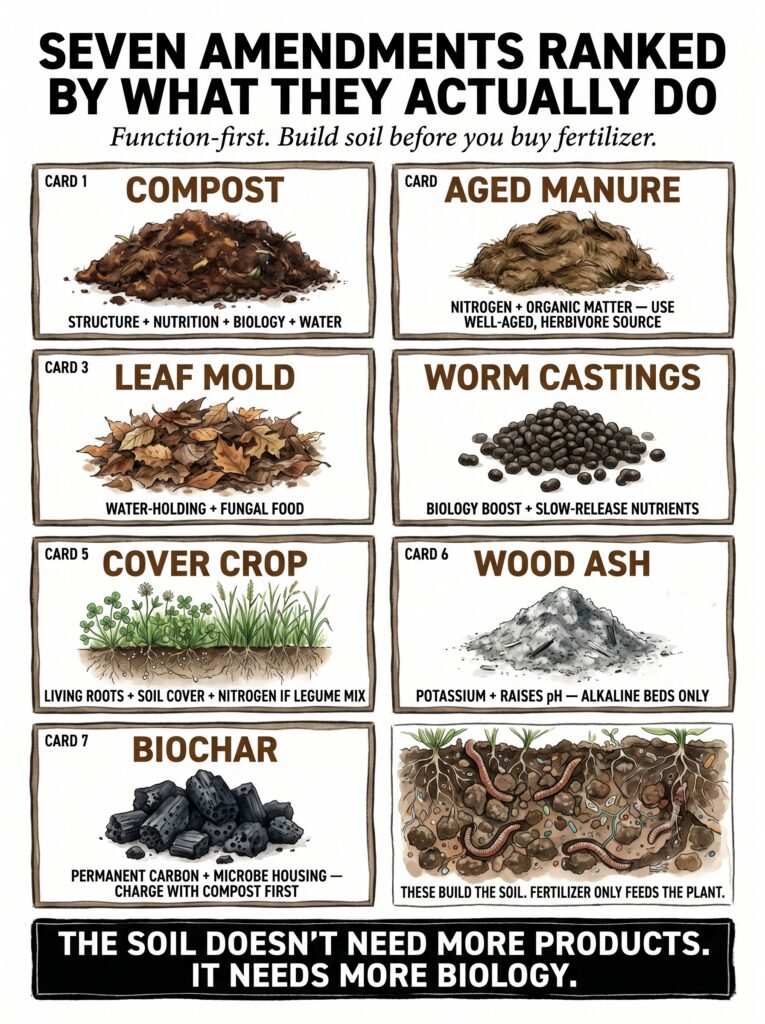
Instead of just reaching for a bag of fertilizer, consider these powerhouse amendments that feed your soil, encourage robust biology, and provide lasting benefits.
1. Rich Compost: The Universal Soil Builder
What it actually does: Compost is decomposed organic matter, a gardener’s black gold. It improves soil structure, aeration, and water retention in sandy soils, while loosening heavy clay soils. Crucially, it introduces a diverse range of beneficial microorganisms, boosting your soil’s living community and providing a slow-release source of nutrients.
- Actionable Advice: Aim for a 1-2 inch layer of finished compost spread over your garden beds annually, working it gently into the top few inches of soil before planting. For ongoing enrichment, top-dress around established plants. Start a backyard compost pile with kitchen scraps and yard waste for a continuous, free supply!
2. Earthworm Castings: Nature’s Potent Fertilizer
What it actually does: These are the excretions of earthworms, incredibly rich in beneficial microbes, enzymes, and readily available plant nutrients. Worm castings act as a gentle, non-burning fertilizer, promoting strong root growth, improved germination, and enhanced plant vigor. They also help repel certain pests.
- Actionable Advice: Use worm castings as a seed-starting medium additive (mix 1 part castings to 4 parts potting mix), side-dress established plants (a handful per plant), or brew them into a ‘compost tea’ for liquid feeding.
3. Biochar: The Carbon Sponge
What it actually does: Biochar is charcoal produced from biomass through pyrolysis. Once incorporated into the soil, it acts like a sponge, dramatically increasing water retention and nutrient holding capacity. Its porous structure provides an ideal habitat for beneficial microbes, contributing to long-term soil fertility and potentially sequestering carbon.
- Actionable Advice: Apply biochar sparingly, typically once every few years, as a little goes a long way. Before adding to soil, ‘charge’ it by mixing with compost or compost tea for a few weeks to inoculate it with microbes. Incorporate 5-10% biochar by volume into your planting holes or garden beds.
4. Cover Crops: The Living Blanket
What it actually does: Planted during off-seasons, cover crops (like clover, vetch, or rye) protect bare soil from erosion, suppress weeds, add organic matter when tilled under (green manure), and some (legumes) fix atmospheric nitrogen into the soil. They are fantastic for building soil structure and feeding soil biology.
- Actionable Advice: Research suitable cover crops for your USDA zone and planting season. Plant them densely after your main harvest, then cut them down and lightly till them into the soil a few weeks before your next planting.
5. Rock Dust (e.g., Greensand, Azomite): Mineral Recharge
What it actually does: These finely ground natural rocks slowly release a wide array of trace minerals and micronutrients that are often depleted in garden soils. These minerals are essential for plant health, metabolism, and resistance to stress, enhancing the overall nutritional density of your produce.
- Actionable Advice: Apply rock dusts at the recommended rates (often 5-10 lbs per 100 sq ft) when preparing new beds or as an annual broadcast application. They are slow-acting, so consistent application over time yields the best results.
6. Mycorrhizal Fungi: The Underground Network
What it actually does: Mycorrhizal fungi form a symbiotic relationship with plant roots, extending the root system’s reach exponentially. They help plants access water and nutrients (especially phosphorus) from a much larger soil volume, making plants more resilient to drought and nutrient deficiencies.
- Actionable Advice: Inoculate seedlings or bare roots by dusting them with mycorrhizal spores before planting. When transplanting, add a small amount directly into the planting hole so it comes into contact with the roots.
7. Kelp Meal: Ocean’s Bounty for Your Garden
What it actually does: Dried and ground seaweed, kelp meal is packed with trace minerals, micronutrients, amino acids, and growth hormones. It stimulates microbial activity, improves seed germination, enhances root development, and boosts plant resilience, all while providing a gentle, balanced nutrient boost.
- Actionable Advice: Mix kelp meal into your potting soil, add it to compost, or use it as a soil top-dressing. A little goes a long way, so follow package directions, typically 1/2 to 1 cup per 100 square feet.
Cultivating a Sustainable, Thriving Garden
Embracing these soil amendments is more than just a gardening technique; it’s a philosophy. It’s about working *with* nature, understanding that a vibrant soil ecosystem is the true engine of productivity. When you prioritize soil biology and structure, you create an environment where plants don’t just survive; they thrive, producing more vigorous growth, more delicious produce, and a more resilient garden that stands the test of time and climate. This approach transforms your daily routine into a deeply connected, sustainable practice.
Start small, observe your soil, and begin to integrate one or two of these amendments into your routine. You’ll soon discover the profound impact of feeding your soil, not just your plants. Happy gardening!