This striking purple-and-green plant is most likely Tradescantia spathacea, commonly called oyster plant, boat lily, or Moses-in-the-cradle. It is a tropical ornamental known for its sword-shaped leaves that are green on top and purple underneath. North Carolina State Extension identifies it as Tradescantia spathacea, an evergreen groundcover in the spiderwort family.
That bold purple color is exactly why people get curious about it. In some folk-health circles, purple leaves are linked with blood flow, “cleansing,” or general circulation support. But there is an important reality check here: I could not find good human evidence showing that oyster plant tea improves circulation or treats heart or blood vessel disease. Claims like “this clears the blood” or “this fixes circulation” go much further than the evidence supports.
So the smarter way to talk about this plant is as a traditional-use herb with limited evidence, not as a proven cardiovascular remedy.
What This Plant Is
Oyster plant is mostly known as an ornamental houseplant or landscape plant, not as a mainstream medicinal herb. It grows in dense clumps and is widely planted because of its colorful foliage. Extension sources describe it mainly for horticultural use, not for established medical use.
That matters because when a plant is primarily ornamental, health claims should be treated more carefully. Some ornamentals do have traditional uses, but that does not mean they are automatically safe or effective as teas.
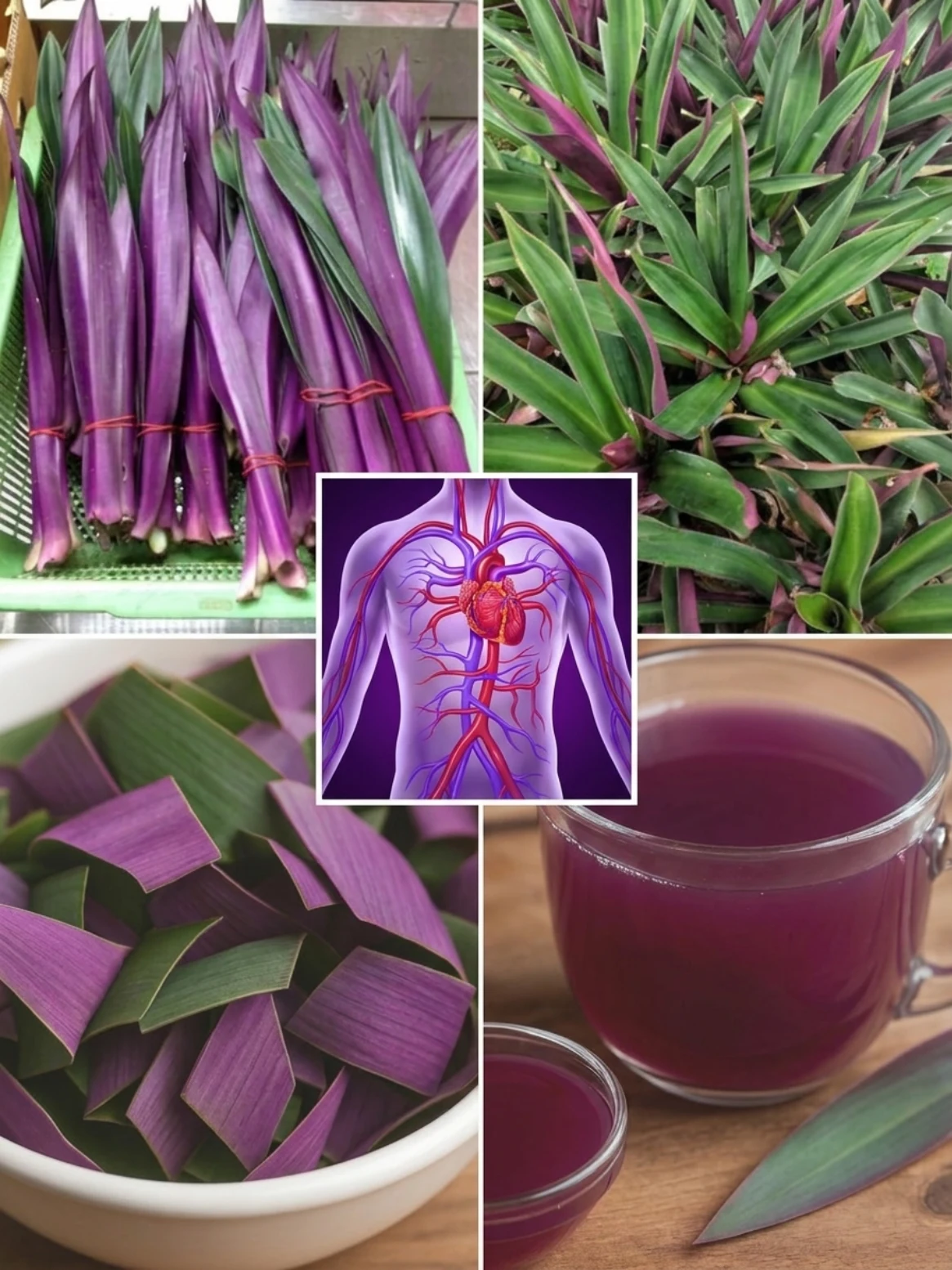
Why People Think It Helps Circulation
The circulation claim seems to come more from folk belief than from strong clinical evidence.
There is some published discussion about related Tradescantia species being used traditionally for anti-inflammatory purposes or “improving blood circulation,” but the available source I found refers to Tradescantia pallida, not clearly to Tradescantia spathacea. That means the claim may be getting generalized across purple-leaved relatives rather than being proven for this exact plant.
That distinction matters a lot. Similar-looking plants in the same genus are not automatically interchangeable as remedies.
Ingredients
If people prepare this traditionally, the version usually suggested online is very simple:
- 3 to 5 fresh oyster plant leaves
- 2 cups water
Use only clean leaves from an unsprayed source.
How It Is Traditionally Prepared
Because this is not a well-established medicinal tea in authoritative sources, it is better to describe this as a folk-style preparation rather than a recommended remedy.
Step 1: Wash the leaves well
Rinse the leaves thoroughly to remove dust, residue, and dirt.
Step 2: Cut into smaller pieces
Slice the leaves into strips so more surface area is exposed.
Step 3: Simmer gently
Add the leaves to 2 cups of water and simmer for about 8 to 10 minutes.
Step 4: Let it steep
Turn off the heat and let it sit for another 5 minutes.
Step 5: Strain and drink
Strain before drinking.
That said, because the safety profile for internal use is unclear, I would not present this as a routine daily tea with strong health promises.
What It May Realistically Do
The most honest answer is modest.
A warm herbal drink may help with:
- hydration
- a calming routine
- the feeling of doing something supportive for yourself
But there is no solid evidence that oyster plant tea improves blood circulation, lowers blood pressure, clears arteries, or treats heart disease. If someone has cold hands and feet, leg swelling, chest pain, shortness of breath, or numbness, those symptoms deserve real medical assessment rather than a homemade leaf tea.
Safety Notes You Should Not Skip
This is the most important section.
Plants in the Tradescantia group are known to cause irritation in some contexts. ASPCA notes that ingestion of Tradescantia plant material may cause vomiting and gastrointestinal upset in pets, which is a useful reminder that this genus is not automatically harmless to ingest. Poison Control also notes more broadly that some plants can irritate skin or cause illness depending on the species and exposure. (ASPCA)
A few practical cautions:
Do not assume ornamental means edible
Many ornamental plants are not meant to be consumed regularly.
Be careful with skin contact
Some people can react to plant sap or leaf juices.
Avoid if pregnant, breastfeeding, or medically vulnerable
There is not enough reliable safety information for routine internal use.
Do not use it as a substitute for circulation care
Poor circulation can be related to anemia, diabetes, vascular disease, heart problems, thyroid issues, or medication effects.
Who Should Definitely Avoid Self-Treating With This
Do not rely on this plant if you have:
- chest pain
- shortness of breath
- severe leg swelling
- one-sided leg pain
- numbness or bluish fingers or toes
- diagnosed heart or vascular disease
Those are not “tea first” situations.
Final Takeaway
Tradescantia spathacea, or oyster plant, is a beautiful purple ornamental with a lot of visual appeal and some folk-health attention. But the current evidence does not support strong claims that it improves circulation or acts as a proven cardiovascular remedy.
If you want to include it in a blog, the most accurate angle is this: it is a traditional purple-leaf plant sometimes talked about for circulation, but the evidence is limited, the exact species matters, and safety should come first.
Related Source Science
Authoritative horticultural sources identify this plant as Tradescantia spathacea, while the medicinal-style circulation claim appears to be based more on traditional or related-species discussion than on strong human evidence for this exact plant. Because Tradescantia species can also be irritating and are mainly known as ornamentals, internal use should be approached very cautiously.