Many people are looking for sustainable, plant-based ways to boost their protein intake, but often overlook some of the simplest and most effective sources. Legumes – the humble beans, lentils, and peas – are true nutritional powerhouses, packed with protein, fiber, and essential micronutrients.
While an infographic can give you a quick snapshot, truly harnessing the benefits of plant protein legumes means understanding which ones work best for your goals, how to prepare them, and how to integrate them into your daily meals. This guide will help you navigate the world of legumes, making healthy eating both easy and delicious.
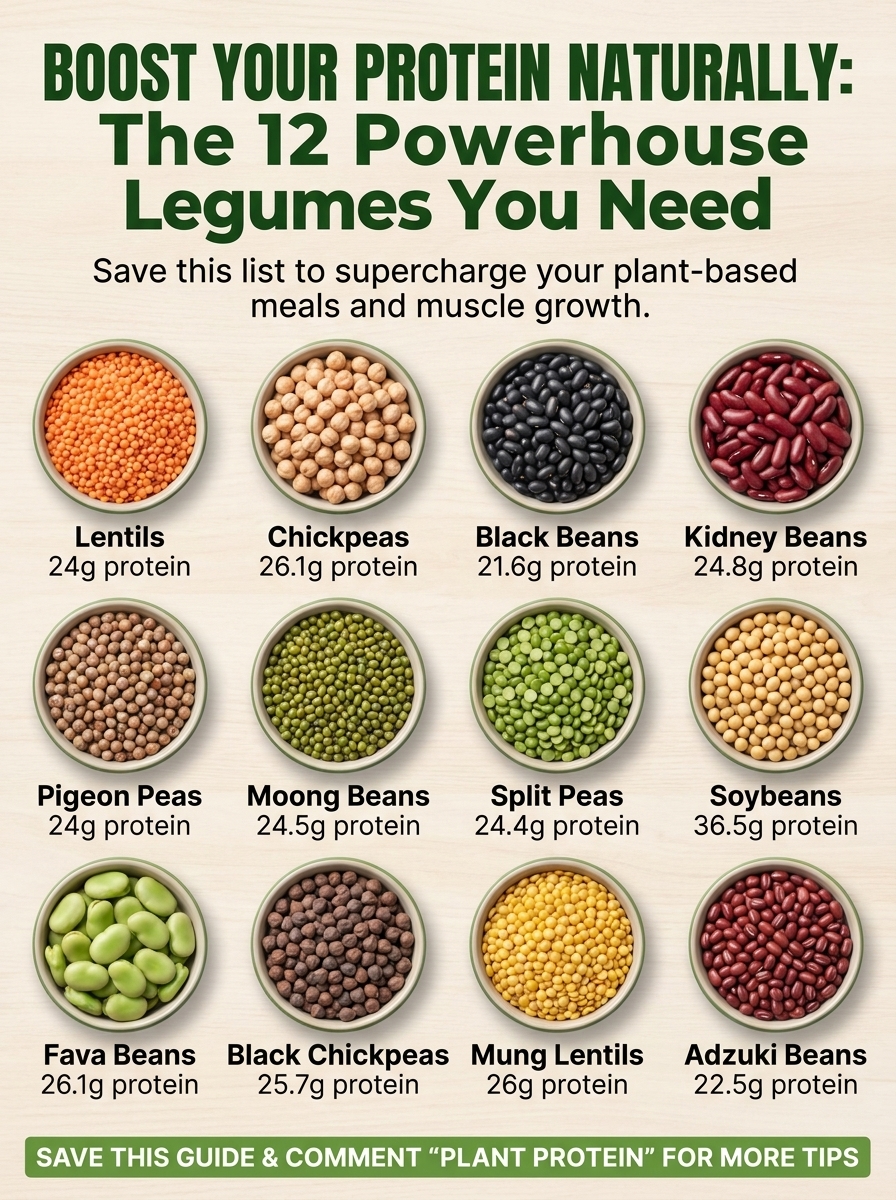
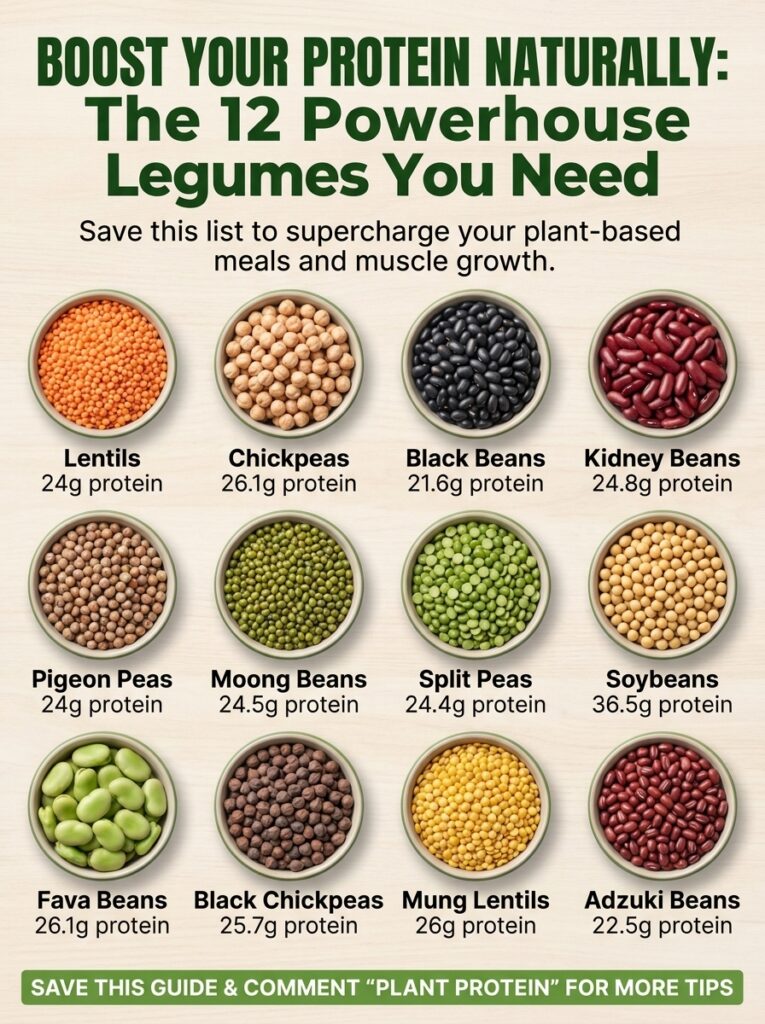 A visual guide to the top 12 protein-rich legumes to boost your natural intake.
Unpacking the 12 Powerhouse Legumes by Protein Content
For those aiming to quickly identify the best protein sources, here’s an overview of some top-tier legumes, ordered by their approximate protein content per 100 grams when cooked. Remember, values can vary based on preparation and variety.
| Legume | Approx. Protein (g) | Best For |
|---|---|---|
| Soybeans (Edamame, Tofu, Tempeh) | 11-18 | Highest protein, complete protein source, versatile in many cuisines. |
| Lentils (Red, Green, Brown) | 9-10 | Quick cooking, excellent for soups, stews, and salads; very digestible. |
| Fava Beans (Broad Beans) | 8-10 | Hearty texture, great for side dishes, salads, and Mediterranean cuisine. |
| Chickpeas (Garbanzo Beans) | 7-9 | Extremely versatile for hummus, salads, curries, roasted snacks. |
| Black Beans | 7-9 | Earthy flavor, perfect for tacos, burritos, chili, and hearty salads. |
| Kidney Beans | 7-9 | Rich flavor, hold shape well in chili, salads, and bean-based dishes. |
| Pinto Beans | 7-9 | Creamy texture, ideal for refried beans, stews, and Mexican dishes. |
| Navy Beans | 7-8 | Small, white beans, excellent for baked beans, soups, and purees. |
| Split Peas (Green/Yellow) | 7-8 | Quick cooking, dissolve well in soups, providing thickness and creaminess. |
| Mung Beans | 7-8 | Mild flavor, often used in Indian and Asian cuisine, sprout easily. |
| Adzuki Beans | 7-8 | Sweet, nutty flavor, popular in Asian desserts, also good in savory dishes. |
| Pigeon Peas | 7-8 | Nutty flavor, common in Caribbean and Indian dishes, excellent in rice and stews. |
Beyond just protein content, different legumes shine for different purposes. Here’s how to pick the right ones for your unique needs and lifestyle goals.
Highest Protein & Complete Amino Acids: The Soybean Advantage
Soybeans consistently lead the pack in protein content among legumes. What truly sets them apart is their status as a ‘complete protein,’ providing all nine essential amino acids your body requires. This makes them a vital component of any plant-based diet, ensuring comprehensive protein intake, whether you choose edamame, tofu, or tempeh.
Lasting Fullness & Stable Energy: Lentils, Chickpeas, and Fava Beans
Lentils, chickpeas, and fava beans are powerhouse choices for managing appetite and maintaining steady energy levels. Their significant fiber content helps you feel fuller for longer and contributes to stabilizing blood sugar, which can reduce unhealthy cravings and support weight management goals. Lentils are particularly low in fat, making them excellent for calorie-conscious diets that still prioritize satisfaction.
To truly understand how these high-fiber proteins impact your body, some individuals benefit from monitoring their blood sugar responses. This might involve regular blood tests like HbA1c or fasting glucose, or even continuous monitoring using devices like CGM sensors. Discussing these options with your doctor can help identify appropriate lab markers to watch, providing insights into your metabolic health.
Efficient Meal Prep & Everyday Convenience: Black Beans & Lentils
Black beans and lentils are champions for efficient meal preparation. They cook well in larger batches and maintain their texture throughout the week when stored in high-quality meal prep containers. Black beans are robust enough for hearty burrito bowls, while lentils integrate seamlessly into salads or alongside grains like quinoa, making them ideal for plant-based beginners.
 Simplify your week with legume-rich meal prep, perfectly stored in airtight containers.
Budget-Friendly Powerhouses: Dried Lentils & Beans
Purchasing dried lentils, black beans, or pinto beans in bulk is an incredibly cost-effective strategy for healthy eating. While most beans require a bit of pre-soaking to reduce cooking time and improve digestibility, the nutritional return on investment for nutrient-dense, filling meals is substantial. A large bag can provide many servings, making accessible, healthy eating a reality for any budget.
Personalized Nutrition: When to Seek Expert Advice
Understanding how legumes fit into your unique nutritional needs can be a game-changer. For personalized strategies, a dietitian consultation can provide tailored guidance, especially if you’re dealing with specific health concerns that require medical nutrition therapy. Sometimes, these services might even be covered by your employer health plans or private insurance, depending on your country-specific rules and whether you have a doctor referral for these services.
Building Balanced Plant-Based Meals with Legumes
Creating satisfying, protein-rich plant-based meals is simpler than you might think. A general formula for a complete and balanced meal includes:
- Legume (for Protein & Fiber)
- Whole Grain (for Complex Carbs & Fiber)
- Healthy Fat (for Satiety & Nutrient Absorption)
Simple Recipe: Speedy Lentil & Veggie Bowl
This quick recipe is perfect for busy weeknights or a healthy addition to your meal prep routine.
Servings: 2
Ingredients:
- 1 cup cooked green or brown lentils (canned, rinsed, and drained is fine)
- 1 cup cooked quinoa or brown rice
- 1 cup mixed chopped vegetables (e.g., spinach, bell peppers, carrots, zucchini)
- 1/4 cup chopped red onion
- 2 tablespoons olive oil
- 1 tablespoon lemon juice
- 1/2 teaspoon dried oregano
- Salt and pepper to taste
- Optional: 1/4 avocado, sliced
How to Make:
- In a large bowl, combine the cooked lentils, cooked quinoa/rice, mixed vegetables, and red onion.
- In a small separate bowl, whisk together the olive oil, lemon juice, oregano, salt, and pepper to create the dressing.
- Pour the dressing over the lentil mixture and toss gently to combine.
- Divide into two overnight oats jars or bowls.
- Top with sliced avocado, if desired, just before serving.
Best for:
Quick lunches, light dinners, or healthy meal prep. Easily customizable with different veggies or spices.
Storage:
Store in airtight containers in the refrigerator for up to 3-4 days. Add avocado fresh before eating.
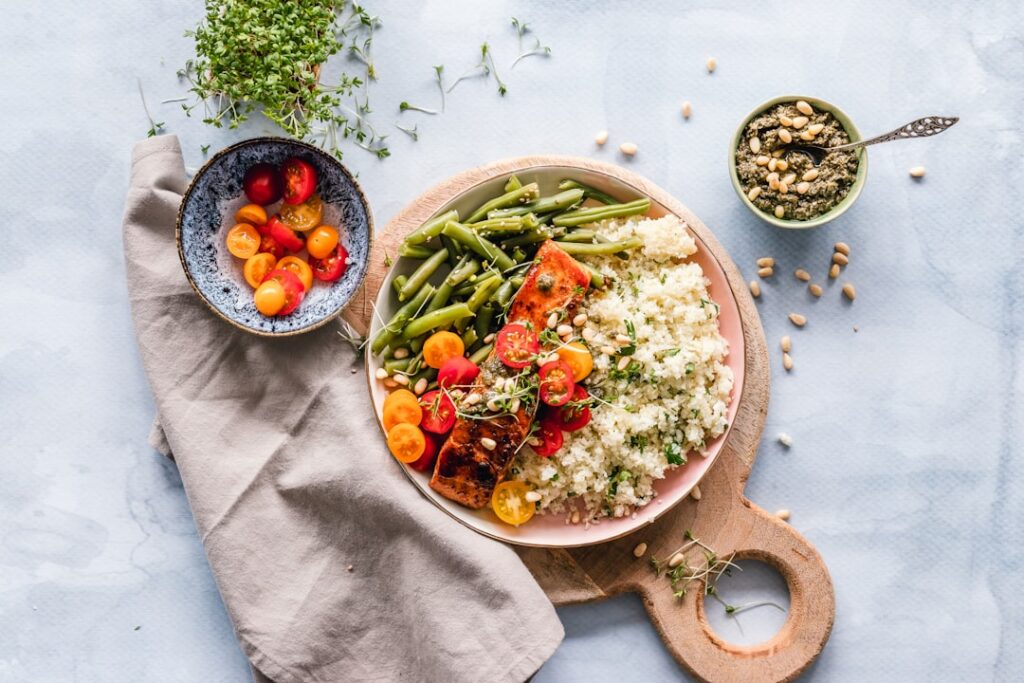 A fresh and fulfilling lentil and veggie bowl, perfect for a quick, nutritious meal.
Your Quick Start Guide to Plant Protein Legumes
You don’t need to try all 12 legumes at once to reap their benefits. If you’re just starting with plant protein, focus on these versatile and accessible options:
- Soybeans: For the highest protein content and a complete amino acid profile.
- Lentils: Easiest to cook, great for soups, stews, and quick additions.
- Chickpeas: Most versatile for snacking, salads, and main dishes.
- Black Beans: Excellent for meal prep and hearty savory meals.
- Fava Beans: Protein-dense and incredibly filling.
Start with 2–3 staples and consistently build meals around them. This simple approach can significantly boost your protein intake and overall well-being, providing lasting energy and satiety.
Embracing plant protein legumes is a delicious and effective way to enhance your diet. With their incredible versatility and nutritional density, they offer a foundation for healthy eating that supports your energy and satiety.
[Read next: Mastering Plant-Based Meal Prep]
[Source: Harvard Health]
This is general information, not medical advice.