Some plants earn a reputation so strong that people start calling them a miracle before the facts catch up.
Crinum latifolium, often known in Vietnamese as trinh nữ hoàng cung, is one of those plants. With its long strap-like leaves, large bulb, and elegant white spider-lily flowers, it has a long traditional history in women’s health conversations, especially around uterine support, fibroids, and gynecologic discomfort. At the same time, most of the modern research is still preliminary. Much of what exists is based on laboratory studies, small traditional-use reports, or broader pharmacological reviews, not strong clinical proof that the plant cures uterine disease.
That is why this herb deserves a more honest introduction. It is not fair to dismiss it, because it clearly has a real traditional and scientific footprint. But it is also not fair to call it a “miracle cure” for fibroids, ovarian cysts, or other reproductive conditions. The more grounded way to describe it is as a traditional women’s health herb with ongoing scientific interest, especially for its alkaloids and antiproliferative activity.
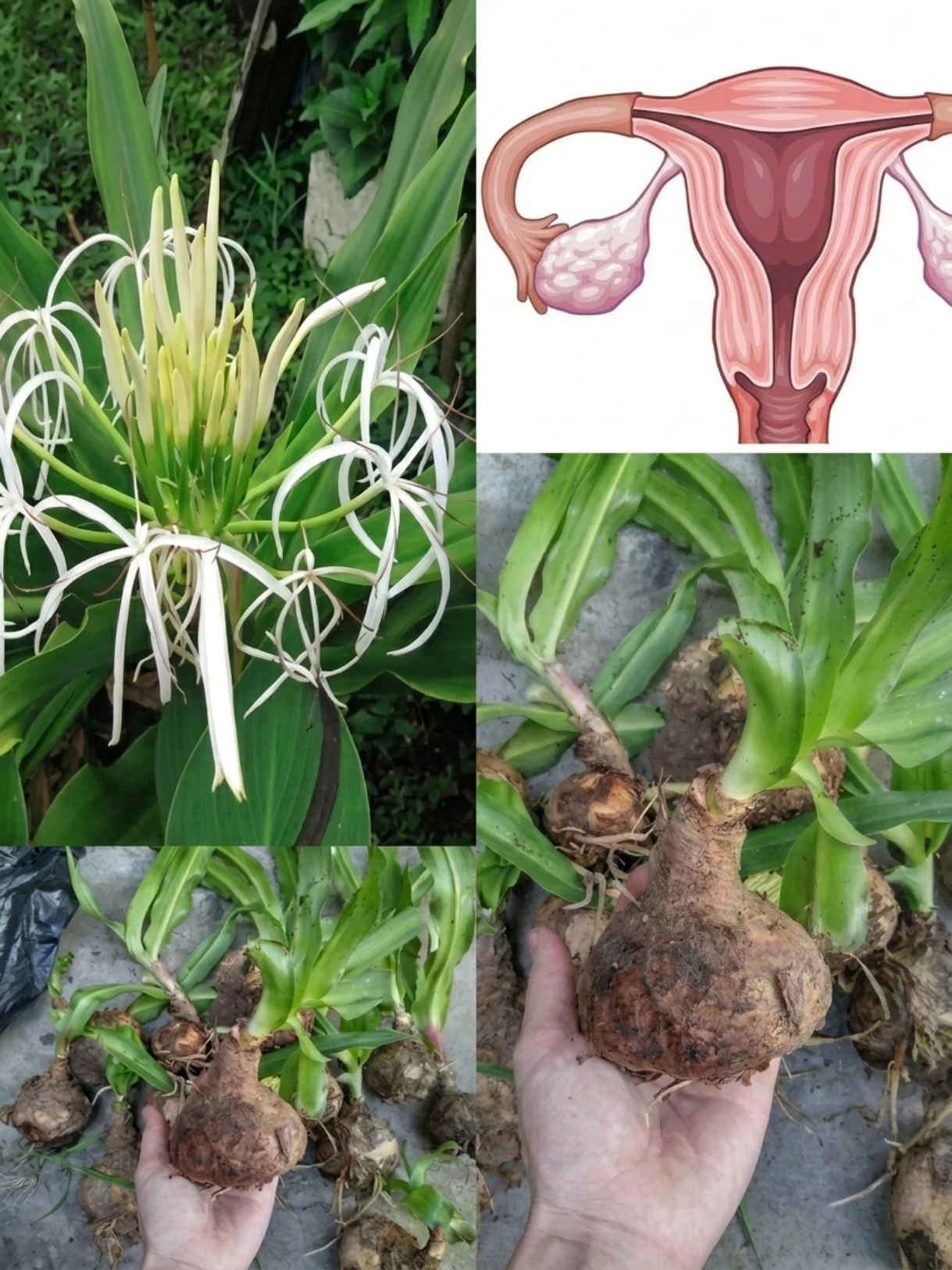
What Crinum latifolium Is Traditionally Used For
In traditional medicine, Crinum latifolium is often linked with:
- women’s reproductive support
- uterine comfort
- breast and pelvic health discussions
- inflammation-related complaints
- prostate and benign growth support in other traditional settings
Published research notes that Crinum latifolium has been used in Vietnamese and Chinese traditional medicine and has drawn attention for possible antitumor, antiviral, antioxidant, and immunomodulatory effects. One PubMed-indexed study specifically notes its traditional use and reports in vitro effects on immune activation and cell proliferation.
That helps explain why the plant is so often mentioned when people talk about fibroids or women’s reproductive concerns. But traditional use is not the same thing as proven clinical treatment. That distinction matters.
Why People Associate It With Uterine Support
The connection usually comes from two places: tradition and early lab research.
First, this plant has been used for years in herbal practice for growth-related and inflammatory concerns. Second, researchers have found that extracts of Crinum latifolium contain alkaloids and other compounds that may help explain its biological activity. Studies have explored antiproliferative effects on certain cell lines and broader immune-related activity, which is why the plant keeps showing up in wellness discussions around abnormal tissue growth.
Still, this is where a lot of online content overreaches. Early in vitro or preclinical findings do not prove that drinking a homemade tea will shrink fibroids or solve gynecologic disease in real life. A plant can be promising without being a cure.
Ingredients
For a simple traditional-style Crinum latifolium tea, people usually use the leaves, not the flower.
You will need:
- 1 to 2 cleaned Crinum latifolium leaves, cut into smaller pieces
- 3 to 4 cups water
Because this plant is potent in traditional practice, more is not necessarily better.

How to Prepare It
This kind of remedy is usually prepared as a decoction, not a quick steep.
Step 1: Wash the leaves well
Rinse the leaves thoroughly to remove dirt and surface residue.
Step 2: Slice into smaller pieces
Cut the leaves into short strips so they simmer more evenly.
Step 3: Add to water
Place the leaves in a pot with 3 to 4 cups of water.
Step 4: Simmer gently
Bring to a light boil, then lower the heat and let it simmer for about 15 to 20 minutes.
Step 5: Let it rest
Turn off the heat and leave it for another 5 minutes before straining.
Step 6: Drink warm
Strain into a cup and drink in small amounts.
This kind of tea is usually treated as a traditional herbal decoction, not a casual flavored drink.
How People Traditionally Use It
People who use trinh nữ hoàng cung in home or traditional settings usually take it in small, moderate amounts, often as part of a longer herbal routine rather than a one-time fix.
Best time to use it
Many prefer it:
- in the morning
- after meals
- during short periods of focused herbal use rather than indefinitely
Quick relief timeline
This is not the kind of remedy that gives a dramatic same-day result. If it is used at all, expectations should be slow and realistic. The first thing people usually notice is simply that they are being more intentional with rest, diet, and routine. Any larger health claim, especially around fibroids or uterine conditions, requires proper medical follow-up rather than waiting on tea alone. (PubMed)
What Science Actually Supports
The strongest scientific support for Crinum latifolium is not “this cures uterine disease.”
What the literature supports more clearly is that the plant contains biologically active compounds, especially Amaryllidaceae alkaloids, and that extracts have shown interesting effects in laboratory research. Reviews of the family and species discuss antioxidant potential, immune-related activity, and antiproliferative effects. Standardization work has also been done on Crinum latifolium leaf extract, especially in relation to benign prostatic hyperplasia research, which shows the plant is being taken seriously scientifically.
That said, serious women’s health issues such as fibroids, abnormal bleeding, ovarian masses, pelvic pain, or infertility are not conditions to self-manage with a single herb. The science here is promising enough to justify interest, but not strong enough to replace diagnosis or treatment.
Safety Notes
This is the part worth reading twice.
Because Crinum latifolium is an active medicinal plant, it should not be treated like an everyday kitchen herb. Published papers on the plant focus heavily on extract activity and standardization, which is useful, but also a reminder that potency and composition matter. More broadly, NCCIH-style guidance on herbal supplements applies here too: herbs can interact with medications, vary by preparation, and should not replace proper medical care for serious symptoms.
Use extra caution if you:
- are pregnant or breastfeeding
- take regular medication
- have heavy bleeding, severe pelvic pain, or rapidly worsening symptoms
- are delaying an ultrasound, gynecology visit, or proper diagnosis
If there is abnormal bleeding, pelvic pressure, faintness, unexplained weight loss, or severe pain, that needs medical evaluation.
Final Thoughts
Crinum latifolium, or trinh nữ hoàng cung, is a respected traditional plant with a real place in women’s health herbal culture. It makes sense that people still talk about it. The plant is beautiful, memorable, and backed by enough scientific interest to feel more than folkloric. But the smartest way to speak about it is with balance: a traditional uterine-support herb with promising research, not a guaranteed cure for fibroids or reproductive disease. (PubMed)
Sometimes the most useful herbal advice is the least dramatic one. Know the plant. Respect the tradition. Keep expectations realistic.