A brighter smile is something almost everyone wants.
That is exactly why simple kitchen remedies spread so fast. Tomato and baking soda sounds easy, cheap, and “natural,” so it is easy to see why people try it. But when it comes to DIY teeth whitening, natural does not always mean safe.
Here is the honest truth: there is no good clinical evidence that tomato and baking soda is a proven teeth whitening remedy, and dentists generally recommend professionally guided whitening or well-formulated whitening products instead. The American Dental Association says whitening can be effective, but the most common side effects are tooth sensitivity and gum irritation, and whitening products should be chosen carefully. The NHS also says the safest way to whiten teeth is through a dentist. (Ada)
That matters because this tomato-and-baking-soda trick combines two things teeth do not love in excess: acid and abrasion.
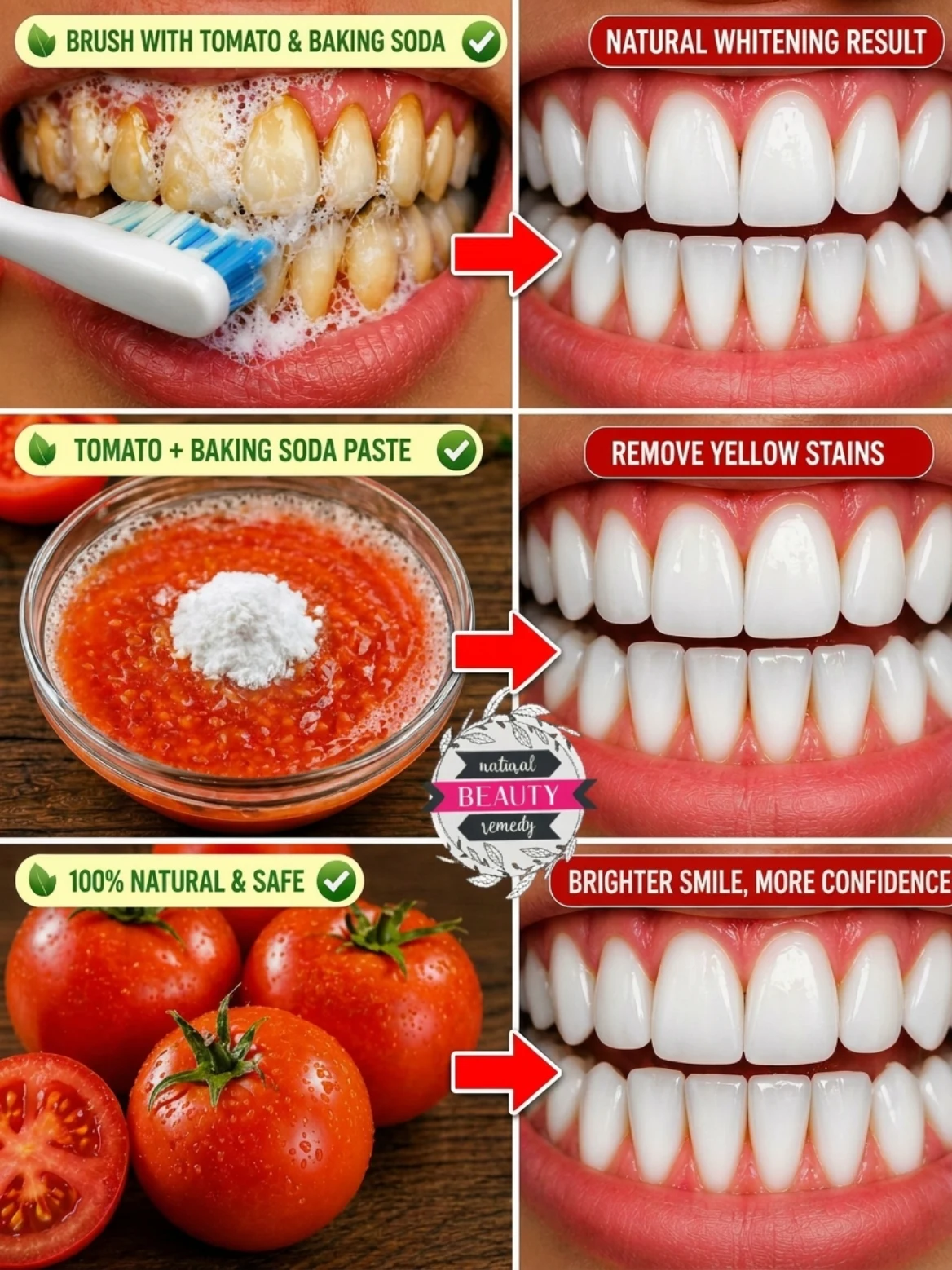
Why People Think Tomato and Baking Soda Can Whiten Teeth
The idea usually comes from two assumptions.
The first is that baking soda can help scrub away surface stains. That part has some truth behind it. Research in the Journal of the American Dental Association notes that baking soda in toothpaste can help with stain removal and whitening, and baking soda–based dentifrices can fall within accepted safety limits when used in proper toothpaste formulations.
The second assumption is that tomato somehow “bleaches” the teeth because it is fresh, acidic, and rich in plant compounds. But that logic is weak. In fact, an NHS dental factsheet specifically lists tomatoes among foods that can stain during whitening treatment.
So while baking soda in a toothpaste formula can make sense, tomato is a very different story.
The Real Problem With Tomato and Baking Soda Paste
This is where the DIY trend starts to fall apart.
Tomatoes are acidic. Acids can soften enamel, especially if teeth are exposed repeatedly. Baking soda, meanwhile, works mainly through a mild abrasive effect. On its own, in a toothpaste designed for oral use, that can be reasonable. But mixing an abrasive powder with an acidic food and rubbing it directly onto the teeth is not the same thing as using a tested whitening toothpaste.
In other words, this paste may make teeth feel cleaner for a short time, but it can also:
- irritate the gums
- increase tooth sensitivity
- wear down enamel over time
- make teeth look duller once enamel is damaged
And once enamel is lost, it does not grow back.
That is why homemade whitening hacks can be so misleading. They often promise a “before and after” result, but they leave out the long-term cost.
Does Baking Soda Have Any Place in Teeth Whitening?
Yes, but context matters.
Baking soda is not automatically bad for teeth. In fact, JADA reviews note that baking soda dentifrices can help with stain removal and are generally considered safe when they are part of properly formulated toothpaste. The key phrase there is properly formulated.
That is very different from dipping a wet toothbrush into kitchen baking soda or mixing it with acidic foods at home.
So if someone wants the potential stain-removing benefits of baking soda, the better option is simple: use an ADA-accepted toothpaste that already contains it, instead of making your own whitening paste in the kitchen. The ADA Seal exists to help consumers choose products evaluated for safety and effectiveness.
What Actually Works for Teeth Whitening
This part is less exciting, but much more useful.
If your goal is a noticeably whiter smile, the most reliable options are still:
Dentist-supervised whitening
This is the safest and most effective route for most people. The ADA and NHS both point people toward dentists for whitening advice and treatment.
Whitening products designed for teeth
Toothpastes and whitening systems made for oral use are very different from random food-based mixtures. ADA information notes that whitening products commonly use hydrogen peroxide or carbamide peroxide, which are the ingredients actually used in whitening interventions.
Stain prevention habits
Sometimes whitening starts with reducing what darkens teeth in the first place. Coffee, tea, tobacco, red wine, and poor plaque control usually matter more than people think.
A Safer Everyday Routine for a Brighter Smile
If you want your teeth to look cleaner and brighter without damaging them, focus on habits that hold up over time.
Brush twice a day with a fluoride toothpaste.
Choose a whitening toothpaste with the ADA Seal if stain removal is your goal.
Floss daily.
Rinse with water after coffee, tea, or deeply colored foods.
See your dentist if yellowing is severe, sudden, or uneven. Sometimes discoloration is not just a surface stain.
Quick Relief Timeline and Realistic Expectations
This matters because whitening myths usually promise instant change.
A kitchen paste may make teeth feel smoother right away, but that is not the same as true whitening. Real stain removal usually takes days to weeks with consistent, safe products. Professional whitening may show results faster, but it should still be done with the right guidance.
So if something looks too dramatic too quickly, it is usually worth questioning.
Safety Notes You Should Not Skip
Do not use tomato and baking soda paste if you already have:
- sensitive teeth
- worn enamel
- gum irritation
- cavities
- whitening-related pain
And stop immediately if you notice burning, sharp sensitivity, or gum soreness.
If your teeth are heavily stained, the answer is not usually a harsher scrub. In many cases, it is a dental cleaning, a safer whitening product, or a proper exam.
Final Takeaway
Tomato and baking soda for teeth whitening may sound like a clever natural fix, but it is not a smart long-term solution. Baking soda has some evidence for stain removal when it is used in well-made toothpaste, but tomato adds acidity without proven whitening benefit. That combination can leave your enamel and gums worse off than before.
A brighter smile is absolutely possible. It just should not come at the cost of your enamel.
Related Source Science
The ADA notes that effective whitening typically involves peroxide-based systems and can cause temporary tooth sensitivity and gum irritation. JADA reviews report that baking soda in toothpaste formulations can help remove stains and whiten teeth, while NHS guidance says whitening is safest when done through a dentist.