Making cheese at home may sound complicated, but many traditional cheeses require only a few ingredients and basic kitchen equipment. Whether you’re interested in fresh cheeses for salads, creamy spreads for breakfast, or rich cheeses for cooking, homemade versions can be surprisingly simple and rewarding.
The six cheeses below are among the most beginner-friendly options and can be made with ingredients commonly found in grocery stores.
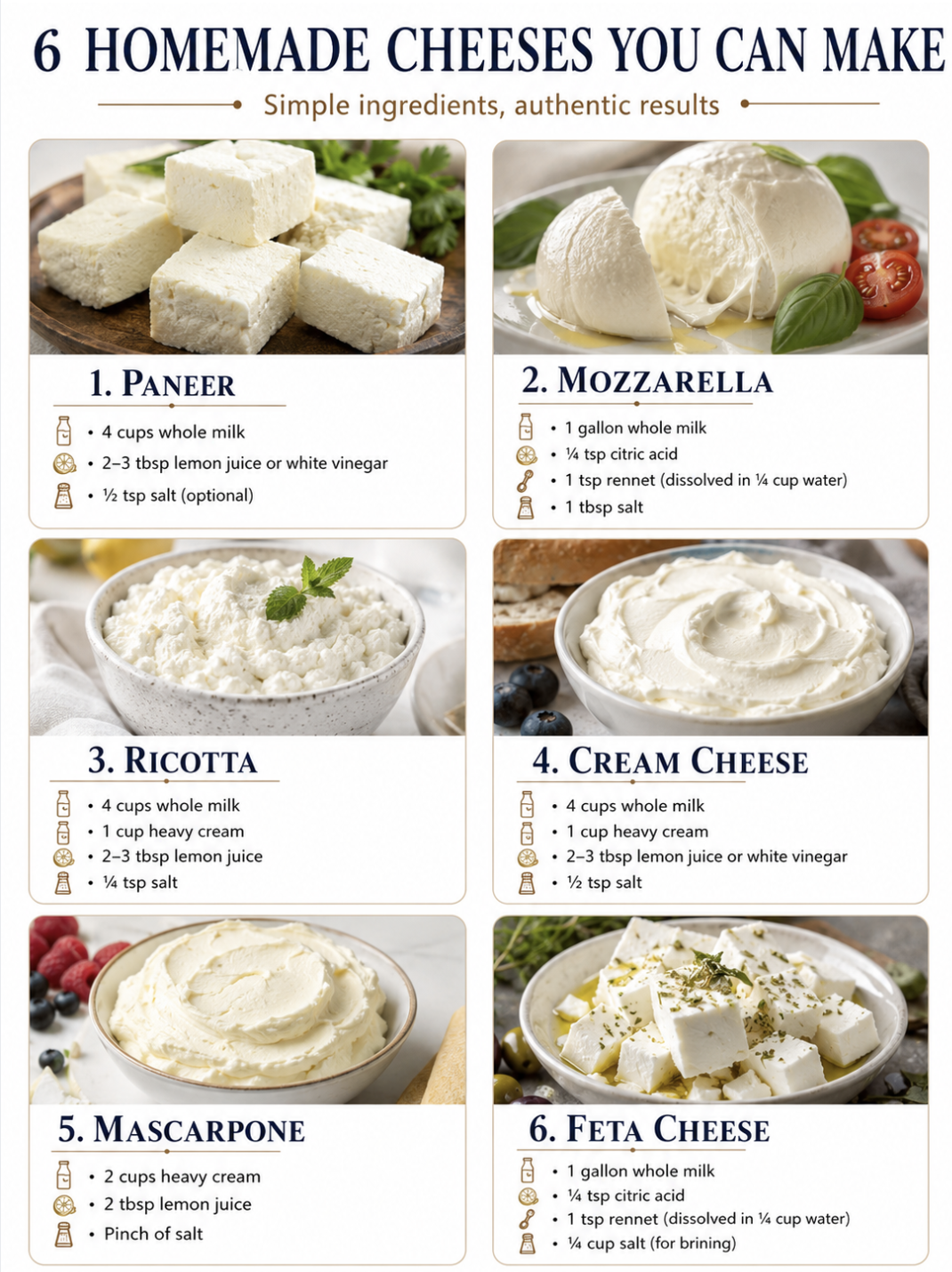
Why Make Cheese at Home?
Homemade cheese offers several advantages:
- Control over ingredients
- No unnecessary preservatives
- Fresh flavor and texture
- Lower cost for some varieties
- A fun and educational cooking project
Most fresh cheeses can be made with milk, an acid such as lemon juice or vinegar, and a little patience.
1. Paneer
Paneer is a fresh cheese widely used in Indian cuisine. Unlike many cheeses, it does not melt when heated, making it ideal for curries and grilled dishes.
Ingredients
- 4 cups whole milk
- 2–3 tablespoons lemon juice or white vinegar
- Optional pinch of salt
Directions
- Heat milk until it begins to simmer.
- Slowly add lemon juice while stirring.
- The milk will separate into curds and whey.
- Pour through cheesecloth.
- Rinse lightly and squeeze out excess liquid.
- Press under a weight for 30–60 minutes.
Best Uses
- Paneer tikka
- Curries
- Salads
- Grilled skewers
2. Mozzarella
Fresh mozzarella is known for its soft texture and mild flavor.
Ingredients
- 1 gallon whole milk
- Citric acid
- Rennet
- Salt
Directions
- Dissolve citric acid in water and mix into milk.
- Heat gently and add rennet.
- Allow curds to form.
- Cut curds and heat slowly.
- Stretch and fold until smooth.
- Shape into balls and cool.
Best Uses
- Pizza
- Caprese salad
- Sandwiches
- Pasta dishes
3. Ricotta
Ricotta is one of the easiest cheeses for beginners.
Ingredients
- 4 cups whole milk
- 1 cup heavy cream
- 2–3 tablespoons lemon juice
- Salt
Directions
- Heat milk and cream together.
- Stir in lemon juice.
- Let curds form naturally.
- Strain through cheesecloth.
- Allow to drain until desired consistency is reached.
Best Uses
- Lasagna
- Toast toppings
- Pancakes
- Desserts
4. Cream Cheese
Cream cheese is rich, smooth, and perfect for both sweet and savory recipes.
Ingredients
- 4 cups whole milk
- 1 cup heavy cream
- Lemon juice or vinegar
- Salt
Directions
- Heat dairy mixture gently.
- Add acid and stir.
- Strain the curds.
- Blend until smooth.
- Chill before serving.
Best Uses
- Bagels
- Cheesecakes
- Dips
- Sandwich spreads
5. Mascarpone
Mascarpone is an Italian cream cheese famous for its luxurious texture.
Ingredients
- 2 cups heavy cream
- 2 tablespoons lemon juice
Directions
- Heat cream gently.
- Add lemon juice.
- Stir until thickened.
- Cool and strain overnight.
- Refrigerate before using.
Best Uses
- Tiramisu
- Fruit desserts
- Frostings
- Sauces
6. Feta Cheese
Feta is a tangy cheese traditionally stored in brine.
Ingredients
- 1 gallon whole milk
- Citric acid
- Rennet
- Salt
Directions
- Form curds using acid and rennet.
- Cut and drain curds.
- Press lightly.
- Cut into blocks.
- Store in salted brine for several days.
Best Uses
- Greek salads
- Grain bowls
- Roasted vegetables
- Mediterranean dishes
Essential Tips for Successful Homemade Cheese
Use High-Quality Milk
Fresh whole milk typically produces better texture and flavor than ultra-processed milk.
Be Patient
Cheese making relies on timing. Rushing the process can affect texture and consistency.
Keep Everything Clean
Sanitized equipment helps prevent unwanted bacterial growth.
Experiment with Flavors
Fresh herbs, garlic, pepper, or spices can add unique flavors to homemade cheeses.
Common Beginner Mistakes
- Overheating milk
- Using too much acid
- Not draining long enough
- Skipping salt when required
- Using poor-quality milk
Most mistakes are easy to correct with practice.
Final Thoughts
Homemade cheese is easier than many people realize. Paneer, ricotta, cream cheese, and mascarpone are excellent starting points for beginners, while mozzarella and feta offer a fun challenge once you’re comfortable with basic techniques. With just a few ingredients and simple equipment, you can create fresh, flavorful cheeses that elevate everyday meals.