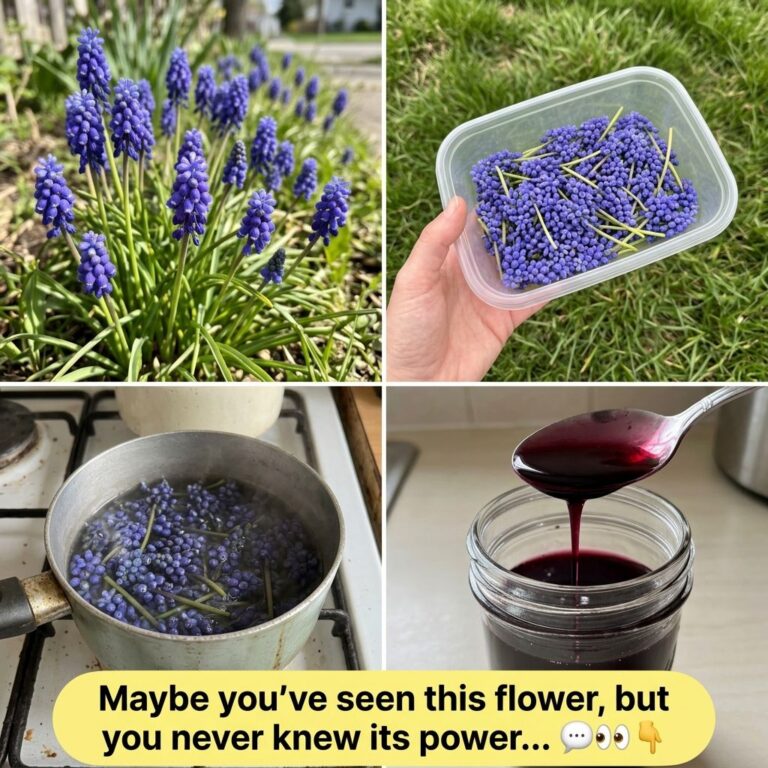
Most people walk right past them in spring, admiring their delicate blue-purple bells. But what if we told you these charming garden flowers, the grape hyacinths, hold a fascinating secret? Beyond their ornamental beauty lies a hidden power that can transform your DIY projects and add a splash of natural wonder to your home.
Forget the notion that natural colors are dull or complicated. We’re about to reveal how these common blossoms can yield a vibrant, pH-reactive extract, perfect for natural dyeing, crafting, or even as a unique, non-toxic indicator. It’s a simple process, yet the results are surprisingly versatile and captivating.
What It Is: Grape Hyacinth Color Extract
We’re talking about a botanical extract made from the beautiful blue-purple flowers of the grape hyacinth plant (Muscari armeniacum or similar species). This extract is rich in anthocyanins, the natural pigments responsible for its vibrant hue. When prepared correctly, this liquid can be used as a natural dye, a pH indicator, or a base for various creative projects. The most exciting part? Its color can shift dramatically depending on the acidity or alkalinity it encounters, turning from blue to stunning shades of purple and red.
Ingredients You’ll Need
- Fresh Grape Hyacinth Flowers: Approximately 2-3 cups, tightly packed. Choose vibrant, healthy blooms.
- Distilled Water: 4 cups (or enough to cover the flowers adequately).
- Non-Reactive Pot: Stainless steel or enamel. Avoid aluminum, which can react with plant pigments.
- Strainer or Cheesecloth: For separating the liquid from the spent flowers.
- Clean Glass Jar or Bottle: For storage.
Formula / Recipe: Simple Color Extraction
The magic is in the gentle simmer. We aim to coax the pigments out without “cooking” them away. This method provides a potent, clear extract.
Approximate Measurements
- Flowers to Water Ratio: Roughly 1 part packed flowers to 2 parts water. This can be adjusted for a stronger (more flowers) or weaker (more water) extract.
- For our recipe: 2-3 cups packed flowers to 4 cups water.
Step-by-Step Method
- Gather Your Flowers: In spring, carefully pick fresh grape hyacinth flowers. Aim for blooms that are fully open and vibrantly colored. Ensure they haven’t been sprayed with pesticides or herbicides.
- Clean the Flowers: Gently rinse the flowers under cool water to remove any dirt or small insects. Pat them dry lightly with a clean towel.
- Combine Ingredients: Place the cleaned grape hyacinth flowers into your non-reactive pot. Pour the distilled water over them, ensuring the flowers are fully submerged.
- Gentle Simmer: Place the pot on the stovetop over medium-low heat. Bring the water to a very gentle simmer – you should see small bubbles forming, not a rolling boil.
- Extract the Color: Maintain a gentle simmer for 30-60 minutes. You’ll notice the water gradually taking on a bluish tint, deepening over time. The longer you simmer (within reason), the more pigment you’ll extract.
- Cool and Strain: Remove the pot from the heat and allow the mixture to cool completely. Once cool, strain the liquid through a fine-mesh strainer or several layers of cheesecloth into a clean glass jar. Press the spent flowers gently to extract any remaining liquid, but avoid squeezing too hard, which can release unwanted plant matter.
- Store Your Extract: Your grape hyacinth color extract is now ready!
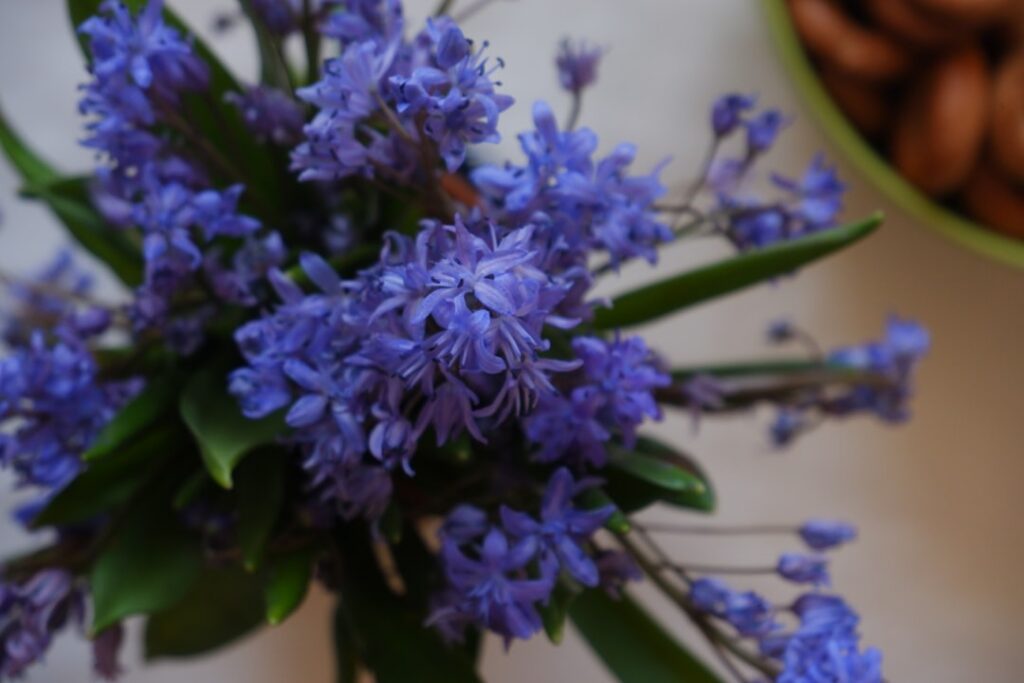
How to Use Your Grape Hyacinth Extract
This extract offers a spectrum of possibilities, mainly for external, non-ingestible applications:
- Natural Dye: Use it to dye natural fibers like cotton, linen, silk, or wool. The initial color will be a lovely blue, but you can experiment with pH modifiers (like vinegar for acidic red/purple or baking soda for alkaline green/blue) for different shades.
- Art & Crafts: Create natural watercolors, inks, or add unique color to homemade paper or playdough.
- pH Indicator: The extract acts as a natural pH indicator. A few drops added to a clear liquid will change color depending on its acidity. Acidic liquids will turn it pink/red, neutral will keep it blue-purple, and alkaline may shift it towards greenish hues.
- Hair Rinse (Experimental): Some enthusiasts use mild botanical rinses for hair. If considering this, perform a small strand test first, as results vary and may not be permanent. Always dilute heavily and consider a patch test for skin sensitivity.
How Often to Use
Use your grape hyacinth extract as often as needed for your creative and DIY projects. For dyeing, you’ll likely use it in batches. For a pH indicator, a small amount goes a long way.
How to Choose & Harvest Grape Hyacinths
The quality of your extract starts with the flowers:
- Identification is Key: Ensure you are correctly identifying Muscari armeniacum. While generally considered ornamental and non-toxic in small, external applications, confusion with other plants can be dangerous.
- Forage Responsibly: Only harvest from your own garden or areas where you have permission. Never over-harvest from wild populations.
- Avoid Sprayed Areas: Do not collect flowers from roadsides, public parks, or any area that may have been treated with pesticides or chemical fertilizers.
- Freshness Counts: Use flowers that are fresh, vibrant, and free from wilting, damage, or disease.
Storage
Once made, store your grape hyacinth extract in a clean, airtight glass jar or bottle in the refrigerator. It should last for about 1-2 weeks. If you notice any mold, strange odors, or cloudiness, discard it immediately. For longer storage, you can freeze it in ice cube trays and transfer the frozen cubes to a freezer-safe bag. Thaw as needed.
Practical Tips for Best Results
- Test pH: Keep some lemon juice (acidic) and baking soda solution (alkaline) handy to experiment with color shifts.
- Mordants for Dyeing: If using as a fabric dye, research natural mordants (like alum) to help the color adhere better and become more wash-fast.
- Concentration: For a more intense color, use more flowers or reduce the liquid by simmering longer after straining (carefully, at very low heat) to create a concentrate.
- Patience is a Virtue: Don’t rush the simmering process. Gentle heat and time extract the most pigment.
Did You Know? pH Power!
The dramatic color change you see in the image—from blue flowers to reddish-purple liquid—is often due to a slight change in pH during extraction or an intentional adjustment. Many anthocyanin-rich plants turn reddish in acidic conditions and bluer or even greenish in alkaline ones. This is why our extract makes such a fun natural pH indicator!
Common Mistakes to Avoid
- Using the Wrong Plant: Mistaking grape hyacinths for other plants can be harmless or, in some cases, dangerous. Always be 100% sure of your identification.
- Over-boiling: A rolling boil can destroy delicate pigments, leading to a duller, less vibrant extract. Keep it at a gentle simmer.
- Using Reactive Pots: Aluminum or cast iron can react with the plant compounds and alter the final color, sometimes turning it muddy or undesirable. Stick to stainless steel or enamel.
- Poor Storage: Leaving the extract out at room temperature will lead to spoilage very quickly.
- Expecting a Permanent Dye Without Mordant: For fabric dyeing, a mordant is often necessary to achieve lasting color that won’t simply wash out.
Cautions / Who Should Avoid It
- External Use Only: This extract is NOT for consumption. Grape hyacinth, like many ornamental plants, is not intended for internal use and can cause stomach upset if ingested.
- Plant Allergies: If you have plant sensitivities, perform a patch test on a small area of skin before extensive use, especially if using it as a hair rinse or for body art.
- Children & Pets: Keep fresh plants and the extract out of reach of small children and pets, who might be tempted to ingest them.
Quick Summary: Your Grape Hyacinth Color Guide
- Best Preparation: Gentle simmering of fresh flowers in distilled water.
- Best Use-Case: Natural dye for crafts/fabrics, homemade pH indicator, natural ink.
- Storage: Refrigerate in an airtight jar for 1-2 weeks, or freeze for longer.
- When to Use: When you need a vibrant, natural, pH-sensitive color for DIY projects.
- What to Avoid: Ingestion, reactive pots, over-boiling, using unknown plants.
Color Comparison: pH Effects
| pH Level | Typical Color | Example Modifiers |
|---|---|---|
| Acidic (pH < 7) | Reddish-Purple to Pink | Vinegar, Lemon Juice |
| Neutral (pH ≈ 7) | Blue-Purple | Distilled Water |
| Alkaline (pH > 7) | Bluish-Green | Baking Soda Solution |
Frequently Asked Questions
- Can I use dried grape hyacinth flowers?
Fresh flowers yield the most vibrant color. Dried flowers may still produce an extract, but the color might be less intense. - How long does the grape hyacinth extract last?
Refrigerated, it lasts about 1-2 weeks. Freezing can extend its shelf life for several months. - Is this extract safe for consumption?
No, grape hyacinth extract is for external and crafting use only. Do NOT ingest. - What if I want a different color than blue or purple?
Experiment with pH modifiers! Acidic additions (like lemon juice) will shift it towards red/pink, while alkaline additions (like baking soda) can push it towards blue-green. - Can I use tap water instead of distilled water?
While possible, tap water contains minerals that can sometimes affect the final color. Distilled water ensures the purest color extraction. - Will this dye clothing permanently?
For permanent fabric dyeing, you’ll likely need to use a mordant (a substance that helps dyes bond to fabric fibers). Without a mordant, the color may fade with washing. - Can I make an oil infusion instead?
Color extracts from water-soluble anthocyanins are best made with water. Oil infusions would extract different compounds and likely not yield the same vibrant colors.
You may also like: DIY Natural Fabric Dyes: A Beginner’s Guide
Conclusion
Who knew such a common garden flower held such a delightful secret? The grape hyacinth color extract is a testament to the simple yet profound magic of nature. It’s an accessible, fun, and beautiful way to bring a touch of natural artistry into your life. So this spring, instead of just admiring these tiny blue bells, consider unlocking their hidden power for your next creative adventure!
Read more: How to Make Your Own Botanical Inks at Home