Grow More Snapdragons All Season: Your Essential Guide to Continuous Blooms
Hello, fellow garden enthusiasts! Are your beautiful snapdragons starting to look a little tired, with some blooms fading while others are still bursting with color? Don’t worry, it’s a common sight, and it certainly doesn’t mean your flowering season is over. In fact, with a little friendly intervention, you can encourage your snapdragons to keep producing those cheerful, vibrant spires of color all summer long, and even into fall! It’s a simple trick, really, much like encouraging a friend to keep sharing their best stories – we just need to know how to prompt them.
Today, we’re going to dive into the art of deadheading snapdragons. It might sound a bit fancy, but it’s just a gardening term for removing spent flowers. And trust me, it’s one of the easiest ways to transform your snapdragons from a fleeting spring beauty into a continuous showstopper.
Why Deadhead Snapdragons? It’s All About Energy!
Think of it this way: a plant’s main goal in life is to reproduce. Once its flowers fade, it quickly shifts its energy into forming seeds. If you let those spent flowers stay on the plant, your snapdragon will pour all its precious energy into seed production, thinking its job is done. This means fewer new blooms and a much shorter flowering season.
By simply snipping off those faded flowers, you’re gently tricking the plant. You’re telling it, ‘Hey, not done yet! Keep working on those beautiful blooms, because we still need to make more seeds!’ This encourages the plant to put its energy back into producing new flower stalks and side shoots, resulting in a much bushier plant with a continuous display of fresh, vibrant flowers. It’s like giving your plant a little pep talk!
- More Flowers: The most immediate and satisfying benefit.
- Longer Blooming Season: Extend the joy of snapdragon blooms for weeks, sometimes even months.
- Bushier Plants: Encourages branching, leading to a fuller, more attractive plant.
- Prevents Unwanted Self-Seeding: While snapdragons can be lovely self-seeders, sometimes you want to control where they grow or prevent them from becoming leggy.
When to Grab Your Shears: Spotting Spent Blooms
Knowing when to deadhead is key. It’s pretty intuitive once you get the hang of it:
Look for flower spikes where individual blossoms have started to wilt, turn brown, or dry out. You’ll notice the vibrant colors fading, and the petals might even begin to fall off. The once-bright spire will start to look dull and perhaps a bit messy. Don’t wait until the entire stalk is a crispy brown; it’s best to act when you see the majority of the individual flowers on a spike have passed their prime.
It’s a good idea to make deadheading a regular part of your garden routine, perhaps once a week or every time you’re out watering. A quick stroll through the garden can reveal all the spots that need a little snip.
How to Deadhead Snapdragons: A Simple Step-by-Step Guide
This is where the magic happens! Don’t be afraid to make the cut. Your snapdragons will thank you with even more blooms.
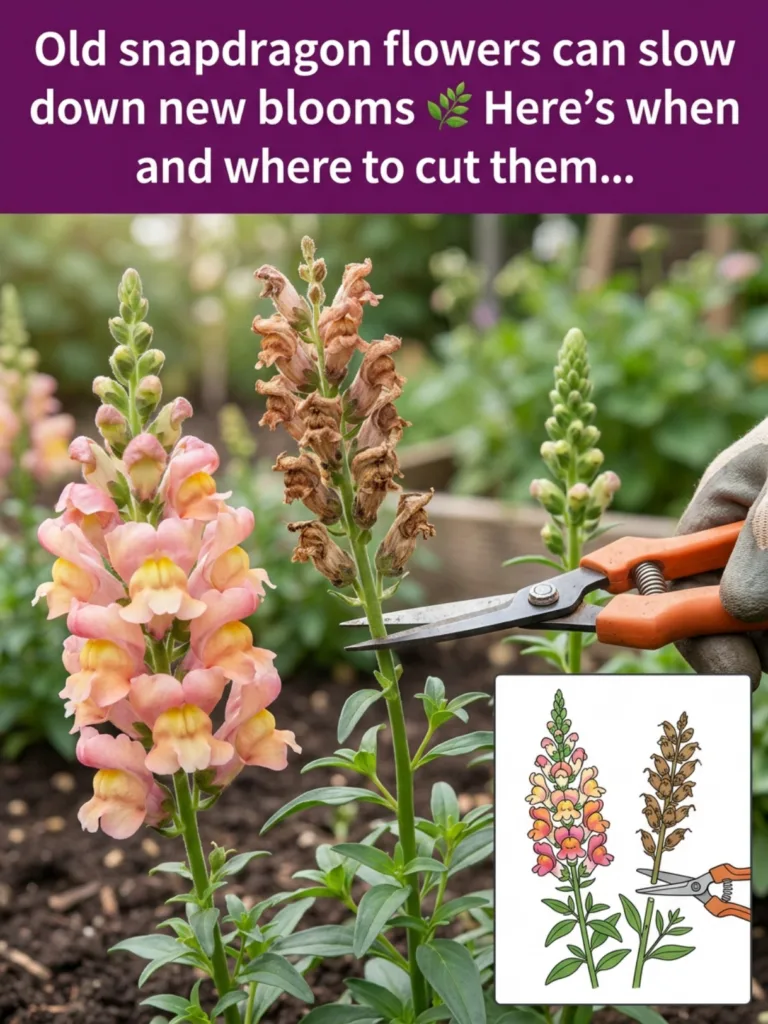 Identify the spent flower stalk, like this dried one, and get ready to make a clean cut.
Identify the Spent Flower Spike
- Walk around your snapdragons and find the stalks where the flowers are clearly past their prime – withered, faded, or brown. Leave any stalks that still have fresh, vibrant blooms or unopened buds.
Follow the Stem Down
- Once you’ve found a spent spike, look down the stem from the top of the faded flowers. You’ll usually see smaller leaves or even tiny new flower buds developing in the leaf axils (the point where a leaf meets the main stem) further down the stalk. These are your next generation of blooms or foliage!
Make a Clean Cut
- Using clean, sharp pruning shears or even strong fingernails, snip the stem just above a healthy leaf node or a developing side shoot. Aim for about 2-4 inches below the bottom-most faded flower on the spike. Making the cut above a new bud or leaf ensures the plant directs its energy to that point, encouraging new growth rather than leaving a bare stem.
Repeat and Enjoy!
- Continue this process for all your spent snapdragon flowers. You’ll be amazed at how quickly new growth emerges and how many more blooms your plants will produce.
Beyond Deadheading: General Snapdragon Care Tips
While deadheading is a superpower for extending blooms, remember that healthy plants are happy plants. Here are a few extra tips to keep your snapdragons thriving:
Sunlight and Soil
- Snapdragons love sunshine! Plant them in a spot that receives full sun (at least 6 hours a day). They prefer well-draining soil that’s rich in organic matter. If your soil is heavy clay, consider adding some compost to improve drainage.
Watering
- Keep the soil consistently moist, especially during dry spells. However, avoid overwatering, as this can lead to root rot. A good rule of thumb is to water when the top inch or two of soil feels dry to the touch.
Fertilization
- A balanced liquid fertilizer every 2-4 weeks can give your snapdragons an extra boost, especially with all that continuous blooming. Look for a fertilizer that’s suitable for flowering plants.
Pest and Disease Watch
- Snapdragons are generally quite hardy. Keep an eye out for common garden pests like aphids and powdery mildew. Good air circulation and proper watering can help prevent many issues.
Winter Care (USA Zones)
- Snapdragons (Antirrhinum majus) are often grown as annuals in most of the USA, particularly in colder climates (zones 3-7). However, in warmer regions (like USDA zones 7-11), they can sometimes survive as short-lived perennials, blooming again in spring. If you’re in a borderline zone, a layer of mulch in fall can offer some protection to their roots.
Cultivate Confidence, Harvest Beauty!
Deadheading snapdragons is a perfect example of how a small, consistent effort in the garden can lead to truly spectacular results. It’s not just about getting more flowers; it’s about connecting with your plants, understanding their needs, and helping them reach their full potential. So, arm yourself with a pair of sharp snips, step out into your garden, and start transforming those fading blooms into a promise of vibrant color yet to come. You’ll be amazed at how this simple act enhances the beauty of your garden and brings you even closer to nature’s rhythm.
Happy gardening, neighbors!