In our busy lives, it’s easy to overlook how deeply our daily food choices impact every part of our body. Beyond just fueling us, food provides the essential building blocks, protective compounds, and energy our various body systems need to thrive. Think of your body as a complex, interconnected ecosystem, where each part plays a vital role, and proper nutrition is the key to its optimal function.
This guide dives into how specific foods can support six crucial body systems: your bones, muscles, joints, immunity, digestion, and heart. By understanding these connections, you can make informed choices that build a foundation for long-term health and vitality.
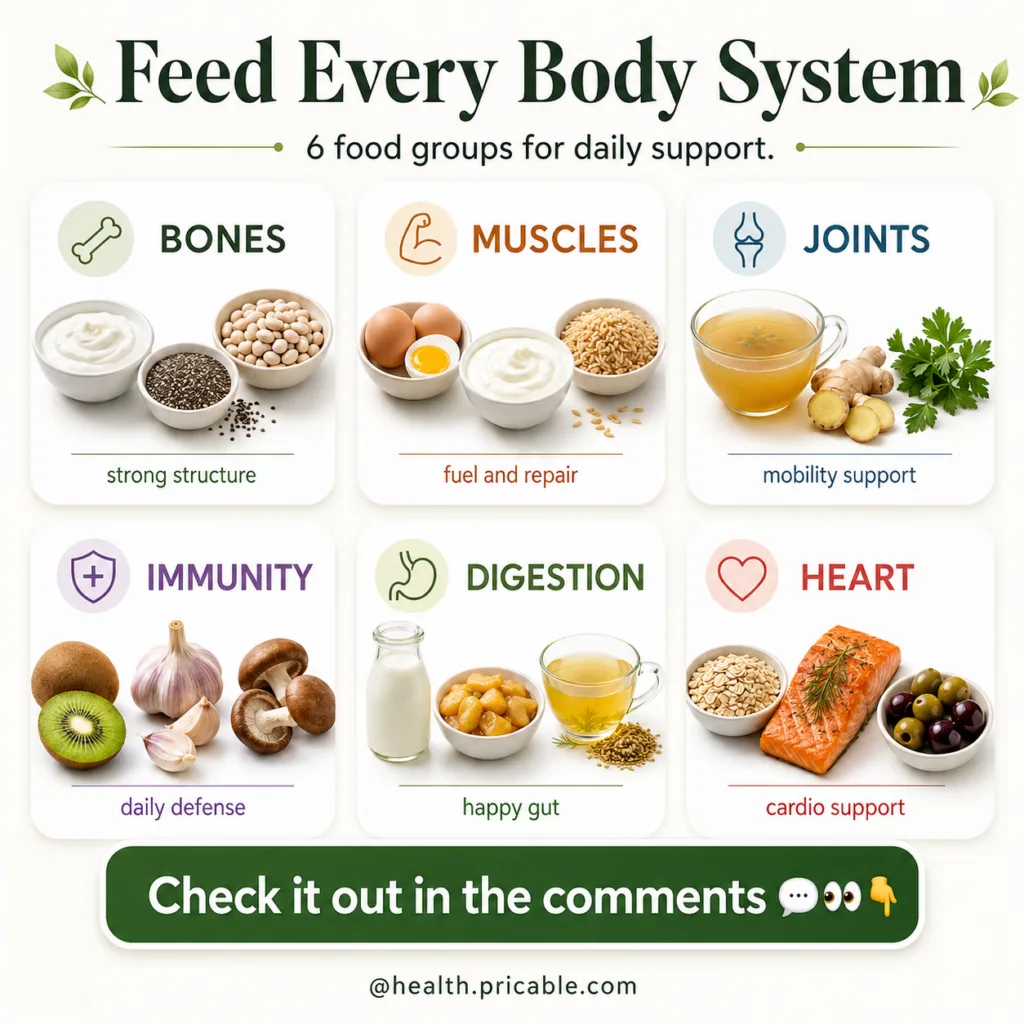 A visual guide to nourishing your body from head to toe.
1. Strong Structure: Fueling Your Bones
Your bones provide structure, protect organs, and anchor muscles. Keeping them strong throughout life is essential for mobility and overall well-being.
Key Nutrients for Bone Health:
- Calcium: The primary mineral in bones.
- Vitamin D: Crucial for calcium absorption.
- Magnesium & Phosphorus: Important for bone density and strength.
Foods to Support Your Bones:
- Milk & Yogurt: Excellent sources of calcium and often fortified with Vitamin D, crucial for strong bones.
- Leafy Greens: Kale, spinach, and collard greens are rich in bone-building calcium and Vitamin K.
- Fortified Plant Milks: Options like almond, soy, or oat milk can provide essential calcium and Vitamin D when fortified.
- Fatty Fish: Salmon and sardines are great for Vitamin D and calcium.
- Nuts & Seeds: Almonds and sesame seeds contribute calcium and magnesium for bone density.
2. Fuel and Repair: Supporting Your Muscles
Muscles are responsible for movement, strength, and even metabolism. Adequate protein is vital for their growth, repair, and maintenance.
Key Nutrients for Muscle Health:
- Protein: Essential amino acids are the building blocks of muscle.
- Magnesium & Potassium: Help with muscle function and prevent cramps.
Foods to Support Your Muscles:
- Chicken Breast & Eggs: Excellent complete protein sources, providing all essential amino acids for muscle repair.
- Lean Meats: Turkey and lean beef offer high-quality protein.
- Fish: Varieties like tuna, cod, and tilapia are rich in protein for muscle maintenance.
- Legumes: Lentils, chickpeas, and black beans provide plant-based protein and fiber.
- Whole Grains: Quinoa stands out as a complete plant protein, alongside brown rice.
- Tofu & Tempeh: Versatile plant-based protein options for muscle development.
- Nuts & Seeds: Almonds, peanuts, and pumpkin seeds contribute protein and healthy fats.
3. Mobility Support: Caring for Your Joints
Healthy joints allow for fluid movement and flexibility. Anti-inflammatory foods can play a significant role in reducing discomfort and preserving joint health.
Key Nutrients for Joint Health:
- Omega-3 Fatty Acids: Powerful anti-inflammatory properties.
- Antioxidants: Protect joint tissues from damage.
Foods to Support Your Joints:
- Avocado & Olive Oil: Provide healthy monounsaturated fats and anti-inflammatory compounds.
- Fatty Fish: Salmon, mackerel, and sardines are rich in powerful Omega-3 fatty acids, known for reducing inflammation.
- Berries: Blueberries, strawberries, and raspberries are packed with antioxidants that protect joint tissues.
- Spices: Turmeric (with its active compound curcumin) and ginger are celebrated for their anti-inflammatory effects.
- Nuts & Seeds: Walnuts, flaxseeds, and chia seeds are excellent sources of Omega-3s.
- Leafy Greens: Spinach and kale contribute Vitamin K, important for bone and joint health.
4. Daily Defense: Boosting Your Immunity
Your immune system is your body’s frontline defense against illness. A well-nourished body is better equipped to fight off invaders.
Key Nutrients for Immune Health:
- Vitamin C: A powerful antioxidant and immune booster.
- Vitamin D: Modulates immune responses.
- Zinc: Essential for immune cell function.
- Prebiotics & Probiotics: Support a healthy gut microbiome, which is linked to immunity.
Foods to Support Your Immunity:
- Oranges & Bell Peppers: Excellent sources of Vitamin C, a powerful antioxidant and immune booster.
- Other Citrus Fruits: Grapefruit and lemons also provide a Vitamin C boost.
- Berries: All types of berries are rich in antioxidants that support immune cell function.
- Cruciferous Vegetables: Broccoli and Brussels sprouts offer a wealth of vitamins and antioxidants.
- Garlic & Ginger: Known for their potent immune-boosting and anti-inflammatory properties.
- Nuts & Seeds: Pumpkin seeds and cashews are good sources of zinc, essential for immune cell development.
- Fermented Foods: Yogurt, kefir, sauerkraut, and kimchi provide probiotics that support a healthy gut microbiome, which is intrinsically linked to immunity.
5. Happy Gut: Nurturing Your Digestion
A healthy digestive system ensures nutrient absorption and plays a huge role in overall well-being, including mood and immunity.
Key Nutrients for Digestive Health:
- Fiber: Both soluble and insoluble fiber for regularity and gut microbiome support.
- Probiotics: Beneficial bacteria that support gut flora balance.
Foods to Support Your Digestion:
- Oats & Bananas: Excellent sources of fiber, supporting regular bowel movements and a healthy gut.
- Whole Grains: Brown rice, quinoa, and whole wheat bread provide both soluble and insoluble fiber.
- Legumes: Lentils, beans, and peas are packed with fiber and prebiotics to nourish gut bacteria.
- Fruits: Apples, pears, and berries (especially with their skins on) offer vital dietary fiber.
- Vegetables: Root vegetables like sweet potatoes and carrots, along with leafy greens, contribute fiber and nutrients.
- Fermented Foods: Greek yogurt, kefir, tempeh, and sauerkraut introduce beneficial probiotics to the gut.
6. Cardio Support: Protecting Your Heart
Your heart is a tireless muscle that keeps blood flowing throughout your body. Protecting its health is paramount for longevity.
Key Nutrients for Heart Health:
- Omega-3 Fatty Acids: Reduce inflammation and improve cholesterol levels.
- Monounsaturated & Polyunsaturated Fats: Healthy fats that support cardiovascular function.
- Fiber: Helps manage cholesterol and blood sugar.
- Antioxidants: Protect heart cells from oxidative damage.
Foods to Support Your Heart:
- Salmon & Walnuts: Rich in Omega-3 fatty acids, which help reduce inflammation and support cardiovascular function.
- Avocados: High in monounsaturated fats, beneficial for cholesterol levels.
- Olive Oil: A cornerstone of the heart-healthy Mediterranean diet, providing healthy fats and antioxidants.
- Leafy Greens: Spinach, kale, and collard greens are rich in nitrates that support blood vessel health.
- Berries: Blueberries, strawberries, and raspberries are packed with antioxidants that protect heart cells.
- Oats: Their soluble fiber content is excellent for helping to lower bad cholesterol.
- Legumes: Beans, lentils, and chickpeas provide fiber and plant-based protein, contributing to heart health.
- Seeds: Flaxseeds and chia seeds are further sources of Omega-3s and fiber.
- Dark Chocolate: In moderation, it can offer beneficial antioxidants for the cardiovascular system.
Embrace a Holistic Approach to Eating
Understanding which foods support each body system empowers you to make intentional choices. Remember, variety is key! A diverse diet ensures you get a broad spectrum of nutrients. Focus on whole, unprocessed foods, hydrate adequately, and pair your healthy eating habits with regular physical activity for truly holistic well-being.
Nourishing your body isn’t about restrictive diets; it’s about providing the best fuel for every single one of its incredible systems. Start incorporating more of these beneficial foods into your daily routine and feel the difference!