Ever wondered why some of your houseplants thrive while others seem to struggle, despite your best efforts? More often than not, the answer lies in one simple, yet often misunderstood, practice: watering. It’s a common tale among plant lovers – a little too much water, or not quite enough, can turn a lush green friend into a sad, drooping sight. But don’t you worry, because today we’re going to unlock the secret to perfect houseplant watering, and it’s simpler than you might think!
Forget the old adage of watering every Sunday or every other Wednesday. Your plants aren’t on a schedule; they’re living beings whose needs change based on their environment, the season, and even the type of pot they’re in. The real key to a thriving indoor jungle is to check the soil, not the calendar. Let’s dig in and learn how to really listen to what your plants are telling you.
Why Watering Right Matters: The Goldilocks Zone
Think of watering like finding the ‘Goldilocks Zone’ for your plants – not too much, not too little, but just right. Both overwatering and underwatering can lead to unhappy plants, but they affect them in different ways.
Overwatering vs. Underwatering: The Silent Killers
- Overwatering: This is arguably the most common mistake. Too much water suffocates the roots, preventing them from taking up essential oxygen. This leads to root rot, a fungal disease that can quickly kill your plant. Signs include yellowing leaves, soft and mushy stems, and a strong, unpleasant smell from the soil.
- Underwatering: While less immediately deadly, consistent underwatering stresses your plant. It can’t transport nutrients effectively, leading to stunted growth, crispy brown leaves, and ultimately, wilting.
Your Best Tool: The Finger Test (and a Moisture Meter, if you like!)
Before you even think about grabbing that watering can, you need to know if your plant is actually thirsty. The most reliable method is the finger test. It’s simple, free, and incredibly effective:
- Insert Your Finger: Gently push your index finger about 1-2 inches deep into the soil near the center of the pot.
- Feel for Moisture:
- If the soil feels damp, hold off on watering.
- If it feels dry, it might be time to water.
Some folks also love using a moisture meter, which is a handy tool that you stick into the soil to get a digital reading. While it can be helpful, your finger is often just as good, if not better, at sensing the true texture and moisture level.
Decoding Your Plant’s Thirst: Four Key Watering Styles
Just like people have different hydration needs, so do plants! Some like a consistently moist environment, while others prefer to dry out completely between waterings. Understanding these categories is where the magic happens. Let’s look at the main types:
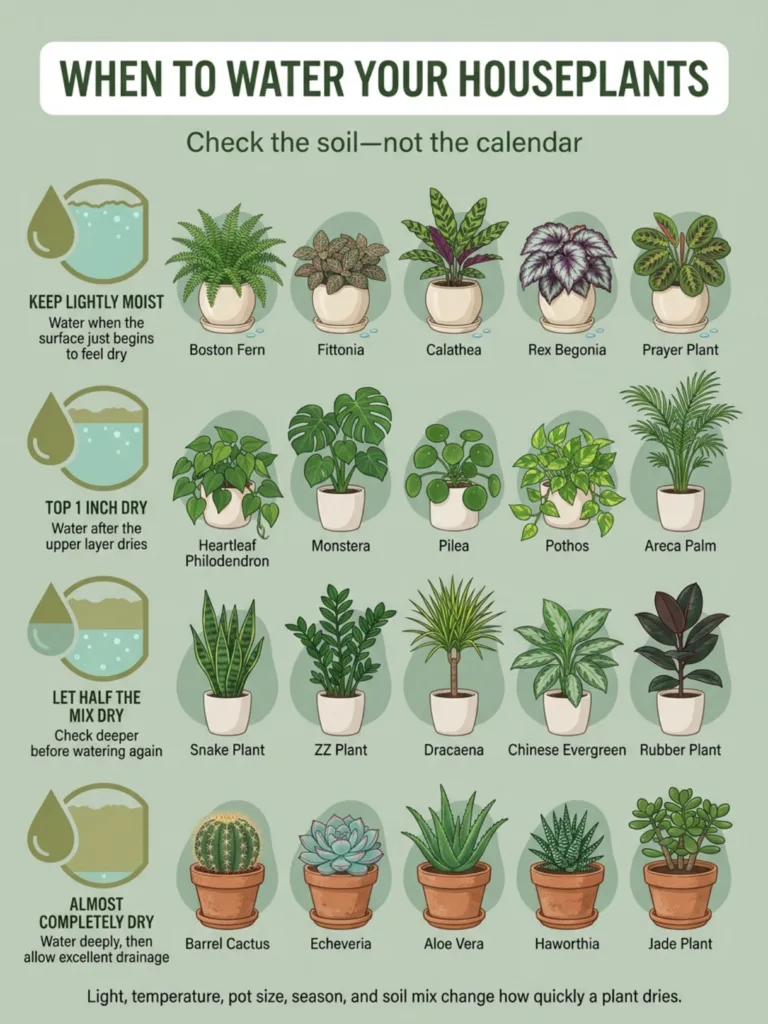 This handy guide illustrates various soil moisture needs for different houseplants.
1. Keep the Soil Lightly Moist (Never Soggy!)
These plants love a consistent drink, but they absolutely hate sitting in soggy soil. Think of it like taking sips of water throughout the day rather than chugging a whole bottle at once. You want the soil to feel like a well-wrung sponge – damp, but not dripping.
- How to Water: Water thoroughly until you see water draining from the bottom. Empty any excess water from the saucer after about 15-30 minutes. Re-water when the top 1/2 inch of soil just begins to feel dry to the touch.
- Examples: Many ferns (like the Boston Fern), Peace Lilies, Prayer Plants, and some Fittonias thrive with this approach.
2. Let the Top Inch Dry Out
This is a very common watering preference for many popular houseplants. They like to dry out a little between waterings, allowing the roots to breathe before their next drink. It’s a great balance for robust growth without the risk of rot.
- How to Water: Water thoroughly until water drains from the pot. Wait to water again until the top inch (about one knuckle deep) of soil feels dry.
- Examples: Pothos, Spider Plants, Monstera, Philodendron, and many Peperomias usually fall into this category.
3. Allow the Top Two Inches to Dry
These plants are a bit more forgiving if you forget a watering session. They prefer to dry out a bit deeper into the pot before needing more water. This helps prevent root issues for plants that don’t like constant moisture.
- How to Water: Water deeply. Wait until the top two inches of soil (about two knuckles deep) are dry before watering again.
- Examples: Many types of Dracaena, ZZ Plants, and some larger Philodendrons appreciate this watering schedule.
4. Water Only When Soil is Completely Dry
These are your champions of drought tolerance! Succulents, cacti, and other desert-dwelling plants are perfectly adapted to go for long periods without water. Overwatering is almost a guaranteed death sentence for these beauties.
- How to Water: Water thoroughly, then completely ignore them until the soil is bone dry all the way through the pot. This might mean weeks, or even a month, depending on the plant and environment.
- Examples: Cacti, most Succulents (like Echeveria, Haworthia, Jade Plant), and Snake Plants (Sansevieria) are prime examples.
More Watering Wisdom for Thriving Houseplants
Beyond knowing when to water, a few other tips can make a big difference in your plants’ health:
Drainage is Non-Negotiable
Always, always use pots with drainage holes! If your pot doesn’t have one, consider drilling one or using it as a decorative cachepot (a pot without holes that holds a smaller, draining pot inside). Stagnant water is the enemy.
The Right Kind of Water
While most tap water is fine, some plants are sensitive to chlorine or fluoride. Letting tap water sit out for 24 hours can help dissipate chlorine. Rainwater or filtered water can be a real treat for particularly finicky plants.
Seasonal Adjustments
Plants typically need less water in winter when light levels are lower and they are in a dormant phase. In summer, with more light and warmth, they’ll likely be thirstier. Always adjust your watering frequency to the season and your plant’s growth cycle.
Listen to Your Plants: Signs of Trouble
Your plants are excellent communicators. Yellowing leaves, droopiness, or stunted growth are often signs of watering issues. Learn to recognize these signals, and you’ll become a better plant parent over time.
Your Green Thumb Awaits!
Mastering houseplant watering isn’t about following a rigid calendar; it’s about developing an intuitive connection with your plants and understanding their individual needs. By learning to ‘read’ the soil and observe your plants, you’ll gain the confidence to provide exactly what they need to flourish.
So go ahead, get your hands a little dirty, feel that soil, and watch as your indoor garden transforms into a vibrant, happy sanctuary. Happy watering!