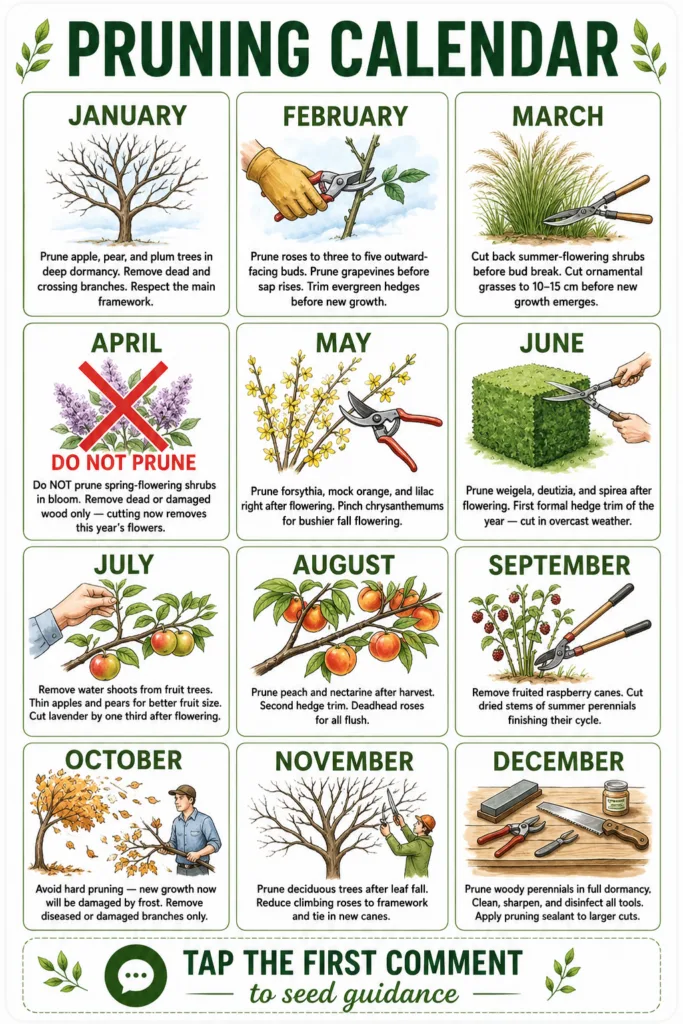
Pruning is one of the most important gardening tasks, but timing matters just as much as technique. Prune too early or too late, and you could reduce flowering, limit fruit production, or weaken your plants.
This month-by-month pruning calendar provides a simple guide to help you know what should—and shouldn’t—be pruned throughout the year.
🌱 January – Dormant Tree Pruning
Winter is the perfect time to prune many deciduous fruit trees because they are fully dormant.
Best plants to prune:
- Apple trees
- Pear trees
- Plum trees
Focus on:
- Removing dead or damaged branches
- Cutting crossing branches
- Improving airflow and tree structure
✂️ February – Prepare for Spring Growth
As temperatures begin to rise, it’s time to shape shrubs before active growth begins.
Ideal plants:
- Roses
- Grapevines
- Evergreen hedges
Prune before new buds develop for the healthiest spring growth.
🌾 March – Cut Back Ornamental Grasses
Early spring is the best time to trim ornamental grasses before fresh shoots appear.
Also consider:
- Summer-flowering shrubs
- Perennial grasses
Cut grasses back to about 4–6 inches (10–15 cm).
🚫 April – Don’t Prune Spring Bloomers
This is one of the biggest mistakes gardeners make.
Avoid pruning:
- Lilac
- Azalea
- Forsythia
- Other spring-flowering shrubs
Pruning now removes the flower buds that formed last year.
Only remove dead or damaged wood if necessary.
🌼 May – Prune After Blooming
Once spring flowers fade, it’s safe to shape many flowering shrubs.
Great time for:
- Forsythia
- Mock orange
- Lilac
You can also pinch chrysanthemums to encourage bushier fall blooms.
🌳 June – Shape Hedges
Early summer is ideal for maintaining formal hedges.
Plants include:
- Weigela
- Deutzia
- Spirea
Trim lightly to maintain shape while encouraging healthy growth.
🍎 July – Thin Fruit for Better Harvests
Sometimes less really is more.
Remove:
- Water shoots
- Extra apples or pears growing too close together
Fruit thinning allows the remaining fruit to grow larger, sweeter, and healthier.
🍑 August – Post-Harvest Pruning
After harvesting stone fruits, give trees a light prune.
Good candidates:
- Peach
- Nectarine
Also:
- Deadhead roses
- Give hedges a final summer trim
🍇 September – Clean Up Perennials
As plants finish producing fruit and flowers, remove old stems.
Prune:
- Raspberry canes after fruiting
- Spent perennial stems
This helps reduce disease and prepares plants for the next growing season.
🍂 October – Easy Does It
Avoid heavy pruning in autumn.
Large cuts can encourage tender new growth that may be damaged by frost.
Instead:
- Remove broken branches
- Remove diseased wood
- Leave major pruning until winter
🌳 November – Dormant Season Returns
Once leaves have fallen, deciduous trees enter dormancy.
Perfect time for:
- Structural pruning
- Removing unwanted branches
- Training climbing roses
🛠️ December – Tool Maintenance
Gardening isn’t just about plants.
Take time to:
- Clean pruning shears
- Sharpen blades
- Disinfect tools
- Apply pruning sealant where appropriate on larger cuts if recommended for your plant species
Well-maintained tools make cleaner cuts and reduce the spread of disease.
🌿 Final Thoughts
Successful pruning isn’t about cutting more—it’s about cutting at the right time.
By following a seasonal pruning schedule, you’ll enjoy:
- Healthier plants
- More flowers
- Bigger fruit harvests
- Better air circulation
- Stronger long-term growth
Every garden is a little different depending on your climate, but using this calendar as a guide will help you make smarter pruning decisions throughout the year.
Happy gardening! 🌱🌼🌳