When we think about our health, our minds often jump to organs like the heart, brain, or stomach. But what if we told you that one of the most powerful indicators of your overall well-being is right under your nose – your mouth? Far from being just for eating and speaking, your oral health acts as a crucial early warning system for your entire body.
Ignoring your mouth means missing out on vital clues about your health. From subtle changes in your gums to persistent bad breath, your mouth can signal underlying issues long before other symptoms appear. Understanding these signals and adopting preventive habits can make a significant difference in your long-term health journey.
The Oral-Systemic Link: Your Mouth and Your Body Are Connected
The connection between your oral health and your overall health, known as the oral-systemic link, is a well-established concept in science. Your mouth is home to billions of bacteria, some beneficial, some harmful. When oral hygiene is neglected, these harmful bacteria can multiply, leading to inflammation and infections that don’t just stay in your mouth.
Think of your mouth as a gateway to your body. Issues like gum disease (periodontitis) have been linked to a surprising array of systemic conditions, including:
- Heart Disease: Bacteria from inflamed gums can enter the bloodstream and contribute to plaque buildup in arteries, increasing the risk of heart attacks and strokes.
- Diabetes: People with diabetes are more susceptible to gum disease, and severe gum disease can, in turn, make it harder to control blood sugar levels. It’s a two-way street.
- Respiratory Infections: Inhaling bacteria from infected teeth and gums can lead to conditions like pneumonia, especially in older adults or those with weakened immune systems.
- Pregnancy Complications: Gum disease has been associated with premature birth and low birth weight in pregnant individuals.
- Dementia: Emerging research suggests a potential link between poor oral health and cognitive decline.
These connections underscore why paying attention to your oral health isn’t just about a bright smile; it’s about safeguarding your entire body.
Common Oral Conditions: What They Tell You
Your mouth can exhibit various signs that act as early warnings. Here are some common conditions and what they might indicate:
1. Gingivitis and Periodontitis (Gum Disease)
What it is: Red, swollen, bleeding gums (gingivitis) progressing to a more severe infection that damages the bone supporting your teeth (periodontitis).
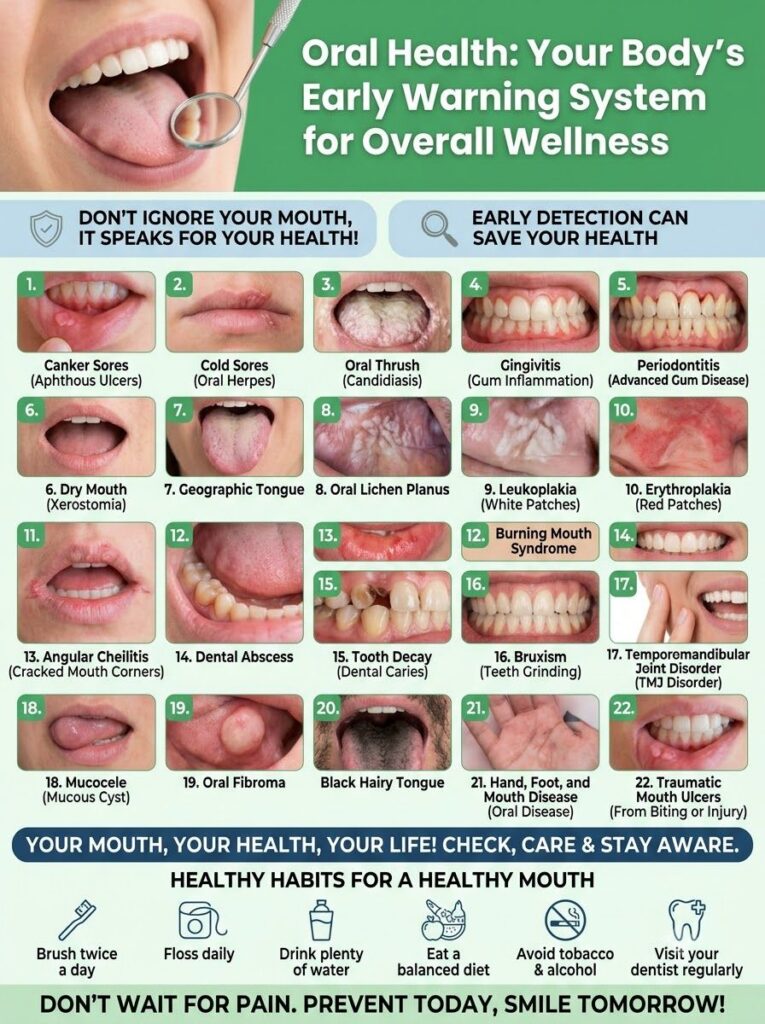
What it tells you: Often a sign of poor oral hygiene, but persistent or severe cases can indicate underlying conditions like uncontrolled diabetes, weakened immune system, or even certain medications. The infographic highlights this as a critical early detection point.
2. Oral Thrush (Candidiasis)
What it is: Creamy white lesions, usually on your tongue or inner cheeks, caused by an overgrowth of yeast (Candida fungus).
What it tells you: While common in infants and denture wearers, in adults, it can signal a weakened immune system, HIV/AIDS, diabetes, or be a side effect of antibiotics or inhaled corticosteroids.
3. Persistent Bad Breath (Halitosis)
What it is: Chronic unpleasant odor from the mouth.
What it tells you: Beyond food choices, it often indicates poor oral hygiene, gum disease, or dry mouth. However, it can also be a symptom of more serious issues like sinus infections, tonsil stones, acid reflux, or kidney/liver disease.
4. Canker Sores and Cold Sores
What they are: Canker sores are small, painful ulcers inside the mouth, while cold sores (fever blisters) are fluid-filled blisters outside the mouth, typically around the lips.
What they tell you: Canker sores can be triggered by stress, minor injuries, or nutritional deficiencies (e.g., iron, B12, folate). Cold sores are caused by the herpes simplex virus and often flare up during stress, illness, or sun exposure.
Healthy Habits for a Healthy Mouth (and Body!)
Preventative care is key to maintaining not just a healthy smile, but a healthier you. The infographic clearly outlines essential habits:
-
Brush Twice a Day
Use a fluoride toothpaste and brush for at least two minutes each time. This removes plaque and food particles that lead to decay and gum disease.
-
Floss Daily
Flossing reaches between your teeth and under the gum line where your toothbrush can’t. It’s crucial for removing trapped food and plaque.
-
Visit Your Dentist Regularly
Routine check-ups and cleanings (at least once a year, ideally every six months) allow dentists to spot problems early, before they become severe.
-
Eat a Balanced Diet
Limit sugary foods and drinks, which feed harmful bacteria in your mouth. Focus on fruits, vegetables, lean proteins, and whole grains for overall health and stronger teeth.
-
Avoid Tobacco Products
Smoking and chewing tobacco are major risk factors for gum disease, tooth decay, oral cancer, and bad breath.
-
Stay Hydrated
Drinking plenty of water helps wash away food particles and bacteria, and promotes saliva production, which is your mouth’s natural defense against decay.
Don’t Wait for Pain: Prevent Today, Smile Tomorrow!
Your mouth provides invaluable insights into your health. By understanding the signs and committing to a consistent oral hygiene routine, you’re not just preventing cavities and gum disease – you’re actively contributing to your overall well-being.
Make oral health a priority. Listen to what your mouth is telling you, and empower yourself with preventive care. Your body will thank you for it!