Your lips are more than just a facial feature; they can be a surprisingly accurate barometer of your internal health. Ever wonder what your lips are truly telling you? Many common lip changes, from subtle discolorations to persistent cracks, may signal essential vitamin and mineral deficiencies, often long before other symptoms appear.
Understanding these subtle clues can empower you to make informed dietary choices and address underlying nutritional gaps for better overall well-being. This article dives into how specific lip conditions relate to key nutrient needs and highlights natural, vegetarian food sources to help you nurture your health from the inside out.
Let’s decode the messages your lips are sending and discover how nourishing your body can lead to healthier, happier you.
What Your Lips Are Really Telling You
Our bodies are interconnected, and a deficiency in one area can manifest in unexpected ways. The delicate skin of the lips is particularly susceptible to nutritional imbalances, often showing the first signs of trouble. Paying attention to these signals can be a proactive step towards optimizing your diet and overall health.
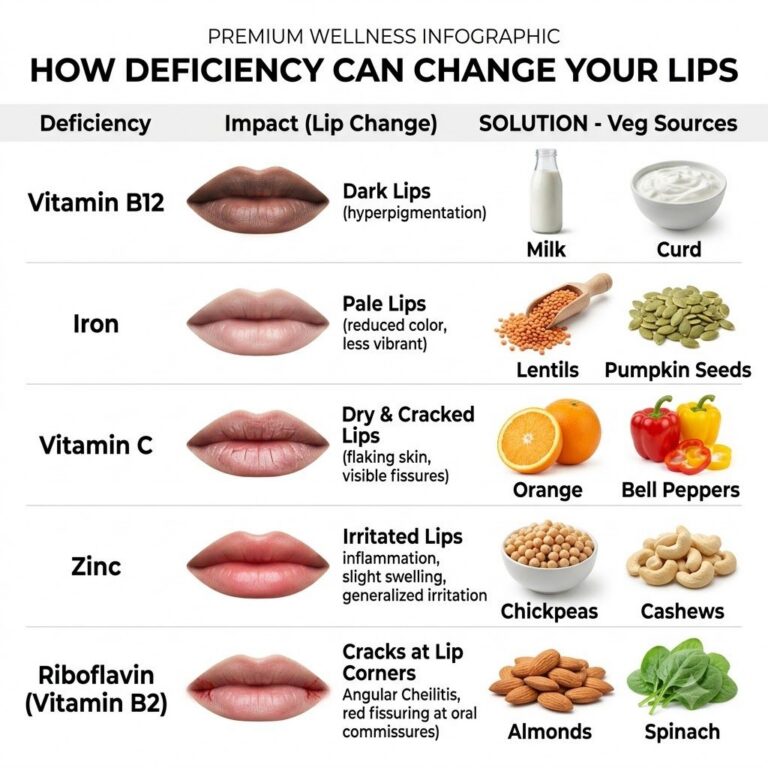
Vitamin B12 Deficiency: The Mystery of Dark Patches
If you’ve noticed unexplained dark patches, or hyperpigmentation, on your lips, or if your tongue appears unusually smooth and red, it could be a sign of a Vitamin B12 deficiency. Vitamin B12 is crucial for nerve function, red blood cell formation, and DNA synthesis. When deficient, the body struggles to produce healthy red blood cells, leading to various symptoms, including changes in skin and mucous membranes.
Vegetarian Sources of Vitamin B12:
- Milk: A staple in many diets, milk is a reliable source of Vitamin B12. Incorporate it into your morning cereal, smoothies, or enjoy a glass on its own.
- Curd (Yogurt): Fermented dairy products like curd are not only rich in Vitamin B12 but also provide beneficial probiotics for gut health.
Iron Deficiency: When Lips Turn Pale and Cracked
Pale lips, indicating a loss of their natural red color, are a classic symptom of iron deficiency anemia. Iron is essential for producing hemoglobin, the protein in red blood cells that carries oxygen throughout the body. Without enough iron, your blood can’t supply adequate oxygen, leading to pallor. Another common sign is angular cheilitis, characterized by painful cracks and inflammation at the corners of the mouth.
Vegetarian Sources of Iron:
- Lentils: These versatile legumes are a powerhouse of iron, protein, and fiber. They can be easily added to soups, stews, and salads. Pairing them with Vitamin C-rich foods enhances iron absorption.
- Spinach: Dark leafy greens like spinach are excellent sources of non-heme iron. Cooked spinach offers a concentrated dose and can be added to curries, stir-fries, or even smoothies.
Vitamin C Deficiency: Beyond Just Chapped Lips
While often associated with scurvy in severe cases, a less pronounced Vitamin C deficiency can manifest as swollen, bleeding gums and unusually dry, chapped lips. Vitamin C is vital for collagen production, which is crucial for healthy skin, gums, and blood vessels. It also plays a significant role in immune function and acts as an antioxidant.
Vegetarian Sources of Vitamin C:
- Oranges: Renowned for their high Vitamin C content, oranges are a delicious and easy snack.
- Bell Peppers: These colorful vegetables, especially red and yellow varieties, are surprisingly rich in Vitamin C, often containing more than oranges. Enjoy them raw in salads or lightly cooked in stir-fries.
Zinc Deficiency: Understanding Dryness and Mouth Ulcers
Persistent dry, chapped lips and recurrent mouth ulcers (aphthous stomatitis) can point to a zinc deficiency. Zinc is a critical mineral involved in immune function, wound healing, cell growth, and taste perception. Its deficiency can impair the skin barrier and immune response, making lips more prone to dryness and slow-healing sores.
Vegetarian Sources of Zinc:
- Pumpkin Seeds: These small seeds are packed with zinc, magnesium, and healthy fats. Sprinkle them on salads, yogurt, or enjoy them as a snack.
- Cashews & Almonds: These nuts are not only delicious but also provide a good amount of zinc, along with other essential minerals and healthy fats. A handful daily can contribute significantly to your intake.
Riboflavin (Vitamin B2) Deficiency: Cracks and Inflammation
Similar to iron deficiency, angular cheilitis (cracks at the corners of the mouth) can also be a strong indicator of riboflavin (Vitamin B2) deficiency. Additionally, inflammation of the lips, known as cheilosis, can occur. Riboflavin is crucial for energy production, cell function, and metabolism of fats, drugs, and steroids. A lack of it can impact skin and mucous membrane health.
Vegetarian Sources of Riboflavin (Vitamin B2):
- Chickpeas: A versatile legume, chickpeas are a good source of riboflavin, protein, and fiber. They can be used in hummus, curries, or roasted as a snack.
- Paneer (Cottage Cheese): This fresh cheese is a tasty source of riboflavin and protein. It can be incorporated into various dishes, from curries to salads.
Optimizing Your Nutrient Intake for Lip Health
Addressing these nutrient deficiencies isn’t just about healthier lips; it’s about supporting your entire body. While focusing on the specific foods mentioned above, remember that a balanced and varied vegetarian diet is key to overall wellness. Prioritize whole, unprocessed foods, and hydrate adequately.
When to Seek Professional Advice
While dietary changes can often resolve mild deficiencies, persistent or severe lip changes warrant a visit to a healthcare professional. A doctor or registered dietitian can provide an accurate diagnosis, recommend appropriate tests, and guide you on the best course of action, which may include supplements in some cases. It’s crucial to address any underlying health conditions responsibly.
Final Thoughts
Your lips truly are a window to your health. By paying attention to common changes like dark patches, paleness, cracks, or dryness, you can gain valuable insights into your body’s nutrient needs. Incorporating a variety of vegetarian-friendly, nutrient-rich foods into your diet, such as milk, lentils, oranges, pumpkin seeds, and chickpeas, is a powerful step towards addressing potential deficiencies and promoting overall wellness. Listen to your body, nourish it well, and enjoy the benefits of vibrant health, starting with your smile.
Medical Disclaimer
The information provided in this article is for general informational purposes only and does not constitute medical advice. It is not intended to diagnose, treat, cure, or prevent any disease. Always consult with a qualified healthcare professional before making any decisions about your health or diet, especially if you have any pre-existing medical conditions or are taking medications.