Mastering Lilies: A Growing Guide to 12 Stunning Lily Types for Your Garden
There’s a special kind of joy that comes from seeing a lily bloom. Their elegant forms, vibrant colors, and often intoxicating fragrances can transform any garden space into a sanctuary of beauty. But with so many captivating varieties available, how do you choose the right ones for your yard and ensure they thrive? Whether you’re a seasoned gardener looking to expand your collection or a beginner ready to dive into the world of bulbs, understanding the unique needs of different lily types is the key to success. Get ready to unlock the secrets to cultivating these magnificent flowers, from planting and care to appreciating their seasonal splendor. Let’s explore 12 popular lily types that promise to add drama and delight to your landscape.
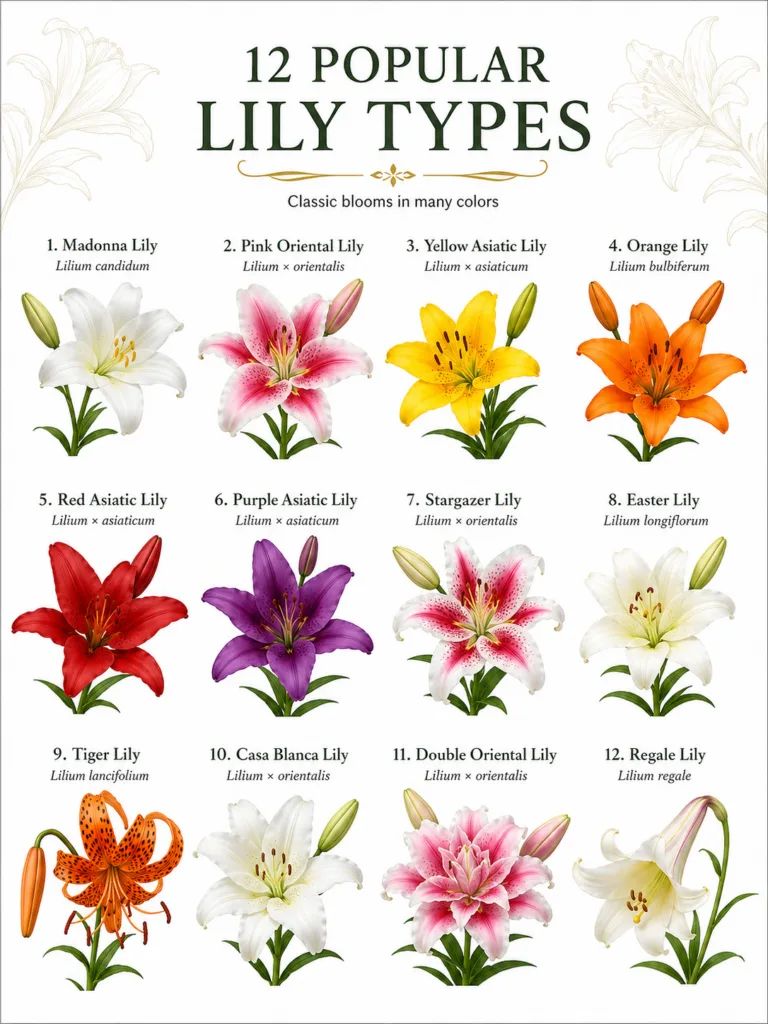 Discover the diversity and beauty of 12 popular lily types to inspire your garden design.
The Allure of Lilies: Essential Growing Principles
Lilies are generally hardy, bulbous perennials that return year after year with proper care. They belong to the genus Lilium, a diverse group within the lily family (Liliaceae). Most garden lilies thrive on a few basic principles: ample sunlight, well-draining soil, and consistent moisture, especially during their active growing season. Understanding these core needs will set you up for success with nearly any lily variety.
Choosing the Right Spot
The vast majority of lilies prefer at least six hours of direct sunlight per day to produce their best blooms. In hotter climates, some afternoon shade can prevent scorching, especially for the more delicate Oriental types. Good air circulation is also vital to prevent fungal diseases, so avoid overly crowded planting.
Soil and Drainage
Lilies are particularly sensitive to soggy soil, which can lead to bulb rot. Amend heavy clay soils with organic matter like compost, peat moss, or well-rotted manure to improve drainage and fertility. A slightly acidic to neutral pH (6.0-7.0) is ideal for most varieties, though some, like the Madonna Lily, prefer a more alkaline environment.
Spotlight on 12 Popular Lily Types
Let’s delve into the specific characteristics and care tips for 12 captivating lily varieties.
1. Madonna Lily (Lilium candidum)
One of the oldest cultivated lilies, the Madonna Lily boasts pure white, exquisitely fragrant trumpet-shaped flowers. It’s unique for its preference for alkaline soil and shallow planting – only about an inch or two of soil over the bulb’s nose. Unlike most lilies, it forms a basal rosette of leaves in the fall that overwinters. Plant it in late summer or early fall for early summer blooms.
- Hardiness: USDA Zones 5-9
- Plant type: Perennial bulb
- Exposure: Full sun
- Height: 3-5 feet
- Spread: 1 foot
Care Tip: Ensure excellent drainage and avoid disturbing the bulb once established. It’s a classic for a reason!
2. Casa Blanca Lily (Lilium ‘Casa Blanca’)
A beloved Oriental hybrid, ‘Casa Blanca’ is renowned for its enormous, pure white, outward-facing blooms with ruffled petals and an intense, sweet fragrance. These majestic flowers make exceptional cut flowers and a dramatic statement in the late summer garden.
- Hardiness: USDA Zones 4-9
- Plant type: Perennial bulb
- Exposure: Full sun to partial afternoon shade
- Height: 3-4 feet
- Spread: 1-2 feet
Care Tip: Provide stakes or support for the tall stems, especially when laden with multiple heavy blooms, to prevent them from flopping over.
3. Pink Oriental Lily (Lilium ‘Pink Oriental’ Varieties)
This category encompasses many stunning Oriental hybrids with various shades of pink, from soft blush to vibrant fuchsia, often with contrasting markings or speckles. Like all Orientals, they are known for their large, highly fragrant flowers that appear in late summer, adding a tropical touch to cooler climates.
- Hardiness: USDA Zones 4-9
- Plant type: Perennial bulb
- Exposure: Full sun to partial afternoon shade
- Height: 3-5 feet
- Spread: 1-2 feet
Care Tip: Plant in groups of three or more for a truly spectacular display and more pronounced fragrance.
4. Stargazer Lily (Lilium ‘Stargazer’)
Perhaps the most iconic Oriental lily, ‘Stargazer’ is famous for its striking upward-facing, crimson-pink flowers edged in white, heavily speckled with dark spots. Its powerful, spicy fragrance and dramatic appearance make it a favorite for bouquets and garden beds alike. It blooms in mid to late summer.
- Hardiness: USDA Zones 4-9
- Plant type: Perennial bulb
- Exposure: Full sun to partial afternoon shade
- Height: 2-3 feet
- Spread: 1 foot
Care Tip: Remove faded blooms (deadhead) to keep the garden tidy, but allow the foliage to remain until it naturally yellows to recharge the bulb for next year’s display.
5. Double Oriental Lily (Lilium ‘Double Oriental’ Varieties)
These unique Oriental hybrids feature extra layers of petals, creating a lush, full, and often less-pollenated bloom. Varieties like ‘Soft Music’ or ‘Roselily’ offer the classic Oriental fragrance and late-summer bloom time but with a captivating, rose-like appearance. They come in various shades of pink, white, and bicolors.
- Hardiness: USDA Zones 4-9
- Plant type: Perennial bulb
- Exposure: Full sun to partial afternoon shade
- Height: 2-4 feet
- Spread: 1-2 feet
Care Tip: Double flowers can be heavier than single varieties; ensure they have adequate support to prevent stems from bending or breaking.
6. Yellow Asiatic Lily (Lilium ‘Yellow Asiatic’ Varieties)
Asiatic lilies are known for their vibrant, often unscented, upward-facing flowers that bloom in early to mid-summer. ‘Yellow Asiatic’ varieties provide a cheerful burst of bright yellow, perfect for adding sunshine to your garden beds. They are typically very hardy and adaptable.
- Hardiness: USDA Zones 3-8
- Plant type: Perennial bulb
- Exposure: Full sun
- Height: 2-3 feet
- Spread: 1 foot
Care Tip: Asiatic lilies are excellent for succession planting with other spring bulbs to ensure continuous bloom throughout the growing season.
7. Orange Lily (Lilium bulbiferum)
Also known as the Fire Lily, Lilium bulbiferum displays striking, erect, cup-shaped flowers in an intense orange, often with dark spots. A unique feature is the small black bulbils (tiny bulbs) that form in the leaf axils, which can be harvested and planted to propagate new plants. It’s a robust and reliable early to mid-summer bloomer.
- Hardiness: USDA Zones 3-7
- Plant type: Perennial bulb
- Exposure: Full sun
- Height: 2-4 feet
- Spread: 1 foot
Care Tip: Collect the bulbils when they are firm and easily detach from the stem; plant them immediately or store in a cool, dark place for spring planting.
8. Tiger Lily (Lilium lancifolium or Lilium tigrinum)
The classic Tiger Lily is instantly recognizable by its recurved petals, vibrant orange color, and abundant dark spots, resembling a tiger’s coat. It’s incredibly vigorous and naturalizes easily, spreading through underground stolons and producing bulbils. While beautiful, be aware that Tiger Lilies can carry lily mosaic virus without showing symptoms themselves, potentially infecting other lily varieties if planted too closely.
- Hardiness: USDA Zones 3-9
- Plant type: Perennial bulb
- Exposure: Full sun to partial shade
- Height: 3-5 feet
- Spread: 1-2 feet
Care Tip: If you plan to grow other lily varieties, consider isolating Tiger Lilies or choosing virus-indexed stock to prevent potential spread of disease.
9. Red Asiatic Lily (Lilium ‘Red Asiatic’ Varieties)
Similar to their yellow counterparts, ‘Red Asiatic’ lilies offer vivid, bold red flowers that face upwards, adding a powerful punch of color to the garden. These non-fragrant beauties are among the earliest lilies to bloom, brightening the landscape in early to mid-summer.
- Hardiness: USDA Zones 3-8
- Plant type: Perennial bulb
- Exposure: Full sun
- Height: 2-3 feet
- Spread: 1 foot
Care Tip: Deadhead spent flowers to prevent seed formation, which directs the plant’s energy back into the bulb for stronger blooms next year.
10. Purple Asiatic Lily (Lilium ‘Purple Asiatic’ Varieties)
For a touch of regal elegance, ‘Purple Asiatic’ lilies deliver. These cultivars showcase various shades of purple, from lavender to deep plum, with their characteristic upward-facing, non-fragrant blooms. They are excellent for creating contrast in mixed borders and typically flower in early to mid-summer.
- Hardiness: USDA Zones 3-8
- Plant type: Perennial bulb
- Exposure: Full sun
- Height: 2-3 feet
- Spread: 1 foot
Care Tip: Combine purple Asiatic lilies with white or yellow varieties for a striking color combination in your garden design.
11. Easter Lily (Lilium longiflorum)
Most commonly seen as a potted plant around Easter, the Easter Lily features large, pure white, trumpet-shaped flowers with a sweet, intense fragrance. While often treated as a temporary houseplant, it can be planted outdoors in warmer climates (or protected spots in cooler ones) where it may naturalize and bloom in late spring to early summer.
- Hardiness: USDA Zones 6-9 (as perennial); often grown as an annual/houseplant elsewhere
- Plant type: Perennial bulb / Houseplant
- Exposure: Bright indirect light indoors; full sun to partial shade outdoors
- Height: 1-3 feet
- Spread: 0.5-1 foot
Care Tip: If planting outdoors after Easter, remove faded flowers, harden off the plant, and choose a well-drained spot. It benefits from deep planting.
12. Trumpet Lily (Lilium ‘Trumpet’ Hybrids)
This group, including Aurelian Hybrids, is known for its exceptionally tall, sturdy stems and magnificent, trumpet-shaped flowers. They offer a wide color palette including white, yellow, gold, pink, and even greenish hues. Trumpet lilies are highly fragrant, especially in the evening, and bloom in mid to late summer, typically after Asiatic lilies but before Orientals.
- Hardiness: USDA Zones 4-8
- Plant type: Perennial bulb
- Exposure: Full sun
- Height: 4-6 feet (some varieties taller)
- Spread: 1-2 feet
Care Tip: Given their impressive height, plant Trumpet Lilies at the back of borders where they can tower over other plants without casting too much shade.
General Care Tips for Thriving Lilies
Regardless of the type, a few general gardening tips will help all your lilies flourish.
Planting Depth and Spacing
Most lily bulbs should be planted at a depth of 2-3 times their height. This helps protect the bulb from temperature fluctuations and provides support for the stem. Space bulbs 8-12 inches apart to ensure good air circulation, which is crucial for preventing fungal issues.
Watering Wisely
Provide consistent moisture, especially during dry spells and when plants are actively growing and flowering. However, avoid overhead watering which can encourage leaf diseases. Water at the base of the plant, and always ensure the soil drains well to prevent rot.
Feeding Your Lilies
Lilies benefit from a balanced granular fertilizer in early spring as new growth emerges, and again after flowering. Avoid high-nitrogen fertilizers, which can promote lush foliage at the expense of blooms. A layer of compost around the base of the plants each spring also provides slow-release nutrients.
Pest and Disease Management
The most common lily pest is the red lily beetle, which can defoliate plants quickly. Inspect your lilies regularly and hand-pick beetles, or use neem oil for control. For fungal diseases like botrytis, ensure good air circulation and consider a preventative fungicide in humid conditions.
Winter Protection
In colder USDA Zones (3-5), apply a layer of mulch (straw, leaves, or pine needles) over the planting area after the ground freezes to insulate the bulbs. This helps prevent heaving due to freeze-thaw cycles. In zones where lilies are not fully hardy, they can often be grown in containers and brought indoors for winter, or treated as annuals.
Common Mistakes to Avoid for Lily Growers
- Overwatering in Poorly Drained Soil: This is the number one killer of lily bulbs. Always ensure excellent drainage.
- Cutting Foliage Too Soon: After blooming, the leaves continue to photosynthesize, sending energy back to the bulb for next year’s flowers. Do not cut the stems back until they have naturally yellowed and died down.
- Planting in Full, Scorching Sun without Protection: While most lilies love sun, extreme heat in certain regions can stress them. Consider partial afternoon shade or plant lower-growing companions to shade their roots.
- Ignoring Pests: Regular scouting for pests like lily beetles can save your plants from significant damage. Early intervention is key.
Regional and USDA Zone Considerations
While most garden lilies thrive across USDA Zones 4-9, regional climates play a significant role:
- Zones 3-5 (Northern US): Focus on extremely hardy varieties like Asiatic and Tiger lilies. Provide thick winter mulch for protection. Planting in containers and storing them in a cool, dark, frost-free location over winter is also an option for less hardy types.
- Zones 6-8 (Mid-Atlantic, Midwest, Pacific Northwest): Most lily types will flourish here. Pay attention to soil drainage during wet springs and provide supplemental water during dry summers.
- Zones 9-11 (Southern US, Southwest, Coastal California): Lilies can struggle with intense summer heat and humidity. Oriental and Trumpet lilies may benefit from afternoon shade. Consider planting bulbs in fall for earlier blooms before extreme heat sets in. Some lilies, like the Easter Lily, are perennial here.
Always check your local extension service for specific advice tailored to your microclimate and soil conditions.
Ready to Cultivate Your Lily Masterpiece?
From the delicate charm of the Madonna Lily to the dramatic flair of the ‘Stargazer,’ the world of lilies offers an incredible array of choices for every gardener. By understanding the specific needs of each type and applying solid general care principles, you’ll be well on your way to enjoying a spectacular display of these elegant flowers year after year. Don’t be afraid to experiment with different varieties and observe how they respond in your unique garden setting. Your efforts will be richly rewarded with their breathtaking beauty and intoxicating scents. Which lily will you invite into your garden first?