In the vast landscape of health and wellness, certain foods often get a bad rap. You hear whispers that they’re ‘unhealthy,’ ’empty calories,’ or just plain ‘bad for you.’ But what if some of these common perceptions are, in fact, misconceptions? It’s time to rethink your perspective on everyday foods often labeled ‘unhealthy.’ At Glowra Health, we believe in a balanced and informed approach to nutrition, which means looking beyond the headlines and understanding the true value of what we eat.
Many foods unfairly tagged as ‘unhealthy’ can actually play a valuable role in a balanced diet, offering essential nutrients, convenience, and even satisfying cravings without derailing your health goals. This article will shine a light on 7 ‘unhealthy’ foods that may not be as bad as you think, helping you make more informed choices and embrace a more varied, enjoyable diet.
The Truth About 7 Misunderstood Foods
Let’s dive into the specifics and uncover why these seven foods deserve a second look.
1. Canned Peas & Carrots
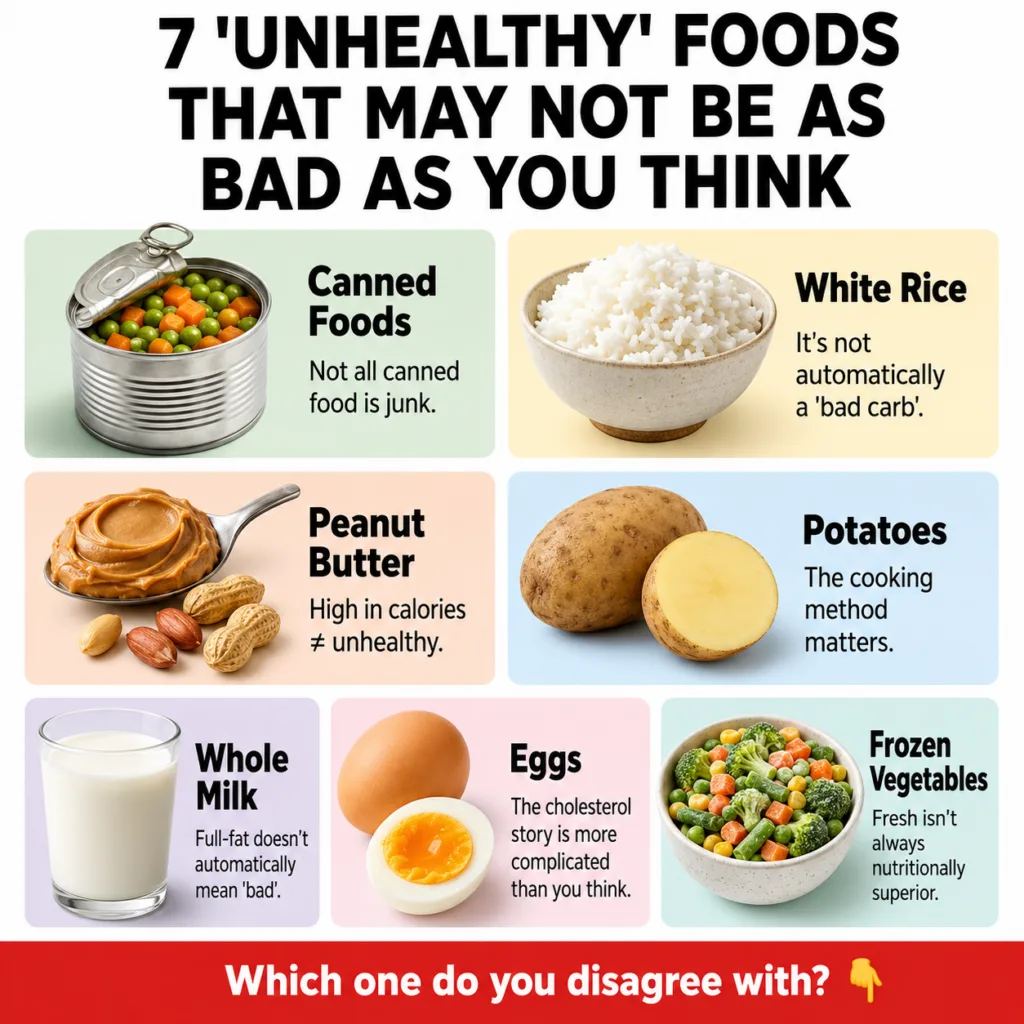
Often dismissed as inferior to their fresh counterparts, canned peas and carrots are a prime example of a convenient food that retains much of its nutritional value. The canning process preserves nutrients, meaning you’re still getting fiber, vitamins (like Vitamin A from carrots), and minerals. They’re an affordable and long-lasting pantry staple, making them an excellent choice for busy weeknights or budget-friendly meal prep ideas. Just opt for varieties with no added salt or rinse them thoroughly before use.
2. White Rice
White rice has long been vilified in favor of brown rice, but it’s not the nutritional villain it’s often made out to be. While brown rice offers more fiber, white rice is an excellent source of quick energy, especially beneficial for active individuals. It’s also naturally gluten-free, making it a safe choice for those with gluten sensitivities or celiac disease. When eaten in moderation as part of a balanced meal with plenty of vegetables and lean protein, white rice can absolutely fit into a healthy eating plan.
3. Peanut Butter
Despite its calorie density, natural peanut butter is far from ‘unhealthy.’ It’s a fantastic source of healthy monounsaturated fats, which are good for heart health, and provides a substantial amount of plant-based protein, helping you feel full and satisfied. Look for varieties with minimal ingredients – just peanuts and maybe a touch of salt – to avoid added sugars and unhealthy oils. A tablespoon or two can be a great addition to breakfasts, smoothies, or as a snack on fruit for sustained energy.
4. Potatoes
Often demonized as a ‘starchy carb’ to be avoided, potatoes are a nutritional powerhouse. They are rich in Vitamin C, Vitamin B6, potassium (even more than a banana!), and dietary fiber, especially if you eat the skin. Potatoes can be incredibly versatile and satisfying, whether baked, boiled, or roasted. The key is in the preparation – avoid deep-frying and excessive butter or sour cream. A baked potato with a sprinkle of herbs and a dollop of Greek yogurt makes for a wholesome side dish.
5. Whole Milk
For years, skim milk was pushed as the healthier option, but whole milk is making a comeback for good reason. The fat content in whole milk contributes to satiety, helping you feel fuller for longer and potentially reducing overall calorie intake later. Furthermore, the fat in whole milk aids in the absorption of fat-soluble vitamins like A and D, which are crucial for bone health and immunity. It’s a natural source of calcium and protein, making it a nutrient-dense choice that can be enjoyed in moderation.
6. Eggs
Eggs have had a rocky relationship with public health advice, primarily due to past concerns about dietary cholesterol. However, modern science has largely debunked the myth that dietary cholesterol significantly impacts blood cholesterol for most people. Eggs are an incredibly nutrient-dense food, packed with high-quality protein, essential amino acids, choline (important for brain health), selenium, and vitamins D and B12. They are an economical, versatile, and complete protein source that makes a fantastic part of any healthy breakfast or meal.
7. Frozen Vegetables
Forget the notion that frozen vegetables are nutritionally inferior. In many cases, they can be even more nutritious than ‘fresh’ produce that has traveled long distances and sat on shelves for days. Frozen vegetables are typically picked at their peak ripeness and flash-frozen within hours, locking in vitamins, minerals, and antioxidants. They offer unparalleled convenience, reduce food waste, and are available year-round, making healthy eating accessible no matter the season. Stocking your freezer with a variety of frozen veggies is a smart move for easy, healthy meals.
Embracing a Balanced Perspective
It’s easy to fall into the trap of labeling foods as strictly ‘good’ or ‘bad.’ However, a truly healthy and sustainable diet is about balance, moderation, and understanding the nutritional profile of a wide variety of foods. The 7 ‘unhealthy’ foods we’ve discussed today are perfect examples of how a nuanced perspective can enrich your diet and health.
Instead of cutting out entire food groups based on outdated information, focus on whole, unprocessed options, mindful portion sizes, and varied eating. Remember, no single food can make or break your diet; it’s the overall pattern of your eating habits that truly matters for long-term wellness.